London rewards the visitor who takes it at a walking pace. It is a city where a Roman wall can sit a short stroll from a glass tower, where a world-famous museum is free to enter, and where a single afternoon can move from quiet galleries to a crowded market square without ever feeling rushed. For a first visit, the challenge is not finding things to do. It is choosing where to begin, and in what order, so that the famous sights make sense as a city rather than as a checklist.
This guide brings together ten places that, between them, tell London’s story: its history and its monarchy, its art and its politics, its shopping streets and its open squares, and the river that ties them all together. Some are grand and formal, others are gloriously informal. All of them are easy to reach by Tube, bus or on foot, and all of them are worth making time for, whether you have a long weekend or a full week. Where opening arrangements or tickets apply, always confirm the details on the official site before you travel, as times and booking rules can change.
Historic London: Museums, Palaces and Power

Start with the places that explain how London became London. They are spread across the centre of the city, but they share a sense of scale and ceremony that is hard to find anywhere else, and they repay unhurried visits far more than hurried ones.
The British Museum
The British Museum, in Bloomsbury, is one of the great museums of the world, and its collection spans thousands of years of human history. Galleries devoted to ancient Egypt, Greece and Rome sit alongside rooms covering Africa, Asia, the Americas and the Middle East, so a single visit can carry you from carved stone tablets to delicate jewellery, monumental sculpture and everyday objects from civilisations long gone. The building itself is part of the pleasure: a classical facade leads into the light-filled Great Court, a calm, covered space that makes a natural meeting point and a good place to pause between galleries.
Because the collection is so large, it helps to arrive with a short list rather than trying to see everything. Pick two or three areas that genuinely interest you, whether that is Egyptian mummies, Greek sculpture or prints and drawings, and give those rooms proper attention. Entry to the permanent collection is free, although special exhibitions are ticketed, so it is also one of the easiest sights to fit around other plans. A morning here, followed by lunch in nearby Bloomsbury or Fitzrovia, is a classic London day.
The Tower of London
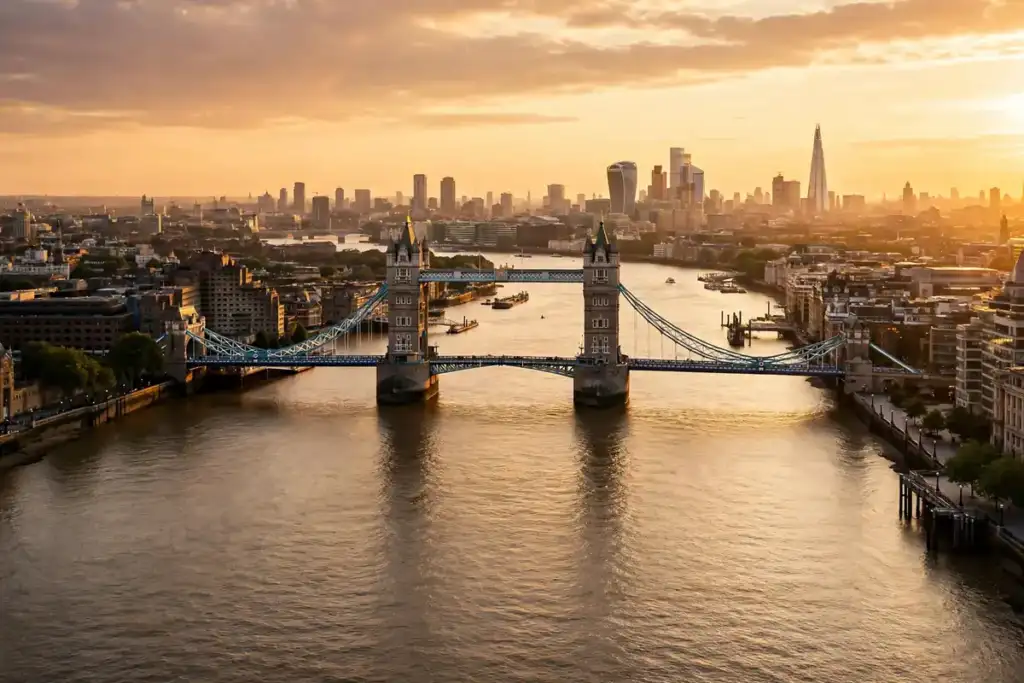
On the north bank of the Thames, close to Tower Bridge, stands the Tower of London, a fortress that has served over the centuries as a royal palace, a prison, an armoury and a treasury. Its White Tower, begun in the eleventh century, still dominates the site, and its thick stone walls hold stories of kings and queens, prisoners and plots, guards and ravens. Today the Tower is best known as the home of the Crown Jewels, a glittering display of crowns, sceptres and ceremonial regalia that draws long, slow-moving queues for good reason.
A guided tour with one of the Yeoman Warders, the ceremonial guards often called Beefeaters, is the best way to make sense of the site. Their tours are entertaining and full of detail, covering everything from famous prisoners to the Tower’s role in defending the city. Allow at least half a day, wear comfortable shoes for the cobbles and steps, and book tickets in advance through the official site where possible, as this is one of London’s most popular paid attractions.
Buckingham Palace
No first visit feels quite complete without standing outside Buckingham Palace, the official London residence of the monarch. The palace gates, the Victoria Memorial and the long sweep of The Mall give the whole area a sense of occasion, even on an ordinary weekday, and the Changing of the Guard ceremony remains one of the city’s most watched free spectacles. Crowds gather early for a good view, so arrive with time to spare and be prepared for a busy pavement.
At certain times of year, usually in the summer months, the State Rooms are opened to visitors, offering a rare look inside the grand rooms used for official receptions and ceremonies, with ornate furnishings, paintings and decorative arts on display. Outside those opening periods, the palace is still well worth seeing from the outside, especially combined with a walk through St James’s Park, where pelicans, flower beds and views back towards the palace make a gentle break from sightseeing.
The Houses of Parliament and Big Ben
Across Westminster Bridge from the South Bank, the Palace of Westminster and its clock tower form the most recognisable silhouette in London. The Gothic Revival building, home to the two Houses of Parliament, stretches along the Thames, and the tower at its northern end, most often called Big Ben after its great bell, has become a shorthand for the city itself. The best first view is from Westminster Bridge or from the South Bank, where the whole facade can be taken in at once, particularly in the early morning or at dusk when the stonework catches the light.
Tours of the interior are available at set times and through official booking channels, offering an insight into how Parliament works and into the history of the chambers, corridors and debating rooms. Even without an interior tour, the Westminster area repays a walk: Westminster Abbey is close by, Parliament Square is lined with statues of historic figures, and the riverside path leads on towards the London Eye and the South Bank’s restaurants, book stalls and street performers.
London from Above: Views and the Riverside
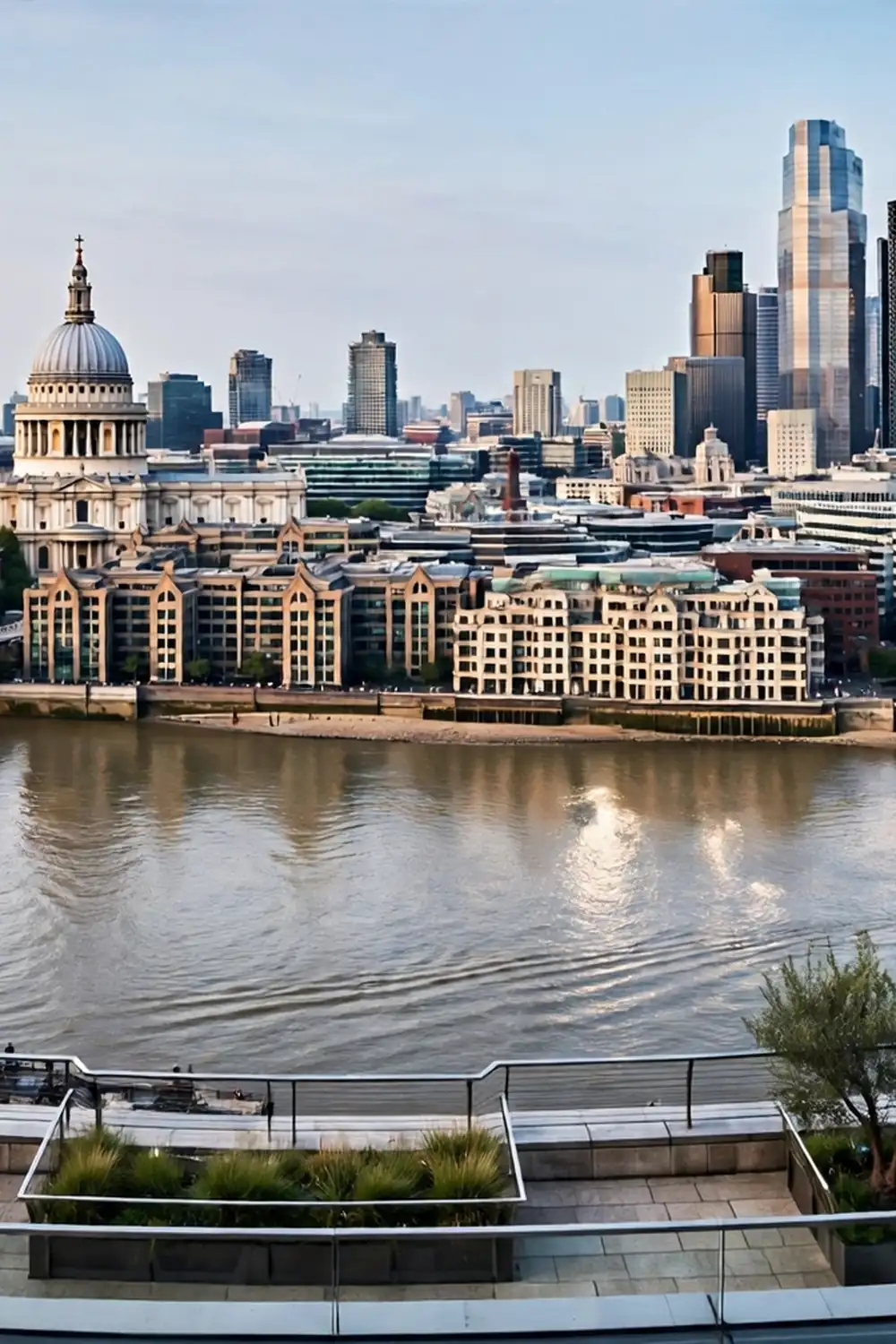
London is a low-rise city in many parts, which makes its viewpoints all the more rewarding. From the river and from the air, the pattern of the city becomes clear: the curve of the Thames, the dome of St Paul’s, the towers of the City, and the green spaces threaded between them.
The London Eye
The London Eye, on the South Bank near Westminster Bridge, is a giant observation wheel that lifts visitors slowly above the river for a full, unhurried rotation. From the enclosed capsules, the view opens out in every direction, taking in the Houses of Parliament, the Thames winding east towards the City, and, on a clear day, landmarks far beyond the centre. The ride is gentle rather than thrilling, which makes it suitable for families, for visitors who prefer a calm experience, and for anyone who wants to get their bearings on a first day.
Evening rides have their own appeal, as the city lights come on and the river darkens, but daytime rides generally give the clearest views of distant landmarks. Tickets are timed, so booking ahead through the official site is sensible, especially at weekends and in school holidays. Afterwards, the South Bank itself is worth lingering on, with its riverside walk, food market stalls and views back across the water.
The Shard and the Sky Garden
For a higher perspective, the Shard, the tapering glass tower on the south bank near London Bridge, offers viewing decks near the top of the building, with panoramic views that stretch across the whole capital. On a clear day the horizon seems to go on for miles, and the experience of looking down on Tower Bridge, the Tower of London and the winding Thames gives a real sense of the city’s scale. The Shard also houses restaurants and bars, so a visit can easily become a meal with a view, although the viewing decks themselves are ticketed and should be booked in advance.
If you would rather enjoy a high view without paying for a ticket, London also has free viewpoints, and comparing them before you go can save both money and disappointment. Our guide to the best free view of London sets out the main options, including the Sky Garden, so you can choose between a paid deck, a free garden in the sky, and a riverside hilltop depending on the weather, the time of day and how much walking you fancy.
Shopping, Streets and West End Life
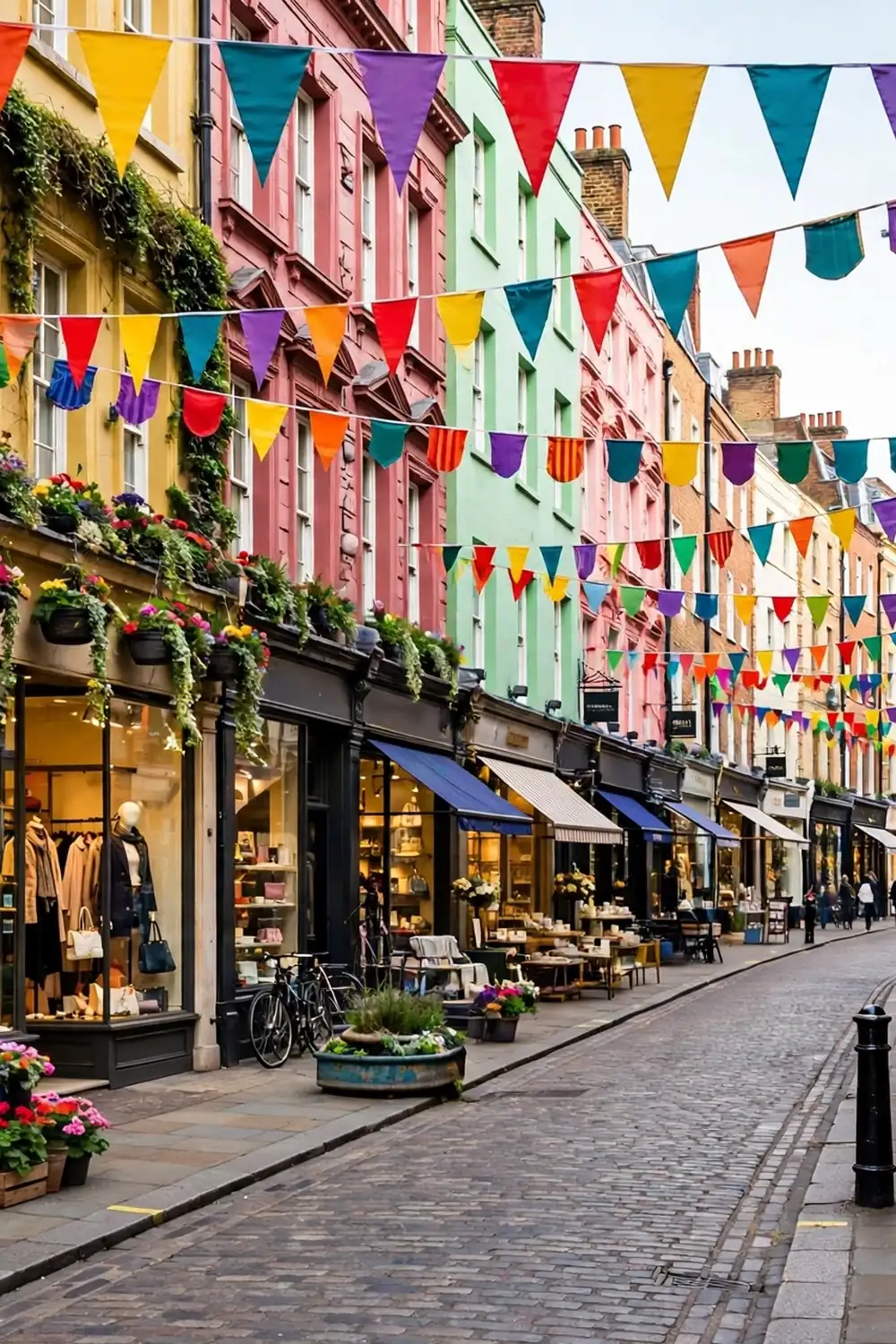
London’s shopping streets are attractions in their own right, not merely places to spend money. They are where the city’s energy is most visible: buskers and window displays, historic shopfronts and modern flagships, side streets full of independent shops and cafes that reward anyone willing to wander a little off the main road.
Oxford Street
Oxford Street runs for well over a mile through the heart of the West End, and it remains London’s best-known shopping street, lined with department stores, flagship fashion shops and high-street brands. Two of its most famous names are Selfridges, near Marble Arch, known for its striking window displays and its vast food hall, and John Lewis, near Oxford Circus, a long-established department store popular for everything from homeware to fashion. Between them, the street offers a huge range of shops, from international brands to smaller boutiques tucked into side streets.
Oxford Street is at its busiest at weekends and in the run-up to Christmas, when the lights and crowds are part of the spectacle but the pavements are very full. Weekday mornings are calmer and better for serious shopping, and the surrounding streets, including Regent Street and the lanes of Soho, offer a quieter, more varied experience. If shopping is not your priority, a walk along Oxford Street still gives a vivid sense of modern London life.
Covent Garden
A short walk south from Oxford Street, Covent Garden offers a very different atmosphere. Its covered market building, with its arcades, craft stalls and cafes, sits at the centre of a network of pedestrian streets filled with shops, restaurants and street performers. The piazza is a natural place to stop, watch a performance, and enjoy a coffee, and the area around it, including Neal’s Yard with its brightly painted buildings, is full of small, independent places that are easy to miss if you hurry.
Covent Garden is also a theatre district in all but name, with the Royal Opera House on its edge and many West End theatres within walking distance. It works well as an evening destination too, when the restaurants and bars fill up and the market building glows under its lights. For a quieter visit, come in the morning, before the lunch crowds arrive, and explore the side streets while the piazza is still waking up.
Piccadilly Circus and Carnaby Street
Piccadilly Circus, where Piccadilly meets Regent Street, is one of London’s most photographed junctions, famous for its bright advertising screens, its statue of Eros and its constant flow of people. It is less a destination to linger in than a landmark to pass through, a useful meeting point and a gateway to the West End, to Leicester Square and its cinemas, and to the shopping streets that lead north towards Oxford Street.
From Piccadilly Circus, it is a short walk to Carnaby Street, a pedestrianised shopping street with a long association with London fashion and music. Its colourful shopfronts, independent boutiques and places to eat make it a pleasant contrast to the big department stores, and it is a good example of how London’s smaller streets often hold the most character. Our guide to Carnaby Street explains what to look for there, from its history to its present-day shops and cafes.
Squares, Art and Open Space
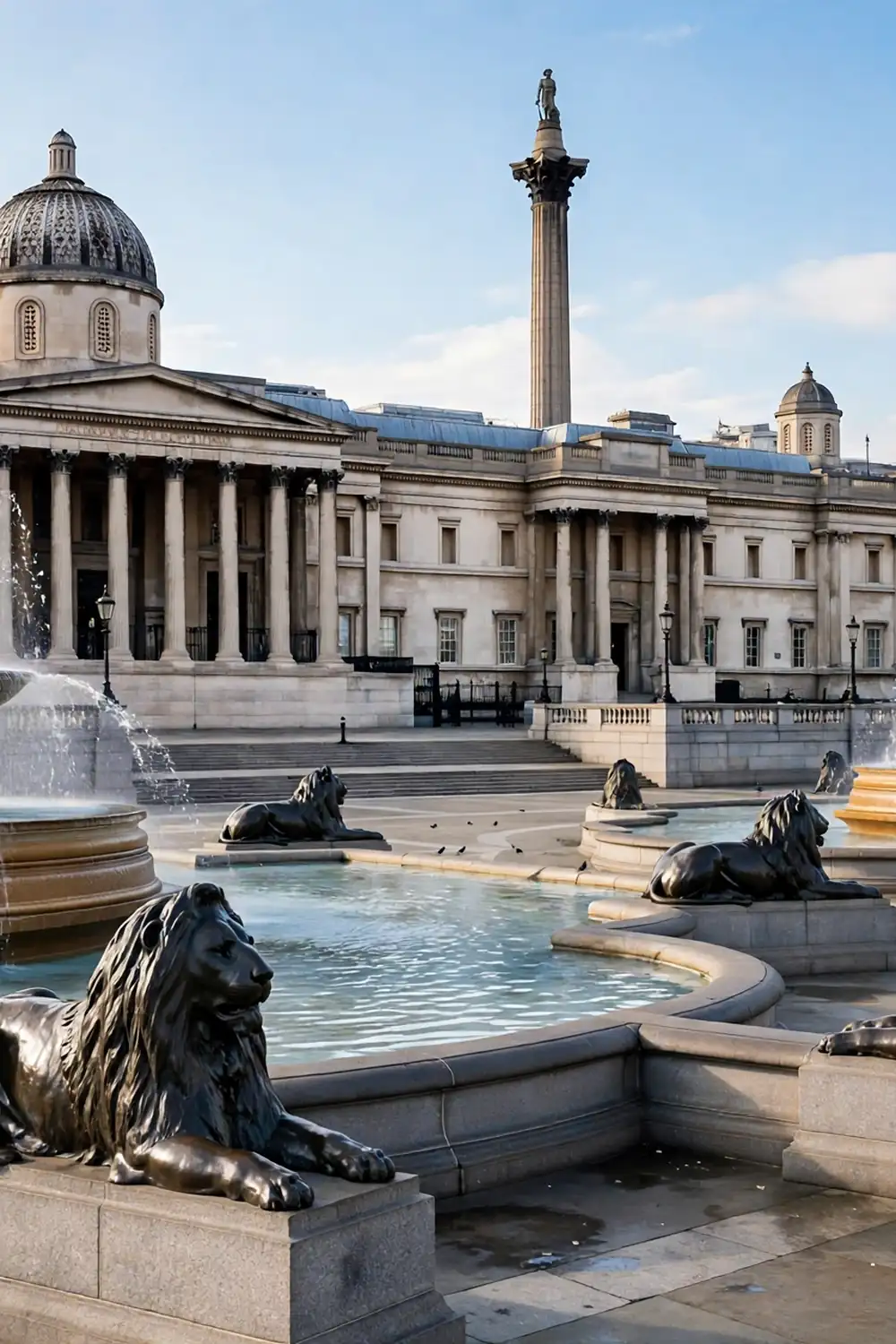
London’s squares give the city its breathing room. They are places to sit, to meet friends, to watch street performers and to take stock between museums and shops, and the grandest of them all is also home to one of the world’s great art collections.
Trafalgar Square and the National Gallery
Trafalgar Square, at the junction of the West End, Westminster and the Strand, is London’s great public square, dominated by Nelson’s Column, its stone lions and its fountains. It is a natural gathering place, used for celebrations, demonstrations and public events throughout the year, and it is also a practical landmark: from here, you can walk to the National Gallery, to Whitehall, to Leicester Square or down towards the river in a matter of minutes.
The National Gallery, which fills the northern side of the square, houses a superb collection of Western European paintings, from medieval altarpieces to Impressionist masterpieces, including works by artists such as Van Gogh, Turner and Leonardo da Vinci. Entry to the permanent collection is free, which makes it easy to dip in for an hour rather than attempting the whole gallery at once. Close by, St Martin-in-the-Fields, the elegant church on the eastern side of the square, is known for its classical music concerts and its cafe in the crypt, a peaceful place to rest after a morning of sightseeing.
How to Fit It All Together
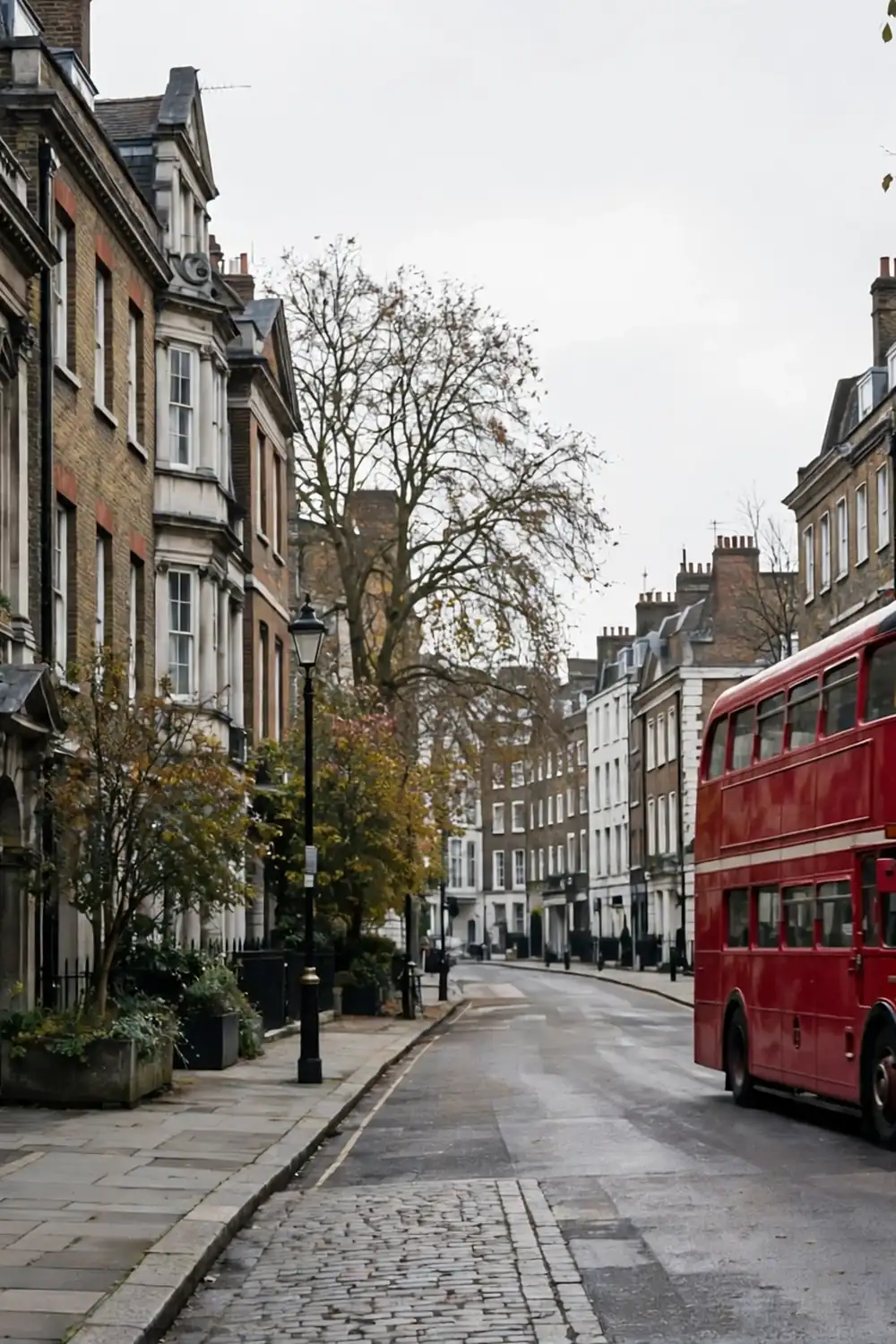
Trying to see all ten places in a single day would leave you exhausted and would do none of them justice. A better approach is to group them by area. The British Museum, Oxford Street, Covent Garden and Piccadilly Circus all sit within a comfortable West End walk of each other. The Tower of London, the Shard and the riverside viewpoints cluster in the east, while Buckingham Palace, Westminster and the London Eye form a natural western and riverside group around the Thames. Trafalgar Square sits conveniently between the West End and Westminster, making it a useful hub for either route.
For a first trip, it also helps to plan around a simple multi-day shape rather than a long list. Our guide on how to spend 3 days in London as a first-time visitor shows one way to spread the major sights across three days, balancing busy mornings with quieter afternoons, so you can adapt its structure to your own pace, interests and energy levels.
Good to Know
- Many of London’s major museums and galleries, including the British Museum and the National Gallery, offer free entry to their permanent collections, although special exhibitions are usually ticketed.
- Popular paid attractions such as the Tower of London, the London Eye and the Shard use timed tickets, so booking ahead through the official site is the safest option, especially at weekends and in school holidays.
- Comfortable shoes matter more than almost anything else on a London trip, as the best way to link sights in the West End and along the river is on foot.
- An Oyster card or contactless payment card covers Tube and bus travel across central London, and walking between nearby sights often proves quicker than changing lines.
- Opening hours, ceremony times and tour availability can change for events, maintenance or seasonal reasons, so always confirm the details on the official site before you set out.
- Rain need not spoil a day in London, as the museums, galleries and covered markets in this guide all offer shelter, and the city looks particularly atmospheric in wet weather.
FAQ
How many days do I need to see the best places in London?
Three full days give a comfortable introduction, allowing you to group sights by area and to include at least one museum, one viewpoint and one shopping or market district each day. With only one or two days, focus on a smaller set, such as Westminster, the South Bank and the West End, and save the rest for a return visit rather than rushing through everything.
Which places in London are free to visit?
The British Museum and the National Gallery both offer free entry to their permanent collections, and Trafalgar Square, Covent Garden’s piazza and Piccadilly Circus can all be enjoyed without a ticket. Buckingham Palace from the outside, the Changing of the Guard and walks along the South Bank are also free, while the Tower of London, the London Eye and the Shard are paid attractions.
What is the best area to stay in for sightseeing?
The West End, around Covent Garden, Soho and Bloomsbury, suits most first-time visitors, as it puts the British Museum, Oxford Street, the theatres and Trafalgar Square within walking distance and offers excellent Tube connections. Westminster and the South Bank are also convenient, particularly if you plan to focus on the river, Parliament and the London Eye.
Is London easy to get around without a car?
Yes, and a car is more of a hindrance than a help in central London. The Tube, buses and walking cover almost every sight in this guide, and many of them are close enough together to link on foot. A contactless card or Oyster card makes Tube and bus travel straightforward, and river buses along the Thames offer a scenic alternative between Westminster, the South Bank and the Tower.
When is the best time of year to visit London?
Late spring and early autumn generally offer the most pleasant balance of daylight, mild weather and manageable crowds, while summer brings the longest days and the fullest calendar of outdoor events. Winter has its own appeal, with Christmas lights, markets and quieter museums, although days are short and some outdoor ceremonies and viewpoints are more weather-dependent.
Do I need to book tickets in advance?
For free museums, advance booking is often optional, but for timed and popular paid attractions it is strongly recommended. Booking ahead usually guarantees your entry time, reduces queuing and lets you plan your day around a fixed slot. Always use the official site for the attraction in question and double-check the entry rules, as they can vary by season.






3 thoughts on “Best Places to Visit in London: 10 Must-See Sights for First-Timers”