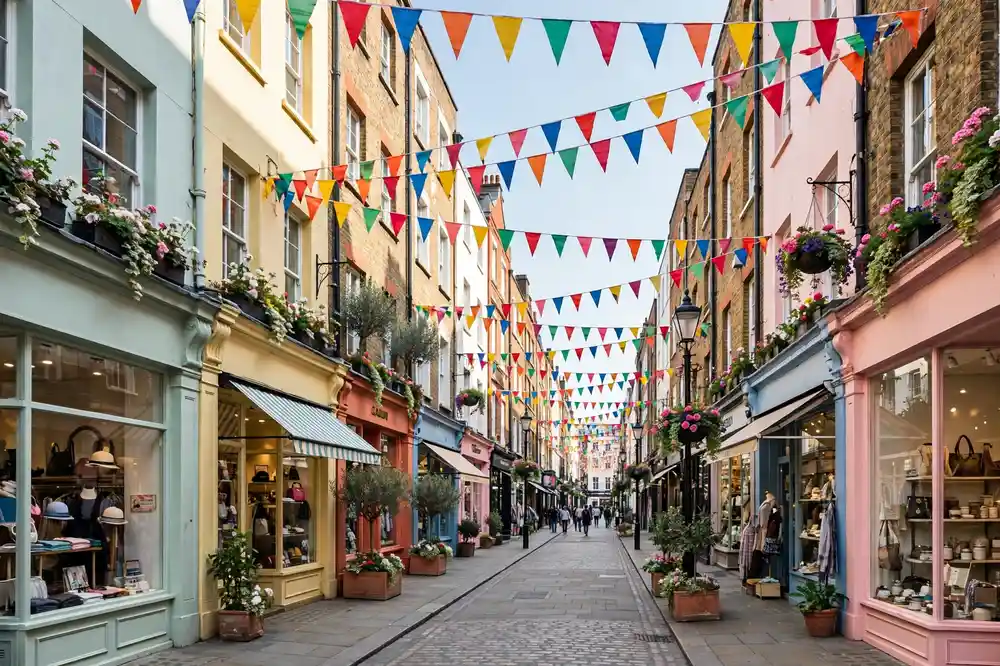
Carnaby Street is the London street that changed fashion — and then, remarkably, managed to stay fun. In the 1960s it was the beating heart of Swinging London, where mods, musicians and designers turned a short Soho street into a global symbol of youth culture. Today it is still pedestrianised, still packed with shops, and still the easiest place in central London to spend a happy, unhurried half-day: browse more than 100 shops, eat in the three-storey food courtyard of Kingly Court, stand beneath the famous arched Carnaby sign, and finish with a free view over the city at Sky Garden. This guide covers Carnaby Street’s history, the best shops and places to eat, how to get there, and the perfect half-day route around it.
Where Is Carnaby Street in London?
Carnaby Street sits in Soho, in London’s West End, just south of Oxford Street and between Regent Street and Wardour Street. It is a short street — the main stretch is only about 200 metres long — but “Carnaby” really means a whole pocket of 14 streets: Newburgh Street, Ganton Street, Kingly Street, Foubert’s Place, Marlborough Court and the rest, all run as one pedestrian-friendly quarter. The nearest Tube stations are Oxford Circus, a few minutes’ walk north, and Piccadilly Circus, about ten minutes south, with Regent Street’s shops and Soho’s theatres all around you.
The street is fully pedestrianised, which is a big part of its charm. There are no buses to dodge and no traffic noise; you can wander from shop to shop, stop in the middle of the street for a photo, and let children run a little without worry. If you are visiting London for the first time, Carnaby is also a gentle introduction to Soho: lively and colourful, but compact and easy to navigate, unlike the much busier Oxford Street a few minutes away.
One honest note before you go: Carnaby Street is a shopping street, not a museum, and its shops change. Flagship stores come and go, seasonal displays change, and opening hours vary. Use this guide for the streets, the history and the plan — and check individual shops’ hours on the day you visit.
The History of Carnaby Street: From Market to Swinging London
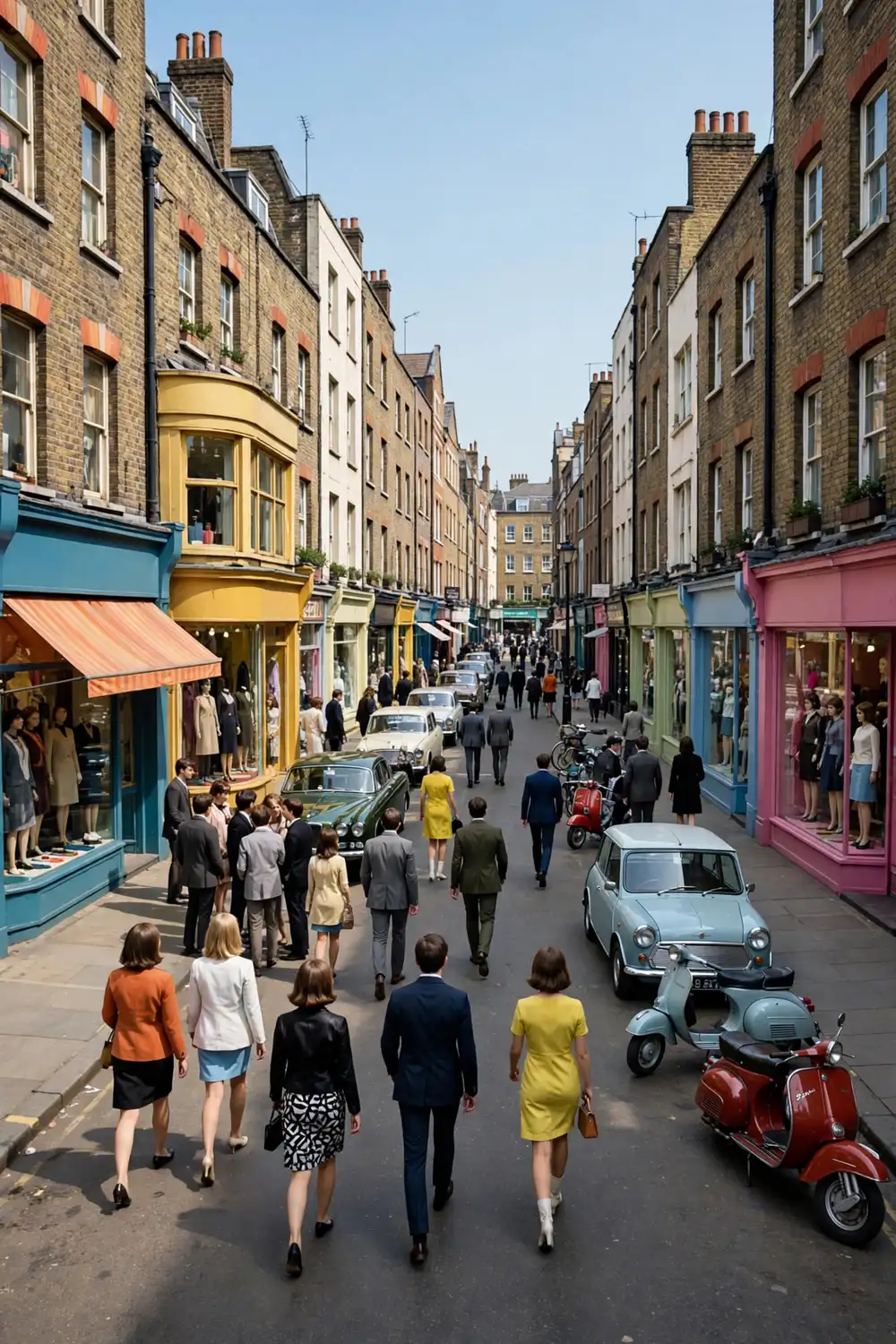
Carnaby Street was laid out in the 1680s and named after Karnaby House, the first house built on the street. Its early centuries were unglamorous: in the 17th century a plague pesthouse stood here, and by the early 18th century the area was best known as Carnaby Market, a market for meat, fish and vegetables. A century later, in his novel Sybil (1845), Benjamin Disraeli mentioned a famous carcase-butcher of Carnaby Market — a far cry from the fashion fame to come.
Through the first half of the 20th century, Carnaby was a quiet street of tailors’ workshops on the western edge of Soho, making suits for nearby Savile Row. The change began in 1954, when Bill Green opened his boutique Vince on Newburgh Street, selling bold, unconventional clothes. His assistant, John Stephen, soon opened His Clothes on Beak Street, then moved to Carnaby Street itself — and became known as the King of Carnaby Street. By 1964, Carnaby Street was the epicentre of the mod movement: sharp suits, miniskirts, bright colours and music, all in one short street.
Designers Mary Quant and Marion Foale had boutiques here, and the street drew The Beatles, The Rolling Stones, The Who, Small Faces, Jimi Hendrix and David Bowie, who came to shop, to be seen, and to soak up the scene. The legendary Marquee Club, just round the corner in Wardour Street, added live music to the mix. In April 1966, Time magazine put Swinging London on its cover, and Carnaby Street became shorthand for the whole era — its street sign was, for a time, said to be the most popular postcard in London.
The fame had a downside: by the 1970s the street had filled with overpriced, low-quality souvenir shops, and the cool crowd moved on. In October 1973 the Greater London Council pedestrianised Carnaby Street, restricting vehicle access between 11am and 8pm, and pedestrian numbers rose sharply. In recent decades the quarter has been rebuilt as a proper shopping destination again — still fashionable, still independent-minded in its side streets, and still trading on that extraordinary 1960s story. Two Westminster green plaques mark the history today: one at 1 Carnaby Street for John Stephen, and one at 52/55 Carnaby Street for the mod pop group the Small Faces.
What to See on Carnaby Street Itself
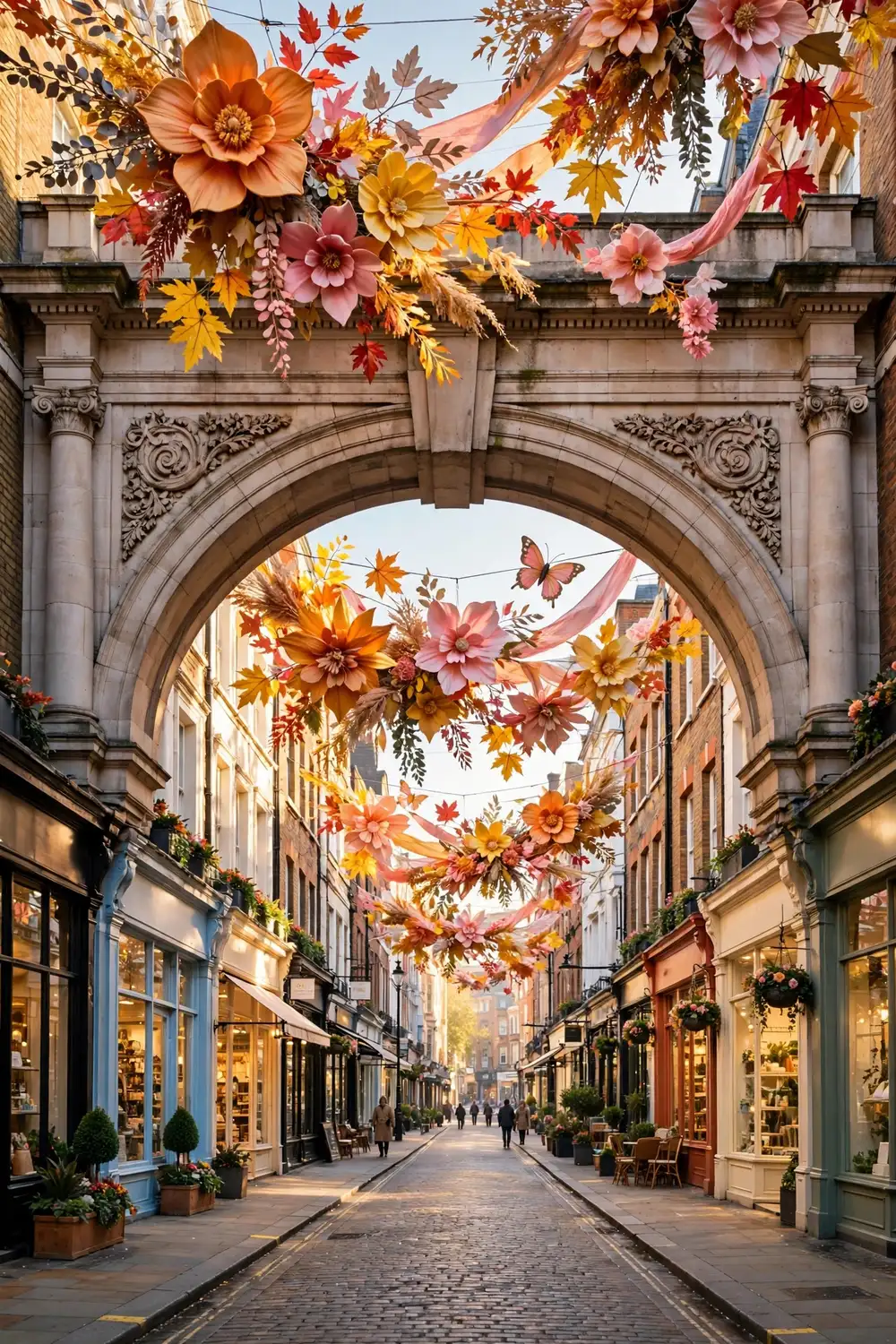
Start at the famous Carnaby Street arch, the “Carnaby Street Welcomes the World” sign that has greeted visitors since the street was pedestrianised. It is the classic photo spot — go early in the morning if you want it without a crowd. Then look up: Carnaby is famous for its giant overhead installations, which change with the seasons. At Christmas the street is one of London’s best lights displays, with a new themed installation each year (for 2026, “Press Play on Christmas”, inspired by the 1990s, with tens of thousands of energy-efficient LEDs); in summer, expect colour, bunting and art overhead.
Halfway down the street, look for the Spirit of Soho mural, a much-photographed piece of street art that celebrates the area’s characters. And keep an eye out for the green plaques and the shopfronts that still nod to the 1960s: the Rolling Stones’ flagship store, RS No. 9 Carnaby, is a pilgrimage stop for music fans, and Sherry’s on Broadwick Street is one of the last surviving signs of Swinging London culture.
The best way to see Carnaby Street is simply to walk it slowly, twice: once down the main street, and once back through the side streets. The main street holds the big names; the side streets — Newburgh Street, Ganton Street, Foubert’s Place — hold the independents, the barbers, the small galleries and the cafés that give the quarter its character.
Shopping in Carnaby Street: The Best Shops
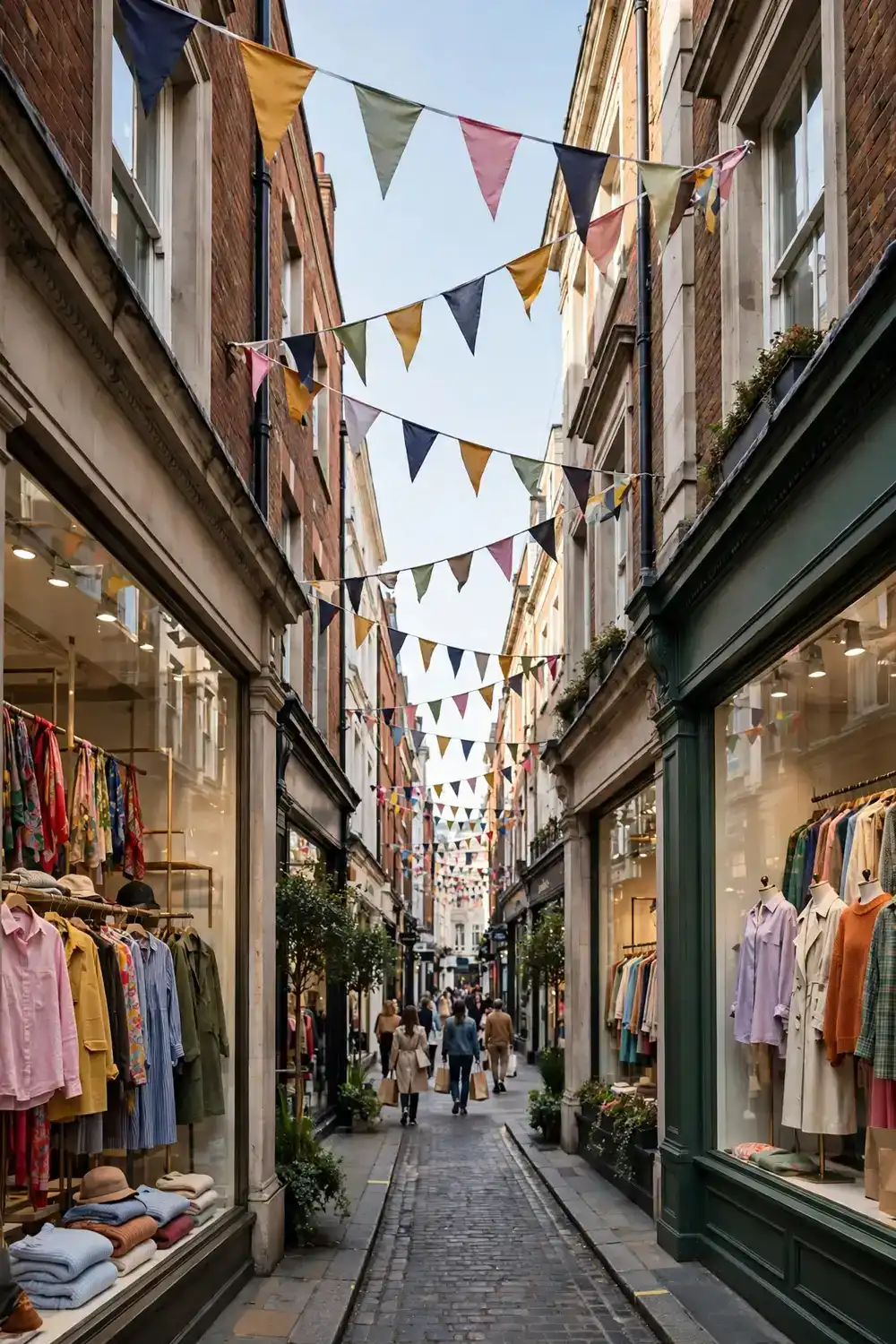
Across the Carnaby quarter there are well over 100 shops, from global flagships to small independents, covering fashion, beauty, gifts and homeware. On the main street you will find well-known names such as Dr. Martens, Levi’s, Barbour, Paul Smith, Ganni, Monki, Brandy Melville and Toast, alongside beauty and lifestyle stores such as Cowshed and Muji’s Japanese goods. Liberty London, the famous Tudor-revival department store built from the timbers of two ships, stands at the northern end of the street on Great Marlborough Street — go for the building alone, then browse its fabric, beauty and gift floors.
For something you will not find everywhere, head to the side streets. Newburgh Street and its neighbours are where independent designers, vintage shops and specialist stores cluster — this is the part of Carnaby that still feels closest to its 1960s boutique spirit. Foubert’s Place and Ganton Street are good for smaller labels and one-off finds, while Kingly Street, to the west, leans more towards food, bars and entertainment in the evening.
A practical shopping tip: Carnaby rewards browsers, not bargain hunters. Prices are central-London prices, and the real finds are the independent pieces and the limited-edition collaborations, not discounts. If you are on a budget, enjoy the window-shopping, the street itself and a coffee in Kingly Court, and save the big purchases for a store you have deliberately sought out.
Where to Eat and Drink: Kingly Court and Beyond
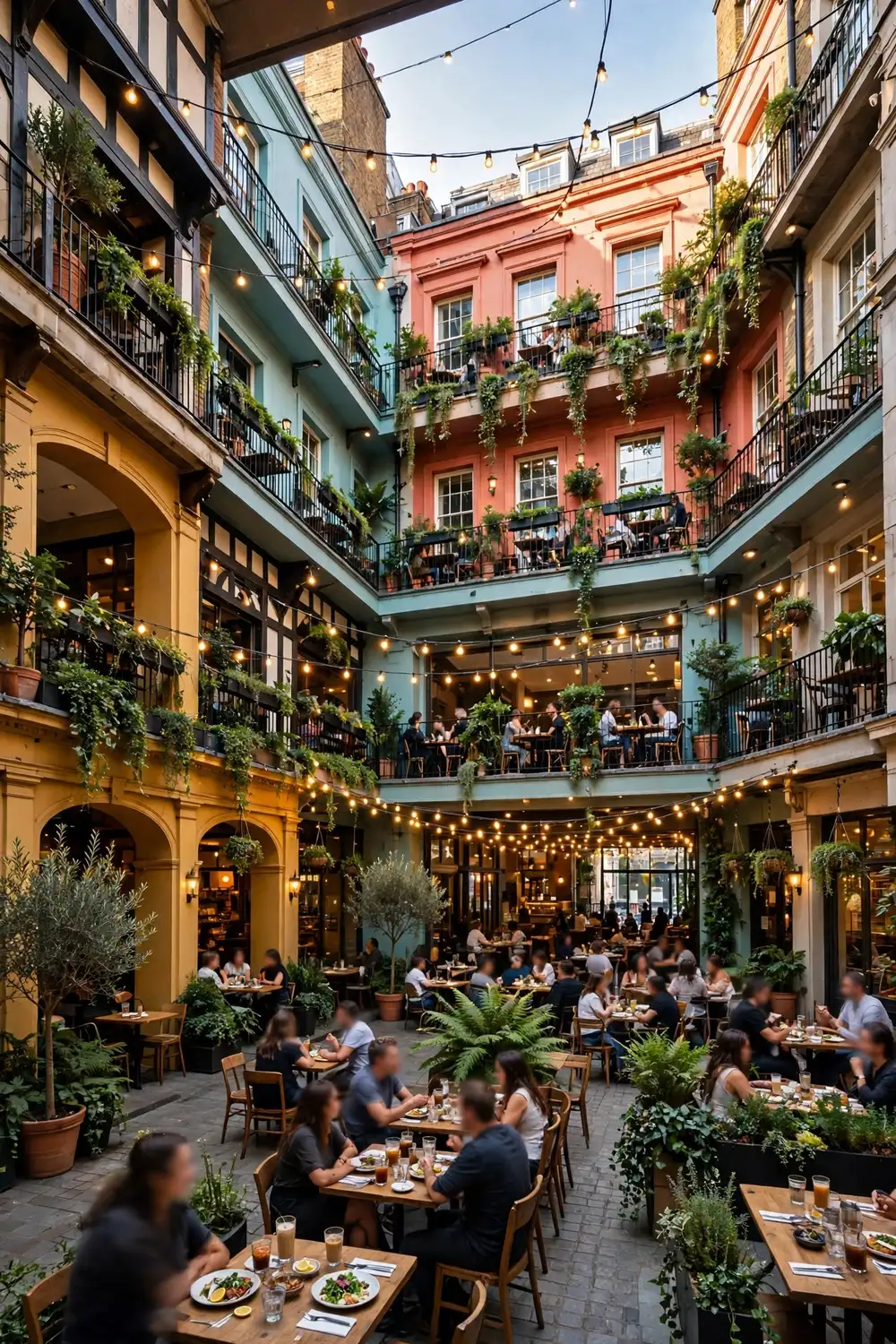
Kingly Court, just off Carnaby Street, is the quarter’s food hub: a three-storey courtyard of restaurants, cafés and bars arranged around an open-air courtyard, with everything from street food to sit-down dinners. It is the easiest lunch stop in the area — no booking needed for most places at lunchtime on weekdays, though weekends and evenings get busy, so book ahead for dinner if you have your heart set on a particular restaurant.
Around the quarter, the choice is wide. For a fun, informal lunch, try Le Bab in Kingly Court for gourmet kebabs, or Mother Mash on Ganton Street for British comfort food — pick a pie, pick a mash, pick a gravy. For something more special, Nopi on Warwick Street serves Ottolenghi-style Mediterranean sharing plates, and Sticks’n’Sushi on Beak Street does Japanese sushi and yakitori. Masala Zone on Marshall Street is a long-running Soho favourite for Indian street food and thalis. And for a drink, the area’s pubs and cocktail bars — including the long-running blues bar Ain’t Nothin’ But The Blues Bar on Kingly Street — keep the quarter lively well after the shops close.
One local tip: if you are visiting at Christmas, book an early dinner in Kingly Court (around 5pm), see the lights while the after-work crowds are still thin, and then wander the lit side streets after your meal. It is the most relaxed way to enjoy Carnaby at its most festive.
How to Get to Carnaby Street
Getting to Carnaby Street is simple. The nearest Tube station is Oxford Circus, served by the Central, Bakerloo and Victoria lines: leave by the Regent Street exit, walk south down Regent Street for a few minutes, and turn left into Great Marlborough Street or Foubert’s Place — Carnaby Street is right there. Piccadilly Circus, on the Bakerloo and Piccadilly lines, is about a ten-minute walk south via Regent Street and Shaftesbury Avenue. Tottenham Court Road, on the Central and Elizabeth lines, is also within walking distance to the east.
From Heathrow, take the Elizabeth line to Tottenham Court Road and walk west, or to Bond Street and walk south. From King’s Cross St Pancras, take the Victoria line to Oxford Circus. Buses run along Oxford Street and Regent Street, and the whole quarter is walkable from Soho, Mayfair and Covent Garden — from Covent Garden it is a pleasant 15–20 minute walk through Soho.
Carnaby Street is step-free at street level once you are there, since it is pedestrianised and flat, but check step-free access at your chosen Tube station before travelling — Oxford Circus and Piccadilly Circus both have step-free routes, but they can be busy, and station layouts change with works.
Pairing Carnaby Street with Soho, Regent Street and Sky Garden
Carnaby Street makes a perfect half-day, and it pairs naturally with the streets around it. Start on Regent Street for its grand shops and the famous angels at Christmas, dip into Liberty, then spend an hour or two in Carnaby and Kingly Court. Afterwards, wander south into Soho proper — Old Compton Street, Brewer Street and Greek Street for cafés, theatres and nightlife — or north to Oxford Street if you still have shopping energy. If you want a quieter, village-like contrast after Carnaby’s buzz, Marylebone, with its high street, bookshops and farmers’ market, is a short walk north-west.
For the day’s grand finish, pair Carnaby with Sky Garden, London’s highest public garden: take the Central line from Oxford Circus to Bank, or the Bakerloo line from Oxford Circus to Charing Cross and change, then walk to 20 Fenchurch Street — allow around 35–45 minutes. Sky Garden is free to enter but needs a timed ticket booked in advance, so book before you leave home. The contrast is the point: Carnaby at street level, all colour and crowds, and then the calm, glassy garden 35 floors above the City. If one free viewpoint is not enough, our guide to the best free views of London rounds up the rest.
A Half-Day Carnaby Street Itinerary
Morning: Arrive at Oxford Circus, walk down Regent Street to Liberty, then enter Carnaby Street from the north end. Photograph the arch, browse the main street’s flagships, and hunt out the green plaques and the Spirit of Soho mural.
Midday: Explore the side streets — Newburgh Street, Ganton Street and Foubert’s Place — for independents, then lunch in Kingly Court. Allow time to sit: the courtyard is made for lingering.
Afternoon: Wander south into Soho, or north to Marylebone for a calmer second act. If you have booked Sky Garden, head east in the late afternoon for a sunset slot above the City.
Evening: Back in Carnaby for dinner and drinks on Kingly Street — or, at Christmas, for the lights after dark, when the whole quarter glows.
Practical Tips for Visiting Carnaby Street
Best time to visit: Weekday mornings are quietest for shopping and photos; late afternoon is best for atmosphere and lights. At Christmas, weeknights are noticeably calmer than weekend evenings.
How long do you need? Two to three hours covers the main street, the side streets and lunch in Kingly Court. A full half-day lets you add Regent Street, Liberty and a wander through Soho.
Is Carnaby Street free? Yes — walking the street costs nothing. You only pay for what you buy, eat or drink, and the street’s displays and installations are free to enjoy.
With children: Carnaby is one of the easier central-London streets with children: car-free, compact, and full of colour. Keep them close at Christmas and on Saturday afternoons, when it gets crowded.
Check before you go: Shops, restaurants and seasonal displays change, so check hours and Christmas-light dates on the official Carnaby website before your visit rather than relying on any single guide, including this one.
Frequently Asked Questions About Carnaby Street
What is Carnaby Street famous for?
Carnaby Street is famous as the centre of Swinging London in the 1960s, when its mod boutiques, designers such as Mary Quant and John Stephen, and visitors such as The Beatles and The Rolling Stones made it a global symbol of youth fashion. Today it is still one of London’s best-known shopping streets, pedestrianised and packed with more than 100 shops.
Where is Carnaby Street and which Tube station is nearest?
Carnaby Street is in Soho, just south of Oxford Street and west of Regent Street. The nearest Tube station is Oxford Circus, a few minutes’ walk north; Piccadilly Circus is about ten minutes south. Both are easy walks on flat, pedestrian-friendly streets.
Is Carnaby Street free to visit?
Yes. Carnaby Street is a public, pedestrianised shopping street, so walking it, photographing the arch and enjoying the seasonal displays costs nothing. You only pay for shopping, food and drink.
What is Kingly Court?
Kingly Court is a three-storey food courtyard just off Carnaby Street, with restaurants, cafés and bars arranged around an open courtyard. It is the quarter’s main lunch and dinner stop, with options from street food to sit-down restaurants, and it gets busy at weekends and in the evening.
When are the Carnaby Street Christmas lights on?
Carnaby Street puts up a new themed Christmas lights installation each year, usually switching on in early November and running through the festive season. The 2026 display, “Press Play on Christmas”, switched on in early November 2026. Check the official Carnaby website for the current year’s dates, as they change annually.
How do I get from Carnaby Street to Sky Garden?
Take the Central line from Oxford Circus to Bank, then walk south to 20 Fenchurch Street — or take the Bakerloo line towards the City and change as needed — allowing around 35–45 minutes in total. Sky Garden is free but requires a timed ticket booked in advance, so book before you travel.