There is a corner in almost every British garden that defeats most plants: the strip along the north-facing fence, the dry ground under a tree, the shady side of the house where the sun barely reaches. Heuchera was made for exactly those places. Better known as coral bells, this compact perennial keeps its colour all year, flowers on slender wands in summer, and asks for remarkably little in return — provided you plant it at the right depth and give it soil that drains. This guide covers everything that matters for UK gardens: which heuchera varieties to choose, where and when to plant them, and the handful of care jobs that keep them looking their best for years.
What Is Heuchera?
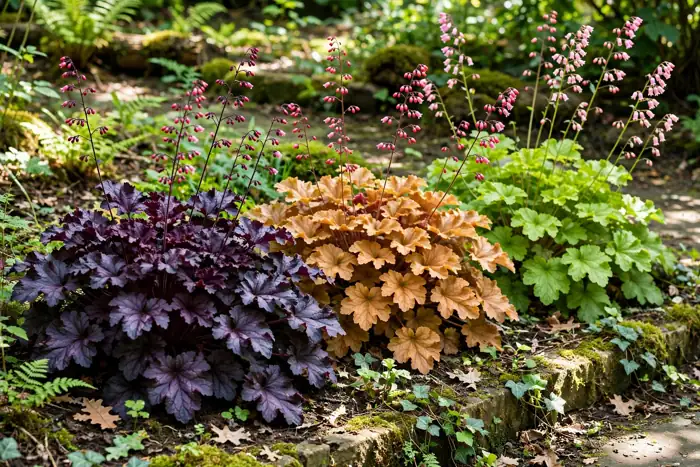
Heuchera, commonly called coral bells or alumroot, is a genus of evergreen to semi-evergreen perennials native to North America. Garden varieties are mostly hybrids, bred from species such as Heuchera villosa, Heuchera micrantha, Heuchera sanguinea and Heuchera americana. What sets them apart is their foliage colours: ruffled, often veined leaves in a range no other shade plant can match — near-black purple, deep burgundy, caramel, amber, bright lime and silvery green, sometimes all on the same plant as the seasons change.
Most heucheras form neat, self-contained mounds around 30 to 45 cm high and wide, with flower stems rising above the leaves in late spring and summer. The flowers themselves are small and bell-shaped, usually pink, red or white, and they are a genuine draw for bees. But be honest about why gardeners buy them: it is the leaves. A heuchera in a dull corner gives you colour in January, when most other perennials have disappeared underground.
The Best Heuchera Varieties for UK Gardens
With hundreds of named cultivars available, it helps to start with proven performers rather than the prettiest picture on the label. These are all widely grown in the UK and hardy in most of the country (RHS hardiness roughly H5 to H6, meaning they cope with winters down to about −15°C to −20°C once established).
Dark-leaved varieties
‘Palace Purple’ is the classic: deep reddish-purple leaves and cream flowers, tough and reliable. ‘Obsidian’ and ‘Blackout’ go darker still, with near-black foliage that makes pale flowers and silver plants beside them glow. Dark-leaved heucheras are also the most sun-tolerant of the family, and their colour often deepens in a sunnier spot.
Bright and warm varieties
‘Lime Marmalade’ is a zingy lime-gold that lights up deep shade like nothing else, while ‘Caramel’ offers warm amber-peach tones that shift with the season. ‘Electra’ combines lime-yellow leaves with red veining for a two-tone effect. These paler leaves scorch more easily, so they belong in shade or dappled light, never in hot afternoon sun.
Patterned and silver varieties
‘Plum Pudding’ has silvery-plum leaves with darker veining, and ‘Green Spice’ pairs silver-veined green leaves with an elegant, almost metallic sheen. ‘Fire Alarm’ brings red flowers on tall stems above bronze-red foliage. If you want a tapestry effect, plant three to five of one variety together, or mix two contrasting colours — dark purple beside lime is the combination that stops visitors in their tracks.
Where to Plant Heuchera
Light is the first decision, and the rule is simple: partial or dappled shade suits most heucheras best. Morning sun with afternoon shade is ideal. Dark-leaved cultivars cope with more sun; pale lime and caramel types need protection from strong midday sun or their leaves will bleach and scorch at the edges.
Heucheras are also one of the few genuinely useful plants for dry shade — the ground under trees or beside a wall where the soil is thin and rain rarely reaches. Once established they tolerate drier conditions better than hostas or ferns, though they will always look lusher with some moisture. They also work well at the front of borders, where their compact mounds edge a path without flopping, and in large containers, where you can control the soil exactly. In shady areas under trees or beside a wall, they are one of the few plants that keep their colour through winter.
Soil and drainage
Soil matters more than feeding or pruning. Heucheras need fertile, well-drained soil enriched with compost, with a neutral to slightly acidic pH. What they cannot stand is soil that stays soggy in winter: wet feet rot the crown, and crown rot is the single most common reason heucheras die in UK gardens. If your soil is heavy clay that holds water, plant heucheras in raised beds or containers, or dig in plenty of grit and compost to open the structure up. A site that is moist but never waterlogged is the sweet spot.
When to Plant Heuchera
Spring and autumn are the best times to plant heuchera, when the ground is moist and warm enough for roots to settle before the extremes of summer or winter. Container-grown plants, which is how heucheras are almost always sold, can technically go in at any time of year as long as the ground is not frozen or parched — but a spring or autumn planting gives them the easiest start. If you do plant in summer, water thoroughly and regularly until the plant is established, because a new heuchera in dry soil will sulk quickly.
How to Plant Heuchera, Step by Step
Planting heuchera correctly takes ten minutes and prevents most later problems. Dig a hole slightly larger than the root ball, and mix compost into the backfill. Set the plant at exactly the same depth it was growing in its pot, or a fraction higher — never bury the crown (the centre where the leaves meet the roots). A buried crown stays damp and rots, and this one mistake accounts for more heuchera losses than frost or pests combined.
Space plants about 30 cm apart for a drift that will knit together within a couple of seasons, firm the soil gently, and water well. Finish with a mulch of compost or leaf mould around — not over — the crown. Mulch keeps the roots cool and moist, suppresses weeds, and feeds the soil as it breaks down. In containers, use a loam-based compost mixed with grit for drainage, and make sure the pot has generous drainage holes.
Heuchera Care: Watering, Feeding and Mulching
Established heucheras are low-maintenance, but a little routine care keeps the foliage dense and colourful. Water during dry spells, especially in the first growing season and for plants in containers, which dry out far faster than plants in the ground. Once established in a border, heucheras are relatively drought-tolerant, but they reward consistent moisture with lusher growth.
Feed lightly: a balanced liquid feed or a top-dressing of compost in spring, when new leaves appear, is usually enough, with a second feed in late summer if growth looks tired. Avoid heavy nitrogen feeds, which produce soft, floppy growth. Re-mulch each spring after tidying, keeping mulch clear of the crown, and you have covered almost everything a heuchera needs.
How to Prune and Tidy Heuchera
Heucheras need very little pruning. The main annual job is a spring tidy: snip off any dead, tatty or winter-damaged leaves from around the base to let the fresh growth through. If the flower stems look spent after flowering, cut them back to the base — this keeps the plant looking neat and stops it wasting energy on seed. If the leaves die back completely in a hard winter, simply pull or cut away the dead foliage in spring; the crown will usually regrow.
Every three to four years, older plants develop a woody centre while the vigorous growth moves to the outside of the clump. When that happens, lift the whole plant in late spring, divide it into smaller sections with roots attached, and replant the vigorous outer pieces. Division rejuvenates the plant and gives you free plants for another corner of the garden — the cheapest way to extend a heuchera collection.
Growing Heuchera in Pots and Containers
Heucheras are excellent container plants, and pots solve the drainage problem that troubles them in heavy soil. Choose a pot at least 25 to 30 cm across, use loam-based compost with added grit, and plant at crown level as you would in the ground. Water containers more often than borders, especially in summer, and feed a few times during the growing season. A single heuchera in a pot by a shady doorway gives year-round colour with almost no effort, and a group of three contrasting varieties in a large trough makes a display that changes with the seasons.
Heuchera Companions: What to Plant Alongside
Heucheras shine as foliage plants in mixed planting, where their year-round foliage anchors plants that come and go. Good companions for partial shade include ferns, hostas and tiarellas (foamflowers) — the latter are so closely related that they have been crossed with heuchera to produce heucherellas, which tolerate even more shade. For a border that works through the year, pair heucheras with spring bulbs, summer-flowering agapanthus in the sunnier spots, and evergreen shrubs behind them. If you are planning the layout, our guide to creating stunning garden borders covers how to layer heights and colours so a border looks intentional rather than accidental.
Common Heuchera Problems — and How to Fix Them
Crown rot
The most serious problem, caused by waterlogged soil or a buried crown. Prevention is everything: plant high, drain well, and never mulch over the centre. A plant with a soft, collapsing crown rarely recovers, so replace it and fix the drainage before replanting in the same spot.
Vine weevil
Vine weevil grubs eat roots, and container-grown heucheras are a favourite target. A plant that suddenly wilts or lifts easily from its pot may have grubs at the roots. Check pots in autumn, remove any creamy, C-shaped grubs by hand, and consider biological control (nematodes) for valuable collections.
Scorched leaves and mildew
Scorched, bleached leaf edges usually mean too much sun for a pale variety — move it to shade or swap it for a dark-leaved type. Powdery mildew can appear in dry, humid conditions; improve air circulation, water at the base rather than overhead, and remove affected leaves. Slugs and snails may nibble leaves but rarely devastate heucheras the way they do hostas.
Heuchera Through the Seasons
One of heuchera’s greatest strengths is that it never really leaves the stage. In early spring, fresh leaves unfurl and the spring tidy reveals new growth. In late spring and summer, airy flower wands rise above the foliage and attract bees. Autumn deepens many leaf colours, and winter is when heucheras earn their keep: while herbaceous perennials vanish, heuchera mounds hold colour through December and January in mild areas. As autumn arrives, it is worth folding heuchera into your wider seasonal routine — our guide to how to winterize your garden covers the jobs, including mulching and tidying, that set shade plants up for a strong spring.
Frequently Asked Questions
Do heucheras like shade or sun?
Most heucheras prefer partial or dappled shade, with morning sun and afternoon shade ideal. Dark-leaved varieties tolerate more sun and often colour better in it, while pale lime and caramel varieties need shade to avoid scorch. Very few heucheras enjoy hot, all-day sun.
Are heucheras evergreen?
Heucheras are evergreen to semi-evergreen, depending on variety and winter severity. In mild UK winters most keep their leaves all year; in colder areas or after a hard frost they may lose some foliage but regrow from the crown in spring.
How often should I water heuchera?
Water new plants regularly until established, and water containers whenever the top few centimetres of compost feel dry. Established plants in the ground need watering mainly in dry spells; the soil should be moist but well-drained, never waterlogged.
Do heucheras spread?
Heucheras do not spread aggressively. They form compact mounds and expand slowly, so the best way to get coverage is to plant several together, about 30 cm apart, rather than waiting for one plant to fill a space.
When should I divide heuchera?
Divide every three to four years in late spring, when the centre becomes woody and growth moves to the edges of the clump. Lift the plant, split it into sections with roots, and replant the vigorous outer pieces at crown level.