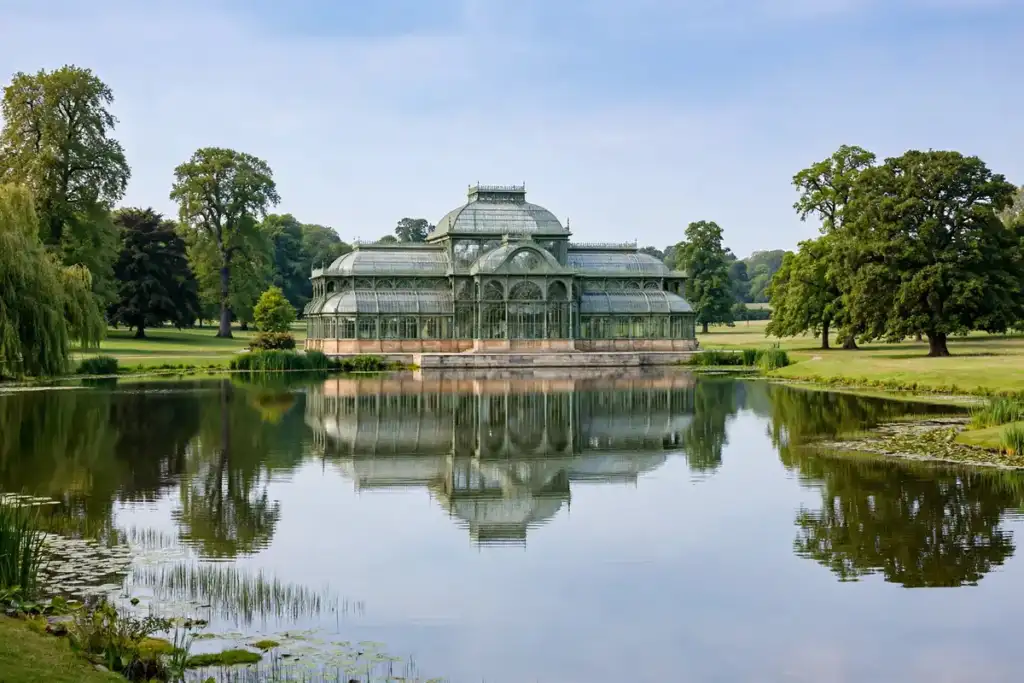
There are gardens you stroll through, and then there is Kew. Spread across a vast sweep of south-west London, the Royal Botanic Gardens, Kew is a UNESCO World Heritage site, a working scientific institution and, quite simply, one of the most rewarding days out in the capital. It is often described as the largest botanical garden on earth, and once you have spent a few hours wandering between its glasshouses, lakes, woodland and historic buildings, that claim feels entirely believable. This guide explains what to see, how to plan your time, and which corners are worth seeking out first.
What Makes Kew Gardens So Special
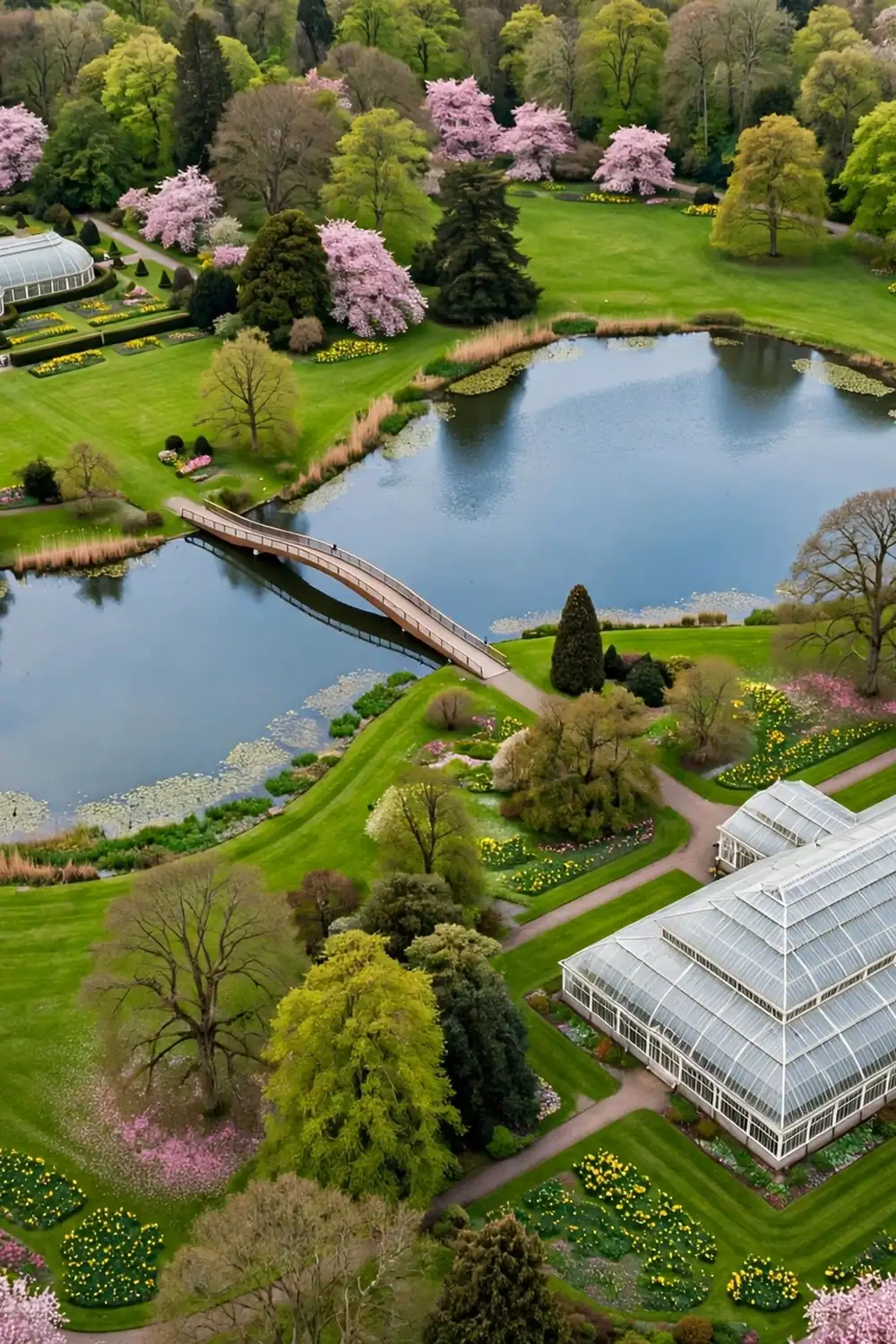
Kew is not a single garden in the usual sense. It is a landscape of many gardens, gathered together over more than two centuries. Formal lawns and ornamental lakes sit beside wilder woodland, while ornate Victorian glasshouses shelter plants from rainforests, deserts and temperate regions around the world. Small follies and temples appear unexpectedly along the paths, as if the landscape were designed to reward curiosity — which, in many ways, it was.
What sets Kew apart from an ordinary park is the science behind the beauty. Behind the scenes, researchers study plant diversity, conservation and the threats facing species across the globe, and much of that work is reflected in what visitors see: collections of rare and endangered plants, carefully labelled displays, and glasshouses arranged by climate and geography rather than by colour alone. You do not need any botanical knowledge to enjoy Kew, but knowing that the planting has a purpose adds a quiet depth to every walk.
Scale matters here, too. Kew is far too large to rush. Visitors who allow a full day, or at least a long half-day, tend to enjoy it most, because the pleasure lies as much in the spaces between the headline sights — a shaded path, a sudden view across the lake, a bench beneath a flowering tree — as in the sights themselves. If you are weighing up a day away from central London, our guide to the best day trips from London puts Kew in context alongside other easy escapes from the city.
Planning Your Visit to Kew Gardens
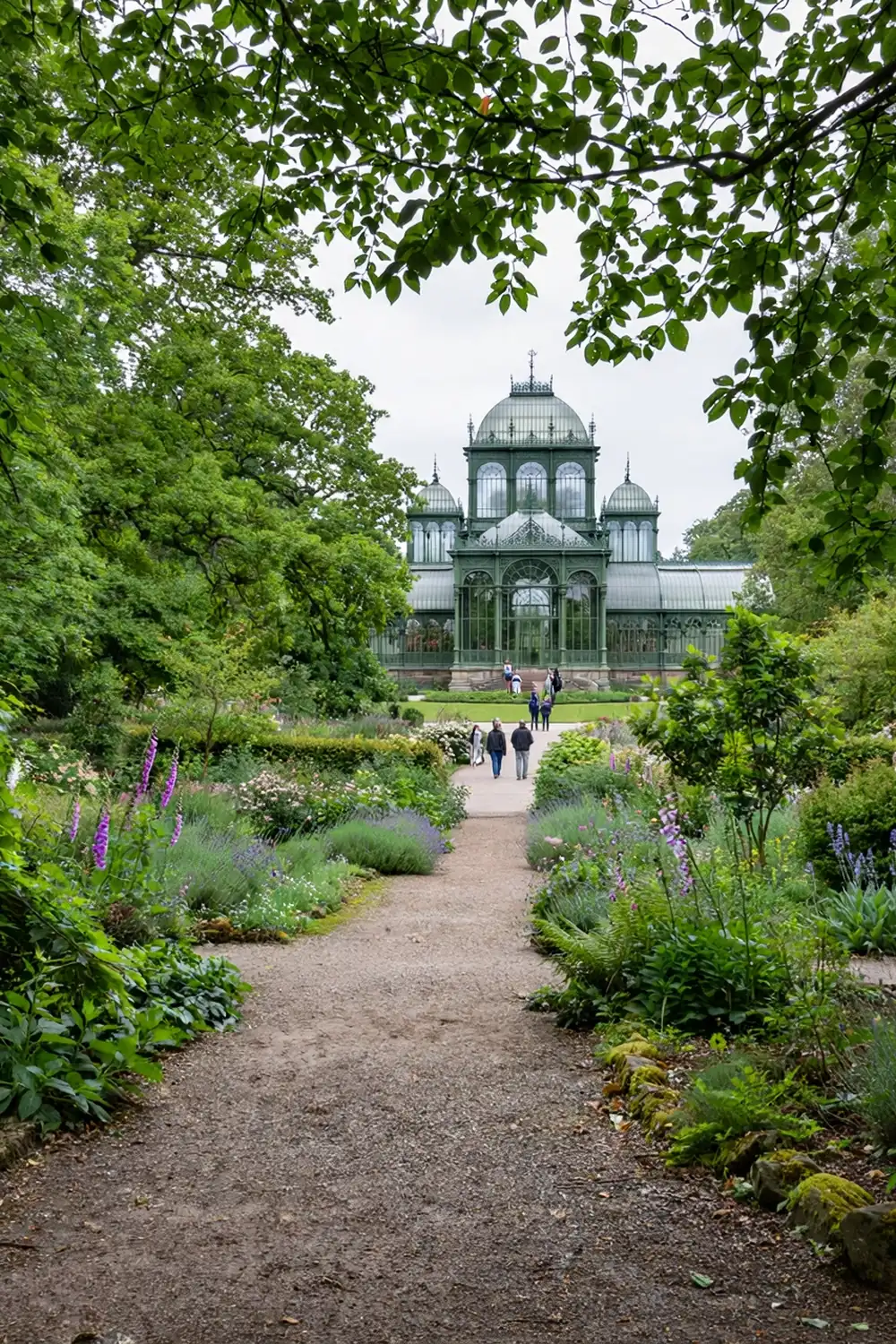
Kew Gardens station is around a ten-minute walk from the gardens, which makes arrival straightforward by public transport, and the grounds are well signed once you are inside. Picking up a map at the entrance is a sensible first step, not because the paths are confusing, but because the site is so large that a little planning helps you group nearby sights together and avoid retracing your steps.
Comfortable shoes are essential, and a picnic is a popular choice on fine days, with benches and open lawns offering plenty of places to pause. There are places to eat and drink within the gardens as well, so you can mix a packed lunch with a café stop if you prefer. Admission charges apply, and opening times, ticket options and any short-notice closures can change, so always check the official site before you travel rather than relying on older information. Some individual attractions within the grounds may have their own arrangements, and seasonal events can affect opening hours.
Families, plant lovers, photographers and first-time visitors all tend to find their own version of Kew. Children often love the treetop walkway and the sheer sense of exploration, while gardeners will linger over plant labels and planting combinations. If you enjoy growing plants at home, you may also enjoy our guide to heuchera, a colourful and shade-tolerant plant that suits many British gardens.
The Great Glasshouses of Kew
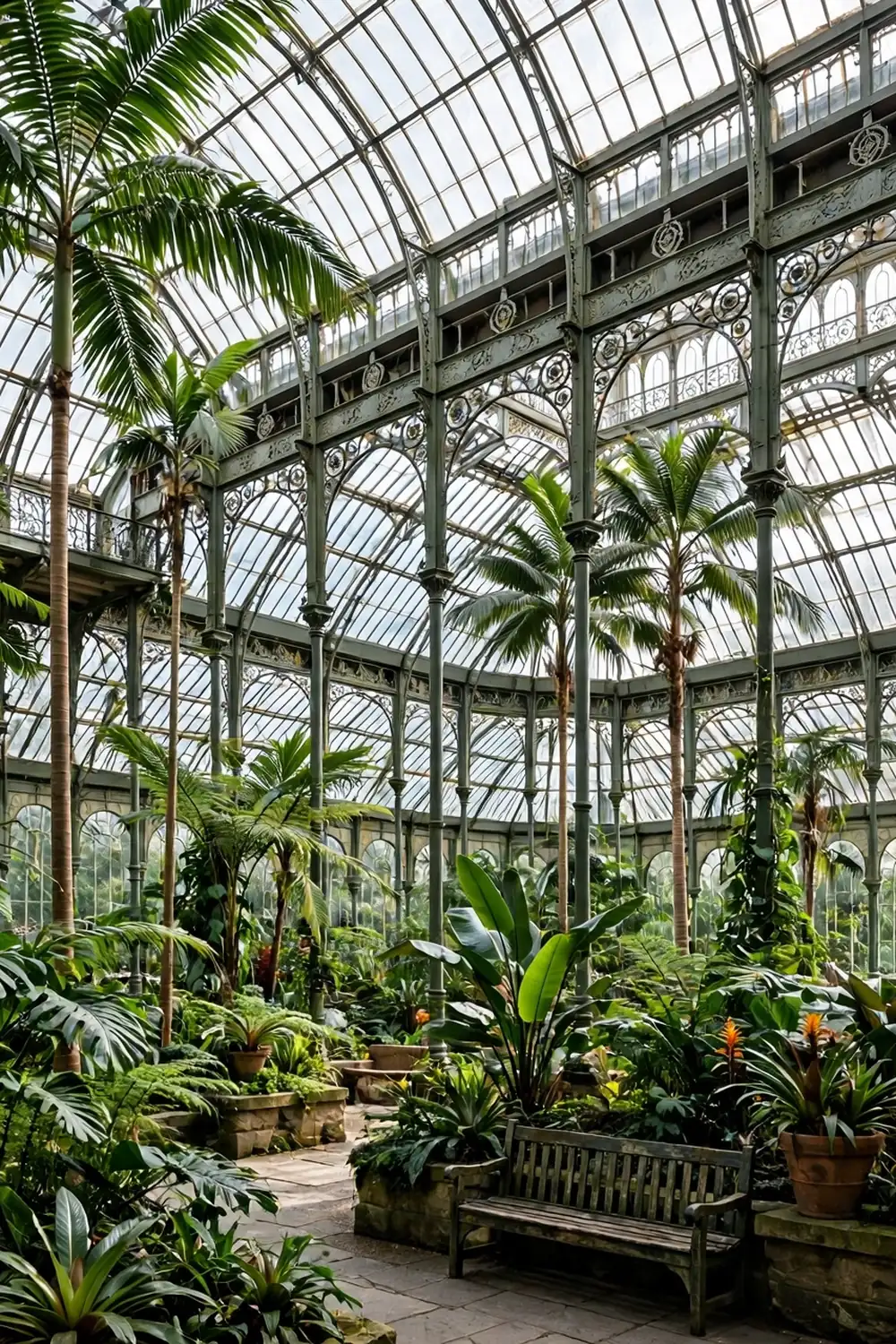
The glasshouses are the heart of a Kew visit, and they are best explored slowly. Each one creates its own world, with its own temperature, scent and light, and stepping from a cool temperate house into a humid tropical one is one of the great small pleasures of the day.
The Palm House
Dating from 1848, the Palm House is one of Kew’s most recognisable buildings: a sweeping curve of glass and ironwork reflected in the lake before it. Inside, it feels like a tropical forest, with towering palms and lush underplanting rising towards the glass roof. Many of the species grown here come from threatened environments around the world, and some are extinct in the wild, surviving only in cultivation in places such as Kew. That conservation role is easy to forget amid the beauty of the planting, but it is central to why the Palm House exists. Climb to the upper walkway if you can, for a different view down through the canopy.
The Temperate House
The Temperate House holds the distinction of being the oldest surviving Victorian glasshouse in the world, and it is immense. It is home to more than ten thousand plants, representing around fifteen hundred species, many of them rare, endangered or extinct in their natural habitats. Plants from distant places such as St Helena and Pitcairn Island grow here alongside species from temperate regions across the globe.
The building itself was restored between 2013 and 2018, a project that involved replacing more than ten thousand individual panes of glass. The result is a light, soaring interior, with a central water feature and upper walkways that let you look down over the planting and appreciate the sheer scale of the collection. Even on a busy day, there is usually a quiet corner here where you can stand among plants that, in the wild, might be clinging to survival on a single remote island.
The Princess of Wales Conservatory and the Water Lily House
The Princess of Wales Conservatory, created in the 1980s, takes a different approach. Much of the building sits below ground level to conserve energy, and inside it holds ten distinct, computer-controlled climate zones, each recreating the conditions of a different part of the world. One zone is devoted to carnivorous plants, always a favourite with younger visitors, while others move from dry desert landscapes to humid tropical planting. It is a good reminder that Kew’s work extends well beyond display: species new to science have been discovered through research connected with the gardens.
Nearby, the Water Lily House, built in 1852, is a smaller and more intimate glasshouse devoted to water lilies, including varieties named for Queen Victoria. The best time to see the lilies in flower is generally from July to October, when the pools are at their most spectacular, although earlier in the season you may catch the first blooms opening. On a warm summer day, the combination of still water, broad leaves and delicate flowers makes this one of the most peaceful rooms at Kew.
Gardens, Follies and Views
Outside the glasshouses, Kew rewards wandering. The grounds contain around twenty follies and ornamental structures, and stumbling upon them is part of the charm. Some are grand and instantly recognisable; others are modest and half-hidden by trees, waiting to be discovered.
The Great Pagoda and the Japanese Landscape
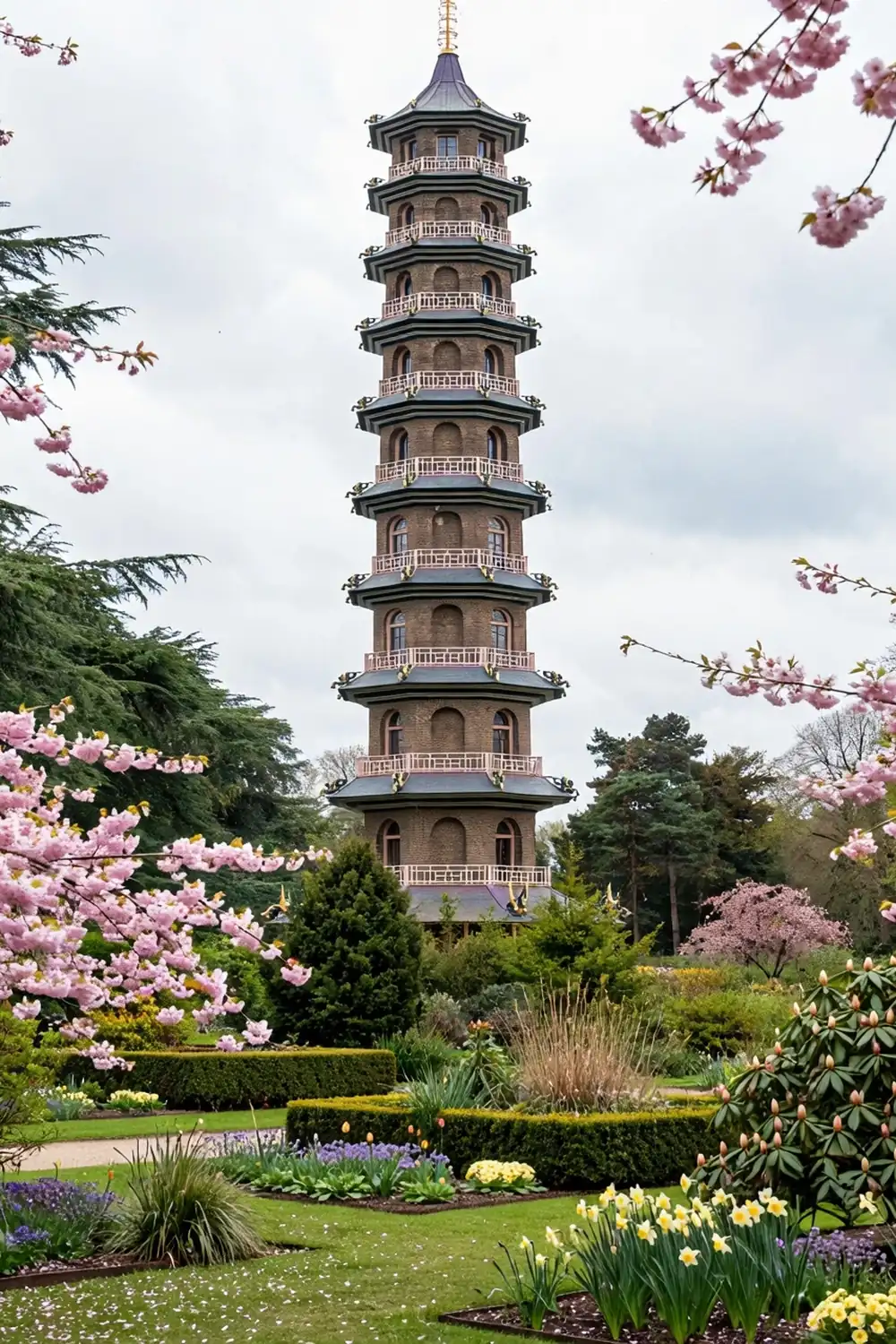
The Great Pagoda, designed by William Chambers in 1762, rises ten storeys to a height of almost fifty metres, with two hundred and fifty-three steps to the top and eighty ornate dragons crowning its octagonal roofs. It is an unmistakable landmark, visible above the trees from many parts of the gardens, and climbing it offers a fine panorama over the surrounding landscape when it is open.
Close to the pagoda lies the Japanese landscape, with its gateway and carefully composed planting. In spring, cherry blossom softens the view towards the pagoda and turns this corner of Kew into one of its most photographed scenes. It is worth slowing down here: the Japanese landscape is designed to be appreciated gradually, as a sequence of views rather than a single postcard image.
The Temple of Bellona and Queen Charlotte’s Cottage
The Temple of Bellona, dating from the late eighteenth century, is one of Kew’s more surprising structures. Despite its solid stone appearance, it is in fact made of wood, and it is dedicated to Bellona, the Roman goddess of war. It stands beside a lake, and its classical columns reflected in still water make it a favourite subject for photographers.
Queen Charlotte’s Cottage, built around 1771, offers a very different mood. It was a favourite retreat of King George III’s family, a countryside escape within the grounds where they could enjoy woodland walks, pictures and quiet relaxation away from court life. The cottage and its surrounding woodland still carry that sense of retreat today, and the walk out to it is one of the loveliest at Kew, especially when the surrounding trees are in leaf.
The Treetop Walkway and the Arboretum
The treetop walkway, opened in 2008, rises eighteen metres above the ground and winds through the canopy of the arboretum. From the walkway, you see the trees as birds see them: branches, leaves and sky, with views opening out across the gardens. Visitors who dislike heights may find it a little unnerving, but for most people it is a highlight, and it gives a vivid sense of the scale and structure of Kew’s tree collection.
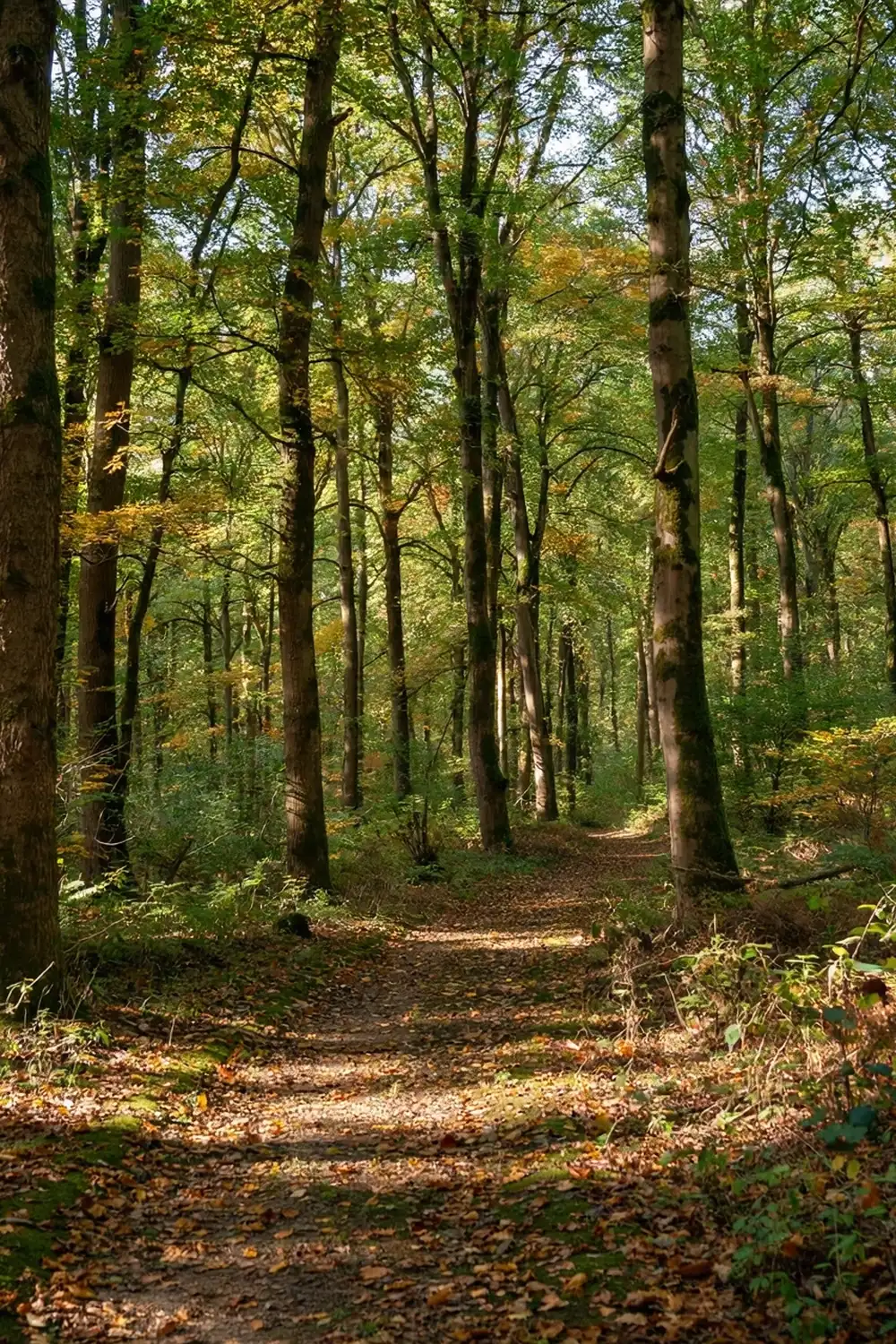
Below, the arboretum itself is a landscape of mature trees from around the world, changing dramatically with the seasons. In spring it is fresh and light-filled; in autumn it becomes a tapestry of gold, red and copper. Allow time simply to walk here without a destination in mind. Kew’s scientific work on trees, including research into how they respond to a changing climate, is rooted in collections such as this one, where individual trees have been observed over decades.
Science, Art and Wildlife at Kew
Kew’s scientific mission is not hidden away. The arboretum, the glasshouses and the research collections all form part of a living laboratory, and interpretation panels throughout the gardens explain what scientists are studying and why it matters, from food security to the conservation of threatened species. It is this blend of beauty and purpose that gives Kew its particular character.
Art has a place here, too. The Marianne North Gallery is a remarkable survival: a Victorian gallery whose walls are covered with more than eight hundred botanical paintings by the explorer and artist Marianne North. Painted during her travels in the nineteenth century, the pictures record plants, landscapes and places that have changed profoundly since, and the gallery itself, with its dense hang of paintings floor to ceiling, is an experience quite unlike a modern exhibition space.
Wildlife thrives alongside the planting. Birds are abundant throughout the gardens, and patient visitors may spot species such as the green woodpecker hopping across the lawns in search of ants. The mix of woodland, water and open grassland creates habitats for a wide range of birds and insects, and the quieter corners of Kew, away from the main paths, are often the most rewarding for wildlife watching.
History is present in smaller ways as well. Kew Palace, dating from 1631 and standing within the grounds, is the smallest royal residence in Britain, and its modest scale is a striking contrast to the grandeur of the glasshouses. Each spring, Kew also hosts an annual orchid festival, usually in the early spring, celebrating one of the world’s most diverse plant families; even outside festival time, orchids can usually be admired in the conservatory displays. Gardeners planning their own planting may also find inspiration in our guide to the magnolia tree, a classic spring-flowering tree that suits many London gardens.
When to Go: Seasons at Kew
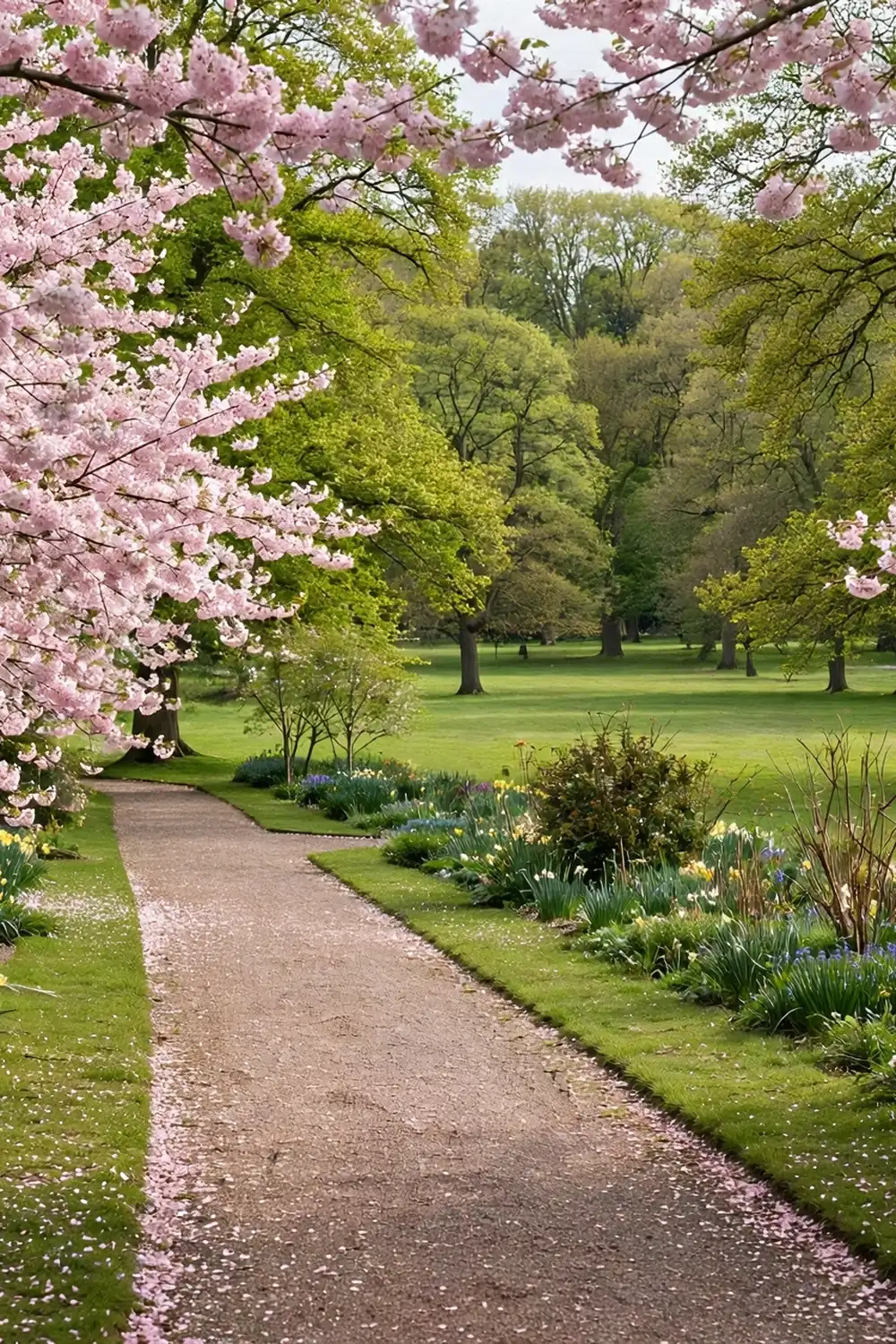
There is no single best season at Kew, but late spring is often cited as the finest time to visit, when cherry blossom is out, trees are coming into leaf and flower borders are gathering momentum. Summer brings the water lilies, lush glasshouse planting and long, lazy afternoons on the lawns. Autumn transforms the arboretum into a display of colour, while winter has its own quiet appeal, with the winter garden showcasing plants that thrive in colder conditions and the glasshouses offering warmth and greenery on grey days.
Short-notice closures can occasionally affect individual buildings or areas, so it is wise to keep plans flexible and to treat any closure as an invitation to explore a different corner. Given the size of the gardens, most visitors leave having discovered areas they did not have time to explore properly — which is, in itself, an excellent reason to return.
Good to Know
- Allow a full day if you can, or at least a long half-day — Kew is far larger than it first appears.
- Wear comfortable shoes and bring layers: the glasshouses vary greatly in temperature.
- Pick up a map at the entrance and group nearby sights together to save walking.
- Admission charges apply and times can change, so check the official site before you travel.
- Spring blossom, summer water lilies and autumn colour are the three great seasonal highlights.
- This is an independent visitor guide, not the official Kew Gardens website — always confirm details on the official site.
FAQ
Where is Kew Gardens and how do I get there?
Kew Gardens is in south-west London, around a ten-minute walk from Kew Gardens station, and it is well served by public transport. Once inside, the grounds are well signed, and a map from the entrance will help you plan a route around the glasshouses and gardens.
How long should I allow for a visit to Kew Gardens?
Most visitors spend at least three to four hours at Kew, and many happily fill a whole day. The glasshouses alone deserve unhurried time, and the arboretum, lakes and historic buildings reward a slower pace, so avoid trying to fit Kew into a rushed afternoon if you can.
What are the must-see highlights at Kew Gardens?
The Palm House and Temperate House are essential, along with the Princess of Wales Conservatory, the Great Pagoda, the treetop walkway and the Marianne North Gallery. If time is short, prioritise the glasshouses and one walk through the arboretum, then add the pagoda and the lake if you can.
When is the best time of year to visit Kew Gardens?
Late spring is a wonderful time, with blossom and fresh foliage everywhere, while summer is best for water lilies and autumn is superb for tree colour. Winter visits are quieter and the glasshouses provide warmth and interest, so every season has something distinct to offer.
Is Kew Gardens suitable for families and children?
Yes, Kew is very family-friendly, with open lawns for picnics, a treetop walkway, carnivorous plants in the conservatory and plenty of space to explore. Children tend to enjoy the sense of adventure in the woodland and the variety of the glasshouses, although younger visitors will need supervision on the walkway.
Do I need to book tickets for Kew Gardens in advance?
Admission charges apply and arrangements can change, so it is best to check the official site before you go for current ticket options, opening times and any seasonal events. Booking ahead, where available, can also help you plan your arrival time and avoid queues.


5 thoughts on “Inside Kew Gardens: London’s Largest Botanical Garden”