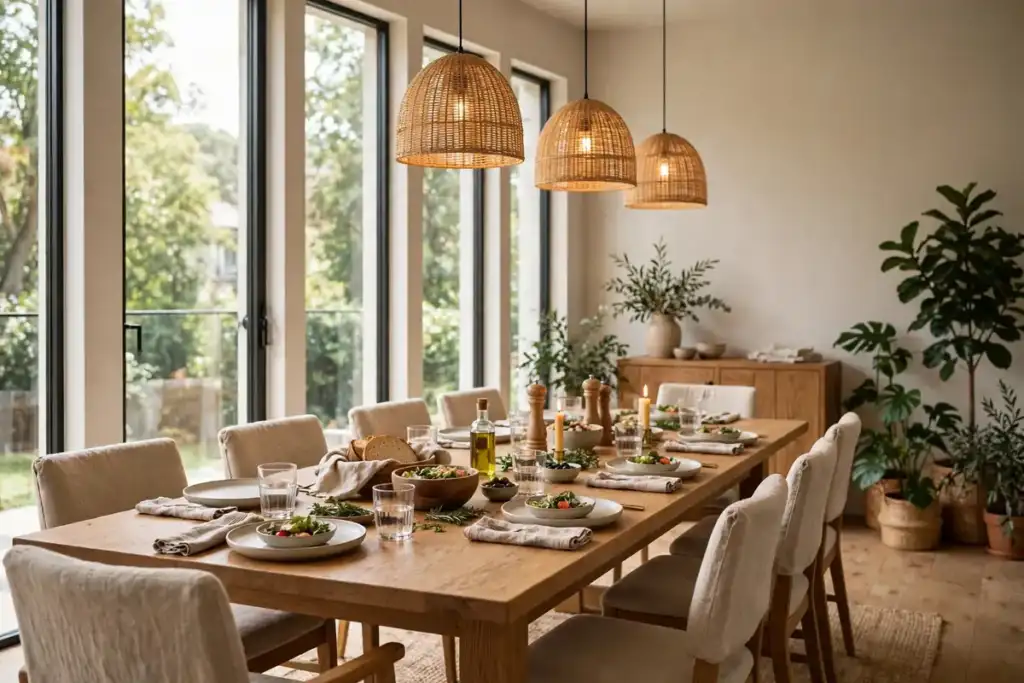
A dining room does not need to be grand, formal, or reserved only for Christmas dinner to be worth designing well. In most homes, it is where the day quietly gathers itself together: breakfast eaten in a hurry, homework spread across the table, a long Sunday lunch, a birthday with too many candles, and a cup of tea with a friend who has just dropped by. When the room works, none of that feels like an effort. Chairs pull out easily, the light is kind in the evening, there is somewhere to put the serving dishes, and everyone can actually hear each other talk.
The best dining room design ideas, then, are not about following one particular look. They are about making honest decisions for the home you actually live in: how many people usually eat together, how much space you truly have, whether the table also has to double as a desk, and what kind of atmosphere makes you want to linger. This guide works through those decisions step by step, with plenty of practical ideas for London homes in particular, from compact flats and Victorian terraces to open-plan new builds and generous period houses. Take what fits your life, ignore what does not, and build a room that feels good on an ordinary Tuesday as well as on a special occasion.
Plan the Layout Around Real Life
Before you buy anything, watch how your dining space is used for a week. Who eats there, and when? Do people drift in and out, or does everyone sit down together? Does the table collect post, laptops, school bags and laundry? Is there a route through the room to the kitchen or garden that constantly interrupts meals? The answers will tell you far more than any showroom display, because a layout that looks beautiful in a photograph can be miserable to live with if it blocks a doorway or leaves no room to pull a chair out properly.
As a general rule, allow around 60 centimetres of chair space behind each seat so people can stand up without scraping the wall, and around 90 centimetres of clear passage where someone needs to walk past a seated diner. If you cannot achieve both, that is useful information rather than a failure: it may mean a smaller table, a bench on one side, or a round table that tucks more gracefully into a tight corner. Dining rooms feel generous not because they are large, but because movement through them feels easy.
Small flats and awkward corners
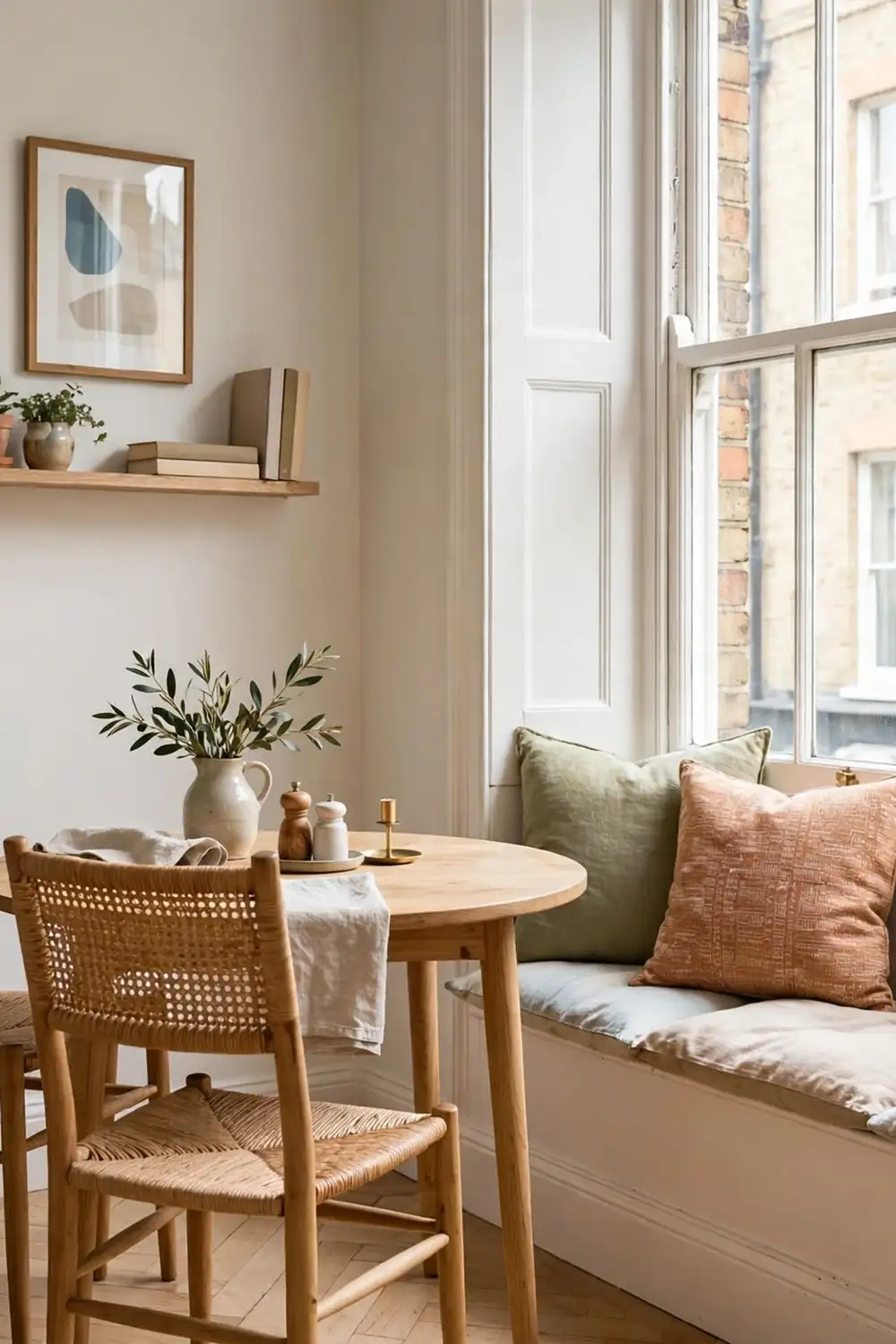
In a small flat, the dining area often shares space with the living room or kitchen, and that is perfectly workable. A round table is a wonderful friend in a tight space: there are no corners to walk into, everyone can see each other, and it seats more people, proportionally, than a small rectangle. A pedestal base helps too, because it frees up legroom and lets you squeeze in an extra chair when friends arrive unexpectedly. If your table sits against a wall most of the week, a bench on the wall side can slide fully underneath when it is not needed, which instantly gives the room back to everyday living.
Window seats, bay windows and alcoves deserve attention as well. A built-in bench in a bay, with storage underneath for tablecloths, board games or rarely used serving dishes, turns a dead corner into the most popular seat in the house. Pair it with a table that can be pulled out slightly for guests, and you have a dining spot that feels intentional rather than squeezed in. Pale walls, a mirror opposite the window, and a light-coloured rug under the table can all help a small dining corner feel brighter and larger, without any structural work at all.
Open-plan spaces and separate dining rooms
Open-plan living brings its own pleasures and its own problems. Without walls, it is easy for the dining table to become a dumping ground, or for the whole space to feel like one long, undefined room. A rug is the simplest way to mark the dining zone: choose one large enough that chairs stay on it even when pulled out, and let it anchor the table visually. A pendant light hung low over the table does the same job from above, drawing the eye and saying, quite clearly, that this is where meals happen.
A separate dining room, by contrast, gives you permission to be a little bolder. Because the room is used for a defined purpose, you can afford deeper colours, heavier curtains, or a more dramatic light fitting without worrying that it will overwhelm the sofa. The trade-off is that separate rooms can feel cold or forgotten between meals, so keep them inviting: a sideboard with a lamp left on, a bowl of fruit, a plant that softens the corner, or a few framed prints that make the room feel lived in rather than preserved. If your separate dining room doubles as a study or homework station during the week, choose storage that closes away cleanly so the room can change character in minutes.
Choose a Table and Chairs You Will Love Sitting At
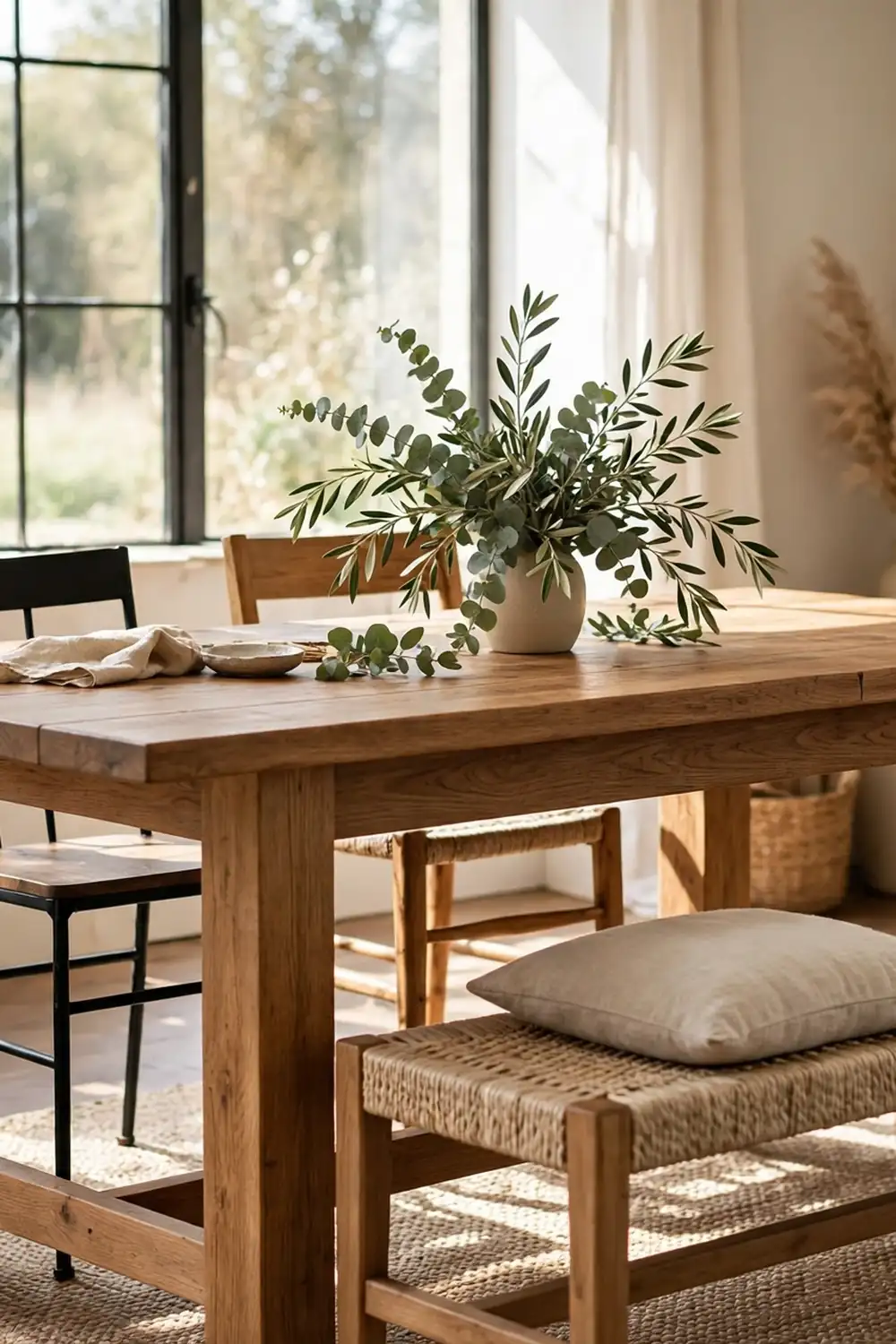
The table is the heart of the room, and it is worth choosing slowly. Size matters more than style: a table that is too big dominates the room and makes conversation feel distant, while one that is too small leaves elbows bumping and serving dishes with nowhere to go. As a rough guide, allow around 60 centimetres of table width per person, and remember that rectangular tables suit long, narrow rooms while round and oval tables suit squarer spaces and encourage conversation. An extendable table is often the most sensible compromise of all, staying compact for everyday family meals and stretching out when the guest list grows.
Material matters too, and not only for looks. Solid wood develops character over time and can be sanded and refinished if it picks up scratches, which makes it a forgiving choice for families. A stone or glass top looks striking and wipes clean easily, but can feel cold and formal, and glass shows every fingerprint. Painted wood is wonderfully practical in a busy home, because scuffs can be touched up and the colour can change when your taste does. Whatever you choose, sit at it properly before you buy if you possibly can: check the height against your chairs, rest your forearms on the edge, and imagine a full hour of sitting there rather than a quick showroom perch.
Chairs, benches and comfort
Chairs are where comfort is won or lost, so be honest about how long people actually sit. A beautiful dining chair that hurts after twenty minutes will quietly push everyone back to the sofa. Look for a seat height of around 45 centimetres, a back that supports the lower back, and a seat deep enough that you are not perched on the edge. Upholstered chairs add warmth and comfort, especially for long dinners, but they need fabric that can cope with spills; removable, washable covers are a gift in a house with children or enthusiastic red-wine drinkers. Wooden chairs are easier to wipe down and often lighter to move, which matters if you regularly rearrange the room.
Benches deserve a second look, particularly in family homes. A bench on one side of the table seats children easily, slides away when not needed, and can double as extra seating elsewhere in the house. Mixing chairs and a bench also stops a matching set from feeling too uniform: a set of simple wooden chairs paired with two upholstered carvers at the ends of the table, for example, gives the room a collected, personal feeling. You do not need every seat to match, but it helps if they share something in common, whether that is a timber tone, a colour, or a similar leg shape, so the mix looks deliberate rather than accidental.
Get the Lighting Right, Layer by Layer
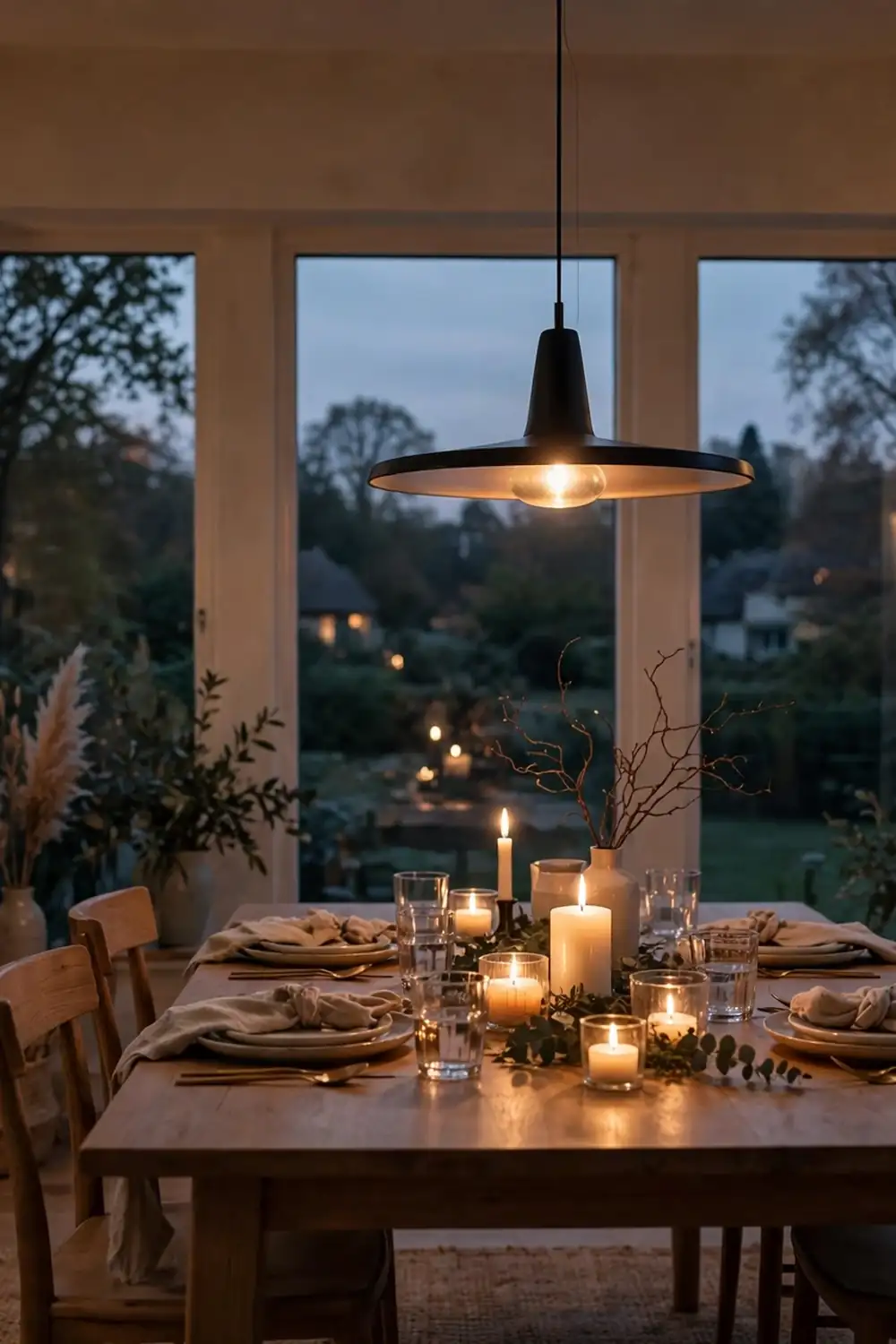
Lighting transforms a dining room more than almost anything else, and it is also where many rooms go wrong. A single bright ceiling light, shining straight down, flatters nobody and makes even a lovely meal feel like an interrogation. Instead, think in layers: a central pendant or chandelier over the table for focus, softer light around the edges of the room for warmth, and a little sparkle, from candles or a small lamp, for atmosphere. When those layers work together, the room feels welcoming at breakfast and quietly magical at dinner, with nothing more complicated than a dimmer switch.
The pendant over the table deserves careful placement. Hang it low enough to create intimacy, usually around 75 to 90 centimetres above the tabletop, so it lights the food and faces rather than glaring into eyes. For a long table, two or three smaller pendants spaced evenly work better than one oversized fitting, and they help the light spread along the whole table. A dimmer is almost always worth fitting: bright light for homework and board games, softer light for dinner, and a gentle glow for a late glass of something after the plates are cleared. If you rent and cannot change fittings, a plug-in floor lamp behind a sideboard, a pair of battery candles, and a warm-toned table lamp can achieve much of the same effect without any rewiring.
Daylight, curtains and evening warmth
Daylight is your first layer, so treat windows with respect. Heavy curtains that block light all day will make even a south-facing room feel gloomy, while sheer linen or voile softens glare without shutting the world out. In a dining room that faces the street, a simple roller blind or a café curtain across the lower half of the window gives privacy while keeping the upper light. Mirrors, placed where they catch a window rather than a blank wall, bounce daylight deeper into the room and make evening candlelight feel doubly warm, which is a particular blessing in London homes where winter evenings arrive early.
Colour temperature matters more than most people realise. Warm white bulbs, around 2700 Kelvin, flatter skin tones and food, while cool white light can make a dining room feel clinical. Use the same warm tone across the room where you can, so the pendant, wall lights and lamps feel like one gentle scheme rather than a collection of unrelated glows. Candles, real or good-quality flameless ones, remain the simplest luxury of all: a few on the table or sideboard instantly slow everyone down, encourage conversation, and make an ordinary midweek supper feel like a small occasion.
Colour, Texture and Materials That Feel Like Home
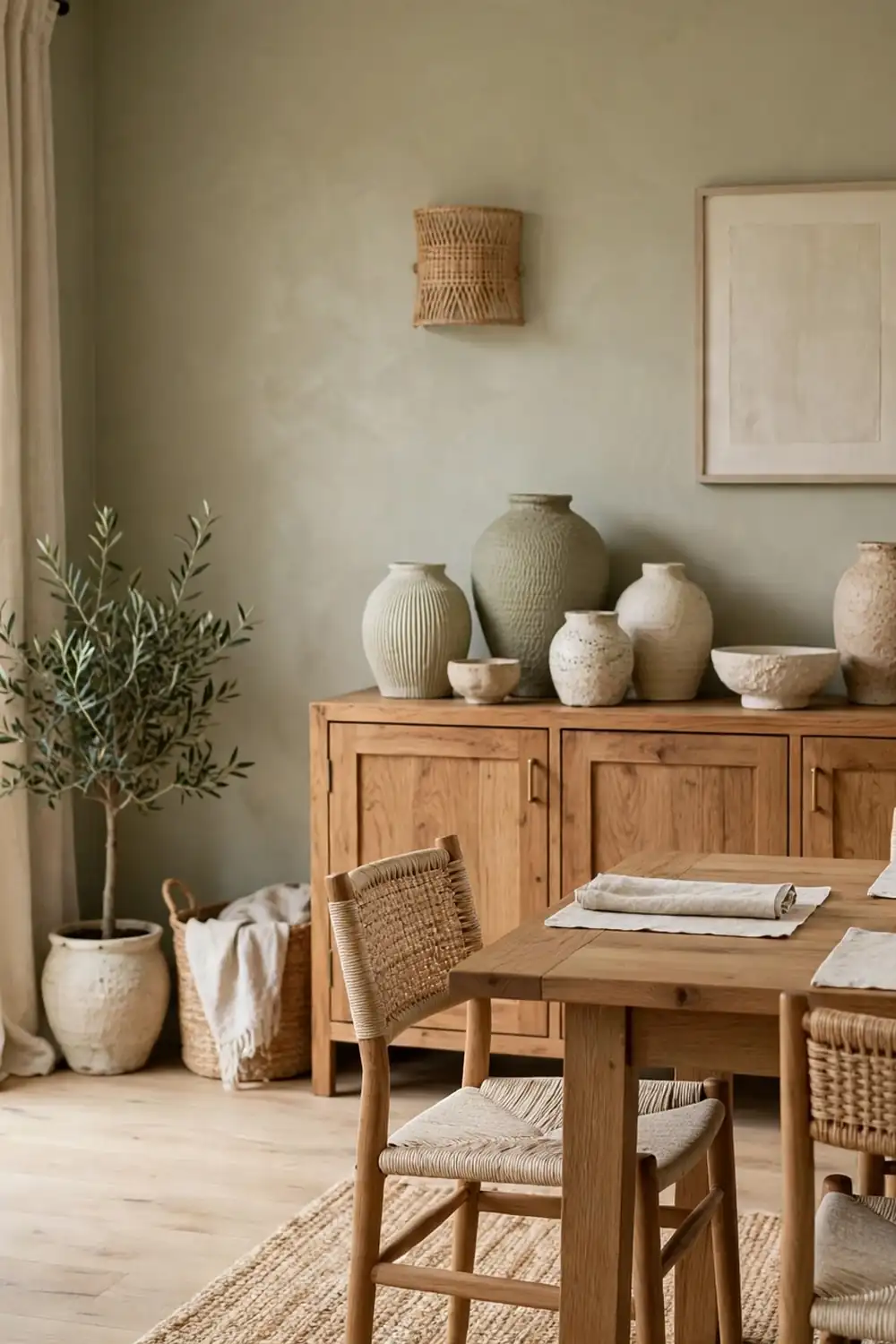
Colour sets the mood of a dining room before a single plate is laid. Soft, warm neutrals such as cream, warm white, pale sage and gentle greige are reliable because they flatter both food and faces, suit most furniture, and keep a small room feeling open. If you love stronger colour, the dining room is an excellent place to try it: a deep green, inky blue, or warm terracotta on one wall, or in the whole room if it is well lit, can make evening meals feel cocooning and special. The trick is to test the colour at different times of day, because a shade that looks perfect in bright morning light can turn muddy under evening bulbs.
Texture is what stops a neutral room from feeling flat. A linen tablecloth, woven placemats, a wool rug, a wooden bowl, a ceramic vase, and a set of cotton napkins all add layers that the eye and hand can enjoy, even when the colour palette stays calm. Mixing materials is usually more interesting than matching everything: wood against linen, glass against ceramic, metal against rattan. If you are drawn to a botanical feeling, with trailing plants, leafy prints and natural timber, you might enjoy seeing how grand garden spaces use greenery at scale; a visit to the largest botanical garden on earth is a wonderful source of ideas for bringing that lush, layered feeling home in a smaller, more practical form.
Period homes, modern homes and finding your balance
London homes offer a rich range of starting points, and your dining room does not need to pretend to be a different era from the rest of the house. In a Victorian or Edwardian home, original cornicing, a fireplace, and tall sash windows are already doing much of the decorative work, so furniture can be simpler and more contemporary without clashing. In a modern flat with clean lines and white walls, a warm wooden table, textured chairs, and a large piece of art can stop the space from feeling stark. The happiest rooms usually blend old and new: a inherited sideboard beside a modern pendant, or contemporary chairs around a reclaimed table. That mix tells a story, and it also means you can change one element at a time without starting over.
Storage and Styling Without the Clutter
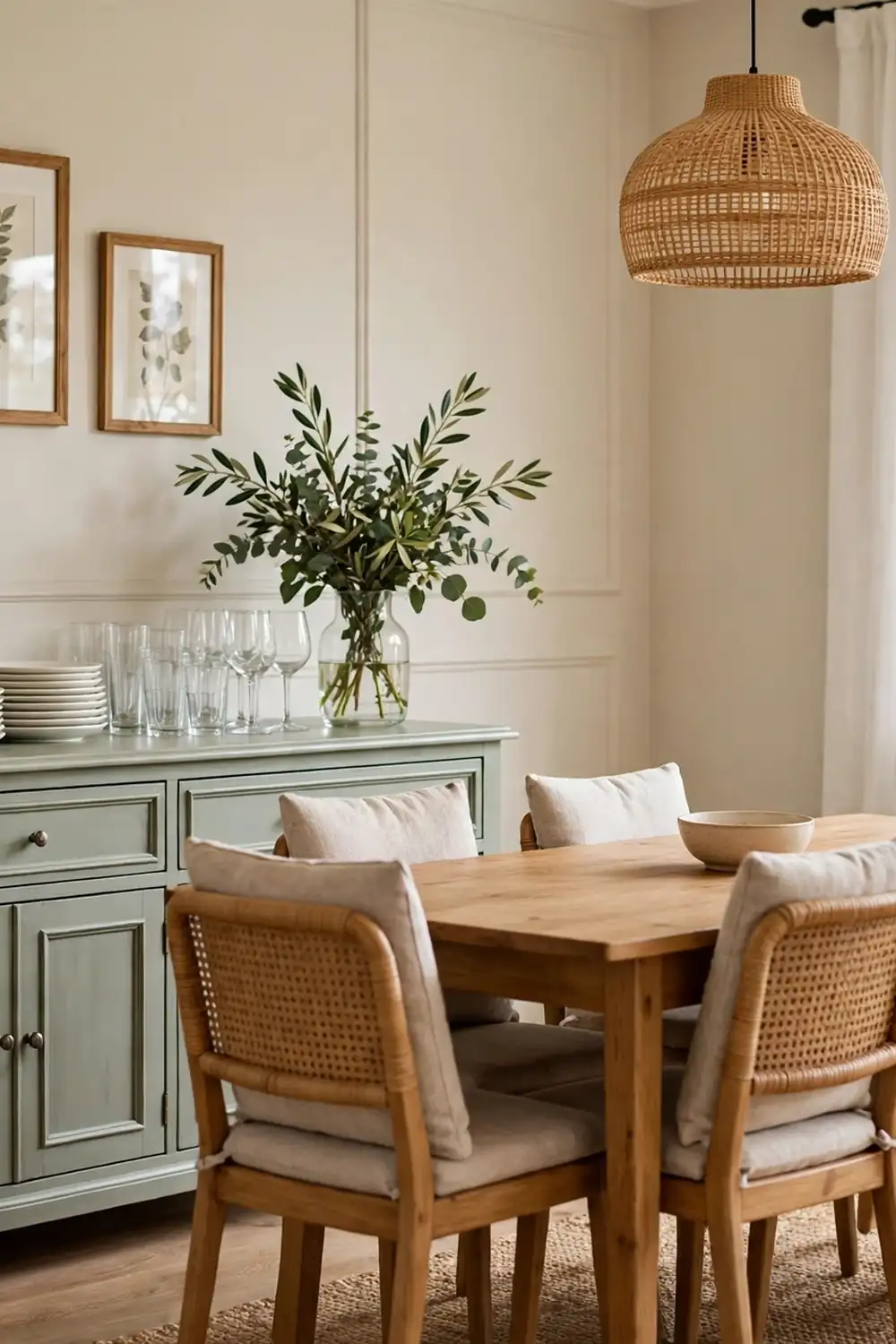
Good storage is what allows a dining room to look calm even in a busy household. Without it, tablecloths, placemats, candles, board games, chargers and school projects all end up on the table itself, and the room never quite feels ready for a meal. A sideboard is the classic solution for a reason: it holds the things you need close at hand, provides a surface for a lamp and a vase, and can hide a surprising amount behind closed doors. A dresser with open shelves works beautifully too, provided you are happy to keep what is on display reasonably tidy; glassware and matching plates look charming on open shelves, while a jumble of mismatched mugs is better kept behind a door.
Table styling for everyday and for guests
Styling a dining table need not be elaborate to be lovely. For everyday meals, a simple runner or a set of placemats, a small vase of fresh stems or a potted herb, and a candle or two are plenty. The centrepiece should stay low enough that people can see each other across it, which is a detail that is easy to forget when arranging a tall bouquet. For guests, add cloth napkins, a few extra candles, and perhaps a bowl of seasonal fruit or a simple garland of greenery down the centre of the table. The best table styling feels generous rather than fussy: enough to show care, but not so much that guests are afraid to put their glass down.
Bringing London inspiration home
It is worth gathering ideas from the places you enjoy visiting, because a dining room that reflects your life will always feel more personal than one copied from a single photograph. The grand, light-filled spaces and planting of London’s great garden rooms, for example, can inspire a greener, more relaxed dining corner at home, and the city’s historic houses show how period detail and modern furniture can sit happily together. When you are out exploring, notice what makes a room feel welcoming: is it the low light, the plants, the long table, or simply the sense that people gather there? A walk through some of the best places to visit in London can be surprisingly useful for interiors inspiration, because you start to see which atmospheres you actually want to live with, rather than just admire from a distance.
Good to Know
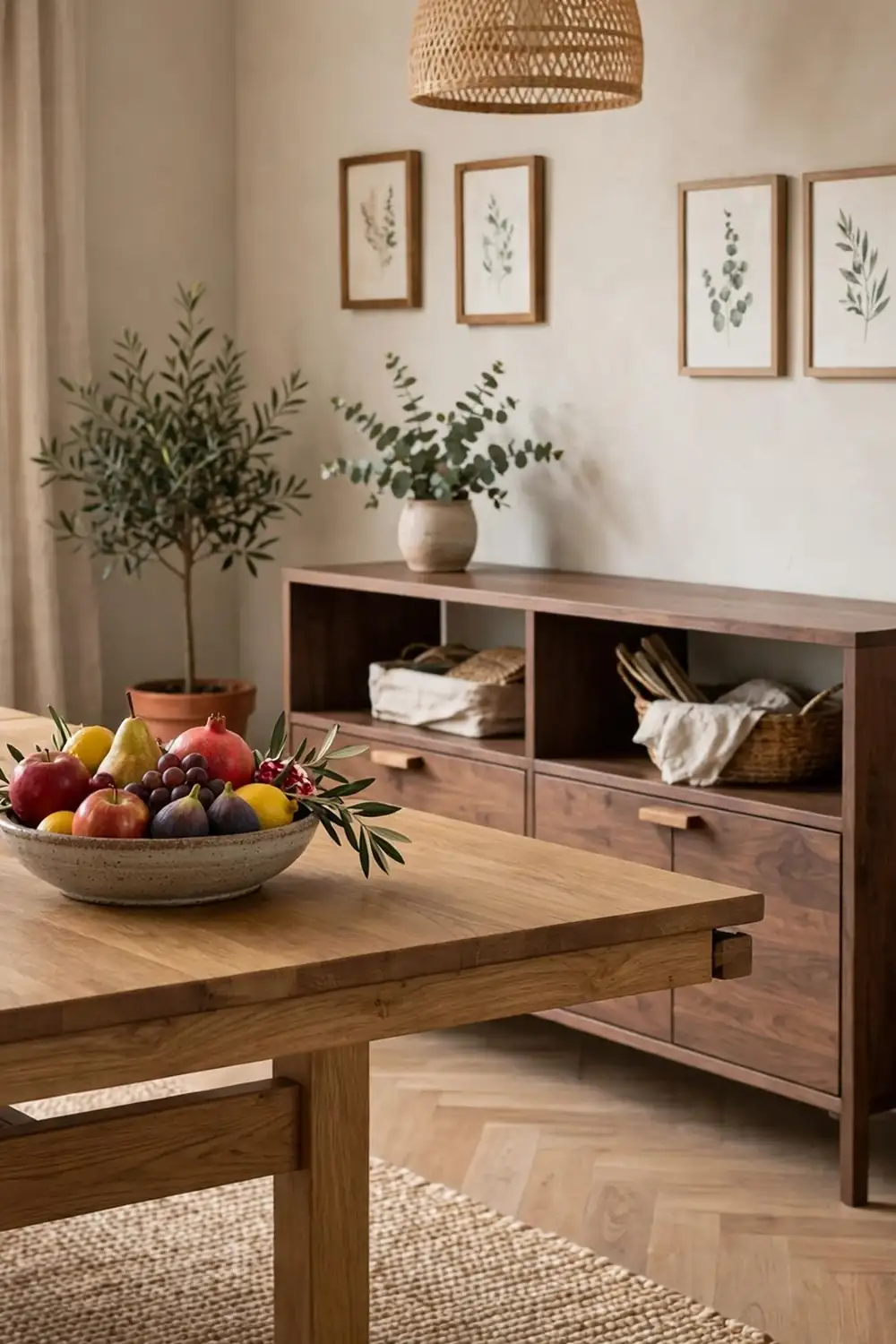
A few practical truths make dining room design much easier. First, measure twice and buy once: doorways, stair turns, and lift dimensions matter as much as the room itself, and many a beautiful table has been returned because it would not fit through the front door. Second, budget for the unglamorous things first, such as a dimmer switch, a rug pad to stop slipping, and chair pads that protect your floor, because those small items determine whether the room is comfortable day after day. Third, if you are renovating, plan lighting and plug sockets before you decorate, so lamps, a sideboard light, and a phone charger for the table all have somewhere sensible to go.
It also helps to think ahead to how your household might change. An extendable table, stackable extra chairs, and a sideboard with flexible storage will adapt as children grow, guests come and go, and the room takes on new roles. If you love hosting but rarely have more than six people at once, do not sacrifice everyday comfort for a twelve-seat table that overwhelms the room for the other 360 days of the year. And if your dining space is also your workspace, give work its own home at the end of the day: a lidded box, a drawer, or a shelf where the laptop lives, so the table can return to being a table. For a different kind of inspiration, the planting and glasshouse atmosphere of London’s Sky Garden shows how greenery, light, and a long view can turn an ordinary gathering into something memorable, and a few well-chosen plants can do the same, on a smaller scale, in your own dining room.
FAQ
What size dining table do I need for six people?
For six people, a rectangular table of around 150 to 180 centimetres long and 90 centimetres wide usually works well, giving each person enough elbow room and space for serving dishes in the middle. A round table for six needs a diameter of around 120 to 150 centimetres. Always measure your room first, allow space to pull chairs out, and remember that an extendable table can give you the best of both worlds: compact for everyday meals and generous when guests arrive.
How can I make a small dining area feel bigger?
Use a round or oval table, choose chairs that can tuck fully underneath, and keep the colour palette light. A mirror opposite a window, sheer curtains, and a rug that defines the dining zone without darkening the floor all help. Avoid bulky furniture and heavy, dark sideboards in a small space; instead, choose a slim console, a bench with hidden storage, and wall-mounted shelves that keep the floor clear and the room feeling open.
Should the dining room rug go under the chairs?
Yes, ideally the rug should be large enough that chairs remain on it even when pulled out for sitting down. That usually means the rug extends at least 60 centimetres beyond the table on every side. A rug that is too small, with chair legs half on and half off, feels awkward and wears unevenly. Choose a low-pile, easy-to-clean rug in a forgiving colour or pattern, and use a non-slip pad underneath to keep it safely in place.
What is the best lighting for a dining room?
Layered, warm lighting works best: a pendant or chandelier over the table as the focal point, softer wall or floor lamps around the edges, and candles for atmosphere. Hang the pendant around 75 to 90 centimetres above the tabletop, fit a dimmer so you can adjust the mood, and use warm white bulbs throughout for a flattering, cohesive glow. Good lighting should make food look appetising and faces look relaxed, not wash the room in harsh brightness.
How do I choose dining chairs that are actually comfortable?
Look for a seat height of around 45 centimetres, a supportive back, and a seat deep enough to sit on properly rather than perch. Sit in the chair for several minutes before buying, and check that it is light enough to pull out easily and stable enough not to wobble. Upholstered chairs suit long dinners, while wooden chairs are easier to clean; in a busy home, removable washable covers or wipeable fabric offer the most practical comfort of all.
Can a dining room work as a home office too?
Absolutely, provided work can be packed away at the end of the day. Choose a table that suits both purposes, keep office supplies in a sideboard drawer or a lidded box, and use good task lighting that can switch to softer evening light. A clear boundary, even a simple ritual of clearing the table and laying placemats, helps the room change from workspace to dining space, so meals still feel like a break rather than an extension of the working day.






3 thoughts on “Dining Room Design Ideas That Make Every Meal Feel Special”