The Sky Garden might be the most photographed free view in London — and one of the trickiest to shoot well. Glass everywhere, crowds at the railing, and a sunset slot that half the city is chasing. But the building also hands photographers some gifts: an open-air terrace, four completely different skyline directions, and planting that gives you a foreground most rooftops can’t offer. Here is where to stand, when to come, and what the rules allow, so your hour produces more than one hurried snap of The Shard.
First, the Rules: Cameras Yes, Tripods No
Personal photography is welcome throughout the Sky Garden — phones and standard cameras alike, as many shots as you like. The restrictions are about hardware and hassle. Tripods are not permitted, and neither are selfie sticks; both are stopped at the security screening, along with anything else bulky. Commercial and professional shoots are a different matter — they need permission arranged with the venue in advance, so don’t plan a brand session on a public ticket.
The Money Shot: The South Terrace
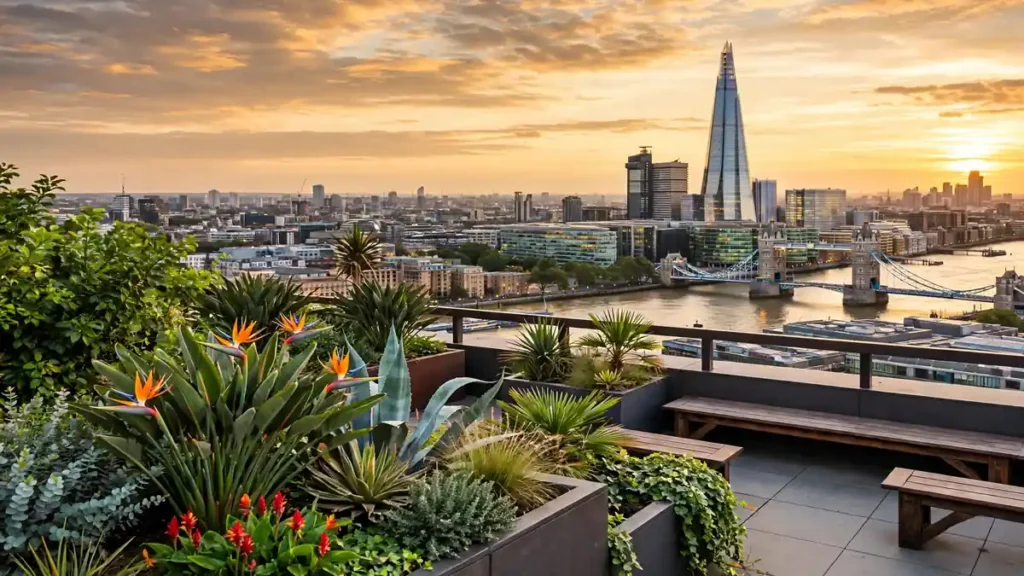
If you take one photograph, take it here. The open-air terrace on the main garden level faces straight down the Thames: The Shard rearing up on the south bank, the river bending away beneath you, Tower Bridge downstream to the east. Because you are standing outside, there is no glass between your lens and the city — the sharpest, cleanest images in the building happen on this terrace. Go early in your slot, before the railing fills, and step slightly to either side; the angle changes, the crowds thin, and the shot gets more interesting. For how this floor fits into the building as a whole, our floor-by-floor tour of the Sky Garden maps the levels before you arrive.
The rear terrace: the City, unfiltered
Now turn around. The quieter side of the garden frames the City’s tower cluster — the Gherkin, the Cheesegrater and their glass neighbours — at close range and without the south terrace’s scrum. Morning light rakes across these towers, and the planting in the foreground gives you the layers that make a skyline photograph feel designed rather than snapped. On busy days, this is the insider’s terrace.
Shooting in Four Directions
The viewing decks wrap around the building, so one slow loop is four photo shoots in one visit:
- South: The Shard, the Thames, London Bridge and the South Bank — the postcard shot, best from the open-air terrace.
- East: Tower Bridge and the Tower of London, startlingly close below you, with Canary Wharf on the horizon.
- West: St Paul’s Cathedral, the London Eye and, on a clear day, the Houses of Parliament — even Wembley Arch if the air is kind.
- North: The City cluster itself. You are inside this photograph, surrounded by towers on every side.
Work the loop slowly, because the light changes as you round the building — a face in shadow on the way out may be glowing on the way back. And if St Paul’s is your particular quarry, know that a rival close-up exists: the rooftop terrace at One New Change — covered in our guide to the best free views of London.
Inside the Dome: Planting, Glass and Reflections
The interior is a subject in its own right: tree ferns against three storeys of glass, terraces stepping into the light, the ribs of the dome drawing lines through every frame. Shoot along the planting beds rather than across them for depth, and let a few unposed visitors drift through the mid-distance — small figures give the space its scale. Reflections are the tax you pay for all that glass. When you must shoot through a window, press your lens hood — or your phone — close to the pane and shade it with your free hand; it kills most of the glare. Wearing something dark helps more than you’d expect: pale jumpers bounce straight back at you in the glass.
Best Times: Light, Crowds and Seasons
Morning: the photographer’s slot
Weekday mornings hand you the two things photographers pray for: soft, low light and thin crowds. The first slots are the easiest to shoot in the whole week — empty railings, clean compositions, and a gentle haze that flatters the skyline. Winter mornings after rain are the connoisseur’s choice: cold, scrubbed air and horizons so sharp you can count the cranes.
Sunset: glorious, and contested
Sunset is the famous slot — the city turning gold, then the lights flickering on across the river — and the tickets to match are the hardest in the building to get. Book on the Monday release three weeks ahead (the system is explained in our complete Sky Garden visitor guide), arrive at the start of your slot, and claim a spot on the south terrace before it peaks. Stay to the end: the blue minutes just after sunset, when the sky deepens and the city glitters, are when the best frames happen.
Etiquette: Sharing the Railing
At peak times the terraces belong to everyone. Take your shots at the glass, then step back and let the next person in; don’t park bags as territory markers, and keep the terrace ends and doorways clear. If a stranger is in your frame at the railing, ten seconds of patience usually beats their shoulder in your masterpiece. And if a fellow visitor asks you to take their photo, do it properly — good karma circulates fast at 155 metres.
Good to Know
- Phones are perfect here — the views do the heavy lifting; you don’t need serious kit to come home with a great shot.
- No tripods, no selfie sticks — they are stopped at security, so leave them at the hotel.
- The open-air terrace beats the glass for sharpness; shoot the postcard outside and the arty planting frames inside.
- Sunset slots are ticket gold — book three weeks ahead on the Monday release, and arrive at the start of your slot.
- This is an independent visitor guide, not the official Sky Garden website — always book through the official site.
Frequently Asked Questions
Can you take photos in Sky Garden?
Yes — personal photography is welcome everywhere in the public areas, on phones and cameras alike, with no charge and no permit needed. The gardens, terraces and views are all fair game for your own pictures.
Are tripods allowed at Sky Garden?
No. Tripods and selfie sticks are not permitted and are stopped at the security screening, so leave them behind. Handheld shooting is the order of the day.
What is the best time for photos at Sky Garden?
For light and elbow room, a weekday morning — ideally the first slot of the day. For drama, sunset, though those tickets are the hardest to book. The clearest horizons of all come on cold winter mornings after rain.
Can you take wedding photos at Sky Garden?
Casual photos of your own day out are fine, but a wedding shoot with professional equipment counts as a commercial session, and those need permission arranged with the venue in advance — the building also hosts private events and hires. Don’t rely on a public ticket for a shoot.
Where is the best photo spot in Sky Garden?
The open-air south terrace, for the classic shot of The Shard across the Thames with Tower Bridge downstream — no glass, no reflections. For the City towers without the crowds, the quieter rear terrace is the photographer’s favourite.