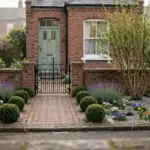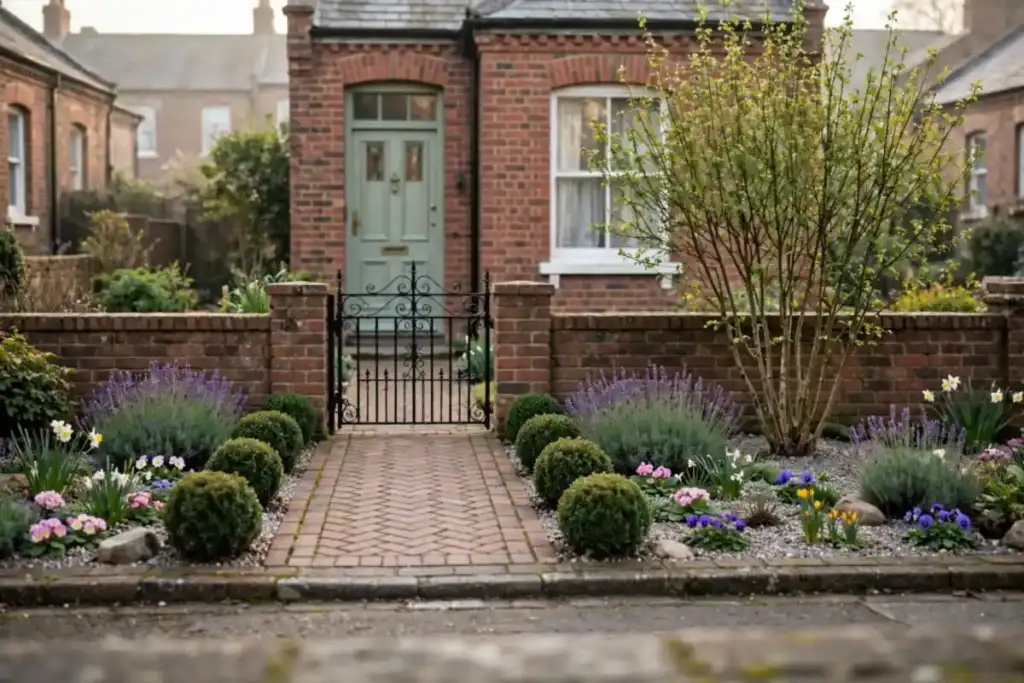
Your front garden is the first thing visitors see and the last thing you pass each day — yet for most of us it is little more than a strip of tired lawn, a cracked path and a wheelie bin. These front garden ideas will show you how to turn that overlooked patch into a welcoming, good-looking space, whether you have a tiny terraced plot, a wide semi-detached frontage or a driveway that needs to do double duty.
Why your front garden deserves better
We spend hours choosing paint colours for the hallway and arranging cushions in the living room, then leave the front of the house to fend for itself. That is a strange set of priorities, because the front garden is the one part of your home that everyone sees — neighbours, delivery drivers, friends arriving for dinner, and, one day, perhaps a buyer. A cared-for front garden changes how a whole street feels, and it changes how you feel coming home.
The most obvious reward is kerb appeal. Estate agents will tell you that first impressions are formed in seconds, and a tidy, planted front garden signals that the house behind it is loved. But the benefits go well beyond selling. The RHS has long pointed out the link between greenery around the home and wellbeing: even a small planted front garden gives you something living to look at from the window, softens traffic noise and dust, and turns a daily arrival into a small pleasure rather than a trudge past the bins.
There is a practical case too. Planted front gardens slow rainwater down, cool the air on hot days and give pollinators a stepping stone through built-up streets. A front garden paved over entirely does the opposite — it sends rain straight to the drains and turns your plot into a heat island. The good news is that you do not need a big budget or a big plot to fix it. Most of the front garden ideas in this guide work on a modest budget, and many of them can be done in a single weekend.
Before you buy a single plant, take ten minutes to look at your plot honestly. Which way does it face? A sunny spot at the front of a south-facing house will suit lavender, roses and Mediterranean herbs, while a shady front garden under a big tree or a tall neighbouring wall needs shade-tolerant planting. What is the soil like? Heavy clay soil holds water in winter and cracks in summer; free-draining soil dries out fast but is easy to improve with compost. Note where the sun falls at midday, where the wind funnels in, and where you actually walk. That short survey will save you from buying plants that sulk and die in the wrong place.
Start with the bones: paths, edging and structure
Every good front garden design starts with structure, not plants. Plants come and go with the seasons; the bones — the path, the edging, the walls and the levels — are what hold the garden together in January as well as in June. Get the hard landscaping right first and the planting becomes far easier.
The front path is the single most important piece of hard landscaping in a front garden. It should be wide enough for two people to walk side by side comfortably, which in practice means 90cm to 1.2m. Anything narrower feels mean and forces visitors to walk single file; anything much wider eats planting space for no benefit. It should also run in a straight, obvious line from the gate to the front door, or curve gently if the plot is wide enough to carry a curve without looking contrived. A path that wanders for the sake of it just looks indecisive.
Materials set the tone. Block paving is the workhorse of British front gardens: neat, hard-wearing, available in colours that suit brick houses, and easy to repair one block at a time. Natural stone — sandstone or Yorkstone flags — costs more but looks superb against period brickwork and ages beautifully. Gravel laid on a membrane is the cheapest option and has a lovely soft crunch underfoot, though it needs occasional raking and topping up, and it is not ideal if you use a wheelchair or a pushchair. Brick paths suit cottage garden and Victorian terraces perfectly, especially when laid in a herringbone pattern. Whichever you choose, keep the material consistent with the house: a sleek grey porcelain path can look wonderful in front of a modern rendered house and completely wrong in front of a 1930s semi-detached.
Garden edging is the small detail that makes a front garden look finished rather than improvised. A crisp edge between path and border — steel edging, brick-on-edge, stone setts or even a clean spade-cut turf edge — stops soil spilling onto the path and stops gravel wandering into the beds. It also makes mowing and weeding quicker, which matters if you want a low maintenance garden rather than a weekend chore.
Think about symmetry and formality before you plant anything. A formal front garden, with matching planters either side of the door and a central path, suits Georgian and Victorian houses and reads as calm and confident. A looser, informal layout with a curved path and a mixed border suits cottage garden houses and modern homes alike. Neither is better — but pick one and commit to it. A garden that is half formal and half wild usually looks accidental rather than artful.
Finally, consider levels. If your front garden slopes towards the house, make sure water drains away from the walls, not towards them. A shallow step, a low retaining edge or a slight re-grade can solve a damp problem before it starts, and it is far cheaper to fix now than after the planting is in.
Evergreen first: planting that looks good all year
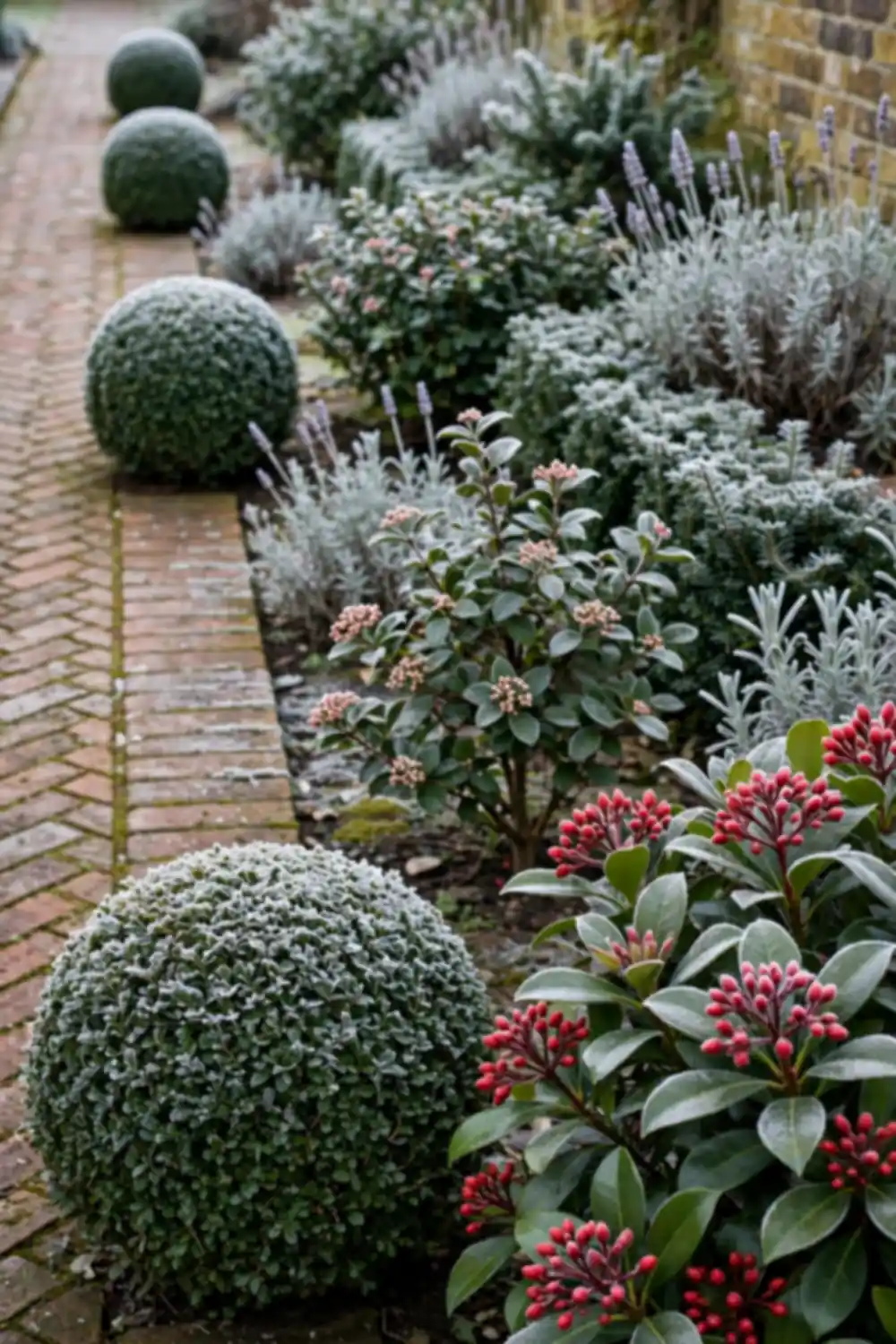
The classic mistake in front garden design is to plant for June and forget about January. A front garden full of herbaceous perennials looks wonderful in high summer and like an empty mud patch for five months of the year. The fix is simple: build the garden around evergreen plants first, then add seasonal colour on top. Evergreens give you year-round structure — the skeleton that holds the garden together when everything else has died back.
Box used to be the default evergreen for this job, clipped into neat box balls and low hedges. Sadly, box blight and the box tree caterpillar have made it a risky choice in many parts of the UK, and a front garden full of chewed, brown box is worse than no box at all. The good news is that there are excellent alternatives. Ilex crenata, Japanese holly, clips just like box into neat topiary shapes, keeps small dark-green leaves all year and is untouched by the caterpillar. Euonymus ‘Emerald Gaiety’ brings variegated cream-and-green leaves that brighten a dull corner, while Euonymus ‘Emerald ‘n’ Gold’ does the same in gold. Both are tough, cheap and happy in sun or part shade.
For something with a seasonal moment, Skimmia japonica is hard to beat: glossy evergreen leaves all year, clusters of red buds through winter, then scented white flowers in spring. Plant it in a shady spot and it will thrive for years with almost no attention. Viburnum tinus is another winter star, carrying pink buds and white flowers from late autumn into spring, and it makes a fine informal hedge. Lavender is not strictly evergreen in the same way, but a lavender hedge keeps its silvery foliage through winter and then erupts in scented purple in summer — plant it along the front path where every visitor brushes past it. Hebe offers neat, rounded evergreen mounds in a range of sizes, and choisya, Mexican orange blossom, gives glossy leaves and a flush of sweetly scented white flowers in spring, with a second flush in autumn.
Arrange your evergreens in odd-numbered groups — threes and fives look natural, while pairs look formal and work best flanking the front door. Put the tallest evergreens at the back of the border or at the corners of the plot, and keep the front of the border lower so the garden reads as layered rather than flat. A single well-chosen evergreen shrub, clipped once a year, will do more for your front garden in February than a dozen summer annuals ever could.
21 front garden ideas for every home
Here are 21 front garden ideas, grouped by the kind of garden they suit best. You do not need all of them — pick the three or four that fit your plot, your budget and the way you live, and do those well. A front garden with a few strong ideas always beats one with twenty half-finished ones.
Front garden ideas for small and terraced gardens (1–5)
- Go vertical with a climbing rose. In a small front garden, the walls are free planting space. A climbing rose such as ‘Gertrude Jekyll’ or ‘New Dawn’ trained along the front wall gives you months of scented flowers without taking a single square metre of ground. Fix horizontal wires to the wall, tie the stems in as they grow, and prune once a year after flowering.
- Plant a multi-stem tree as a focal point. One small multi-stem tree — an Amelanchier with spring blossom and autumn colour, a slender birch with white bark, or a Japanese maple with fiery autumn leaves — gives a tiny garden height, shade and four seasons of interest without overwhelming the plot. Keep it in scale: a tree that will reach 4–5 metres is right; one that wants to reach 15 metres is not.
- Use ground cover instead of bare soil. Bare soil in a small garden looks untidy and breeds weeds. Ground cover plants such as Geranium macrorrhizum, ajuga with its dark leaves and blue spring flowers, or Vinca minor knit together into a living carpet that suppresses weeds and looks good all year. Plant them thickly and they will do the weeding for you.
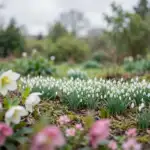
- Layer spring bulbs for months of colour. Spring bulbs are the cheapest colour you can buy. Plant crocus at the front of the border, tulips in the middle and daffodils towards the back, all in autumn, and you will get colour from February to May for a few pounds. Naturalise them in drifts rather than straight lines, and leave the foliage to die back naturally so the bulbs feed for next year.
- Make the path do the work. In a terraced house with a front garden barely wider than the path, the path itself is the design. Lay it in a beautiful material, edge it crisply, and plant low edging plants such as lavender or catmint along both sides so the walk to the door feels like a garden, not a corridor.
Cottage-style front garden ideas (6–9)
- Build a classic cottage garden border. A cottage garden front is all about abundance: a mixed border packed with roses, foxgloves, hardy geraniums, catmint and hollyhocks, spilling gently over the path. Plant in drifts, let plants self-seed a little, and accept a touch of happy chaos — that is the charm. For planting inspiration, see our guide to 25 best cottage garden flowers.
- Add a picket fence and a gate. A low picket fence, painted white or a soft sage green, frames a cottage garden beautifully and marks the boundary without blocking the view. It also gives climbing plants something to scramble over and stops footballs and dogs wandering through the borders.
- Grow herbs by the front door. Rosemary, thyme and sage by the door are practical as well as pretty: you can snip them on the way to the kitchen, they smell wonderful when brushed, and bees love their flowers. They need full sun and free-draining soil, so they are happiest in a raised bed or a large pot.
- Let a climbing rose frame the door. Train a climbing rose up and over the front door so visitors walk beneath a arch of flowers in summer. It is the single most romantic of all front garden ideas, and it costs little more than the plant and a few wires. Pair it with clematis for flowers before and after the rose blooms.
Modern minimalist front garden ideas (10–13)
- Use repetition for calm. Modern front garden design relies on repetition: a row of identical grasses, a run of clipped evergreen cubes, a single species of tree repeated three times. Restraint is the point — three plants repeated well look more designed than thirty different plants competing for attention.
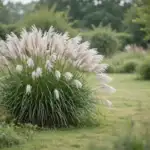
- Plant ornamental grasses in drifts. Ornamental grasses such as Miscanthus, Pennisetum and Stipa bring movement, texture and sound to a modern front garden, and they look superb in winter when their seed heads catch the frost. Plant them in generous drifts rather than ones and twos, and cut them back in late winter before new growth starts.
- Choose a single strong focal point. A sculptural tree, a large stone boulder, a water bowl or a piece of garden sculpture gives the eye somewhere to land. One bold focal point is enough — two will argue with each other. Place it where you see it from the front window as well as from the street.
- Keep the palette to two materials. Limit hard landscaping to two materials — for example, pale gravel with dark slate edging, or grey paving with warm timber — and the garden will feel considered and calm. A third material usually creeps in through the planters and the door furniture, which is quite enough.
Front garden ideas for driveways and parking (14–16)
- Keep green strips between the wheel tracks. If you need parking at the front, you do not need to pave the whole plot. Two paved wheel tracks with a planted strip of low grasses or creeping thyme between them keep most of the garden green, and they look far better than a slab of concrete. Grass grids — plastic or concrete grids filled with grass or gravel — do the same job and take the weight of a car.
- Soften the driveway edges. A gravel driveway framed by a low lavender hedge or a row of evergreen shrubs looks like a garden that happens to hold a car, not a car park that happens to have a house. Keep planting low near the entrance so drivers can see out, and choose tough plants that can cope with a splash of grit and the odd wing mirror.
- Add a tree to shade the car. A small tree planted at the edge of the driveway shades the car in summer, softens the hard surfaces and gives birds somewhere to perch. Choose a species with a tidy habit and small leaves — Amelanchier and crab apple are both good — so you are not sweeping up leaves all autumn.
Front door, window boxes and finishing touches (17–21)
- Frame the door with matching planters. Two identical planters either side of the front door give instant symmetry and a sense of arrival. Fill them with a standard bay or a clipped cone in the centre, underplanted with seasonal colour — spring bulbs in March, trailing lobelia and geraniums in summer, cyclamen and ivy in winter. For more on choosing and caring for evergreens, see our guide to evergreen shrubs.
- Fill window boxes with seasonal colour. Window boxes are the smallest garden you can own, and they repay attention out of all proportion. Plant them twice a year — bulbs and violas for spring, trailing geraniums and lobelia for summer — and water them in dry spells, because small boxes dry out fast. Keep the colours simple: one or two colours per box, repeated across the house.
- Light the path and the door. A few low, warm lights along the front path and a lantern by the door make the garden welcoming after dark, help visitors find the step, and show off your planting in the evening. Solar lights are cheap and easy, but mains-powered lights are brighter and more reliable in winter — pick one system and stick to it.
- Add a small water feature. A wall-mounted fountain, a stone water bowl or a small rill beside the path adds sound and movement, and birds will visit to drink and bathe. Keep it simple and in scale: a large feature in a small front garden looks wrong, while a modest bowl looks deliberate and calm.
- Plant for pollinators. Finish with planting that feeds wildlife: lavender, catmint, single-flowered dahlias, sedum and foxgloves are all pollinator-friendly and beautiful. A front garden that hums with bees in summer is a joy, and it connects your plot to the wider neighbourhood of gardens. Even a single wildlife-friendly corner makes a difference.
If you want a broader starting point for the whole garden, our garden design ideas guide covers layout, colour and planting combinations in more detail.
Small front garden ideas: terraced and semi-detached layouts
A small front garden is not a problem to solve — it is a design opportunity. Small spaces force good decisions: every plant has to earn its place, every material has to be right, and nothing can hide behind size. The result, done well, is often more beautiful than a large garden that sprawls without a plan.
Start by measuring. A typical terraced house front garden might be only 2m x 4m, with the path taking up a third of it. A typical semi-detached front might be 4m x 6m, often with room for a car. Those two sizes need completely different approaches. In the terraced plot, the path, the door planters and one vertical feature — a multi-stem tree or a climbing rose — are the whole design, and the planting should be low and layered so the space feels generous. In the semi-detached plot, you have room for a small lawn or gravel area, a mixed border on each side and a proper shrub or two.
In both cases, the tricks for making a small front garden look bigger are the same. First, keep the planting low at the front and taller at the back, so the eye travels through the garden rather than stopping at a hedge. Second, use a pale path material — light gravel or pale stone — because pale surfaces reflect light and feel spacious. Third, repeat one plant along the whole frontage rather than dotting different plants about; repetition creates rhythm and makes a small space feel intentional. Fourth, borrow the view: if there is a tree on the street or a hedge next door, let it be part of your garden’s backdrop rather than blocking it off with a tall fence.
Planting choices matter most in small spaces. A multi-stem tree gives height without bulk. Ground cover plants — Geranium macrorrhizum, ajuga, Vinca — fill the soil and suppress weeds without needing constant attention. Spring bulbs give months of colour for very little money. And a single well-placed evergreen, perhaps a clipped cone or a small standard bay, anchors the whole composition through winter. Avoid large shrubs that will outgrow the space in three years and need constant hacking back; in a small garden, a plant that stays the size you bought it is worth its weight in gold.
Think about the view from inside as well. You will see your front garden from the front window every day, so frame that view: place your best plant or your focal point where it can be seen from the sofa, not just from the pavement. A small front garden designed from the window outwards feels like part of the home, not just a strip of land you happen to own.
Parking without losing the garden
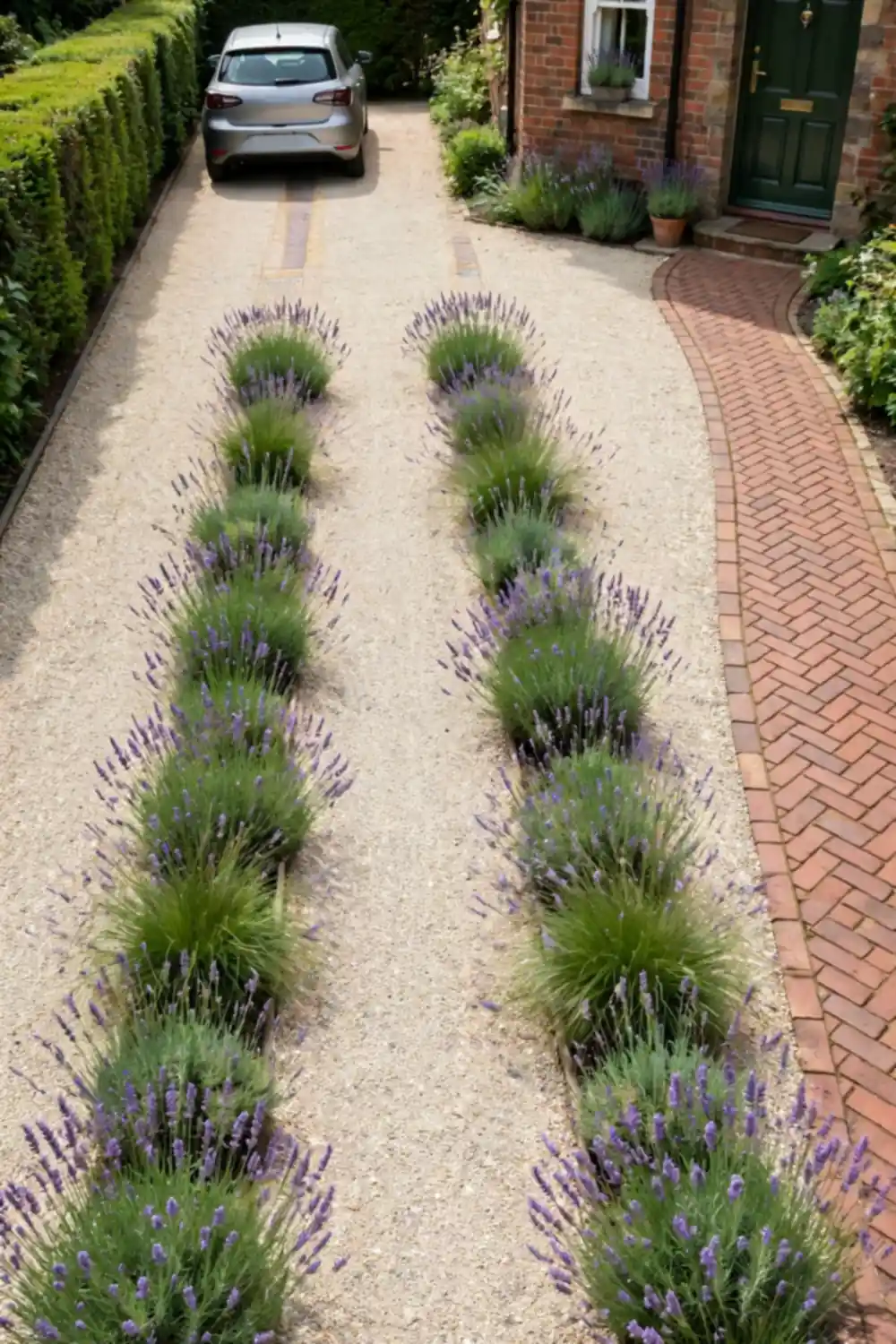
For many households, the front garden also has to be a car park — and that is where front gardens most often go wrong. A whole plot concreted over, with no planting at all, is bad for drainage, bad for wildlife and bad for the street. The good news is that parking and planting can share a front garden happily, if you plan it properly.
The simplest approach is to pave only what the car needs. Two strips of paving under the wheels, with planting or gravel between them, keep most of the plot green and cost less than a full slab. Grass grids — interlocking grids filled with grass or gravel — spread the car’s weight and let water through, so the surface stays green and permeable. A gravel driveway is another good option: cheap, permeable, easy to repair, and it looks right in front of period houses. If you prefer a solid surface, permeable block paving is designed with wider joints filled with grit so rainwater drains through, and resin-bound surfacing — stone aggregate set in resin over a permeable base — gives a smooth, smart finish that still lets water through.
Drainage is not a detail to leave until later. Rainwater from a front garden has to go somewhere, and if it runs onto the pavement or into the street it becomes a hazard in icy weather. A soakaway — a gravel-filled pit buried in the garden that lets water drain slowly into the ground — is the standard solution, and it is worth building properly at the start. Permeable paving, gravel and grass grids all help because they let rain soak in where it falls instead of running off.
There are legal points to check before you pave. In England, since 1 October 2008, planning permission is needed if you cover more than 5m² of your front garden with impermeable paving that does not drain to a permeable area. Using permeable surfaces, or directing water to a lawn or border, usually avoids the need for permission — but check with your local council, because rules can vary and conservation area rules may be stricter. If you live in a conservation area, or your house is listed, you may need permission for changes that would be permitted elsewhere, so a quick call to the planning department before you start can save an expensive mistake.
A dropped kerb is a separate matter. If you want to drive across the pavement to reach your front garden, you need a dropped kerb, which is a separate council application — typically costing around £800–£2,500 depending on your council and the work involved. You cannot simply drive over the pavement without one, and the council can require you to reinstate the kerb at your own cost. Apply early, because approvals can take weeks.
The front door: pots, planters and a welcome
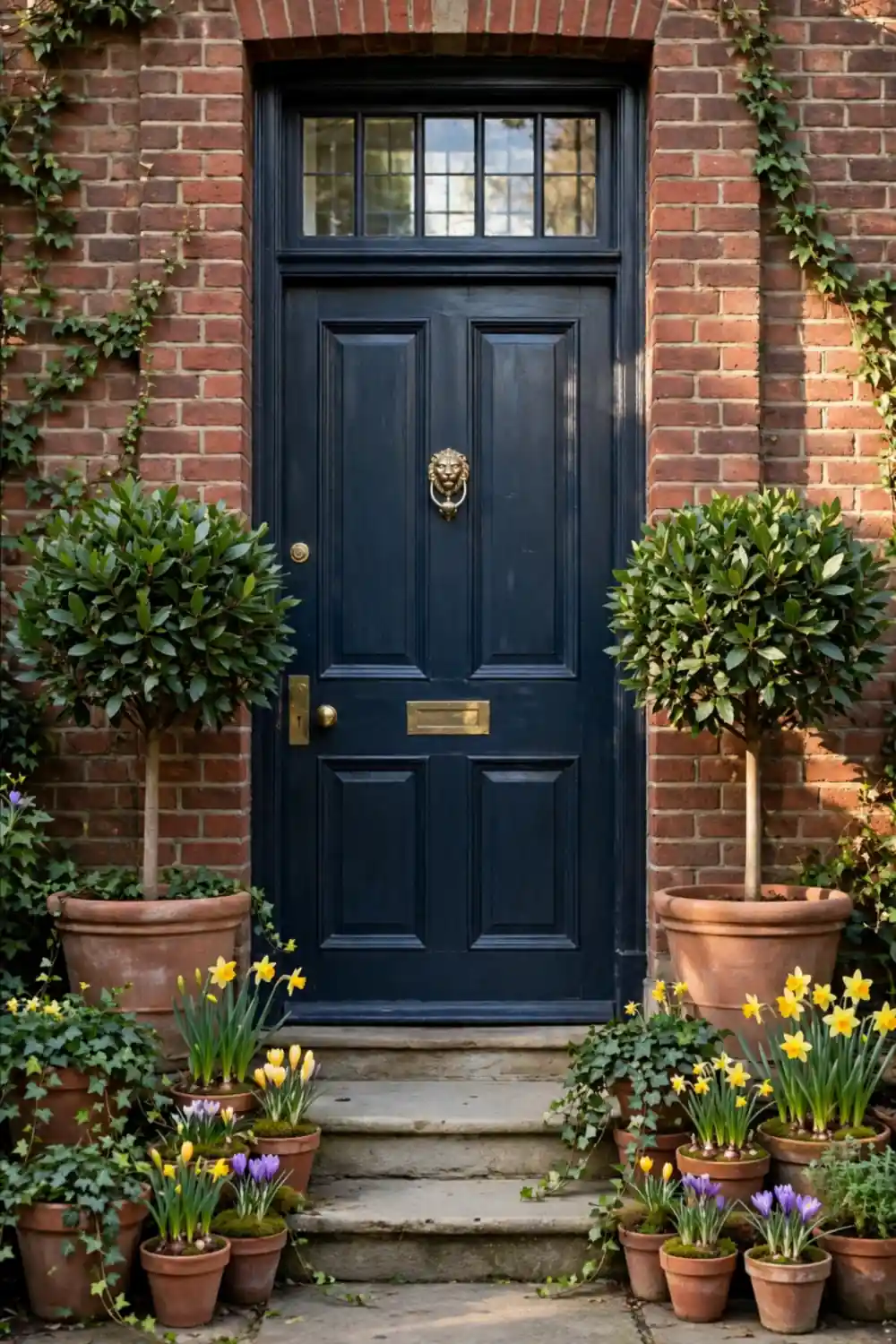
The front door is the heart of the front garden. It is where the garden meets the house, and a little effort here pays off more than anywhere else. Two matching planters, a clean doorstep and a plant or two at eye level can transform a house in an afternoon.
Start with the planters themselves. Matching planters either side of the door give symmetry, which reads as calm and welcoming even before a single plant goes in. Terracotta is the classic choice and suits brick and period houses; glazed ceramic in a deep blue or green suits modern homes; galvanised metal or Corten steel suits contemporary designs. Whatever you choose, make sure the pots are frost-resistant pots — cheap terracotta and ceramic can crack in a hard frost, and replacing a split pot in January is an avoidable expense. Check the label before you buy, and raise pots slightly off the ground on feet so water drains freely.
For the planting, a standard bay is the classic choice: a bay tree trained on a single clear stem with a clipped ball on top, in a large pot. It is evergreen, scented, useful in the kitchen, and it looks formal and confident flanking a door. Underplant the bay with seasonal colour — spring bulbs in spring, trailing lobelia in summer, cyclamen and ivy in winter — and the pots will look good all year. If bay feels too formal, a clipped cone of yew or Ilex crenata, a standard olive in a sunny spot, or a large hydrangea in a shady front garden all work well.
Think about the whole doorway, not just the pots. A climbing rose or a clematis trained around the door frame adds height and scent; a wall-mounted lantern gives warm light on dark evenings; a clean, well-swept step and a doormat that actually fits the doorway finish the picture. Keep the area clear of clutter — the doorway is not a storage area for boots, bikes and parcels. If you need storage, put it elsewhere and keep the entrance clean.
Finally, maintain what you plant. Pots dry out faster than beds, so water them in dry weather — even in winter during a dry spell — and feed container plants in spring with a slow-release fertiliser. A neglected planter by the door is worse than no planter at all, because it is the first thing visitors see. A ten-minute tidy once a week — deadheading, watering, sweeping the step — keeps the entrance looking loved all year.
Hiding bins, bikes and the practical bits
Every front garden has to hide something: wheelie bins, recycling boxes, bikes, a hose, perhaps an EV charger. The trick is to plan for these things rather than letting them take over. A bin left in the middle of the front garden will undo all your planting work in one glance.
A bin store is the best solution for wheelie bins. A simple timber store with a hinged lid and front doors, sized to hold two bins, keeps them out of sight and out of the rain. Build it against a wall or fence where it is easy to reach on collection day, and consider a green roof — a shallow tray of sedum planted on top — which softens the structure and gives pollinators a tiny habitat. If a full store is too much, a simple screen of trellis with a climbing plant, or a low evergreen hedge in front of the bins, will hide them from the street while keeping them accessible.
Bikes need a different solution. A small bike store, a wall-mounted rack under a canopy, or a neat lean-to at the side of the house keeps bikes dry and secure without filling the front garden. Avoid leaving bikes leaning against the front wall — they damage the brickwork and the plants, and they look untidy.
An EV charger is becoming a common front-garden feature. Mount it on the house wall or on a discreet post near the parking space, keep the cable tidy with a wall-mounted holder, and plant a low evergreen nearby to soften it. Choose a charger colour that blends with the house rather than shouting about itself. The same principle applies to meters, pipes and vents: paint them the colour of the wall behind them and they disappear; leave them bright white against dark brick and they will catch the eye every time.
The general rule is simple: anything practical should be easy to reach, easy to use and hard to see. Plan its position at the start, when you are laying out the path and the beds, and it will never become an afterthought that spoils the garden.
What a front garden makeover costs in the UK
Costs vary enormously with the size of the plot, the materials you choose and whether you do the work yourself or hire a landscaper — so treat every figure here as a typical 2026 range and get proper quotes for your own garden before you commit. The ranges below are hedged deliberately: they are what UK homeowners commonly pay, not a promise of what your garden will cost.
A modest planting refresh — new plants, compost, mulch and a few pots, done yourself — typically costs £300–£1,500 depending on the size of the beds and the size of the plants you buy. Buying small plants and letting them grow is the cheapest route; buying instant, mature specimens can double or triple the bill. A new front path in block paving or natural stone, laid professionally, is usually priced per square metre: gravel costs roughly £25–£40 per sq m laid, paving slabs around £50–£80 per sq m, permeable block paving roughly £60–£90 per sq m (some suppliers quote £70–£120 for premium permeable block), and resin-bound surfacing roughly £80–£130 per sq m. Add the cost of excavation, a proper sub-base and drainage — a soakaway if needed — on top of the surface price.
A full driveway for two cars, including excavation, sub-base, drainage and surfacing, typically runs from about £2,000 for a simple gravel driveway to £9,500 or more for a large permeable block or resin-bound driveway with new edging, a dropped kerb and planting. The dropped kerb itself is usually a separate council cost of around £800–£2,500. A bin store can be bought ready-made for a few hundred pounds or built bespoke for more; a pair of good frost-resistant pots with standard bays might cost £150–£400 for the pair, depending on size.
To keep costs down, phase the work. Do the hard landscaping first — path, edging, drainage — then the structural planting, then the seasonal colour. Buy plants in autumn, when nurseries often discount stock, and plant bare-root shrubs and roses in the dormant season for the best value. Do the work you can do yourself — clearing, planting, mulching, painting a fence — and hire professionals for the skilled jobs: excavation, laying a path base, drainage and anything involving the pavement. A front garden done in sensible phases over a year often looks better than one rushed in a single expensive month, because you learn how the light and the soil behave before you commit to the final planting.
Frequently asked questions
Do I need planning permission to pave my front garden?
Usually not, if you do it properly. In England, since 1 October 2008, you need planning permission if you cover more than 5m² of your front garden with impermeable paving that does not drain to a permeable area, such as a lawn or border. If you use permeable paving, gravel, resin-bound surfacing on a permeable base, or direct the water to a soakaway or planted area, you generally do not need permission. Rules are stricter in a conservation area or for a listed building, so check with your local council’s planning department before you start — a quick call is free and can save an expensive mistake.
How can I make a small front garden look bigger?
Keep planting low at the front and taller at the back so the eye travels through the space; use a pale path material to reflect light; repeat one or two plants along the whole frontage instead of dotting many different plants about; and use vertical planting — a climbing rose on the wall or a multi-stem tree — to add interest without taking ground space. Avoid tall fences and large shrubs that close the space in, and keep the path clear and uncluttered so the garden feels open.
What are the best low-maintenance plants for a front garden?
For a genuinely low maintenance front garden, build around evergreen plants that need one clip a year: Ilex crenata, Euonymus, Skimmia japonica and Viburnum tinus for structure; lavender and hebe for scent and colour; ornamental grasses for movement. Add ground cover such as Geranium macrorrhizum to suppress weeds, and spring bulbs for colour with no effort at all. Avoid plants that need regular deadheading, staking or watering unless you enjoy that kind of gardening.
How do I fit parking and planting in a small front garden?
Pave only what the car needs: two wheel tracks with a planted strip or grass grid between them, or a permeable gravel driveway edged with planting. Keep a border along the house wall and the boundary, even if it is only 30–40cm wide, and plant it with tough, low evergreens and a lavender hedge. Use vertical planting on the walls and a small multi-stem tree at the corner to keep the garden green without losing the parking space. And remember the drainage and planning rules: use permeable surfaces and check whether you need a dropped kerb.
How much does a front garden makeover cost?
A modest planting refresh done yourself typically costs £300–£1,500. A new path runs roughly £25–£40 per sq m for gravel, £50–£80 for paving slabs, £60–£90 (up to £70–£120 for premium) for permeable block paving, and £80–£130 for resin-bound surfacing. A full two-car driveway typically costs £2,000–£9,500 including drainage, with a dropped kerb adding around £800–£2,500 as a separate council cost. Prices are typical 2026 ranges and vary by region and materials — always get two or three quotes before you commit.
Your front garden does not need to be large, expensive or perfect to be a pleasure. Start with the bones — a good path, crisp edging and a few evergreens — add one or two ideas from the list above, and keep the doorway welcoming. Do that, and the first thing you see when you come home will be something you are quietly proud of, every single day. For help with the planting itself, our guides to creating stunning garden borders, climbing plants and garden plants for shade will help you choose the right plants for your soil and aspect.