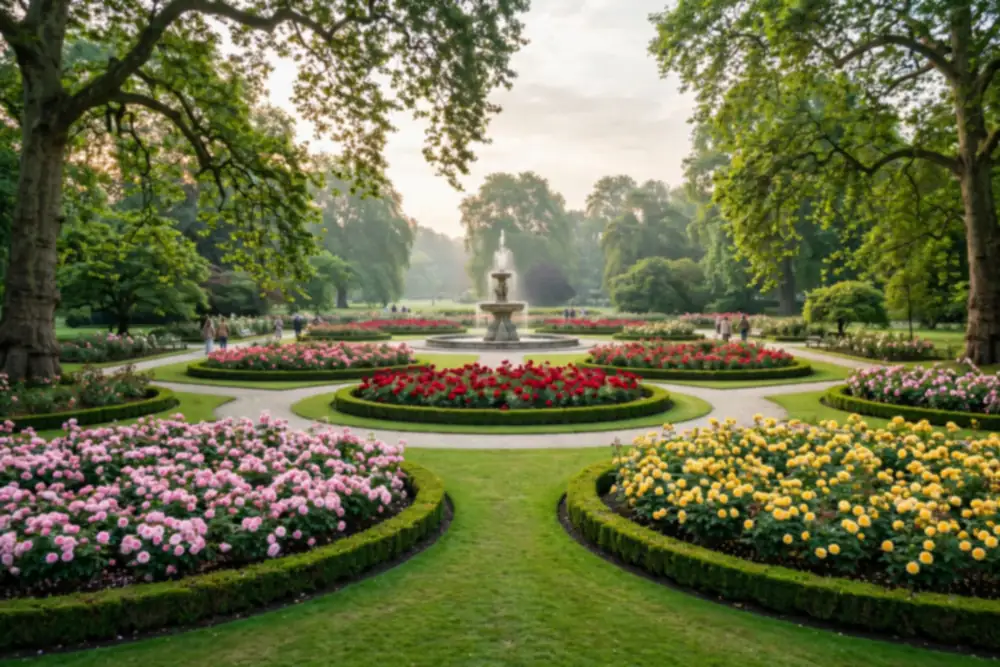
There is a moment, usually in the first two weeks of June, when Queen Mary’s Gardens in Regent’s Park stops being a garden and becomes something else entirely — a wave of colour and scent so strong you can smell the roses before you see them. Around 12,000 roses bloom across 85 single-variety beds in what is London’s largest collection of roses, all of it completely free to enter. No ticket, no queue, no booking — just a quiet corner of one of London’s great Royal Parks, ten minutes from Baker Street station. This guide covers when to go for the best blooms, what to look for inside the gardens, how to get there, and how to fold the visit into a full Regent’s Park day.
Why Queen Mary’s Gardens Is London’s Prettiest Free Garden
London has no shortage of beautiful green spaces, but Queen Mary’s Gardens has something the others do not: scale, order and scent, all at once. The garden sits in the southern section of Regent’s Park, inside the Inner Circle, and it was laid out in the 1930s on the former grounds of the Royal Botanic Society. Named after Queen Mary, the wife of King George V, it opened to the public in the early 1930s, with the rose garden completed in 1934 and the gardens re-opened under their current name in 1935. Queen Mary’s rose garden has been open to the public ever since. Nearly a century later, it remains the most romantic rose garden in London — and one of the best free things to do in London, full stop. It is the finest formal rose garden in any park in London, and it costs nothing to enter.
What makes it special is not a single view or a famous building. It is the sheer density of the planting. Bed after bed of roses, each one a single variety, is arranged in formal patterns around lawns, paths and benches, with shrubberies placed to give the garden a sense of privacy and mystery — you turn a corner and find a new colour, a new scent, a new little pocket of shade. The Royal Parks, who look after the garden, describe the rich sights and scents of these marvellous plants as the heart of the experience, and they are right. Even people who know nothing about roses leave knowing what a good rose smells like.
It is also, honestly, one of the calmest places in central London. Regent’s Park is one of the capital’s largest Royal Parks, covering 197 hectares including Primrose Hill, yet the gardens feel sheltered and unhurried. Couples sit on benches with a book. Photographers arrive at dawn. Families spread a picnic on the lawns. There is no café inside the garden itself and no gift shop — just the flowers, the fountains and the sound of the city politely kept at a distance.
The Roses: London’s Largest Collection
The headline number is the one every guide quotes: Queen Mary’s Gardens holds London’s largest collection of roses. The Royal Parks’ own page puts it at approximately 8,000 roses, while many visitor guides quote around 12,000 rose plants — the difference comes down to how the beds are counted after replanting seasons. By any count it is the largest rose garden in London, and the scale is unmistakable when you stand in the middle of it in June: thousands of blooms in every shade of pink, red, yellow, white and orange, all of them labelled, all of them chosen to flower in succession so the display lasts for months.
There are 85 single-variety beds on display, which is what makes the garden so rewarding for anyone who actually likes roses rather than just liking the idea of them. Each bed holds one variety, so you can compare a deep red hybrid tea beside a soft apricot floribunda and see exactly how they differ — in colour, in shape, in scent, in the way the petals hold up in the sun. It is a living catalogue, and it is free.
The Rose Varieties to Look For
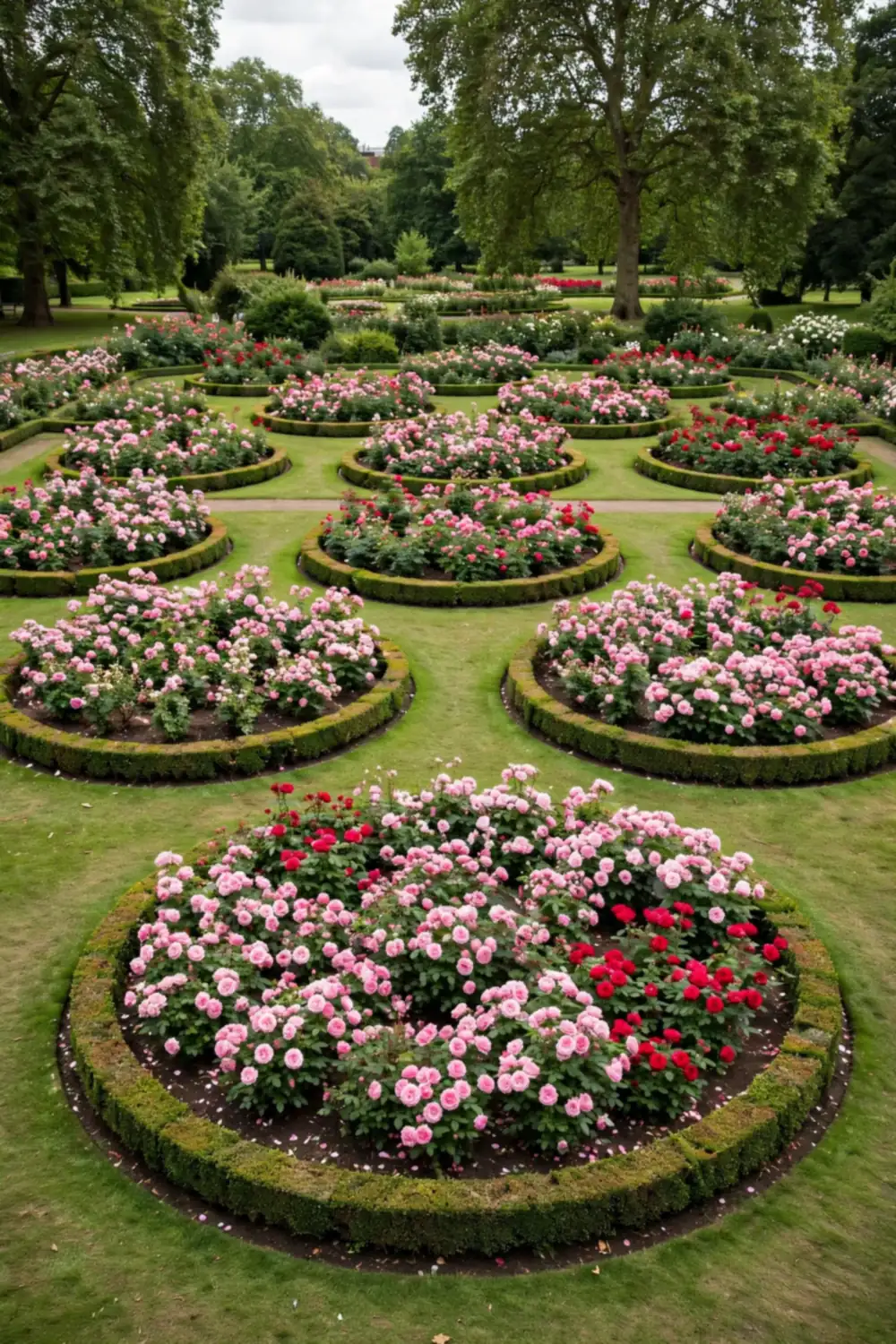
Examples of most rose varieties, from the classics to the most modern English roses, are present in the gardens, and a slow walk among the rose bushes is a short course in what roses can be. Hybrid tea roses give you the classic single bloom on a long stem — the florist’s rose, in about thirty varieties here, at their best from June to September. Floribunda roses flower in clusters rather than single blooms, which makes their beds look fuller and more generous; they flower from May to October and are the ones that keep the garden colourful long after the first flush has passed. Climbing roses scramble over the rose-covered arches that make some of the prettiest photo spots in the gardens, flowering mainly from June to August. Shrub roses, looser and more natural in shape, fill the borders from May to September.
Look out, too, for the garden’s own variety. One of the 85 beds is home to the Royal Parks rose, bred for the park itself — a small, charming detail that tells you how seriously this garden takes its roses. The English roses, the modern shrub roses bred for old-rose scent and repeat flowering, are among the most fragrant beds in the garden; stand downwind of one on a warm June morning and you will understand why people plan whole trips around this place.
If you grow roses at home, bring a notebook. Every bed is labelled with its variety name, and the planting combinations — tall delphiniums behind low floribundas, pale roses against dark shrubbery — are worth stealing for your own garden. Our guide to garden design ideas has more on borrowing formal planting ideas for a small space.
When to Visit Queen Mary’s Gardens: The Best Time for Blooms
Timing is everything here, and the honest answer is that the garden has a season. The roses do not bloom all year round, so planning your trip around the flowering calendar makes the difference between a good visit and an unforgettable one.
Peak Bloom: Late May to Early July
The best time to visit Queen Mary’s Gardens is late May to early July, when the majority of roses are in full bloom. The Royal Parks’ own advice is precise: to see the best blooms, visit in the first two weeks of June. That is when the first great flush peaks — thousands of roses unfurling at once, the fragrance at its strongest, the colours at their brightest. Regular visitors say the blooms appear at their peak in the first week of June, and the garden stays spectacular through the rest of the month.
June is also, inevitably, the busiest month. The garden can get crowded at midday on a sunny weekend, especially around the circular rose beds and the arches. Plan your visit for a weekday morning if you can — early mornings offer softer light, fewer people and the scent at its freshest — or come in the late afternoon, when the golden hour light turns the whole garden warm and the crowds thin out. Both are far better than the middle of the day, when the sun is harsh for photography and there is very little shade in the rose beds themselves.
The Second Bloom: September to October
Miss June and all is not lost. A second, smaller bloom happens in early autumn, when many varieties flower again and the garden gets a second wind. September to October is a lovely time to visit: the light is softer, the park is quieter, and the roses that do flower — particularly the floribundas — still put on a generous show against the turning leaves of the surrounding trees. It is never as overwhelming as June, but it is arguably more peaceful, and for photography the autumn light is kinder.
Visiting in Winter: What to Expect
Winter is the honest caveat. From late autumn through early spring most roses are dormant, pruned back to bare stems, and the rose beds can look stark. If you visit in November or December, do not expect a wall of colour — expect instead the garden’s bones: the formal layout, the fountains, the paths, the shrubberies and the Winter Garden, which is designed to shine in winter and early spring, with plants chosen to look their best in the colder months rather than in summer. The garden is still free, still open from dawn to dusk, and still a peaceful walk — but time your first visit for June if the roses are the reason you are coming.
What to See Inside Queen Mary’s Gardens
The roses are the reason to come, but they are not the only reason to stay. The garden rewards a slow wander, and several features are worth seeking out rather than stumbling past.
The Circular Rose Beds and the Rose-Covered Arches
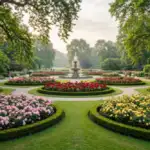
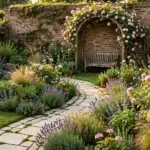
The circular rose beds are the garden’s centrepiece and its most photographed spot. Concentric rings of roses in graduated colour create a rainbow effect that looks designed for a camera — because, in a sense, it is. The beds sit in an open lawn, so the light reaches them all day, and the effect from a few steps back is a flat disc of colour against green grass. The rose-covered arches nearby are the garden’s other classic photograph: climbing roses trained over curved frames, forming tunnels of bloom in June. Walk through slowly; the scent inside an arch on a warm day is the whole garden concentrated into a few steps.
The Triton and Dryads Fountain
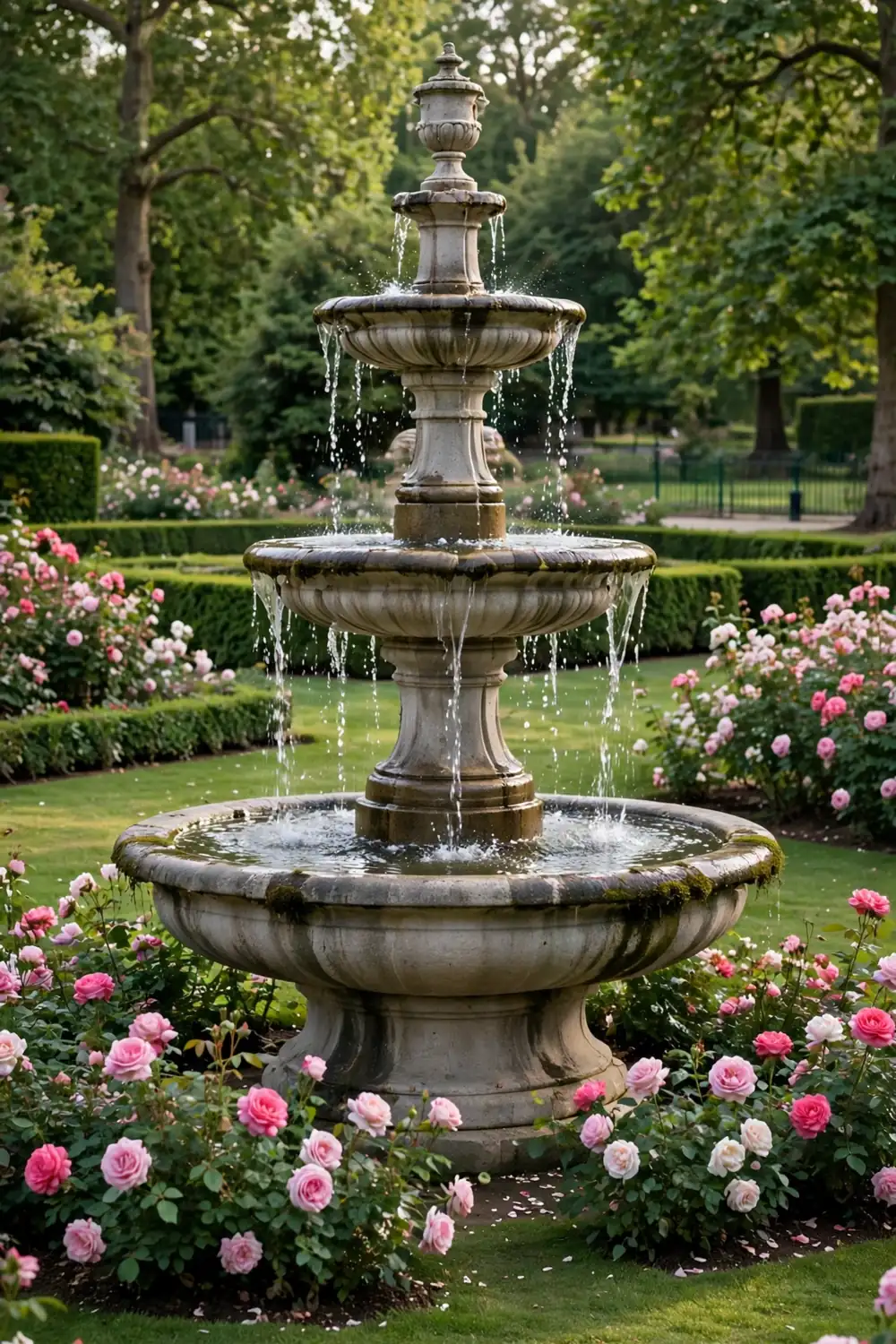
The Triton and Dryads Fountain is the garden’s great water feature — a classical fountain with cascading water, set among lawns and planting where visitors gather to sit and listen. It gives the garden its sound as much as its look: on a quiet morning the water is the loudest thing in the garden, and the benches around it are the best seats in the house. It is also a useful meeting point if your group splits up among the beds.
The Delphinium Border
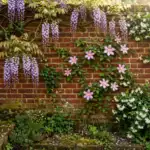
Beside the roses, the Delphinium Border is the feature regulars mention most. Tall spires of blue delphiniums rise behind the lower rose beds, giving the garden its vertical lines and its coolest colour. The contrast — blue spires against warm rose pinks and reds — is one of the garden’s best planting combinations, and it flowers in step with the roses, so June visitors get both at once.
The Avenue Gardens and the Winter Garden
The Avenue Gardens, the long planted walks that frame the rose garden, are worth exploring in every season. They hold countless flower beds, plants and trees, and wandering through their lush greenery is pure joy even when the roses are not in flower. The Winter Garden, tucked into the same area, is the garden’s answer to the off-season: plants chosen for winter interest — coloured stems, evergreen structure, early spring flowers — so that the garden still has something to offer when the rose beds are bare.
Look out, too, for the rock garden, the peaceful ponds and the striking sculptures scattered through the planting. None of them is signposted like a tourist attraction, which is rather the point: Queen Mary’s Gardens is a garden first and a sight second, and its pleasures are the quiet, unlabelled kind.
How to Get to Queen Mary’s Gardens
Queen Mary’s Gardens sits inside Regent’s Park at Chester Road, London NW1 4NR, in the southern section of the park within the Inner Circle. It is easy to reach, but Regent’s Park is large, so it helps to know which entrance to aim for.
The nearest Tube stations are Regent’s Park station on the Bakerloo line, Baker Street station (Bakerloo, Circle, Hammersmith & City, Jubilee and Metropolitan lines) and Great Portland Street (Circle, Hammersmith & City and Metropolitan lines). From any of them it is a short walk into the park — around ten to fifteen minutes from Baker Street through the park’s southern gates, following the signs for the Rose Garden, which is well signposted once you are inside. Many bus routes also serve the streets around the park.
Entry is free — there are no tickets, no booking and no admission fee at all. The gardens are open daily from early morning until dusk; the park’s pedestrian gates generally open at 5:00 am and the gardens are usually listed as open 5:00 am to 9:00 pm in summer, closing earlier as the evenings draw in. Hours can change with the season and for special events, so it is worth a quick check on the Royal Parks website before a winter visit.
Wear comfortable shoes. Regent’s Park is vast, and the walk from the station, around the gardens and on to the boating lake or Primrose Hill adds up quickly. There is little shade in the rose beds, so on a hot June day bring water, sun cream and a hat if you plan to linger. Public toilets and cafés are available elsewhere in the park, and there are food vans near the main entrances in summer.
Photography Tips for Queen Mary’s Gardens
The gardens are one of the most photographed spots in Regent’s Park, and a little planning goes a long way. Early morning is the best time: the light is soft, the dew is still on the petals, the scent is strongest and the garden is at its quietest. Late afternoon, the golden hour, is the second-best window — the low sun warms the colours and throws long shadows across the lawns, and the arches photograph beautifully with the light behind them.
Photography for personal use is generally allowed, and nobody will mind a tripod at a quiet hour, but keep paths clear and stay off the beds — the gardeners work hard to keep 85 varieties in show condition, and a single careless step can damage a plant. Drones are prohibited in the Royal Parks, so leave that shot to the professionals. The circular beds photograph best from a slight elevation — even standing on a bench edge (carefully) changes the composition — and the arches work best with a person walking through them for scale, shot from a little distance rather than close up.
Combine Your Visit: Regent’s Park in a Day
Queen Mary’s Gardens is a wonderful stop on its own, but it sits inside one of London’s great parks, and the smart move is to build a day around it. The gardens take one to two hours at a leisurely pace; the park around them can happily fill the rest of the day.
The Japanese Garden and the Golden Jubilee Gates
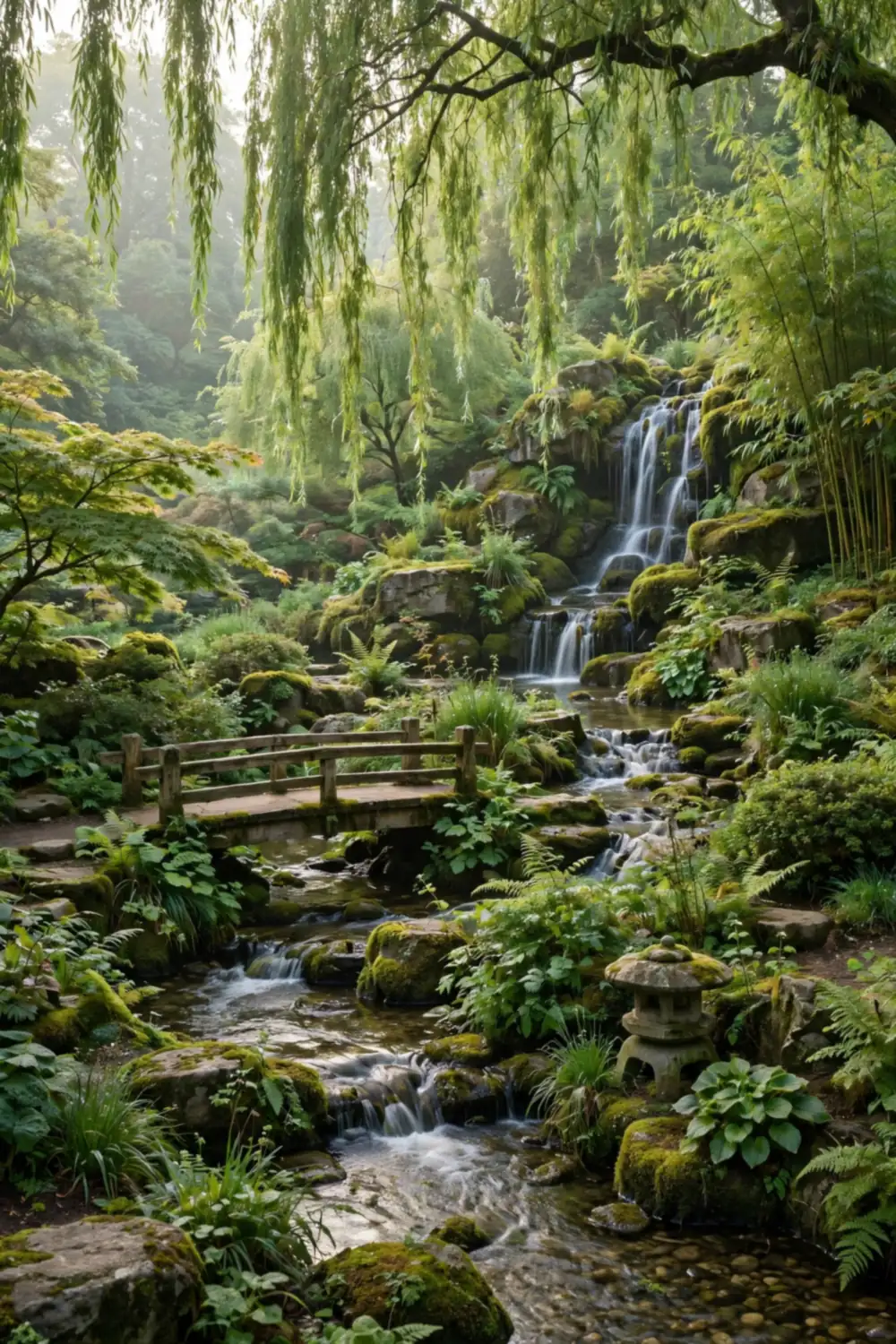
A short walk from the rose garden, the Japanese Garden is one of the hidden gems of Regent’s Park — gentle waterfalls, streams, willow trees and careful planting that feel a world away from the busy streets outside. The Golden Jubilee Gates nearby, created to mark the Silver Jubilee of King George V, make a grand entrance into the gardens and a fine photograph in their own right.
The Boating Lake
Just a short stroll from Queen Mary’s Gardens is the Boating Lake, where you can hire rowboats or pedalos and drift among the ducks and swans. There is a dedicated children’s boating lake too, open on weekends, bank holidays and during school holidays from late March to late October. It is the natural next stop after the roses, especially with children in tow.
Regent’s Park Open Air Theatre
From late May to early September, the Open Air Theatre stages performances in the park — Shakespeare, musicals and family shows under the evening sky. An evening performance after a daytime visit to the rose garden is one of the great London summer days out, but book ahead: popular productions sell out weeks in advance.
London Zoo, Primrose Hill and the Queen Elizabeth II Garden
London Zoo sits at the northern end of Regent’s Park and makes a natural pairing with the gardens for a family day. From the park’s northern edge it is a short climb to Primrose Hill, the 63-metre summit with one of the most photographed skylines in London — our Primrose Hill guide covers the walk and the best time to go. The Queen Elizabeth II Garden, one of the park’s newest attractions just off the Broad Walk, is another quiet corner worth finding. And if you want more free views after the park, our guide to the best free things to do in London gathers the city’s free rooftops, museums and hilltops into one plan, while our London experiences guide rounds up the best paid and free days out across the city.
Practical Tips for Visiting Queen Mary’s Gardens
A few honest notes before you go. The gardens are free, open and unguided — which is most of their charm, but it means a little preparation helps. Bring water and sun protection in summer, as there is little shade among the rose beds. Pack a picnic: the lawns are made for it, and a sandwich eaten among 12,000 roses beats a café lunch on most days. Arrive early or late to avoid the midday crowds in June. Check the Royal Parks website for any closures or events before you travel, especially in winter when hours shorten. And give yourself permission to be slow — this is not a sight to tick off, but a garden to sit in. The benches are there for a reason. Use them.
Frequently Asked Questions
Is Queen Mary’s Gardens free to enter?
Yes. Queen Mary’s Gardens is completely free to enter — free entry, no admission fee, no ticket and no booking. It is a public garden inside Regent’s Park, one of London’s Royal Parks, and it is open daily from early morning until dusk.
When is the best time to visit Queen Mary’s Gardens?
The best time to visit is late May to early July, with the peak bloom in the first two weeks of June, when the roses are at their most spectacular. A second, smaller bloom follows in September and October. Winter visits are still pleasant for the garden’s structure and the Winter Garden, but most roses will be dormant.
How many roses are in Queen Mary’s Gardens?
Queen Mary’s Gardens holds London’s largest collection of roses — approximately 8,000 roses according to the Royal Parks, with many guides quoting around 12,000 after replanting — arranged in 85 single-variety beds. The collection includes hybrid tea, floribunda, climbing and shrub roses, plus modern English roses and the garden’s own Royal Parks rose.
How do I get to Queen Mary’s Gardens?
The gardens are inside Regent’s Park at Chester Road, London NW1 4NR. The nearest Tube stations are Regent’s Park (Bakerloo line), Baker Street (Bakerloo, Circle, Hammersmith & City, Jubilee and Metropolitan lines) and Great Portland Street. From Baker Street it is about a ten to fifteen minute walk through the park, following signs for the Rose Garden.
What else is near Queen Mary’s Gardens?
Queen Mary’s Gardens sits inside Regent’s Park, so the Japanese Garden, the Golden Jubilee Gates, the Boating Lake, the Open Air Theatre, London Zoo and the Queen Elizabeth II Garden are all a short walk away. Primrose Hill, with its famous skyline view, is just beyond the park’s northern edge, and central London — Baker Street, Marylebone and Camden — is minutes away.