There is a moment every spring, usually in late March or April, when a magnolia tree stops being just another tree in the garden and becomes the whole garden. One week it is a tangle of bare branches; the next it is covered in goblet-shaped flowers so large you can see them from the end of the street. If you are thinking of planting one, this guide covers everything that actually matters: which magnolia tree suits a UK garden, where and when to plant it, how to care for it in its first few years, and how to avoid the two mistakes — wrong variety, wrong spot — that cause most disappointments.
Why a Magnolia Tree Earns Its Place in a UK Garden
Magnolias are among the oldest flowering plants on Earth, yet they suit modern British gardens remarkably well. Most deciduous magnolias are fully hardy across the UK, they need very little pruning, they rarely suffer serious pest or disease problems, and once established they ask for little more than water in a dry summer and a mulch in spring. Their flowers arrive early, often before the leaves, which is why a magnolia in bloom feels like the true start of spring — and why gardeners forgive them a short flowering season. A good specimen will flower for two to four weeks, and an evergreen magnolia grandiflora then carries the display into summer with large, lemon-scented white blooms.
That said, a magnolia is not a plant-and-forget shrub in its first year. It has fleshy, brittle roots that dislike disturbance, shallow roots that dry out faster than you might expect, and flower buds that a late frost can brown overnight. Get the planting right and choose a variety matched to your space, and most of the care below becomes a pleasant annual routine rather than a rescue mission.
The Best Magnolia Varieties for UK Gardens
Choosing the right variety matters more than any other decision, because magnolias range from compact shrubs of two metres to trees of fifteen metres. Match the plant to your space, not to the photograph on the label.
Magnolia stellata — the star magnolia for small gardens
Magnolia stellata is the best choice for a small garden and for a pot. It forms a slow-growing, bushy shrub around 2–3 metres tall, covered in masses of white, star-shaped flowers in March and April. It is fragrant, it flowers young, and it stays manageable without pruning. If you have a courtyard, a front garden or a large container, start here.
Magnolia × soulangeana — the classic saucer magnolia
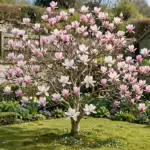
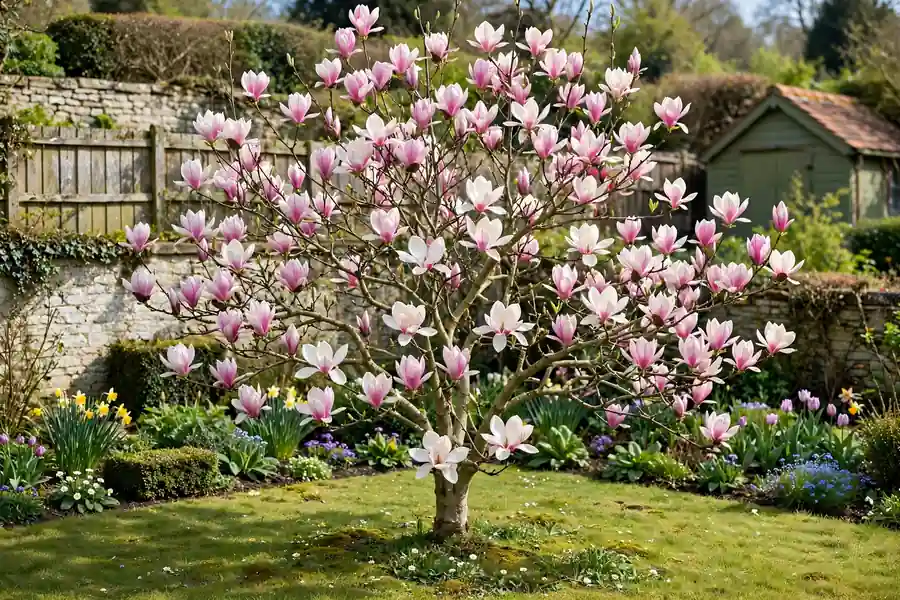
This is the classic garden magnolia, grown in British gardens for around 200 years and still the most popular. Its large goblet-shaped flowers in pink, white and purple open on bare branches in April, before the leaves appear. It grows to 6–8 metres tall and about as wide, so it needs a good-sized garden — and room for its roots. Give it space and it will reward you for decades.
Magnolia grandiflora — the evergreen magnolia
Magnolia grandiflora, sometimes called bull bay, is the evergreen magnolia. It has huge, waxy, lemon-scented white flowers from June to September and glossy dark leaves all year, with rusty undersides. It can grow into a big tree, so in most UK gardens it is best trained against a sunny south- or west-facing wall, where the extra warmth helps it flower. Compact forms such as ‘Little Gem’, around 4–6 metres, bring the same look to smaller spaces.
Magnolia ‘Susan’ and the Little Girl hybrids
‘Susan’ is one of the “Little Girl” magnolias, bred in the 1950s for small gardens. It grows 3–4 metres tall, with scented reddish-purple flowers that fade to pink, and — crucially — it flowers in late April and May, which means it usually misses the worst of the late frosts. That late flowering makes it one of the most reliable choices for frost-prone gardens and colder parts of the UK. ‘Elizabeth’, with pale yellow flowers, and ‘Black Tulip’, with deep burgundy blooms, are other compact favourites in the same size range.
Magnolia liliiflora ‘Nigra’ — the deep purple lily magnolia
For the deepest colour of any magnolia, look at Magnolia liliiflora ‘Nigra’. It is a compact shrub around 3 metres tall, with dark purple-red, tulip-shaped flowers in April and May and sometimes a few more in late summer. Its upright shape fits neatly in a border among other shrubs, and it can take a few years to start flowering — patience, rather than a problem, is the price of that colour.
Where to Plant a Magnolia Tree
A magnolia tree wants sun and shelter. Choose a spot in full sun or light shade, sheltered from cold easterly and northerly winds, and away from a frost pocket at the bottom of a slope. Morning sun is a mixed blessing: it thaws frosted buds quickly, which can damage them, so a position that warms up a little later in the day often protects early flowers better than a spot that catches the first sun. Avoid planting under a large tree that will compete for water, and give the tree room to reach its mature spread — planting a soulangeana two metres from a wall is a future pruning problem, not a design choice.
Soil matters almost as much as sun. Magnolias prefer moist, well-drained, fertile soil that is neutral to slightly acidic (roughly pH 5.5–6.5). They dislike waterlogged ground and very chalky, alkaline soil, where they can develop yellow leaves from iron chlorosis. If your soil is chalky, choose a tolerant variety, plant in a large container with ericaceous compost, or improve the planting area generously with organic matter rather than fighting the soil every year. Shallow, fleshy roots also mean magnolias dislike having their root zone dug over or compacted, so settle them in a quiet corner of a border where they will not be disturbed.
When to Plant a Magnolia Tree
The best time to plant a magnolia tree in the UK is autumn to early spring, when the tree is dormant — roughly October to April — and the ground is neither frozen nor waterlogged. Autumn planting, when the soil is still warm from summer and autumn rain keeps it moist, gives roots time to establish before spring growth. If you buy a container-grown tree in summer, keep it well watered in its pot in a sunny spot and plant it once it goes dormant, rather than forcing it into dry summer soil. Container-grown magnolias can be planted at other times of year, but they will need much more watering in their first summer.
How to Plant a Magnolia Tree, Step by Step
Water the tree thoroughly an hour before planting. Dig a hole roughly twice the width of the container and no deeper than the container itself — magnolias must be planted at the same level they were in the pot, never deeper, because their shallow roots suffer if buried. Gently ease the plant from its pot and tease out any circling roots at the bottom, taking care not to snap the brittle roots. If the soil is poor, mix well-rotted compost or leaf mould into the backfill, but do not pile soil or mulch against the stem.
Set the tree in the hole, backfill, and firm gently with your foot. Water well, then mulch with a thick layer of leaf mould, ericaceous compost or well-rotted manure, keeping the mulch a few centimetres clear of the stem. Stake the tree for its first few years if the site is exposed, using a low stake and a soft tie that will not rub the bark. Then leave it alone: magnolias establish slowly, and constant moving or replanting sets them back far more than a quiet first year does.
Magnolia Tree Care: Watering, Feeding and Mulching
Once established, magnolias are low-maintenance, but the first two or three years decide how well they flower for the next thirty. Water newly planted trees deeply and regularly through spring and summer — a thorough soak two or three times a week in dry weather beats a daily sprinkle — and do not let the shallow roots dry out fully, even in an established tree during a hot, dry summer. Trees in pots need regular watering throughout every growing season, allowing the top couple of centimetres of compost to dry between waterings.
Feed for the first few years with a general-purpose granular fertiliser in late winter, lightly worked into the soil surface, and top with a thick mulch of well-rotted organic matter in early spring. The mulch does three jobs at once: it locks in moisture, suppresses weeds and feeds the soil as it breaks down. Once a tree planted in the ground is established, it will usually need no regular feeding unless growth looks weak. Avoid high-nitrogen feeds, which push leafy growth at the expense of flowers, and never feed a stressed, drought-dry tree — water it first.
For a seasonal routine that pairs well with magnolia care, see our guide to how to winterize your garden before the first frost, and if you are planning the planting around it, our tips on how to create stunning garden borders will help you place a magnolia where its spring display gets the frame it deserves.
How to Prune a Magnolia Tree
The best pruning advice for magnolias is simple: prune as little as possible. Magnolias do not need regular pruning, and hard pruning often produces wispy, upright shoots that spoil the natural shape and can reduce flowering for a few years. If you must prune, do it immediately after flowering, between mid-summer and early autumn for deciduous types, when the tree is in full leaf and wounds heal before winter. Evergreen magnolias are best pruned in spring.
Remove only dead, diseased, damaged or crossing branches, cutting back to a main stem or a healthy outward-facing shoot, and keep the centre of the tree open so air can circulate. If a magnolia has outgrown its space, renovate it gradually over two or three years, removing no more than a third of the branches in any one year, rather than cutting it back hard in a single season. Magnolias are slow to heal, and new growth often does not appear until the second season after pruning — so a light, patient hand always wins.
Growing a Magnolia Tree in a Pot
A magnolia in a pot is entirely possible, provided you choose a compact variety such as stellata or ‘Susan’ and a large, deep container with good drainage. Use loam-based compost mixed with ericaceous compost, water regularly through the growing season, and feed annually in spring. Top-dress the pot each spring if you are not moving the tree into a larger container, replacing the top few centimetres of compost. Expect a potted magnolia to flower a little less lavishly than one in the ground, and to need more attention in a dry summer — but for a patio, balcony or small front garden, it is one of the most rewarding container trees you can grow.
Common Magnolia Problems — and How to Fix Them
Most magnolia problems have a simple cause. If your magnolia is not flowering, the likeliest reasons are youth (many take two or three years to bloom), too much shade, late frost damage to the buds, or overfeeding with high-nitrogen fertiliser. Move a young tree only if you must — magnolias dislike transplanting — and otherwise give it sun, patience and a lighter hand with feed.
Brown, papery flowers after a cold night are almost always late frost damage, not disease. There is no cure for that year’s blooms, but choosing a later-flowering variety, planting in a sheltered spot away from early morning sun, and covering a small tree with fleece on forecast frost nights will protect future displays. Yellow leaves with green veins usually point to chlorosis on alkaline soil; mulching with ericaceous compost and, for potted trees, switching to ericaceous feed will help, though a badly suited variety on chalk will always struggle.
Pests and diseases are rarely serious. Magnolias can suffer from scale insects, coral spot on dead wood, and occasionally honey fungus, but a healthy, well-watered tree in the right spot usually outgrows minor trouble. Remove dead wood promptly, keep the base clear of debris, and avoid wounding the bark with strimmers or mowers — magnolia bark is thin and slow to heal.
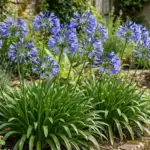
For another spring performer that pairs beautifully with a magnolia in a UK border, see our complete agapanthus growing and care guide — its summer flower heads pick up the display just as the magnolia’s spring show ends.
Where to See Magnolias in London
If you want to see mature magnolias before you buy, London is a generous place to look in spring. The great botanic gardens and National Trust gardens hold superb specimens, and many London squares and parks plant soulangeana and stellata where their pink and white flowers stop passers-by in March and April. A spring walk that pairs a magnolia hunt with a free rooftop view — Sky Garden at 20 Fenchurch Street, for example — turns a plant-shopping trip into a proper day out, and it lets you judge the true mature size of a variety in a way no nursery label can.
Frequently Asked Questions
How fast does a magnolia tree grow?
Slowly. Most garden magnolias grow 15–30 centimetres a year and take 10–20 years to reach mature size, which is why buying the largest plant you can afford is often worth it. A stellata may reach 2–3 metres in a decade; a soulangeana will take longer to reach 6–8 metres.
When does a magnolia tree flower in the UK?
Deciduous magnolias flower from March to May, with stellata earliest and ‘Susan’ latest. Evergreen magnolia grandiflora flowers later, from June to September. The exact timing shifts with variety, location and spring weather, and a late frost can shorten the display.
Do magnolia trees lose their leaves in winter?
Most magnolias are deciduous and lose their leaves in autumn, regrowing them in spring — often after flowering. Magnolia grandiflora is evergreen and keeps its glossy leaves all year, which makes it useful for screening as well as flowers.
Can I grow a magnolia tree in a small garden?
Yes, if you choose a compact variety. Magnolia stellata, ‘Susan’, ‘Genie’ and ‘Little Gem’ all stay around 2.5–4 metres and suit small gardens, front gardens and large pots. Avoid soulangeana and full-sized grandiflora in a small space.
Why are my magnolia flowers turning brown?
Almost always frost. Flower buds that open into a cold snap, or that are thawed too quickly by early morning sun, turn brown and papery. The tree itself is unharmed and will flower again next year; plant in a sheltered spot and choose a later-flowering variety to reduce the risk.