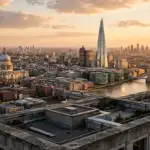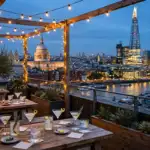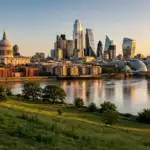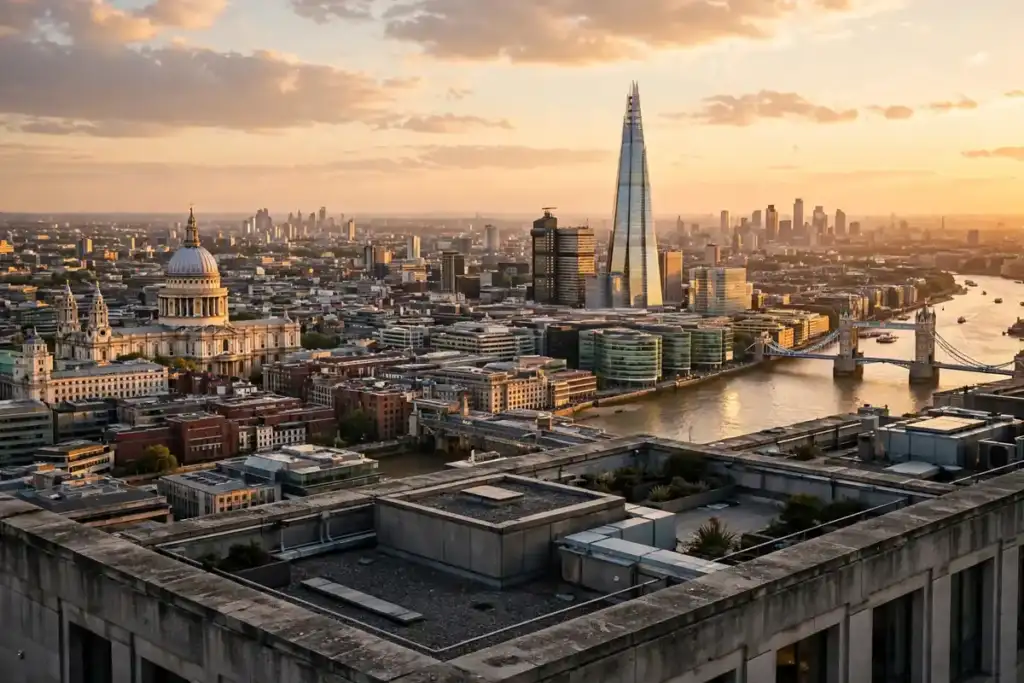
London has one of the most recognisable skylines on earth — a glass pyramid, a great dome, a Victorian bridge and a forest of towers, all crowded along one river. The best part is that you do not need to pay a penny to see it properly. From a free garden on the 35th floor of a skyscraper to a grassy hilltop in north London, the city gives its best views away. This guide rounds up the 14 best places to see the London skyline free, with honest booking advice, the best times to go and the photo tips that make the difference.
Stand on any of these spots on a clear evening and you will understand why the London skyline draws photographers from all over the world. The Shard catches the last light, the dome of St Paul’s Cathedral glows warm against the glass towers of the City of London, and Tower Bridge sits low over the Thames like something from a postcard. The trick is knowing which viewpoint suits the hour you have — and which ones need booking before you leave the house.
What the London Skyline Actually Looks Like
Before you pick a viewpoint, it helps to know what you are looking at. The London skyline is not one cluster but several, spread along the River Thames, and each viewpoint frames a different combination.
The tallest single landmark is the Shard, a glass pyramid rising 310 metres above London Bridge station on the south bank. Opposite it, across the river, sits the City of London, the financial district, where the Walkie Talkie (20 Fenchurch Street), the Gherkin and the Cheesegrater form a tight cluster of modern towers. Further east, the towers of Canary Wharf rise on the horizon. And threading through it all are the older landmarks: the dome of St Paul’s Cathedral, the towers of Tower Bridge, the Tower of London and, to the west, the wheel of the London Eye.
That mix of old and new is exactly what makes the views in London so photogenic. A rooftop in the City puts you at eye level with the towers; a hilltop in the north gives you the whole sweep at once, with the Shard, St Paul’s and Canary Wharf lined up in a single frame. Both are worth doing, and both are free.
Free Rooftop Viewpoints in the City
The City of London now has four free public observation decks within a few minutes’ walk of each other, and they are the easiest way to see the London skyline from above without spending anything.
Sky Garden — 20 Fenchurch Street
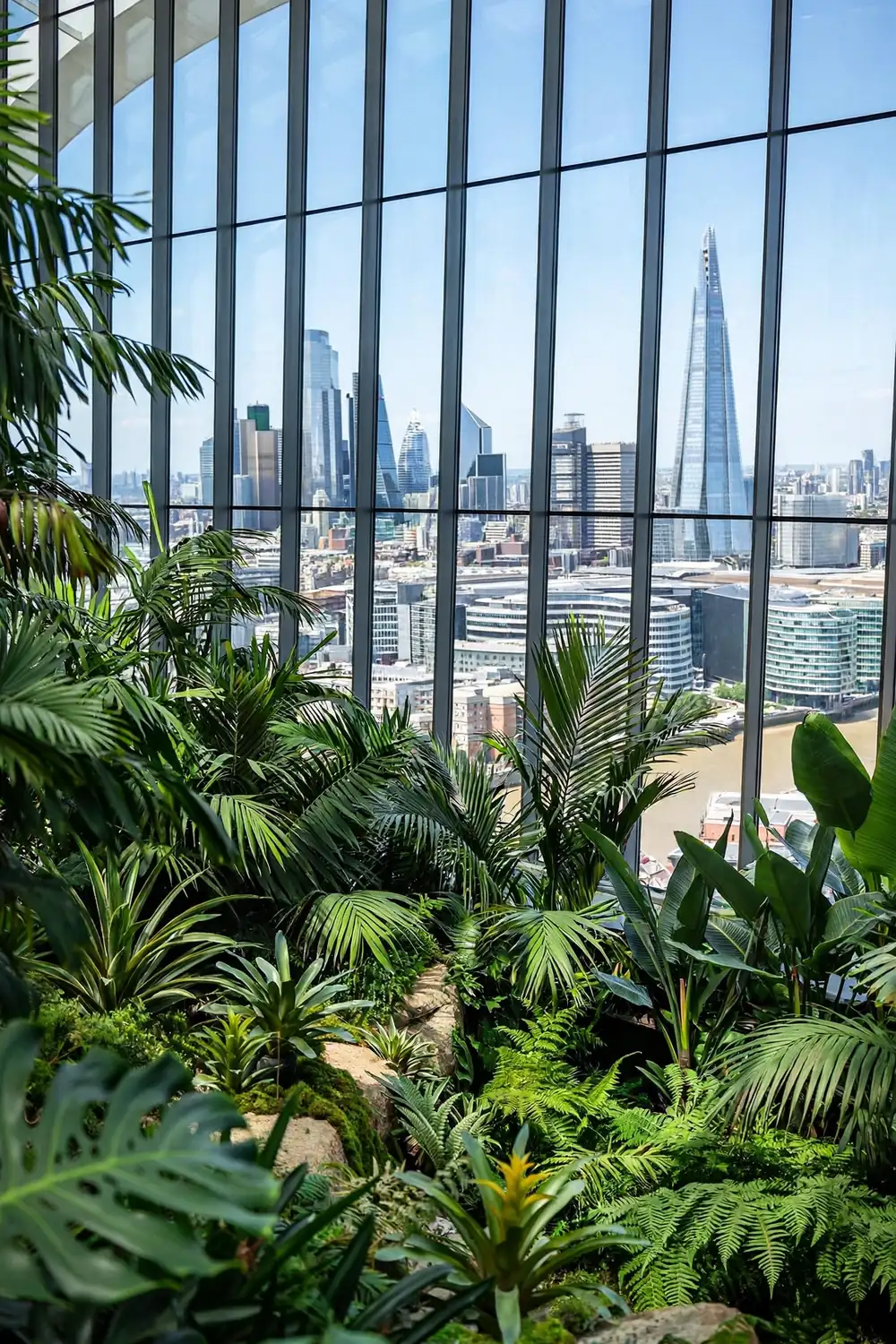
Sky Garden is still the most famous free viewpoint in London, and for good reason. Set on the 35th floor of the Walkie Talkie building at 20 Fenchurch Street, 155 metres up, it is a landscaped public garden inside a glass dome, with an open-air terrace and panoramic views across the Thames, St Paul’s Cathedral, the Tower of London and the Shard. Entry is free, but you must book a timed slot in advance — slots are released in batches and the sunset ones go first, sometimes weeks ahead. Arrive at your booked time with ID, allow time for the airport-style security check, and head straight for the terrace if the weather is clear. For the full visitor guide, including the restaurants and the bars, see our complete Sky Garden visitor guide.
Horizon 22 — 22 Bishopsgate
Horizon 22 is the highest free viewpoint in London. Its viewing gallery sits on level 58 of 22 Bishopsgate and offers near 300-degree views across central London, higher than Sky Garden and higher than the Shard’s paid observation deck in practical terms. Entry is free and you book a timed slot online, just like Sky Garden — though at the time of writing, same-week slots are often easier to find here, especially on weekday mornings. The space is simpler than Sky Garden, with no garden and no restaurant, but the view is arguably the best of the lot: the whole City spread below you, the Thames curling away to the east, and on a clear day, Wembley Arch on the western horizon.
The Lookout — 8 Bishopsgate
Right next door to Horizon 22, the Lookout occupies level 50 of 8 Bishopsgate and is the quietest of the City’s free rooftops. It is a free public viewing gallery with sweeping views of the Shard, Tower Bridge and St Paul’s Cathedral, and because fewer people know about it, you can often book a slot at short notice — even on the day. There is a small bar, and the terrace feels calmer than its taller neighbour. If Sky Garden and Horizon 22 are fully booked, try here first.
The Garden at 120 — 120 Fenchurch Street
The Garden at 120 is the most relaxed of the free rooftops: an open air roof garden on top of 120 Fenchurch Street, planted with trees and seating, with views over Tower Bridge, the Gherkin and the Tower of London. Unlike the others, it is mostly walk-in — no advance booking — and it stays open later into the evening in summer. It is smaller and lower than Sky Garden, so the view is less sweeping, but on a warm evening with a drink from the garden’s kiosk it is one of the nicest places in the City to watch the light change.
Hilltop Views: The Whole City in One Sweep
Rooftops put you inside the skyline. Hills put the whole of it in front of you at once — and London’s hilltops are free, open all day and need no booking at all.
Primrose Hill
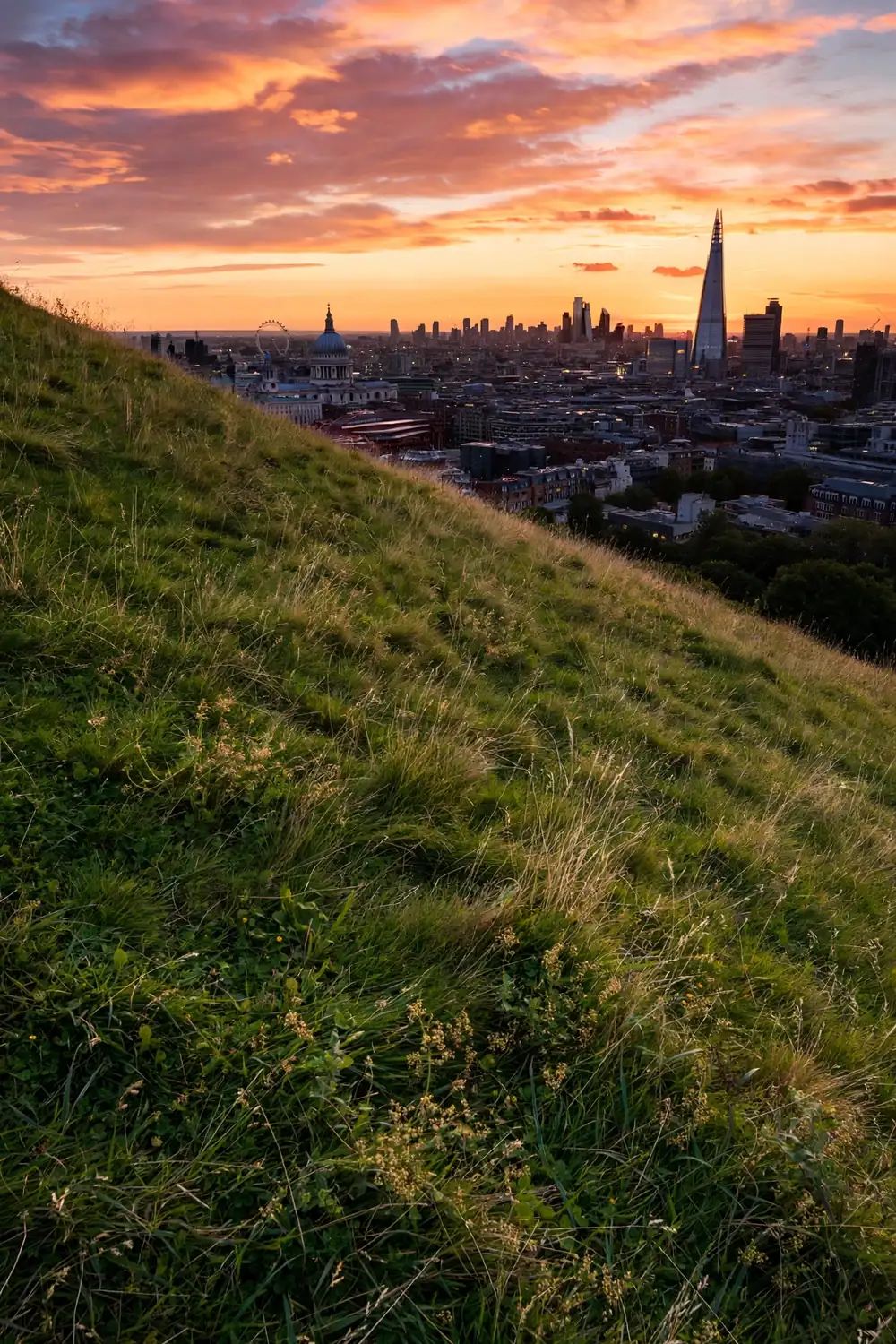
Primrose Hill is the classic London skyline viewpoint, and the one most Londoners would name first. The hill rises about 78 metres above sea level just north of Regent’s Park, and from the summit the whole of central London lies in front of you: the Shard, St Paul’s Cathedral, the BT Tower, the London Eye and Canary Wharf in a single panorama. It is at its best in the last hour before sunset, when the sky turns gold and the city lights begin to appear one by one. Bring a picnic blanket in summer, arrive 20 to 30 minutes before sunset for the best spot, and read our full Primrose Hill guide for the walk up from Camden and the history of the hill.
Parliament Hill, Hampstead Heath
Parliament Hill is the highest natural viewpoint in London at 98 metres, and the panorama from the top is wider and wilder than Primrose Hill’s. From here you can pick out St Paul’s Cathedral, the Shard, the Gherkin and Canary Wharf, with the green sweep of Hampstead Heath in the foreground. It is free and open 24 hours, and the walk up from Gospel Oak or Hampstead Heath station takes about 15 minutes. The protected view from Parliament Hill is so valued that planning rules limit what can be built in its sightline — which is why the dome of St Paul’s still stands clear against the sky from this spot.
Greenwich Park and the Royal Observatory
For the skyline from the east, climb to the Royal Observatory in Greenwich Park. The view from the hill looks west across the Thames to the towers of Canary Wharf in the middle distance and the City beyond, with the Shard on the horizon. It is one of the best places to photograph the London skyline at sunrise, when the light comes up behind the City and the river turns silver. The park itself is free; the observatory courtyard and the Prime Meridian line sit right beside the viewpoint.
Riverside Views Along the Thames
Some of the best views of the London skyline are at river level, where the Thames itself becomes part of the picture.
South Bank and Observation Point
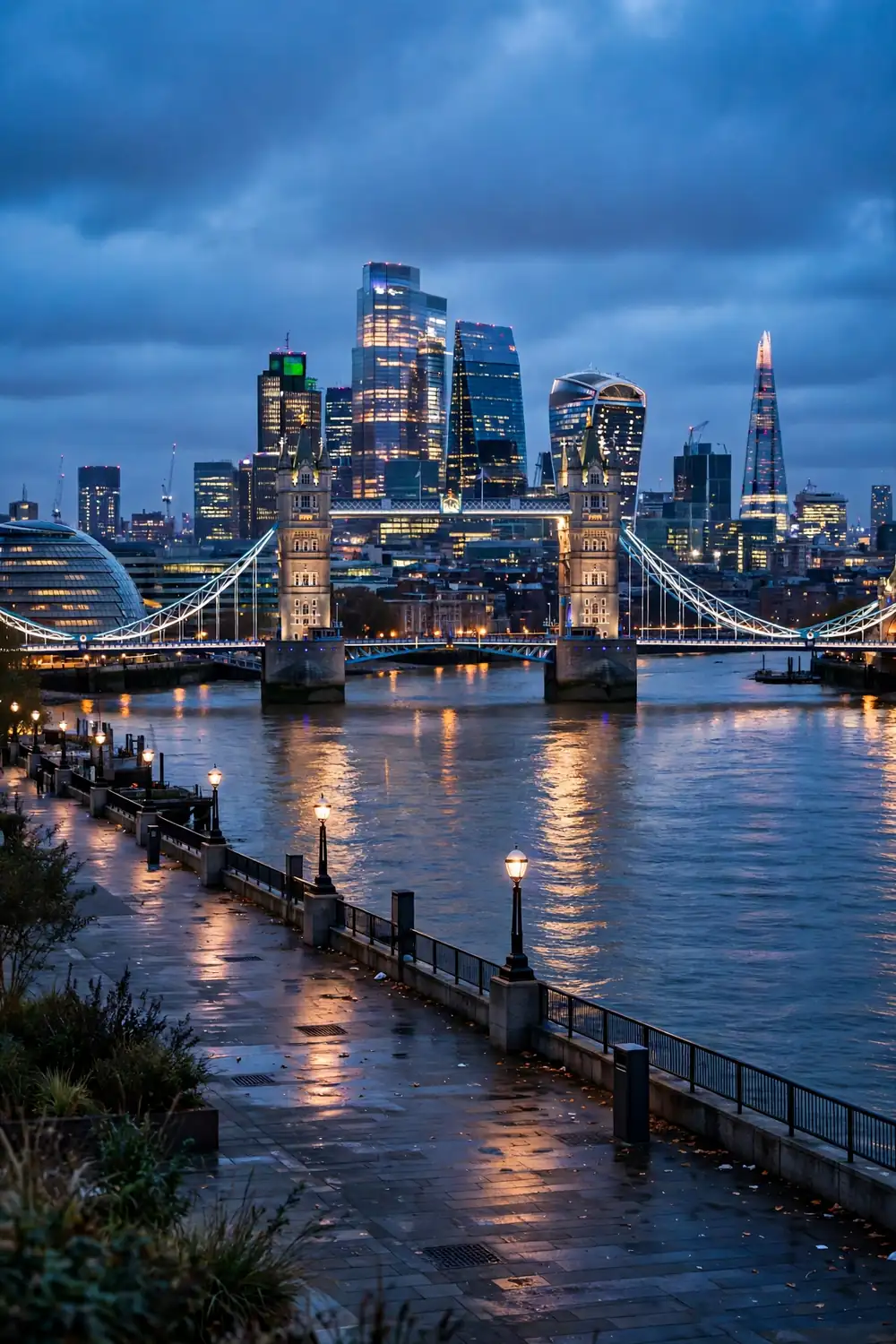
The South Bank walk from Westminster Bridge to Tower Bridge is the single best free riverside route in London. Observation Point, near the Southbank Centre, gives an open panorama of St Paul’s Cathedral, the Shard and Tower Bridge across the river, and it is open 24 hours. Walk it at dusk, when the bridges light up and the skyline reflects in the Thames, and you will see why photographers return here again and again.
Millennium Bridge and Tate Modern
Stand in the middle of the Millennium Bridge and you get the most famous axis in London: St Paul’s Cathedral dead ahead to the north, the Tate Modern behind you to the south. The bridge is free and open all hours, and it is one of the few places where you can photograph the dome of St Paul’s framed by the river. The Tate Modern’s own viewing terrace on the Blavatnik Building, free to enter, gives a high-level view back across the Thames to the City skyline and the dome.
Tower Bridge and the Tower of London
The stretch of riverside around Tower Bridge and the Tower of London puts the oldest and newest parts of the skyline in one frame: the medieval Tower, the Victorian bridge and the glass towers of the City rising behind them. The best viewpoint is from the south bank near City Hall, looking back across the river at dusk, when Tower Bridge is lit and the Shard glows above it. If you want a drink with the same view, our rooftop bar guide covers the terraces nearby.
One New Change Roof Terrace
For the closest free view of St Paul’s Cathedral, take the lift to the roof terrace at One New Change, the shopping centre just east of the cathedral. The terrace is free and open to the public, and it puts you at eye level with the great dome, with the City skyline and the Shard behind it. It is a small space and it can be busy at lunchtime, but early in the morning or late in the afternoon it is one of the most underrated viewpoints in central London — and the view down to the dome from here is the one every photographer wants.
The Paid Views Worth Knowing About
Not every great viewpoint is free, and two paid ones are worth knowing about so you can decide whether the ticket is worth it.
The View from The Shard
The View from The Shard is the highest paid observation deck in London, at around 244 metres on levels 68 to 72, with 360-degree views. It is impressive on a clear day, but at the time of writing a standard adult ticket costs roughly three times a West End cinema ticket, and the view itself is not so different from what Horizon 22 gives you for free — the main difference is height and the glass floor on level 72. Book online in advance for the best price, and only go on a clear day: in low cloud you will be standing inside the weather.
London Eye
The London Eye is a different kind of view — a slow, 30-minute rotation 135 metres above the South Bank, with the Thames, Westminster and the City unfolding as the wheel turns. It is a landmark in its own right and the views of the skyline westward are lovely, but for a pure skyline panorama the free hilltops and rooftops give you more for nothing. If you do ride it, book a timed slot online and aim for sunset.
The Best Time to See the London Skyline
The London skyline changes completely with the hour, and choosing your time matters as much as choosing your viewpoint.
Sunset and golden hour are the classic choice. In summer the sun sets around 21:00, so an evening visit is easy; in winter it sets around 16:00, which means the best light comes during an ordinary afternoon. Arrive 30 to 45 minutes before sunset to watch the light turn gold, and stay for the blue hour afterwards, when the sky deepens and the city lights switch on.
Sunrise suits early risers and photographers. The light is cleaner, the viewpoints are empty, and from Greenwich Park or Primrose Hill the sun rises behind the City, silhouetting the towers. Winter sunrises are the most practical, arriving around 08:00 rather than 05:00.
Night has its own magic: the Shard, Tower Bridge and the London Eye are all lit, and the skyline becomes a line of lights along the Thames. The South Bank and the Millennium Bridge are the best free spots after dark.
Clear winter days often give the sharpest views of all. Cold, still air after rain clears the haze, and the low sun rakes across the towers. Summer haze can soften the distant skyline, so if you visit in July or August, aim for the morning or the evening rather than midday.
Photography Tips for the London Skyline
You do not need expensive kit to photograph the London skyline well, but a few habits make a real difference. Shoot at golden hour or blue hour rather than midday, when the light is flat and the glass towers glare. Put something in the foreground — the river, a bridge, the grass of Primrose Hill — so the skyline has scale. If you are shooting through glass at Sky Garden or Horizon 22, press the lens flat against the window to kill reflections, and turn your phone’s flash off. For night shots, rest the camera on a wall or railing rather than holding it, and use the night mode your phone already has. And check the weather before you go: a forecast of clear skies matters far more than the camera you carry. For a deeper guide to the best photo spots and the rules at each viewpoint, see our Sky Garden photography guide.
A Free Skyline Day: One Easy Route
If you have one day and want the best of the London skyline for free, this route covers the highlights without rushing. Start at Greenwich Park in the morning for the sunrise view over Canary Wharf, then take the river bus or the Tube into the City for a booked slot at Horizon 22 or Sky Garden around midday. Walk to the Garden at 120 for a relaxed afternoon stop, cross the Millennium Bridge at golden hour for the St Paul’s view, and finish on the South Bank at dusk as Tower Bridge lights up. Every stop on the route is free — the only thing you need to book in advance is the Sky Garden or Horizon 22 timed slot. For more free ideas to fill the gaps, see our list of free things to do in London.
Frequently Asked Questions
Where can I see the London skyline for free?
The best free places to see the London skyline are Sky Garden, Horizon 22, the Lookout and the Garden at 120 in the City of London, and the hilltops of Primrose Hill, Parliament Hill and Greenwich Park. All are free to enter; the three City rooftops need a free timed slot booked online, while the hills and the Garden at 120 are walk-in.
Do I need to book Sky Garden in advance?
Yes. Sky Garden entry is free, but you must book a timed slot online before you go, and the popular sunset slots are often taken weeks ahead. If you cannot get a slot, try Horizon 22 or the Lookout at 8 Bishopsgate, which often have same-week availability, or the Garden at 120, which is mostly walk-in.
What is the highest free viewpoint in London?
Horizon 22 at 22 Bishopsgate is the highest free viewpoint in London, with its viewing gallery on level 58 offering near 300-degree panoramic views. Parliament Hill on Hampstead Heath is the highest natural viewpoint at 98 metres, and it is free and open 24 hours.
Where is the best place to photograph the London skyline at sunset?
Primrose Hill is the best free sunset spot, with the whole skyline in one frame and a grassy foreground for composition. For a rooftop sunset, Sky Garden’s terrace or Horizon 22 at golden hour are hard to beat, and the South Bank near Tower Bridge is the best riverside sunset location.
Is the London skyline better at sunrise or sunset?
Sunset is the easier and more popular choice, with warm light on the towers and the city lights coming on afterwards. Sunrise is quieter and the light is cleaner, and it suits Greenwich Park and Primrose Hill best. Both are worth doing; if you only pick one, pick sunset, and arrive 30 to 45 minutes early.