A garden arch is the fastest way to make an ordinary garden feel designed. One curved frame over a path adds height, structure and a focal point in an afternoon — and once climbing plants take hold, it becomes the part of the garden everyone photographs. This guide rounds up 12 garden arch ideas that work in real UK gardens, from rose-covered entrances to kitchen arches that earn their keep, plus the best plants, the honest cost, and how to fit one so it stays upright through a British winter.
Garden Arch Ideas at a Glance
Short on time? Here is the whole guide in one table — pick the idea that fits your garden, then read the detail below.
| Idea | Best for | Plants to try |
|---|---|---|
| Rose-covered entrance arch | Front gardens, front doors | Climbing roses, clematis |
| Gothic arch statement | Formal and cottage gardens | Roses, honeysuckle |
| Kitchen-garden arch | Vegetable plots | Beans, cucumbers, squash |
| Walkway of repeated arches | Long paths, big gardens | Wisteria, laburnum |
| Arbour with a bench | Quiet corners, seating | Evergreen climbers, jasmine |
| Metal arch for small gardens | Patios, narrow plots | Sweet peas, clematis |
| Wooden arch, rustic look | Country and cottage gardens | Honeysuckle, climbing roses |
| Arch that frames a view | Gardens with a vista | Simple greenery, ivy |
| Arch over a gate | Boundaries, side entrances | Jasmine, honeysuckle |
| Floral arch for occasions | Parties, weddings, summer | Seasonal flowers, sweet peas |
| Fruit arch | Productive gardens | Grape vine, trained fruit |
| Corner arch | Awkward corners, patios | Clematis, passion flower |
What Is a Garden Arch?
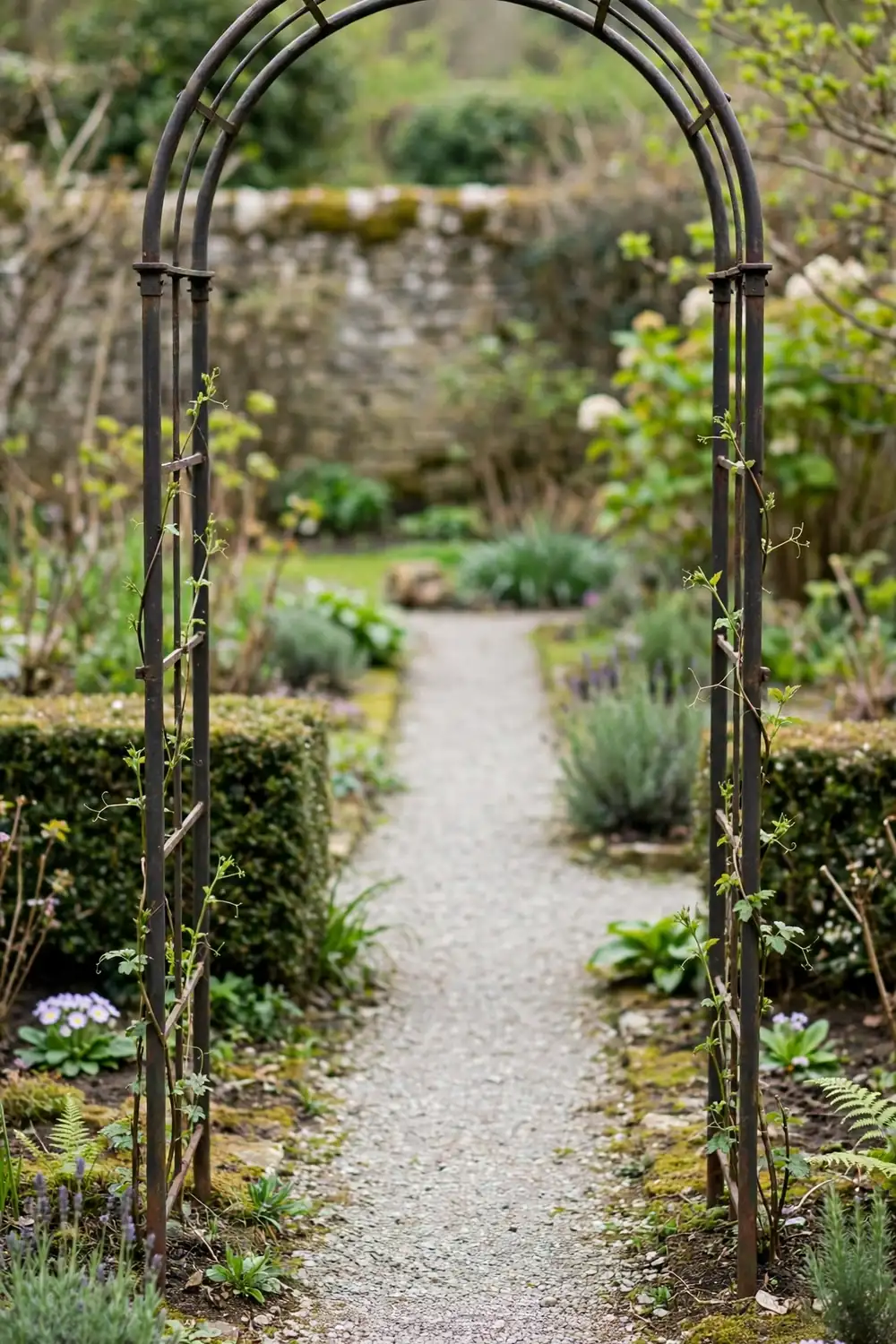
A garden arch is a freestanding curved or flat-topped frame, usually between 2 and 2.5 metres tall, that you walk through. It marks a threshold — from lawn to flower beds, from patio to vegetable plot — and gives climbing plants something to grow over. Unlike a fence or a wall, it does not block the garden; it frames it.
Arches have been a feature of English gardens for centuries, from the wisteria tunnels of great estates to the simple rose arch over a cottage front gate. They suit almost any size of garden, and they are one of the cheapest ways to add structure without building anything permanent.
Garden Arch vs Pergola vs Arbour
The three get mixed up, so here is the quick distinction. A garden arch is a single curved frame, usually over a path. A pergola is a larger, open-roofed structure, often over a patio, with beams and rafters. An arbour is an arch with a seat built in — a place to sit, not just to walk through. All three can be planted, but only the arch is a quick, affordable weekend project.
12 Garden Arch Ideas
These are the twelve uses that come up again and again in British gardens. Most need nothing more than a basic kit, a few climbers and a free afternoon.
1. The Rose-Covered Entrance Arch
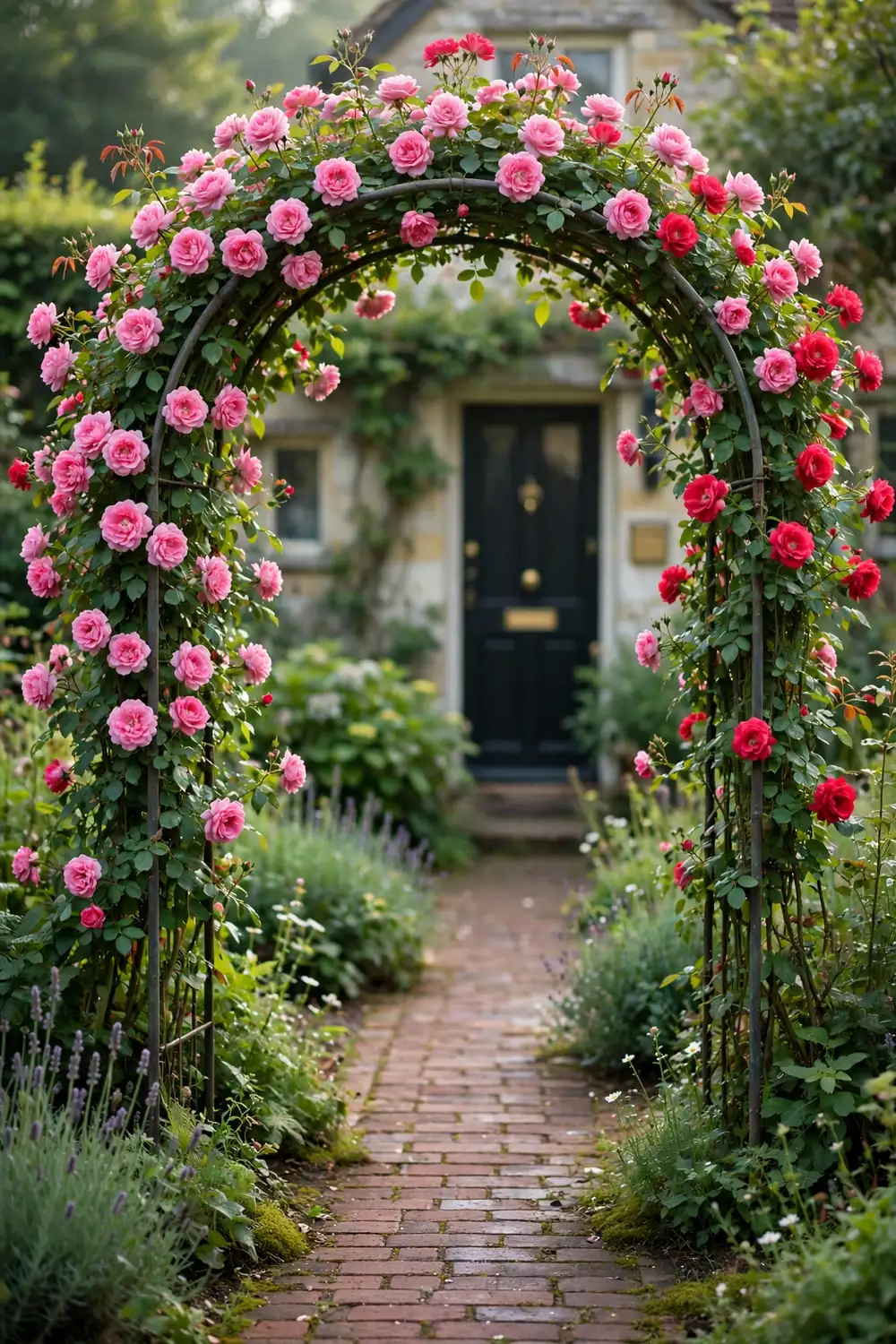
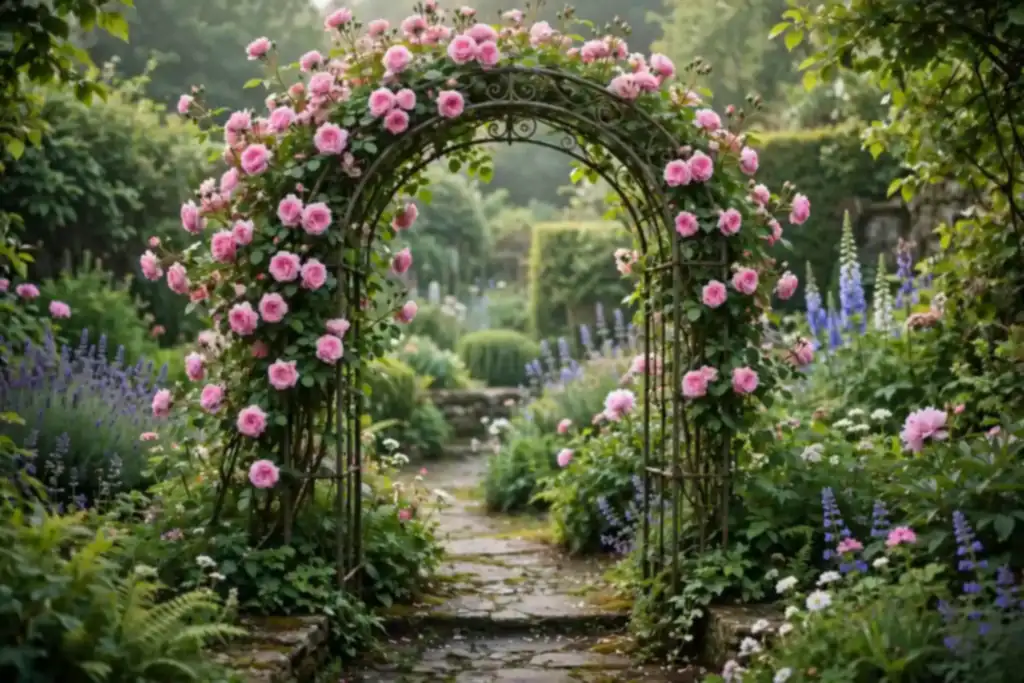
The classic, and still the best. A round arch over the front path, planted with climbing roses on both sides, turns an ordinary entrance into a moment. Choose repeat-flowering roses such as ‘Gertrude Jekyll’ or ‘New Dawn’ for scent and a long season, and tie the stems in horizontally to encourage more flowers along the length.
2. The Gothic Arch Statement
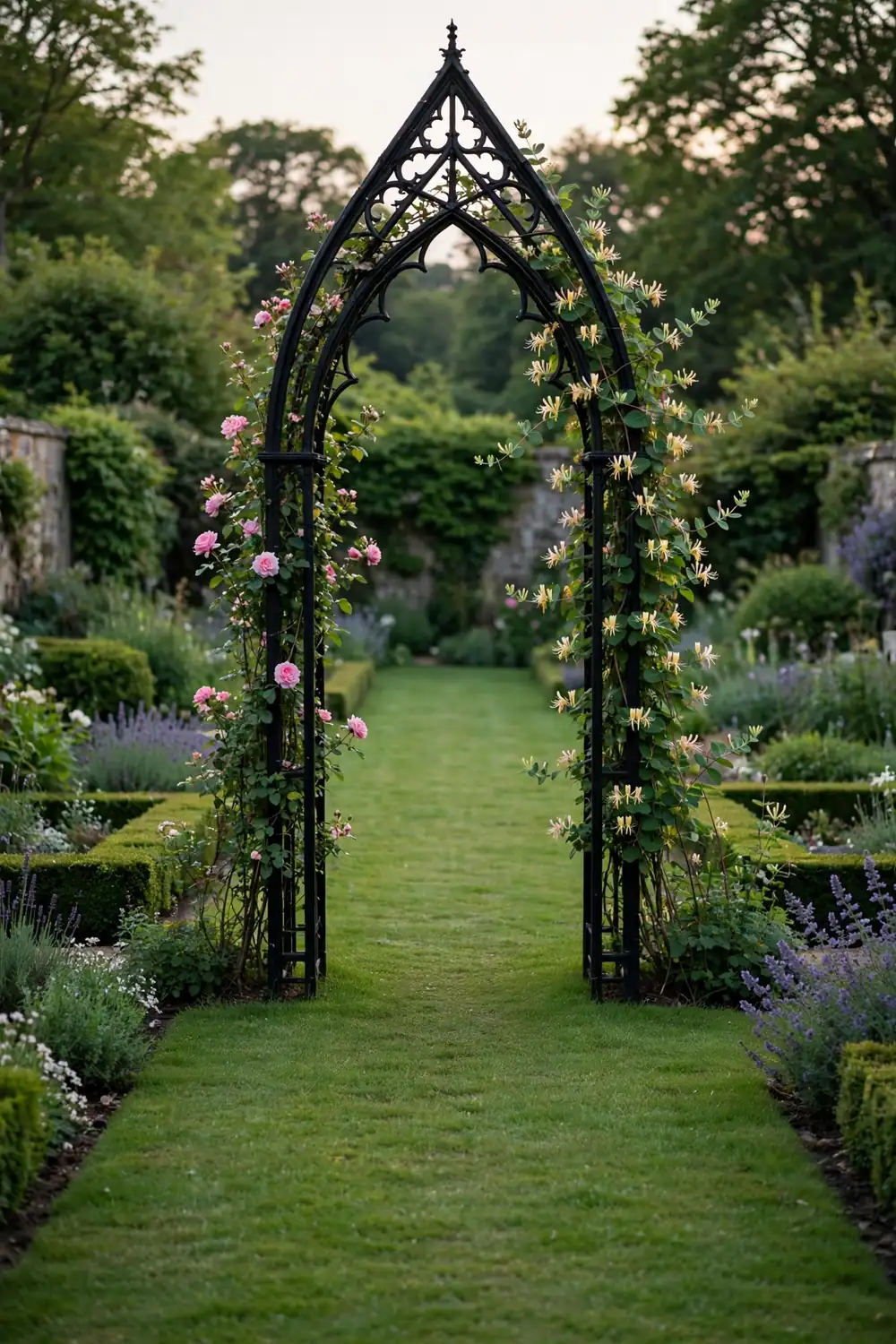
Gothic arches have a pointed apex, and that single detail changes the whole mood: drama, height and a hint of formality. They suit larger gardens and work beautifully at the end of a long path, where the point draws the eye. Plant with roses and honeysuckle for scent, and keep the planting symmetrical so the shape stays crisp.
3. The Kitchen-Garden Arch
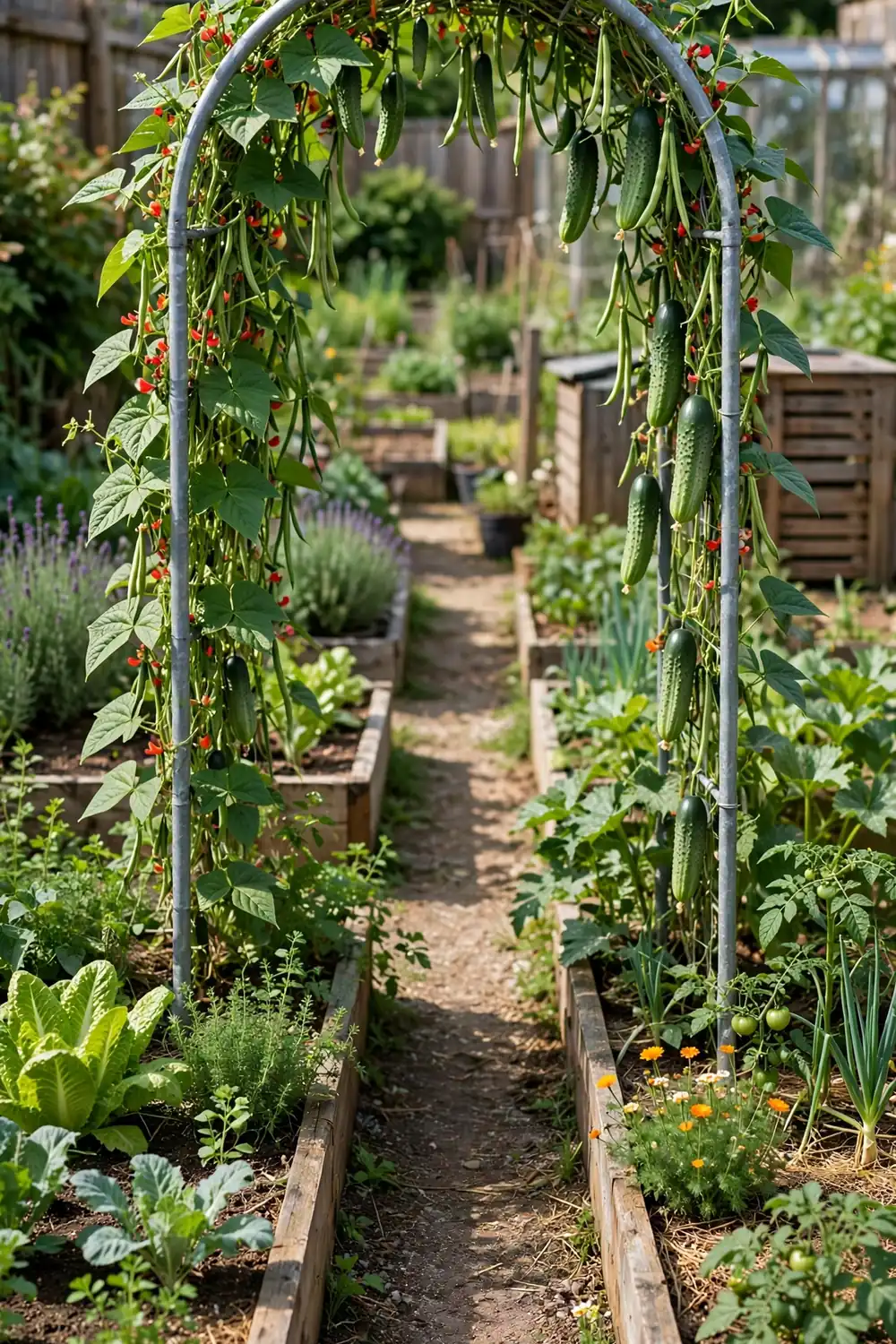
This is the arch that earns its keep. Grown over with runner beans, cucumbers or squash, a kitchen-garden arch turns a productive plot into a walk-through tunnel and frees up ground space below. It also makes picking easier — the crop hangs down where you can reach it. Our raised-bed guide pairs well with this idea.
4. A Walkway of Repeated Arches
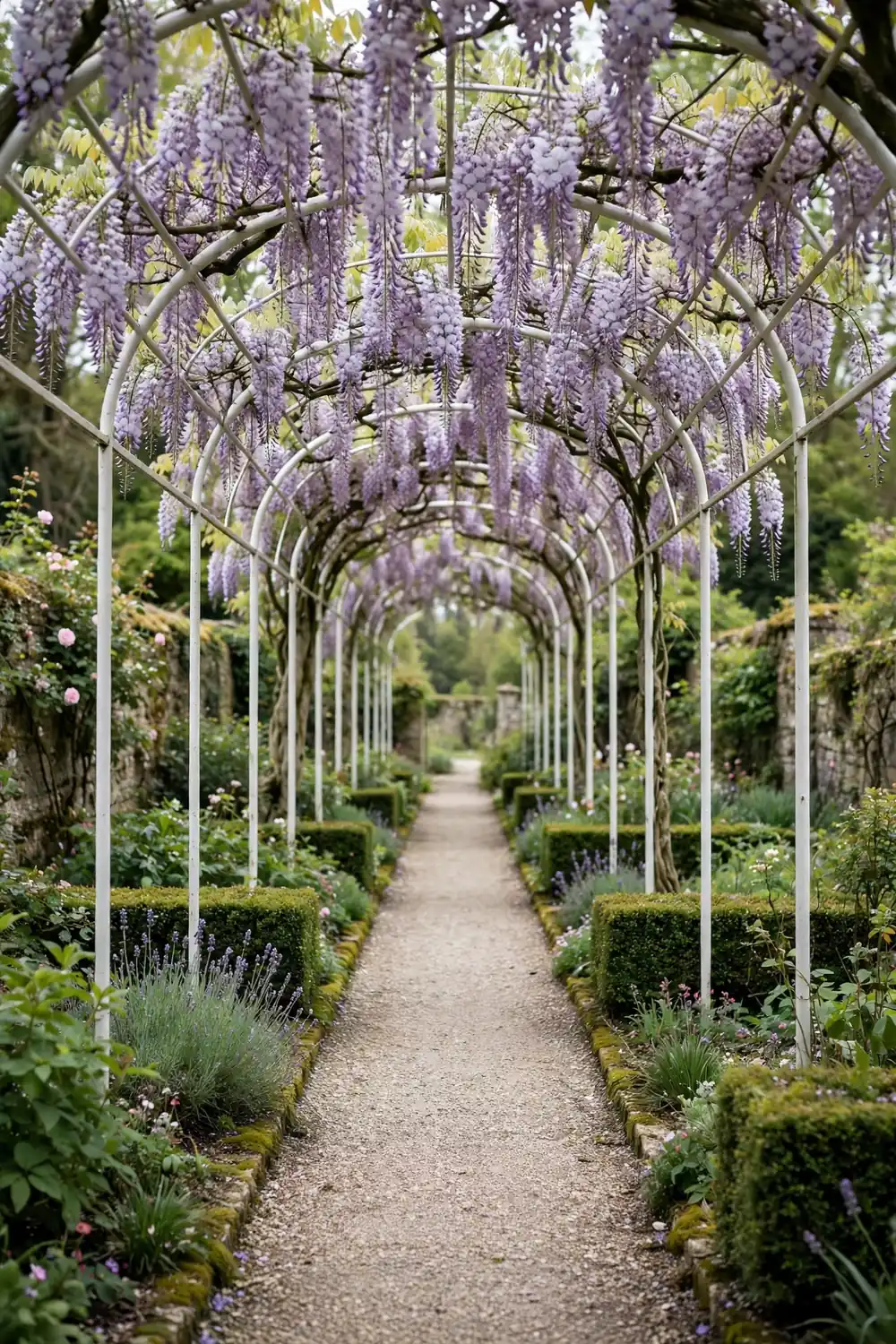
One arch marks a moment; a row of them creates a journey. Place three or more matching arches along a straight path, spaced evenly, and plant the same climber on each for a tunnel effect. Wisteria is the showstopper here, but it is heavy and needs a strong metal frame and regular pruning — laburnum is a lighter, golden alternative for spring.
5. The Arbour: An Arch With a Bench
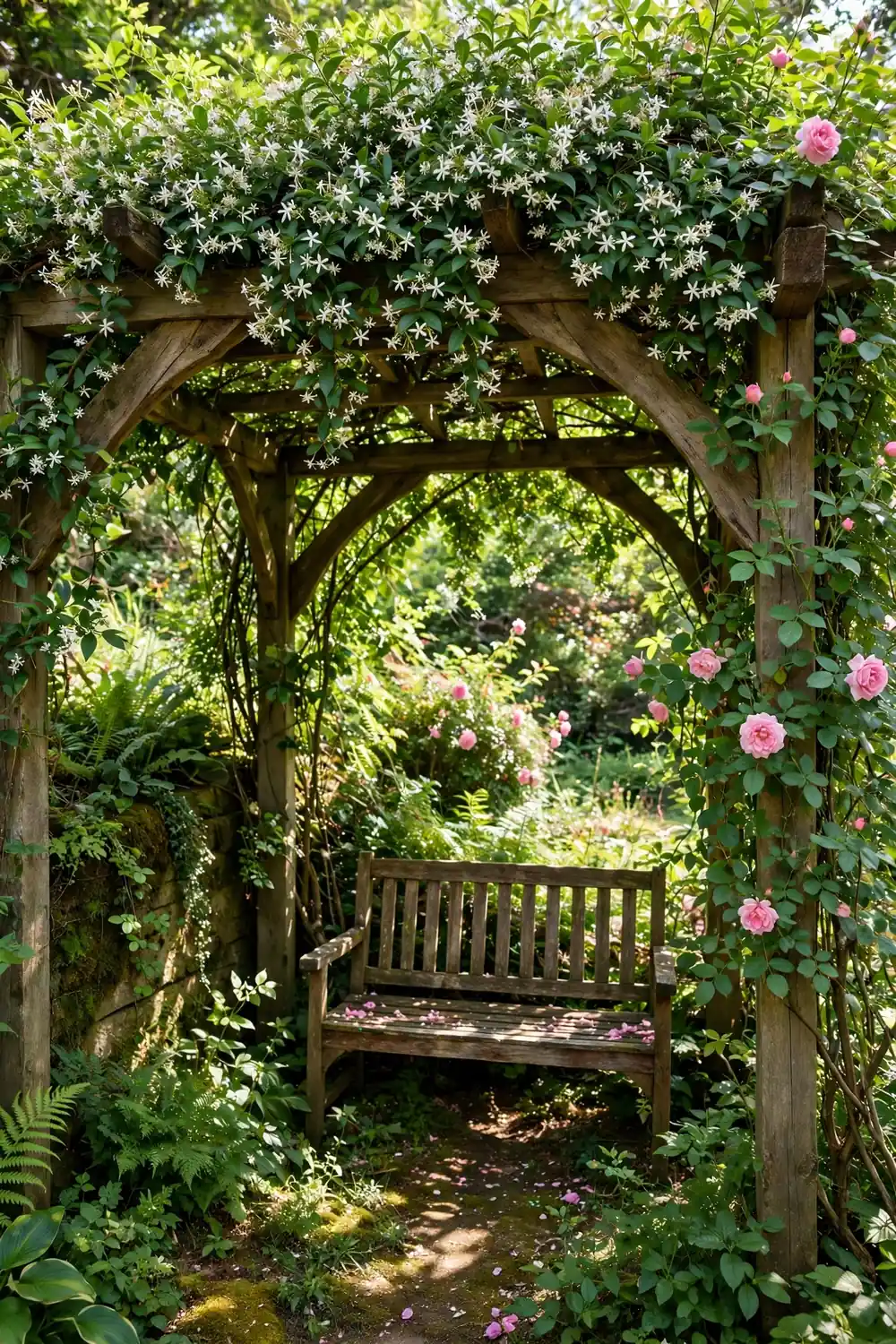
Place a wide arch over an existing bench and you have an arbour — a secluded, scented seat that feels like a destination. Evergreen climbers such as jasmine or ivy keep it green through winter, while a rose overhead adds summer scent. Face it towards the best view in the garden, not towards the house.
6. A Slim Metal Arch for a Small Garden
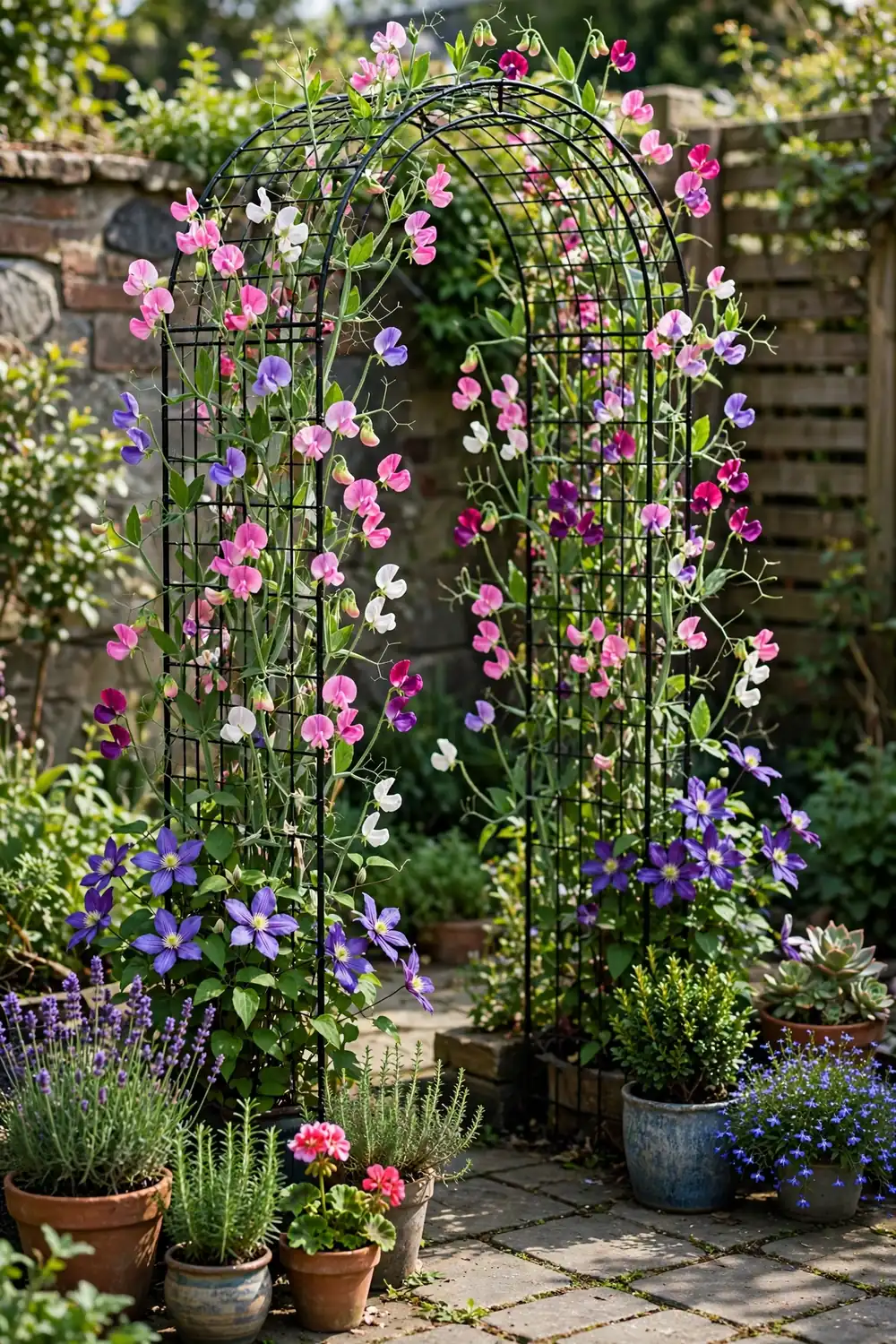
Small gardens need arches most, because height is the one dimension a small plot can still gain. A slim, dark metal arch takes up almost no ground space, yet it draws the eye upwards and makes the garden feel taller. Sweet peas and clematis are ideal here: light, fast-growing and easy to cut back each year.
7. A Rustic Wooden Arch
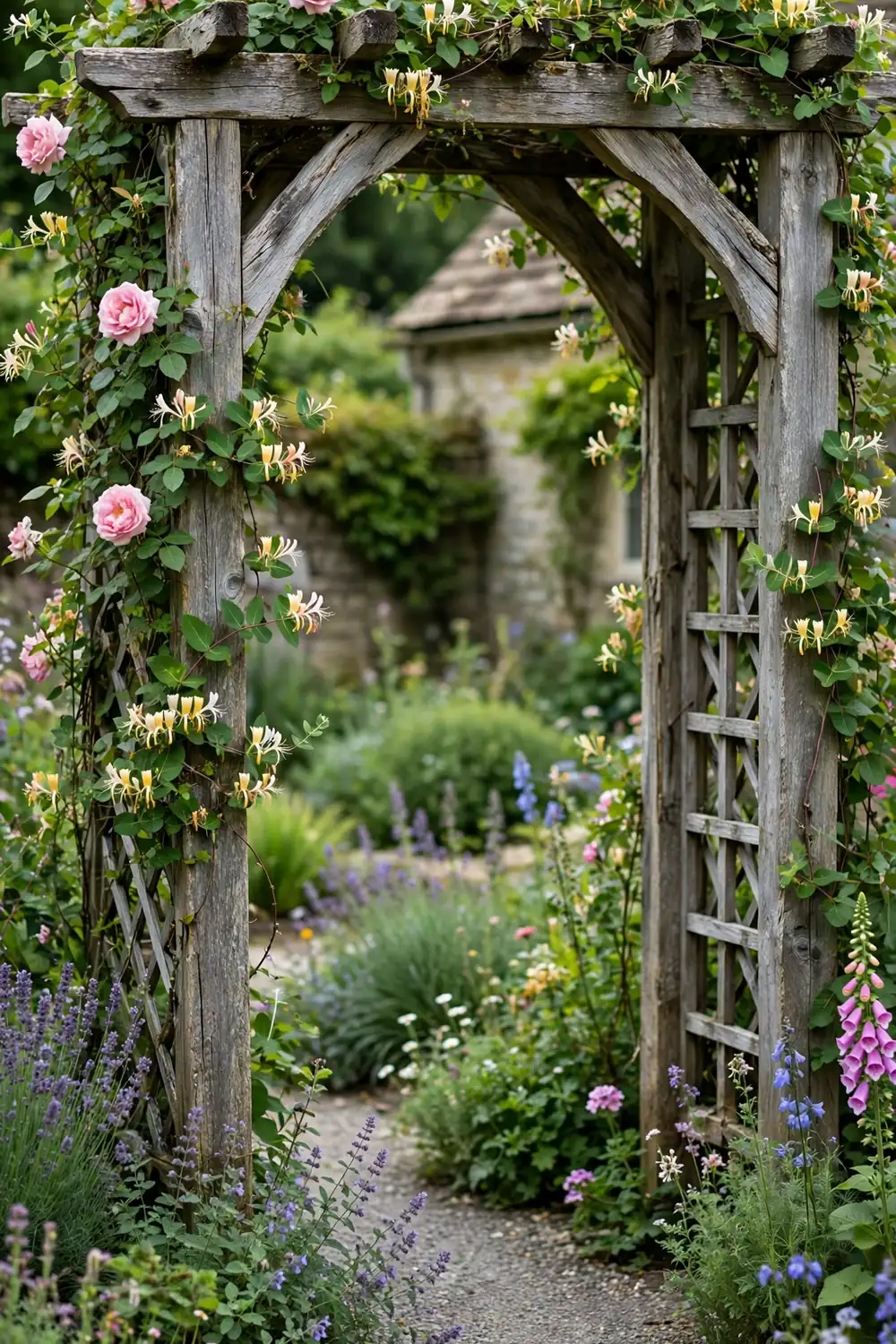
If metal feels too formal, a wooden arch brings warmth. Chunky pressure-treated timber suits country and cottage gardens, and it weathers to a soft grey that sits well among shrubs. Honeysuckle is the natural partner — it is vigorous, scented and happy on wood — but keep it trimmed, or it will hide the shape of the arch entirely.
8. An Arch That Frames a View
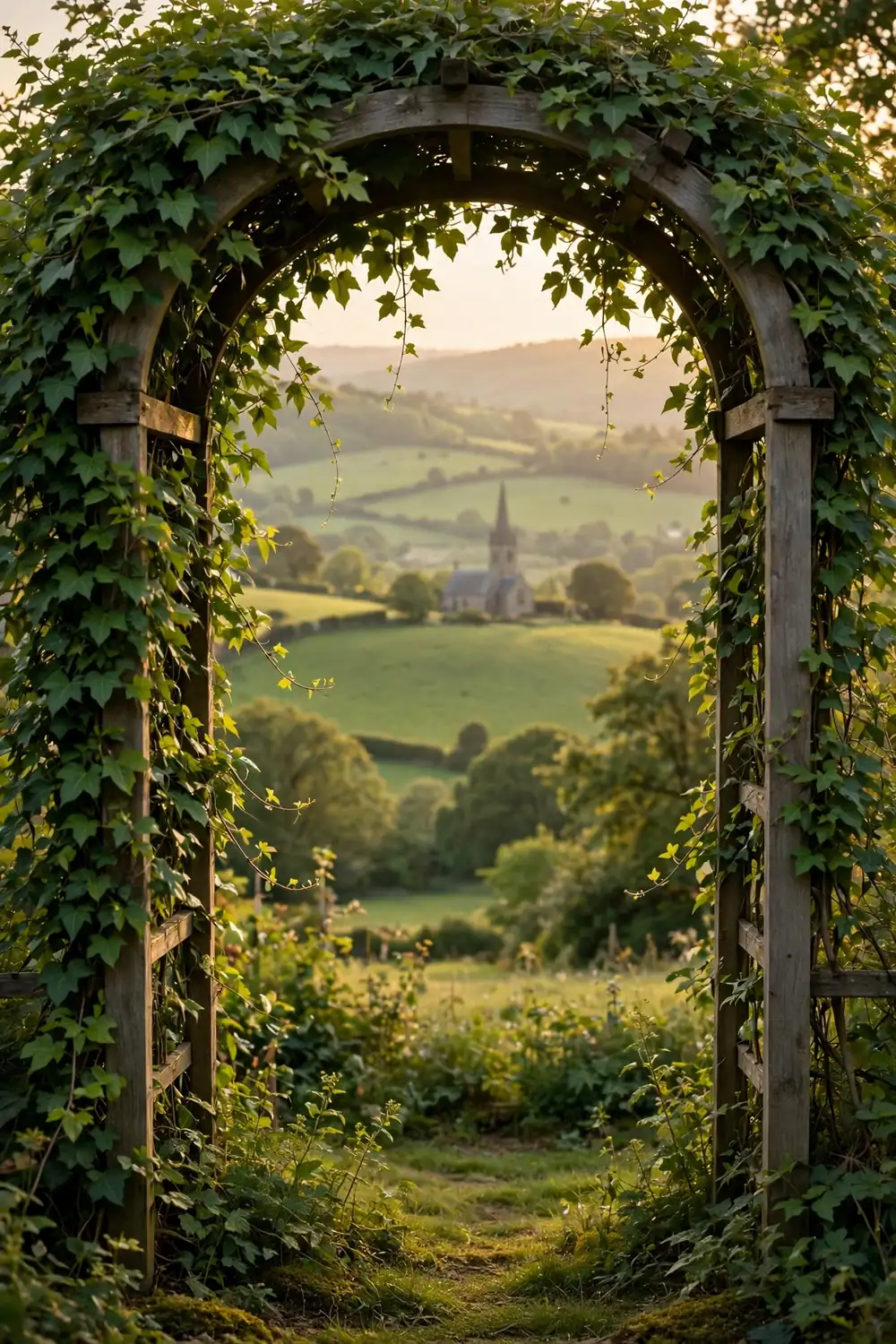
Use an arch the way a picture frame works: place it where it lines up with the best view in — or out of — the garden. That might be a tree, a distant hill, a pond or even a neighbouring church spire. Keep the planting simple, with ivy or plain greenery, so the view, not the arch, is the star. For more on placing features well, see our top garden design tips.
9. An Arch Over a Gate
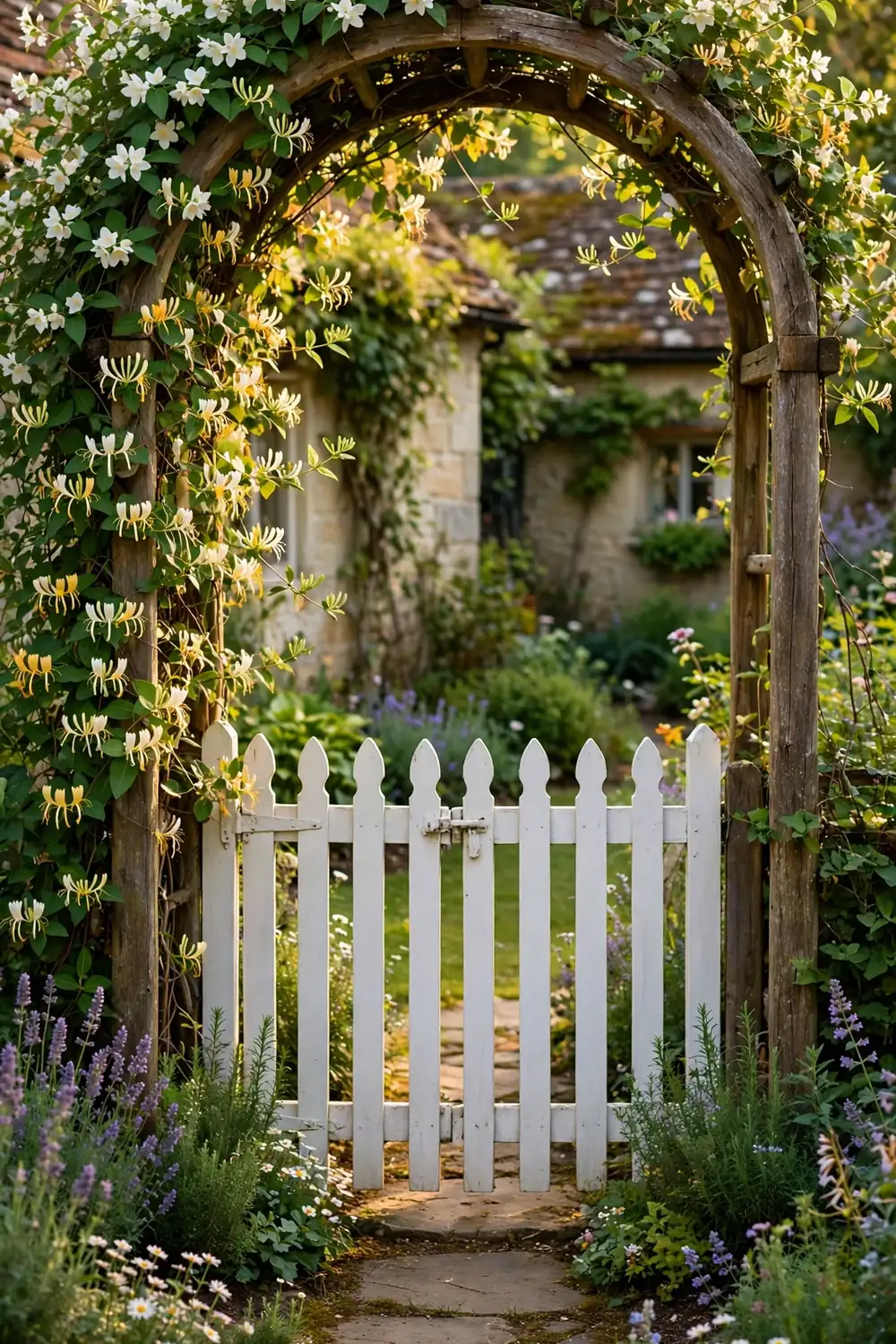
An arch over a garden gate adds impact and, quite literally, makes an entrance. It works particularly well on side gates and boundaries, where a plain gate can look bare. Jasmine is a good choice here — evergreen, scented and not too heavy — and it will not drop leaves all over the path in autumn.
10. A Floral Arch for Occasions
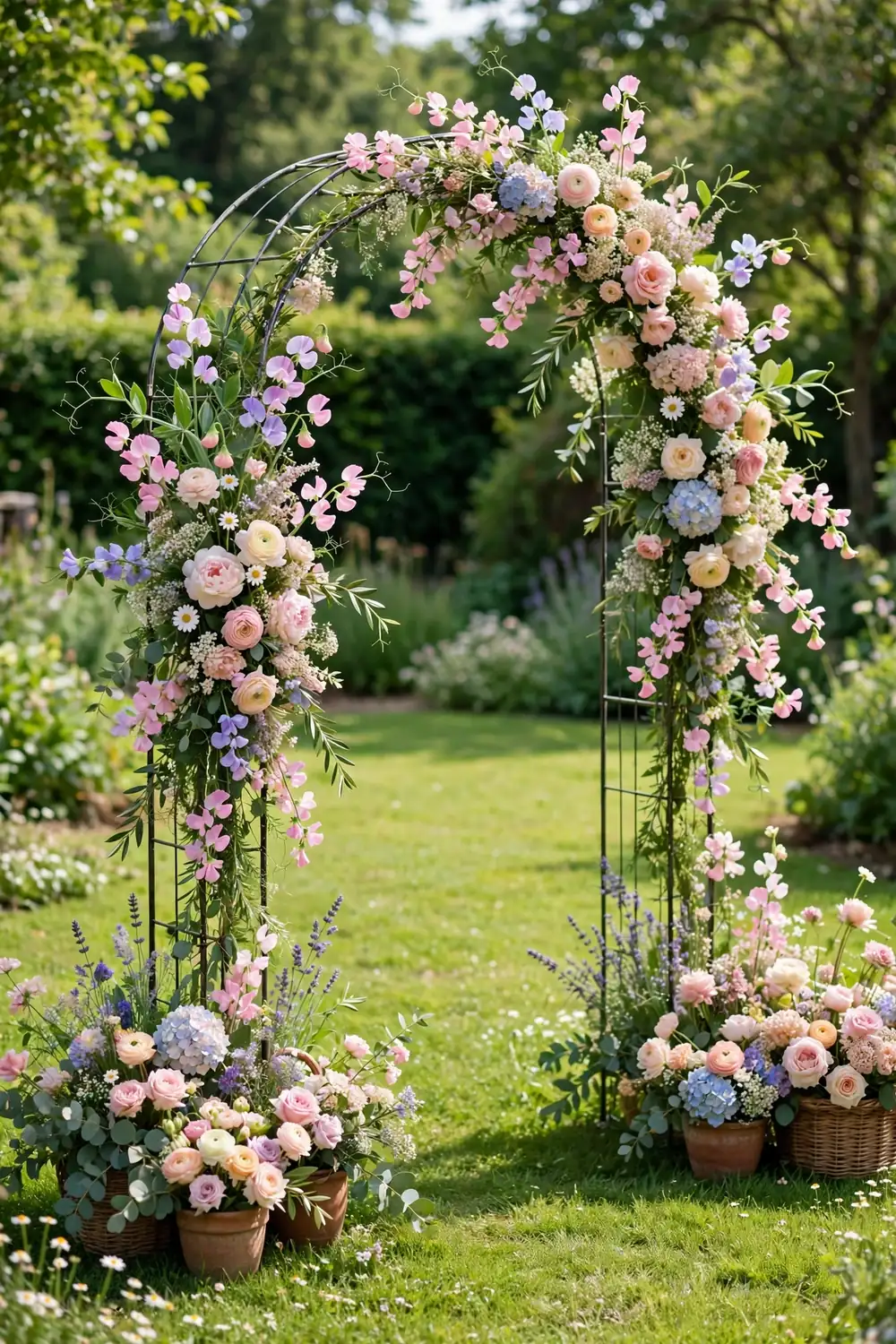
Not every arch has to be permanent. A lightweight metal arch dressed with seasonal flowers makes a lovely backdrop for a summer party, a wedding or a garden gathering. Use chicken wire or foam to hold the stems, mix in foliage for bulk, and choose flowers in season — sweet peas in June, dahlias in late summer. Take it down afterwards and store it flat.
11. A Fruit Arch
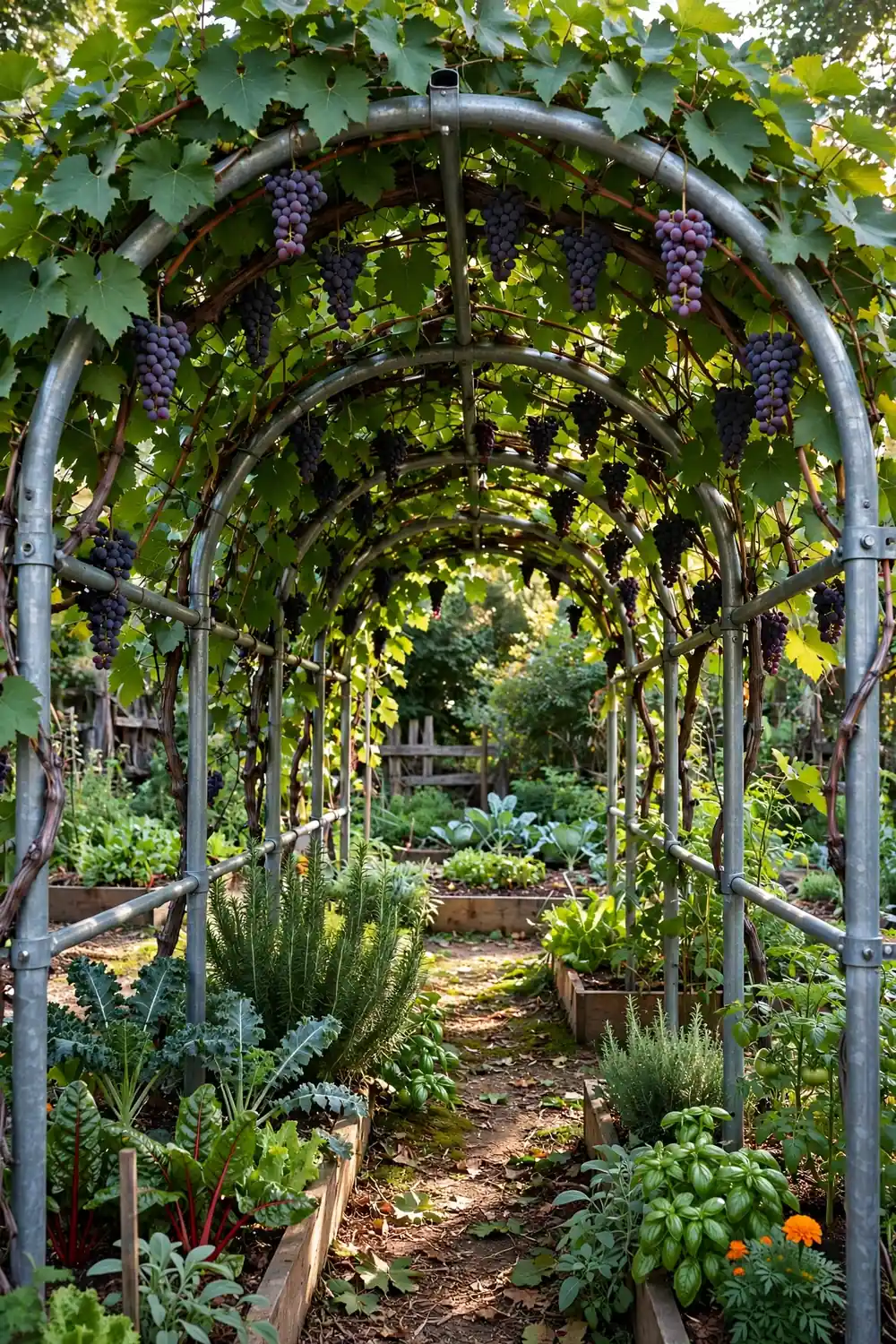
Grape vines are the natural choice for a fruit arch, but trained fruit trees, kiwi and even hops work too. The arch gives the fruit sun and air, which helps it ripen, and it keeps the crop off the ground where slugs find it. Choose a strong frame — a laden vine is heavy — and prune in winter while the plant is dormant.
12. A Corner Arch for Awkward Spaces
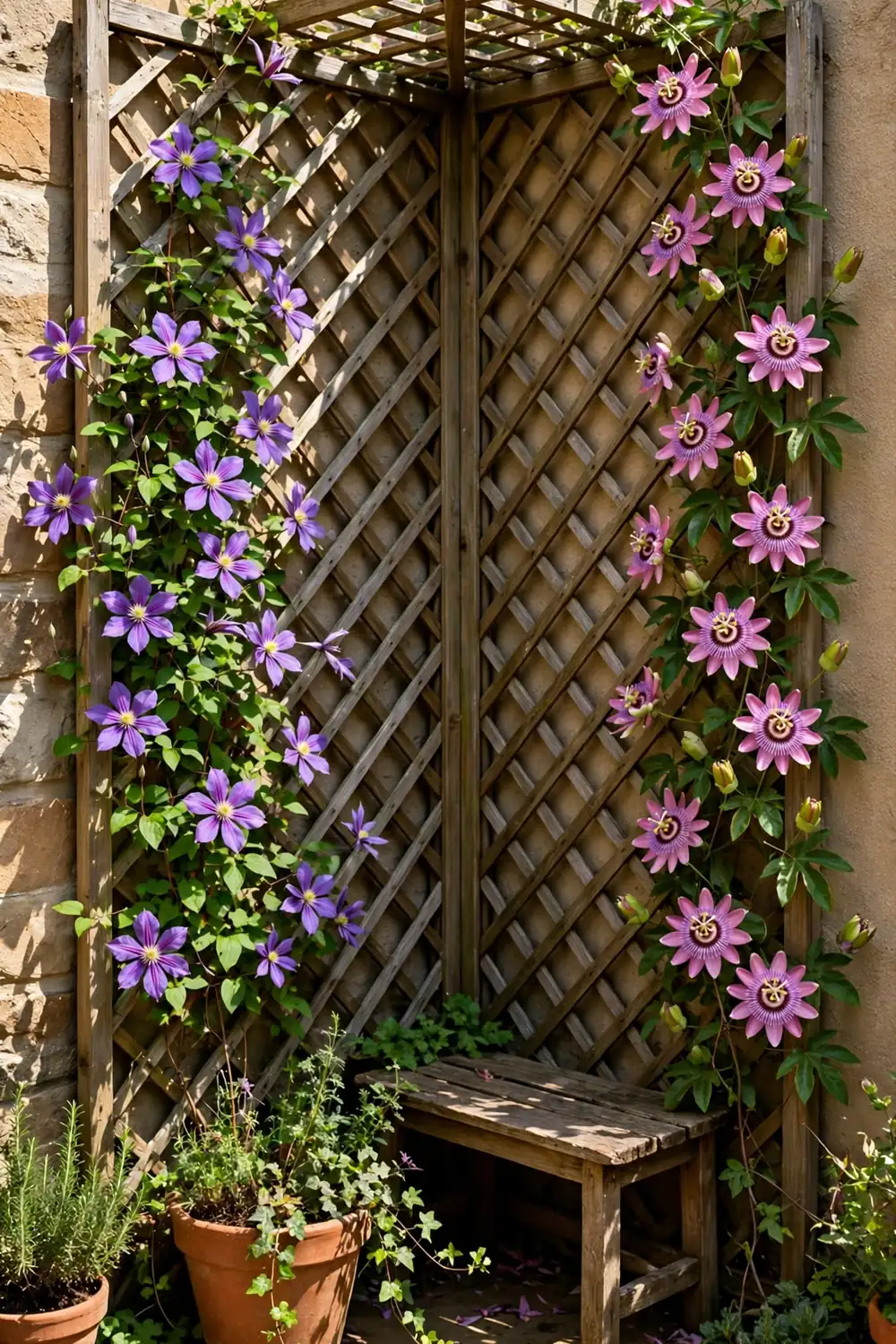
Every garden has a dead corner — the bit behind the shed, the angle where two fences meet. A corner arch turns that wasted space into a feature. Angle it across the corner, plant clematis or passion flower at its feet, and add a pot or two underneath. Suddenly the corner is the prettiest part of the garden.
Best Climbing Plants for a Garden Arch
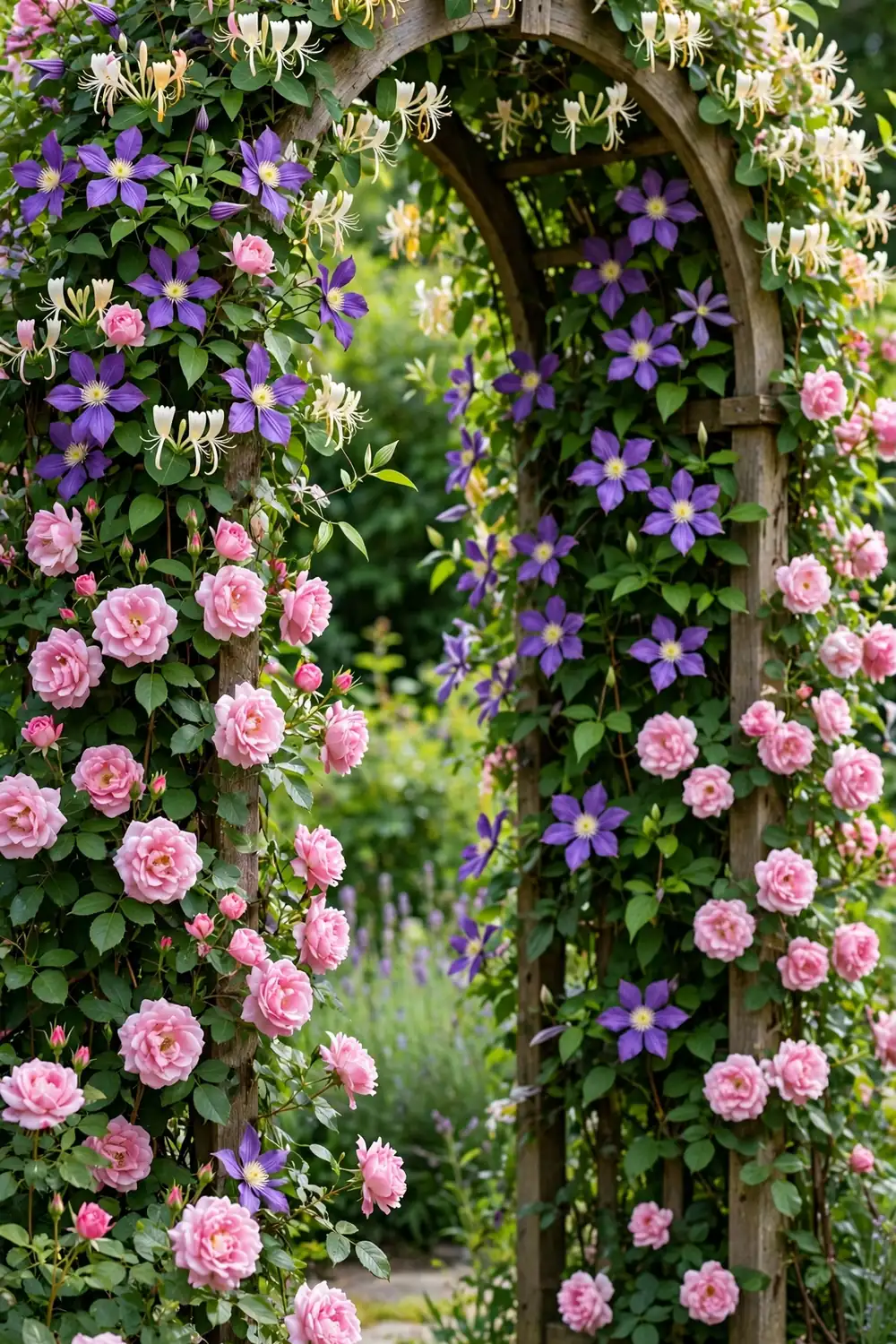
The arch is only half the picture — the planting makes it. The best climbing plants for arches are roses, clematis, honeysuckle, jasmine, wisteria and sweet peas, chosen for scent, flowering season and how heavy they grow. Roses give the longest season, clematis adds colour in spring and autumn, honeysuckle and jasmine bring evening scent, and sweet peas are the quick fix for a first summer. For shady spots, check our guide to garden plants for shade — several of those climbers cope well with less sun. Whatever you plant, put one climber at the base of each leg, feed in spring, and tie new growth in regularly rather than letting it flop.
Wooden vs Metal Garden Arches
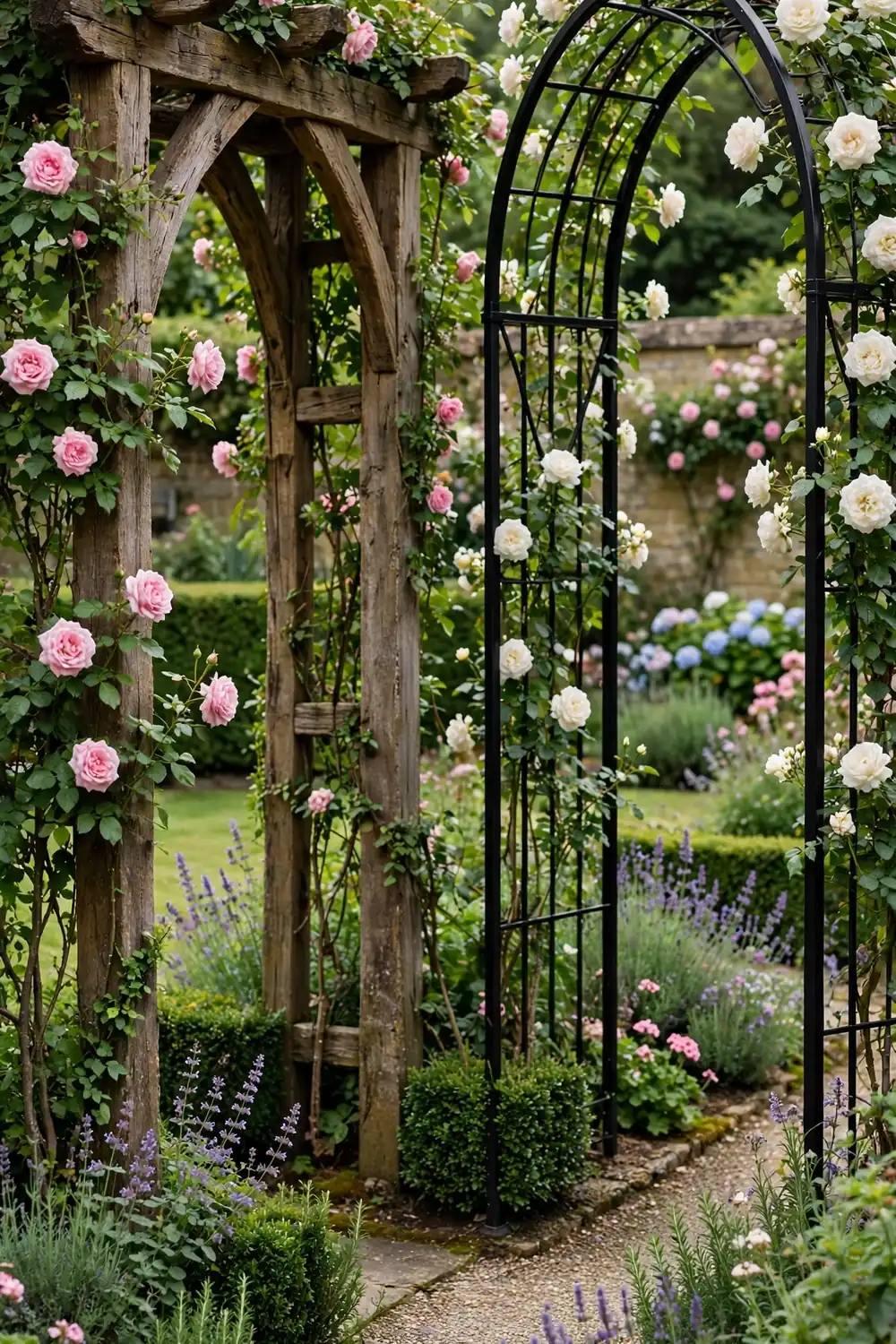
The material decision shapes everything else: cost, lifespan, weight of planting and how much maintenance you are signing up for. Here is the honest comparison.
| Wooden arch | Metal arch | |
|---|---|---|
| Look | Warm, rustic, cottage-garden | Clean, formal or contemporary |
| Typical lifespan | 5–10 years (longer if pressure treated and kept out of standing water) | 15–25 years for galvanised steel |
| Strength | Good; chunky timber carries roses well | Best; tubular steel carries heavy wisteria and vines |
| Maintenance | Preservative every 2–3 years; check for rot at ground level | Very little; touch up chips in the coating |
| Cost (guide) | From around £40 for a basic kit to £200+ for chunky hardwood | From around £30 for a slim kit to £300+ for a large wrought-iron style arch |
| DIY friendly? | Yes — the easiest to build yourself | Usually bought as a kit; the pieces bolt together |
On materials, two phrases matter when you shop. “Pressure treated” means the timber has been impregnated with preservative, so it resists rot far longer than untreated wood. “Galvanised” means the steel has a zinc coating that stops rust — look for it, and for a polymer or powder coating on top, which adds colour and extra protection.
Which Material Lasts Longest in UK Weather?
Metal, by a clear margin. A galvanised steel arch with a polymer coating will outlast a wooden one in damp British winters, because it does not rot at ground level. Wood can still last a decade or more if it is pressure treated, kept out of standing water and re-treated every couple of years — but if you want to fit it once and forget it, choose metal.
How to Install a Garden Arch
Most arches arrive as a kit and go up in a couple of hours with two people. The steps are the same whether the arch is wood or metal.
1. Choose the spot. Pick somewhere the arch frames a path, gate or view — not floating in the middle of a lawn. Check it is level and that there is room to walk through comfortably.
2. Mark and dig. Mark the four post positions, then dig holes around 30–45 cm deep. If the ground is hard, soak it the day before.
3. Fix the posts. Set the posts in post-mix concrete, or use metal ground spikes for a quicker, removable fixing. Check the arch is upright with a spirit level before the concrete sets.
4. Assemble and secure. Bolt the top sections on, tighten everything, and check the arch does not wobble. A planted arch catches the wind, so this step matters.
5. Plant and tie in. Plant one climber at the base of each leg, in enriched soil, and tie the first stems loosely to the frame with soft twine. Water well.
If you cannot dig — a patio, for instance — use large containers at the base of the arch, filled with soil and weighted with stones, or bolt the feet to the paving. A freestanding arch on a patio still needs weight at the base, or the first strong wind will topple it.
Do You Need Planning Permission for a Garden Arch?
Almost never. A freestanding garden arch under 2.5 metres tall is a garden structure, not a building, and it does not usually need planning permission. The exceptions are listed buildings, conservation areas and arches attached to a house or boundary wall — if any of those apply, check with your local council before you build.
How Much Does a Garden Arch Cost?
Prices vary widely, so treat these as a rough guide for 2026 and check current listings before you buy. A slim metal kit starts at around £30, a decent wooden arch at around £40–£80, and a large wrought-iron style arch can cost £300 or more. Add £20–£40 for two climbing plants, plus concrete or ground spikes if they are not included. A fitted, hardwood arch installed by a landscaper will cost considerably more — but for most gardens, a kit and an afternoon are enough.
Garden Arch Care Through the Year
An arch is low-maintenance, but a little seasonal attention keeps it looking good and standing straight. In spring, feed the climbers and tie in new growth. In summer, deadhead roses and cut back anything that blocks the path. In autumn, check the fixings and clear fallen leaves from the base, where damp causes rot. In winter, prune roses and wisteria while they are dormant, and check after storms that the posts are still firm.
Frequently Asked Questions
What is the best climbing plant for a garden arch?
Climbing roses are the best all-rounder: long flowering, scented and reliable in UK gardens. Clematis is a good second choice for colour, and honeysuckle for scent. For a first year, sweet peas will cover an arch quickly while slower climbers establish.
How tall should a garden arch be?
Most garden arches are 2 to 2.5 metres tall, with a clear walk-through height of around 2 metres. That leaves room for planting overhead without forcing tall visitors to duck.
Do garden arches need to be fixed into the ground?
Yes — always, unless the arch is very light and sheltered. A planted arch catches the wind, and a toppled arch can damage plants and injure anyone underneath. Use concrete, ground spikes or weighted containers.
Can you put a garden arch in a small garden?
Absolutely — small gardens benefit most, because an arch adds height without taking up ground space. Choose a slim metal arch, plant light climbers such as sweet peas or clematis, and place it over a path or gate rather than in the middle of the lawn.
How long does a garden arch last?
A galvanised steel arch with a polymer coating typically lasts 15–25 years, and quality makers often guarantee it for a decade or more. A wooden arch lasts 5–10 years, longer if it is pressure treated and kept out of standing water.