A good garden is never an accident. The gardens that stop you in your tracks — the ones you glimpse over a fence in London or wander through at a flower show — all share the same secret: somebody thought about them before they planted them. Garden design ideas are not about spending a fortune or hiring a professional. They are about making a handful of good decisions in the right order: where the sun falls, where you will actually sit, which plants will earn their place, and how the whole thing looks in February as well as in June. This guide brings together 15 garden design ideas that work in real UK gardens — from tiny London courtyards to generous country plots — with honest, practical advice on zoning, planting, paving, water features and lighting, so you can design a garden you will genuinely use and love.
Before You Start: How to Design a Garden That Works
Every successful garden design begins the same way: with observation, not shopping. Spend a week watching your garden before you change anything. Note where the sun falls at breakfast, at lunchtime and in the evening. Note which corners stay damp after rain and which dry out fast. Note the view from the kitchen window, because that is the view you will live with most. These small facts decide almost everything that follows — which plants will thrive, where the seating should go, and where a shady corner is better left as a quiet, planted retreat than forced into a sunny dining spot.
Then think about how you actually want to use the space. A garden that has to feed a family, entertain friends, give children somewhere to play and still look good from the house is doing four jobs at once, and the only way to fit them all in is to divide the garden into zones — separate areas for dining, relaxing, growing and playing, each with its own character. A garden divided into clear zones always feels bigger and more considered than one big open rectangle, however large it is. Sketch the zones on paper, even roughly. It costs nothing and saves you from the most common garden design mistake of all: buying plants before you know where they are going.
Finally, be honest about your budget and your time. A garden design that needs two hours of maintenance every weekend will be resented by March, so plan for the gardener you actually are, not the one you wish you were. Low maintenance garden design is not a compromise — it is a design choice, and some of the best-looking gardens in the UK are built around it. Set a realistic budget for hard landscaping first (paving, decking, paths and walls are the expensive part), then spend what is left on plants, which are comparatively cheap and easy to change later.
15 Garden Design Ideas for UK Gardens
These 15 design ideas are the ones that make the biggest difference in British gardens, whether your plot is large or small. They are grouped by the job they do: shaping the space, planting it well, and adding the features that make you want to spend time in it. You do not need to do all 15 — pick the three or four that solve your garden’s biggest problems first, and the rest will follow naturally over time.
1. Zone Your Garden Like Rooms in a House
Think of your garden as a series of outdoor rooms rather than one open space. A seating zone near the house for morning coffee, a dining zone for summer evenings, a planting zone for borders and beds, and perhaps a practical zone for the shed and compost — each separated by a change of level, a screen of planting, a low hedge or simply a different surface. These garden zones work in gardens of every size: even a 5 m x 5 m plot can hold a seating zone and a planting zone without feeling cramped, and a small garden that does one or two things well always beats one that tries to do everything.
The trick is to make the boundaries soft. A curved path, a trellis with climbers, a row of tall grasses or a change from paving to gravel all signal “this is a different place” without building walls. Leave a little mystery, too — if you can see the whole garden from the back door, your eye finds the edges and the space feels small. Hide a corner behind planting and the garden instantly feels larger, because there is something left to discover.
2. Shape Your Lawn Into Something Interesting
Look out of the window and the biggest shape you will probably see is your lawn — so if the lawn is a dull rectangle, the whole garden feels dull. A lawn does not have to be rectangular. Try an oval, a circle or a sweeping curve, and let the borders and curved paths flow around it in generous, sinuous shapes. A curved lawn edge makes the planting look intentional and the garden feel designed, even before a single flower is in bloom.
Keep the lawn shape simple and mowable, though — fiddly wiggles are a chore to edge every week. In a small garden, consider whether you need a lawn at all: a well-designed paved seating area with generous planting can be more useful and more beautiful than a postage-stamp lawn that is mostly mud by November. If you do keep grass, a strong, clean lawn shape sets the entire garden on the right track.
3. Layer Herbaceous Borders for Months of Colour
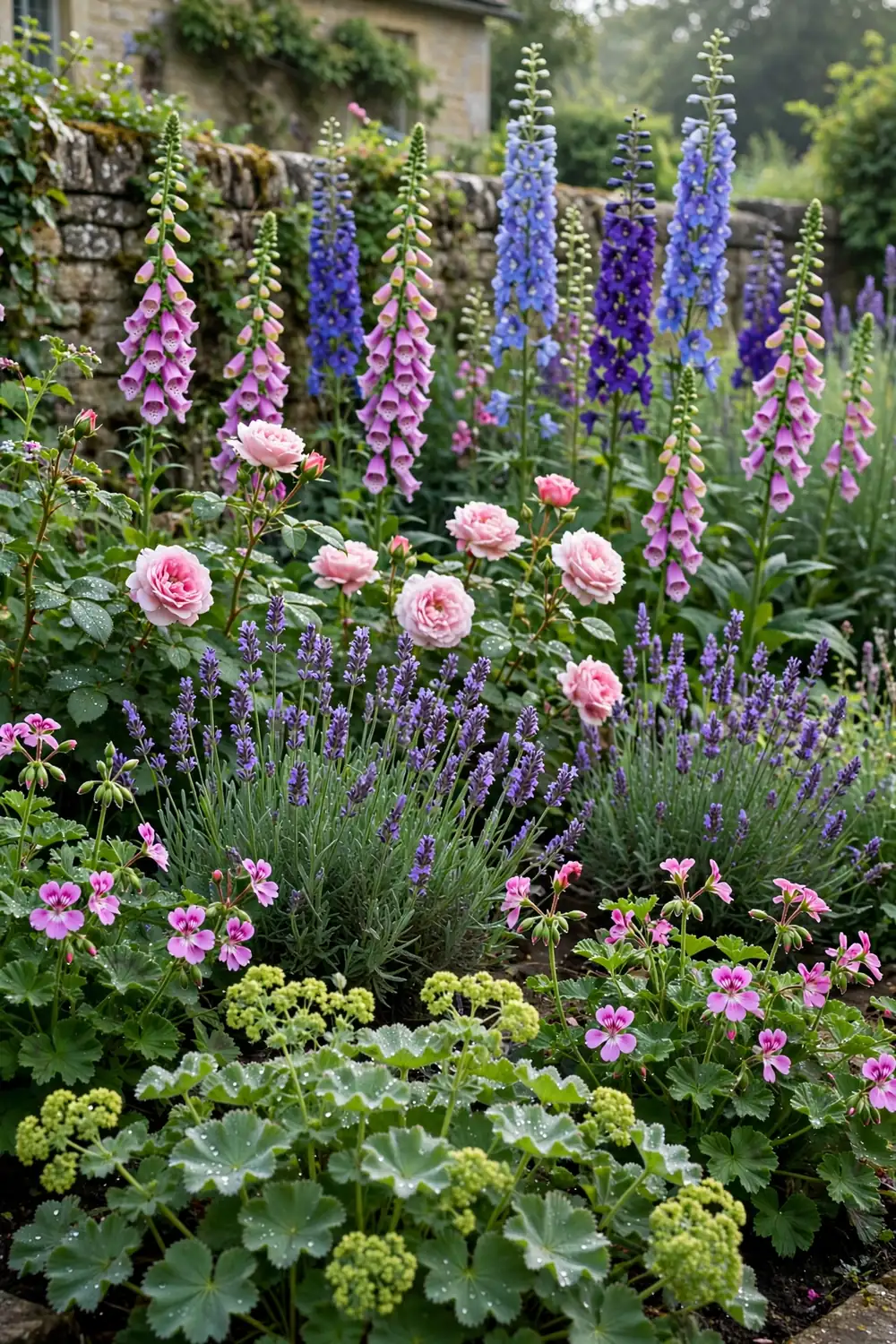
The classic English herbaceous border is still one of the best garden design ideas ever invented, and it works because of layering. Tall plants at the back, medium plants in the middle, low plants at the front — each layer visible, each plant given room to grow into its neighbours. A border a metre or more deep gives you enough space to put smaller plants at the front with taller ones behind, and the result is a rich, generous look that changes every few weeks from spring to autumn.
Plan for succession, not just for June. Choose plants that flower in sequence — spring bulbs and hellebores, then alliums and lupins, then roses and delphiniums, then asters and dahlias — so there is always something in flower. Mix in foliage plants for texture: the silver leaves of artemisia, the dark drama of heuchera, the soft mounds of alchemilla. Texture matters more than colour in a border, because a variety of leaf shapes brings a sense of movement even when nothing is in flower. To grow flowers that keep coming all season, deadhead regularly and feed the border with garden compost each spring.
4. Use Evergreen Shrubs as the Backbone
The best garden designs start with structural plants, infilled with pretty, flowering plants. Evergreen shrubs are that structure: they hold the garden together in winter when everything else has died back, and they give the summer planting something to lean against. Use them at the end of each border and as punctuation along the way — a clipped box ball, a holly, a hebe or a sarcococca for winter scent by the door — and check the RHS hardiness rating before you buy, so the shrub you choose is genuinely tough enough for your part of the country.
Three large shrubs have more impact than ten spindly annuals, so choose quality over quantity and give each shrub room to reach its natural size. Evergreen shrubs also do the quiet work of screening: a row of them along a boundary hides a fence, softens a wall and gives birds somewhere to shelter. For year-round colour, mix evergreens with a few shrubs chosen for winter stems or berries — the red bark of cornus, the berries of pyracantha, the winter flowers of mahonia. Our guide to evergreen shrubs picks the 15 best for UK gardens that stay green all year.
5. Go Vertical With Climbers and Living Walls
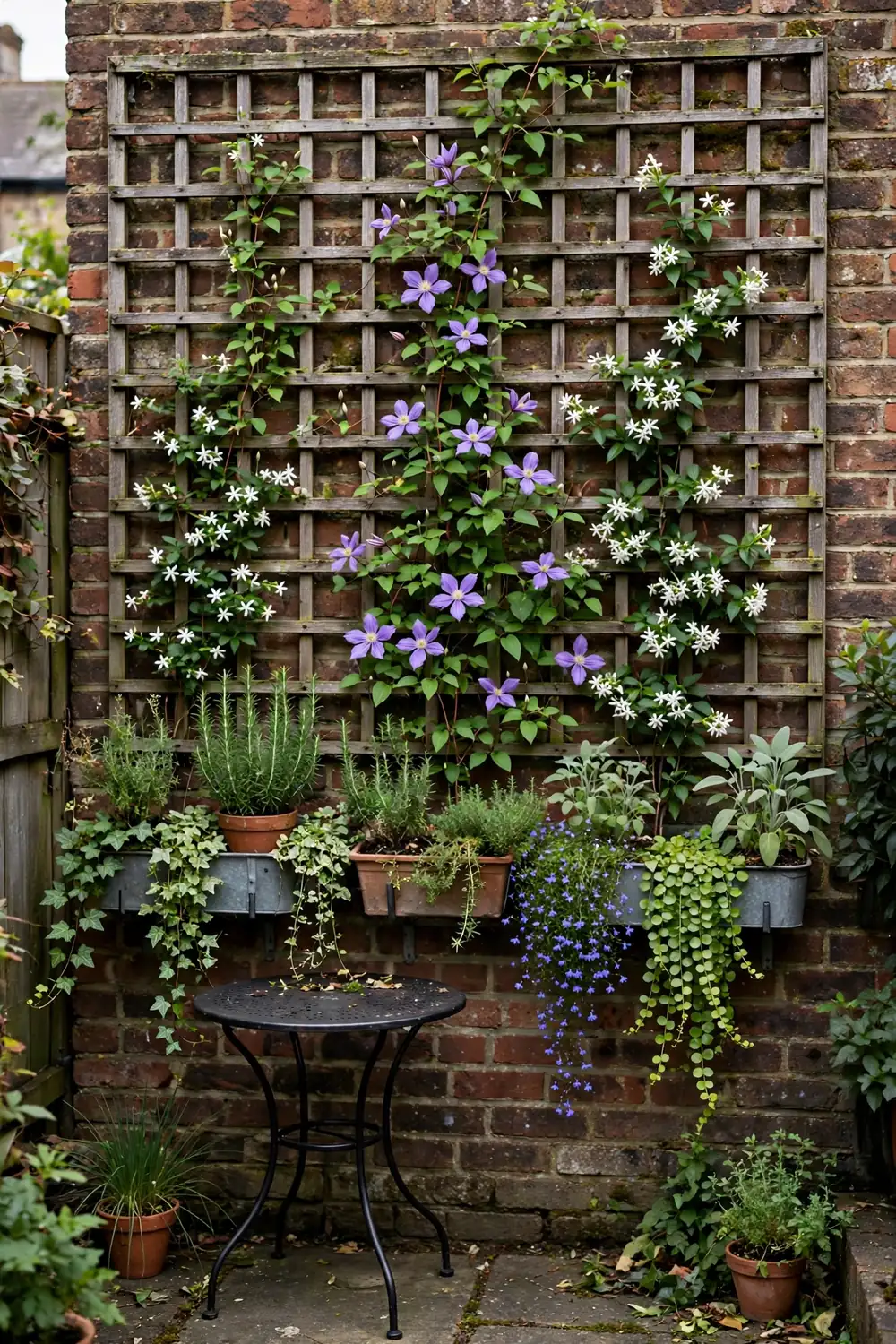
Walls and fences are free growing space, and in a small garden they are the most valuable real estate you have. Climbing plants soften hard surfaces, add greenery without using a single square metre of ground, and can turn a bare fence into the best-looking part of the garden. Clematis, honeysuckle, climbing roses and star jasmine all thrive on a UK fence or wall, and a living wall of wall-mounted planters can hold herbs, trailing plants and compact vegetables on a balcony or courtyard where there is no soil at all. Container gardening works the same way at ground level: a group of large pots by the back door can hold a small tree, scented plants for the evening and herbs for the kitchen, all in a square metre of paving.
Match the climber to the aspect: sun-lovers such as wisteria and star jasmine for a south- or west-facing wall, ivy and climbing hydrangea for a shady north-facing wall. A south-facing fence is extra precious — it soaks up the sun and stays warm, so it is the perfect spot for trained fruit, tender plants or tomatoes. Our guide to the best climbing plants for UK gardens covers the 15 most reliable climbers for walls, fences and pergolas.
6. Build a Classic English Cottage Garden
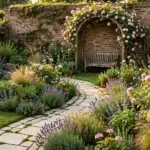
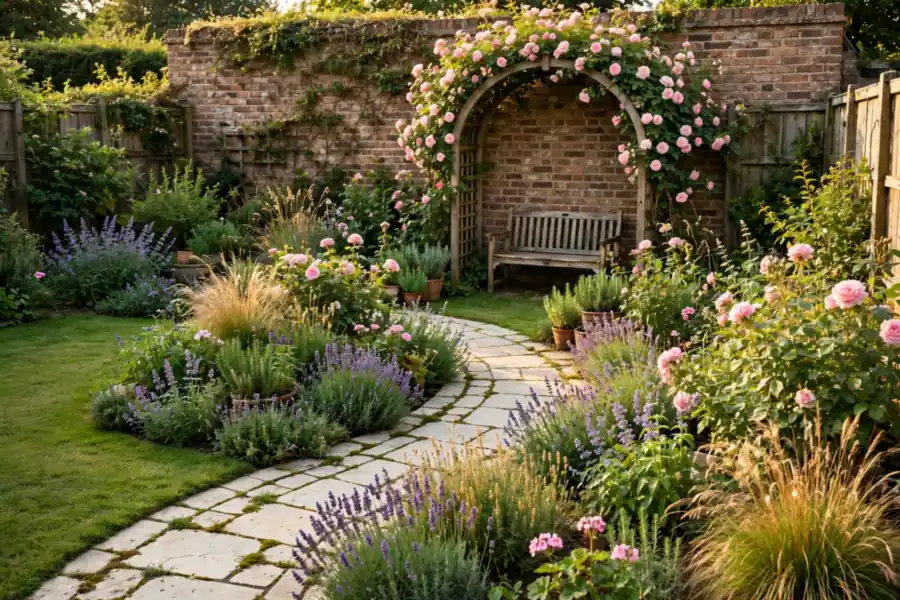
The cottage garden is the most loved garden style in Britain for a reason: it looks generous, smells wonderful and is surprisingly forgiving. Its secret is structured informality — dense, mixed borders of roses, foxgloves, lupins, lavender and self-seeders, packed closely enough to smother weeds, with a path running through the middle and something in flower from March to October. Heritage roses form the backbone of an authentic cottage garden in the UK: disease-resistant varieties such as ‘Gertrude Jekyll’ and ‘The Generous Gardener’ withstand wet winters and variable summers, and climbing roses trained along a pergola or arch turn vertical space into a scented tunnel.
Let some plants self-seed — calendula, cosmos, poppies and foxgloves will find their own places and soften the edges of the design in a way no plan ever could. Add a picket fence or a simple wooden gate for the finishing touch, and keep the paths narrow and a little informal: a cottage garden should feel discovered, not imposed. For planting inspiration, see our roundup of the 25 best cottage garden flowers.
7. Grow a Kitchen Garden You Actually Use
A kitchen garden earns its place in a way no ornamental bed can: it feeds you. Even a small patch — a sunny border, a few raised beds, or pots by the back door — can grow salads, herbs and soft fruit from April to October in the UK climate. Grow what you actually eat: cut-and-come-again lettuce, tomatoes on a sunny wall, herbs within arm’s reach of the kitchen door, and a few raspberry canes along a fence. A kitchen garden also makes a garden feel alive and worked, which is a big part of its charm.
Site it where it is convenient, not where it is out of sight — a vegetable patch hidden at the far end of the garden gets neglected, while one you pass every day gets watered, weeded and harvested. Raised beds make a kitchen garden easier to manage, warmer in spring, and far simpler to keep weed-free, and they look smart enough to sit near the house rather than being banished to the bottom of the plot.
8. Lay Paving Slabs and Paths That Lead Somewhere
Hard landscaping is the skeleton of a garden design, and the materials you choose set its whole character. Paving slabs in a pale, natural stone or porcelain paving make a small garden feel brighter and more open, because light colours bounce light around; dark paving can make a compact plot feel gloomy. Large-format slabs — 600 mm x 600 mm or bigger — reduce the number of grout lines and make a patio feel more expansive, while a single material used consistently looks cleaner than mixing three different ones.
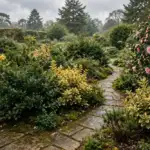
Paths matter as much as patios. A gently curved path makes a garden feel larger by hiding the far boundary, while diagonal paving draws the eye along the longest line of the plot. Keep paths 50–70 cm wide so they do not feel cramped, and use gravel paths or stepping stones for secondary routes. Limit yourself to two hard materials in total — one for the main paving, one for everything else — and the garden will look calm and considered rather than busy.
9. Add a Water Feature, Even a Tiny One
Water features are one of the most effective garden design ideas for adding life and sound to a garden, and they do not need to be grand. A small millstone fountain, a bird bath, a shallow rill or even a glazed pot with a solar pump brings movement, reflects the sky and attracts birds and bees. The sound of running water masks traffic noise, which makes it especially valuable in a city garden, and a still pool doubles the light in a shady corner by reflecting it back up into the planting. A water feature also turns any garden into a small wildlife garden: birds drink and bathe in it, bees visit on hot days, and a pond — even a tiny one — will attract frogs within a season or two.
Site a water feature where you will hear it and see it — near a seating area, or visible from the kitchen window — and keep it simple. A single, well-chosen feature beats a collection of competing ones, and a small pond or water bowl is far easier to maintain than a large formal pool. If you have children or pets, choose a raised rill or a bubbling boulder rather than an open pond, and site it in partial shade so algae stays under control.
10. Create a Fire Pit Corner for Year-Round Evenings
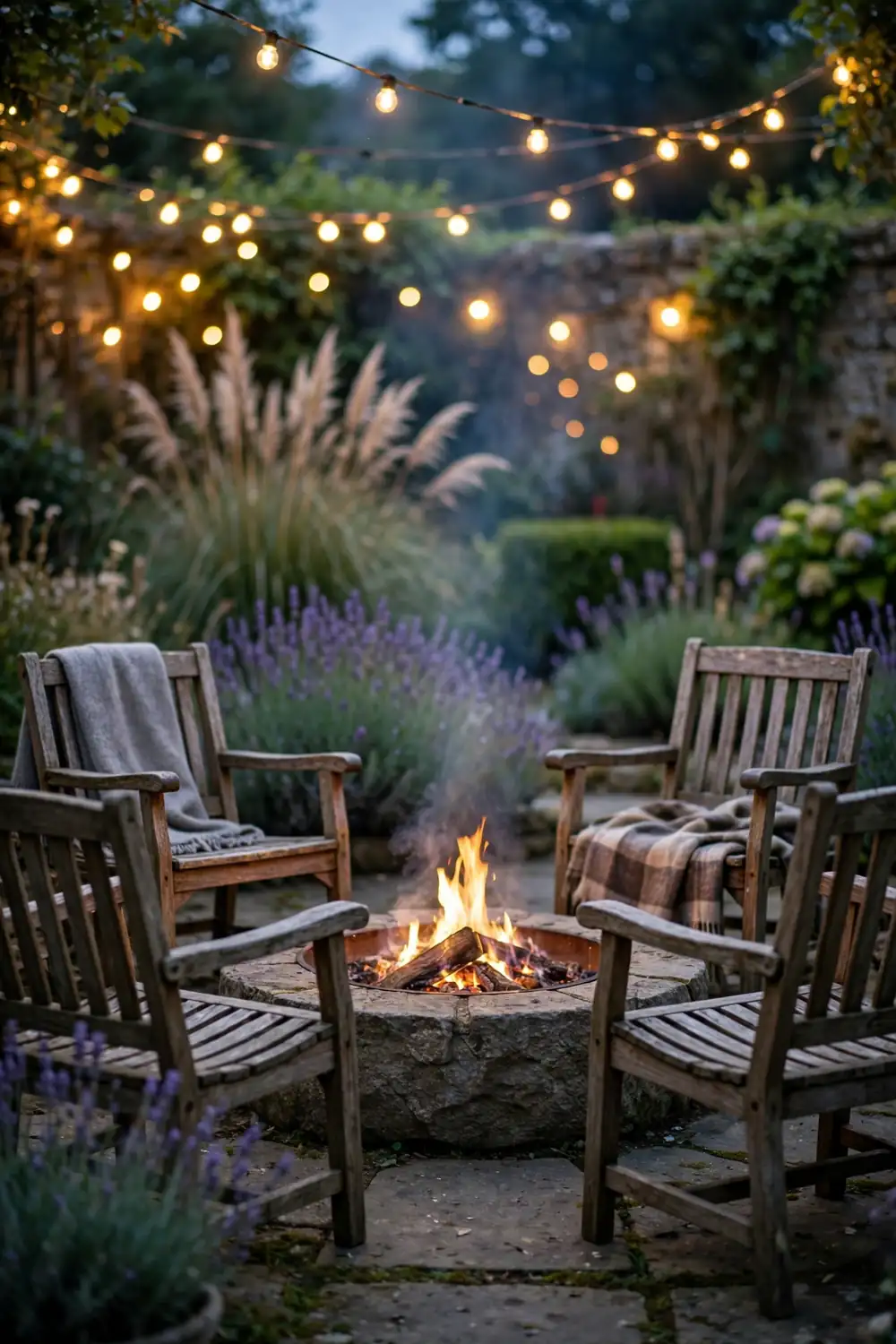
A fire pit turns a garden from a summer-only space into a year-round one. On a cool April evening or a crisp October night, a circle of chairs around a fire is the warmest place in the house — and it costs far less than a garden room or an extension. Choose a spot sheltered from the wind, away from overhanging branches and fences, and give it a proper surface: a circle of gravel or paving slabs that will not scorch, with enough room for chairs to pull back from the heat.
Keep the design simple. A low stone fire bowl, a few sturdy wooden chairs, a stack of dry logs and some warm lighting is all it takes, and the corner will quickly become the place everyone gravitates to. Check your local rules on smoke if you live in a smoke control area — many London boroughs are — and burn only dry, seasoned wood. A fire pit also gives a garden a natural focal point after dark, which is when most gardens are at their least interesting.
11. Frame the Garden With an Arch or Pergola
An arch or pergola does two jobs at once: it creates a doorway between one part of the garden and another, and it gives climbing plants somewhere to go. Walking under a rose-covered arch is one of the great small pleasures of a British garden, and a pergola over a seating area provides dappled shade in summer and a frame for lights and hanging plants in the evening. Arches work best at a change of direction — where a path turns, where one zone meets another, or at the entrance to a vegetable garden.
Build it sturdy and generously sized: a pergola that is too narrow feels like a tunnel, while one that is too flimsy will not hold a mature climbing rose. Metal arches suit a modern garden; timber suits a cottage style. Either way, plant the climbers at the same time as you build the structure, so the plants and the frame grow together. Our guide to garden arch ideas shows 12 ways to turn a garden into a showstopper.
12. Raise Your Beds
Raised beds are one of the most practical garden design ideas in the book, and they suit almost every style of garden. They warm up faster in spring, drain better in a wet winter, keep the soil loose and workable, and make gardening far easier on your back and knees. They also give a garden instant structure: a row of timber or brick raised beds reads as a designed feature, not a makeshift one, and they are ideal for the awkward corners and sloping ground where a flat border would be a struggle.
Keep them no wider than 1.2 metres so you can reach the middle from either side, and fill them with a good mix of topsoil and garden compost. Raised beds are perfect for a kitchen garden, for cut flowers, and for any plant that needs better drainage than your native soil provides — lavender, rosemary and Mediterranean herbs all thrive in them. Our step-by-step guide to how to build a raised garden bed covers materials, sizes and soil mixes for UK gardens.
13. Light It for the Evening
Garden lighting is the single most underrated of all garden design ideas. It lets you enjoy the garden after dark, draws the eye to plants rather than fences, and makes a small garden feel bigger in the evening than it does in the day. The rule is simple: light the plants and the features, never the boundaries. Uplights at the base of a tree, warm LED strips under a bench, a wash of light across a wall of climbers — each one creates depth and atmosphere.
Choose warm white light (around 2700K), not cool white, which makes a garden look like a car park. Avoid floodlights entirely: they flatten everything and light up the fences, which is the opposite of what you want. Solar lights have improved enormously and are fine for paths and borders, but for seating areas and feature lighting, low-voltage mains lighting is more reliable and easier to control — warm white LED strips under a bench or along a step edge give a soft glow without glare. A few well-placed lights will do more for your garden than a dozen scattered ones.
14. Plant Ornamental Grasses for Movement
Ornamental grasses bring something no other plant can: movement. A clump of miscanthus or stipa swaying in the breeze makes a border feel alive, and grasses catch the low autumn sun in a way that flowers never do. They are also among the easiest plants to grow in the UK — most are fully hardy, need almost no feeding, and look good for nine months of the year, from fresh spring growth through summer plumes to frosted winter seed heads.
Use grasses as the connective tissue of a design: repeated through a border, they tie different planting groups together and stop the garden looking like a collection of unrelated specimens. Tall grasses make excellent screens and dividers between zones, while low grasses such as festuca and carex are perfect for edging paths and softening the hard lines of paving. A Japanese maple in a large pot gives the same job done in miniature — fiery autumn colour and a graceful shape without taking up a border — and pairs beautifully with grasses in a sheltered corner. Leave the seed heads standing through winter for frost and structure, and cut them back in early spring before the new growth starts.
15. Keep It Low Maintenance on Purpose
The best garden design ideas are the ones you can actually live with, and that means designing for low maintenance from the start rather than apologising for it afterwards. Choose plants that look after themselves — evergreen shrubs, hardy perennials, ornamental grasses, drought-tolerant planting such as lavender, sedum and rosemary, and ground cover that smothers weeds — and mulch every border thickly each spring with bark or garden compost. Mulch is the single best low-maintenance trick there is: it suppresses weeds, holds moisture in dry spells and feeds the soil as it rots down.
Keep the lawn small, the paving generous and the planting dense, and you will spend your weekends enjoying the garden rather than maintaining it. A low maintenance garden is not a lazy garden — it is a garden where the design does the work, and the gardener gets to sit down with a cup of tea and admire it.
Garden Design Ideas for Small London Gardens
London gardens have their own particular challenges, and they are worth designing for specifically. Most are small — a typical terraced garden is 6 m x 8 m, and a new-build plot is often barely 4 m x 6 m — and many are overlooked, shaded by neighbouring buildings, or paved over entirely. But small does not mean uninteresting: some of the most inventive garden design in the UK is happening in London courtyards and terraces, precisely because every square metre has to earn its place.
In a London garden, go vertical first. Fences, walls and trellis are extra growing space, and a fence running down the side of a small garden can hold more plants than the beds below it. Star jasmine by the front door, clematis on the fence and a climbing rose over an arch will give you more greenery than any amount of ground-level planting. Use pale paving to bounce light around — London gardens are often shaded, and pale natural stone or porcelain makes the space feel brighter and more open, while dark decking can make a small plot feel gloomy. A single material for the main paving and one other for everything else keeps a small London garden calm rather than busy.
Choose plants that cope with the London climate: it is milder than most of the UK, so tender plants such as star jasmine, passion flower and even some Mediterranean herbs survive here that would struggle further north — but pollution and dry shade under trees are real problems, so pick tough, proven plants and water new planting well in its first summer. And remember that London gardens are often the only outdoor space their owners have, so design them to be used: a proper seating area with garden furniture scaled to the space — a bistro set will fit on a single square metre of paving — a table you can actually eat at, and lighting that makes the garden inviting after work, not just at weekends. Even house gardens with barely a strip of soil at the back can grow a surprising amount vertically, with climbers on the fence and pots on the steps. If you want free inspiration before you spend anything, London’s public gardens are a masterclass in design — the roof gardens at Sky Garden and the Garden at 120 are free to visit and show how much can be done in a small, high space.
Common Garden Design Mistakes to Avoid
Trying to fit in too much. The single biggest mistake in garden design is cramming every idea into one plot. A small garden that does one thing well is infinitely better than a small garden that tries to do everything. Pick three or four ideas from this guide and do them properly.
Too many materials. More than two hard materials in a garden looks busy and expensive. Stone paving and timber beds. Gravel and brick edging. Porcelain and corten steel. Any more, and the eye has nowhere to rest.
Ignoring the boundaries. Fences and walls are the largest surfaces in most gardens, and leaving them bare makes the garden feel like a yard. Plant them, paint them a dark colour so they recede, or screen them with grasses and climbers.
A centred rectangular lawn. A lawn in the middle of the garden, with a thin border around it, wastes the best planting space and makes the garden feel smaller. Push the lawn to one side, curve it, or lose it altogether.
Planting too much, too close. New plants look small in the nursery and enormous three years later. Give each plant the space the label promises, or you will spend every spring digging things out and moving them.
Forgetting winter. A garden designed only for June is a garden that looks bleak for five months of the year. Evergreen shrubs, grasses with seed heads, coloured stems and winter scent are what make a garden worth looking at in January — and they are easy to add once you think about them.
Frequently Asked Questions
What are the best garden design ideas for a small garden?
The best small garden design ideas are zoning, vertical planting and a simple material palette. Split the garden into two or three clear zones, use fences and walls for climbers and living walls, and stick to one paving material plus one other. Pale paving, a curved path, a focal point at the far end and warm lighting will make even a 4 m x 6 m plot feel generous. The full list of 15 ideas above works in small gardens too — just pick the three or four that solve your biggest problems first.
How do I design a garden on a budget?
Start with the layout, which costs nothing: observe the sun, sketch your zones, and move existing plants before buying new ones. Spend money on hard landscaping first, because paving and paths are the expensive part and the hardest to change. Buy small plants and let them grow, propagate from cuttings and divisions, and use gravel, mulch and self-seeders to fill gaps cheaply. A well-designed garden built slowly over two or three years will look better than one bought all at once.
What is the easiest garden design for beginners?
The easiest garden design for beginners is a simple one: a strong lawn or paved shape, deep borders filled with reliable evergreen shrubs and hardy perennials, and one or two features such as a fire pit or a water bowl. Choose plants that are known to be easy in the UK — lavender, roses, ornamental grasses, hostas for shade and heuchera for colour — and avoid anything that needs regular pruning or winter protection until you have a season of experience. These design tips apply to any size of garden: keep it simple, repeat your best plants, and let the garden grow into itself.
How can I make my garden look good all year round?
Year-round colour comes from structure, not flowers. Plant evergreen shrubs for winter shape, ornamental grasses for autumn movement and frosted seed heads, and shrubs with coloured stems or berries for the dark months. Add spring bulbs, summer perennials and autumn-flowering plants in layers, so something is always coming into flower. Flower shows such as the Chelsea Flower Show and Hampton Court are excellent places to see year-round planting ideas in action — note which gardens look good in May and which are designed for autumn, and borrow the combinations you like.
Do I need a professional garden designer?
Not necessarily. Most UK gardens can be designed well by their owners using the ideas in this guide — especially if the garden is small or the changes are mostly planting. Consider a professional designer if your garden is large, steeply sloping, needs major hard landscaping or drainage work, or if you want a fully drawn plan to hand to a landscaper. Many designers offer a one-off consultation or a concept plan, which is a good middle ground: you get expert advice on layout and structure, then do the planting yourself over time.