Few plants give you a tropical holiday feeling for as little effort as a cordyline. One spiky fountain of sword-shaped leaves can turn a plain border or a bare patio corner into something that looks like it belongs in a much warmer climate — and once it is settled in, it asks for almost nothing. The catch is winter: most cordylines are not fully hardy in the UK, and a single cold snap can undo years of growth. This guide shows you how to grow cordyline well in British conditions — which varieties to choose, where to plant them, how to water and feed them, and exactly how to protect them when the frost arrives — so yours keeps its bold, architectural shape year after year.
Quick Answer: How to Grow Cordyline in the UK
Short on time? Here is the whole guide in a few lines. Plant cordyline in spring, after the last frost, in a sheltered spot with full sun or light shade and free-draining soil. Water regularly in the first summer, then very little once established — cordylines are drought tolerant and hate wet feet. Feed container plants with a balanced liquid fertiliser from spring to late summer. Before winter, tie the leaves up, wrap the stem in fleece and mulch the roots; in cold areas, move potted plants under cover. Choose Cordyline australis for the best chance outdoors — it is the hardiest species for UK gardens.
What Is a Cordyline?
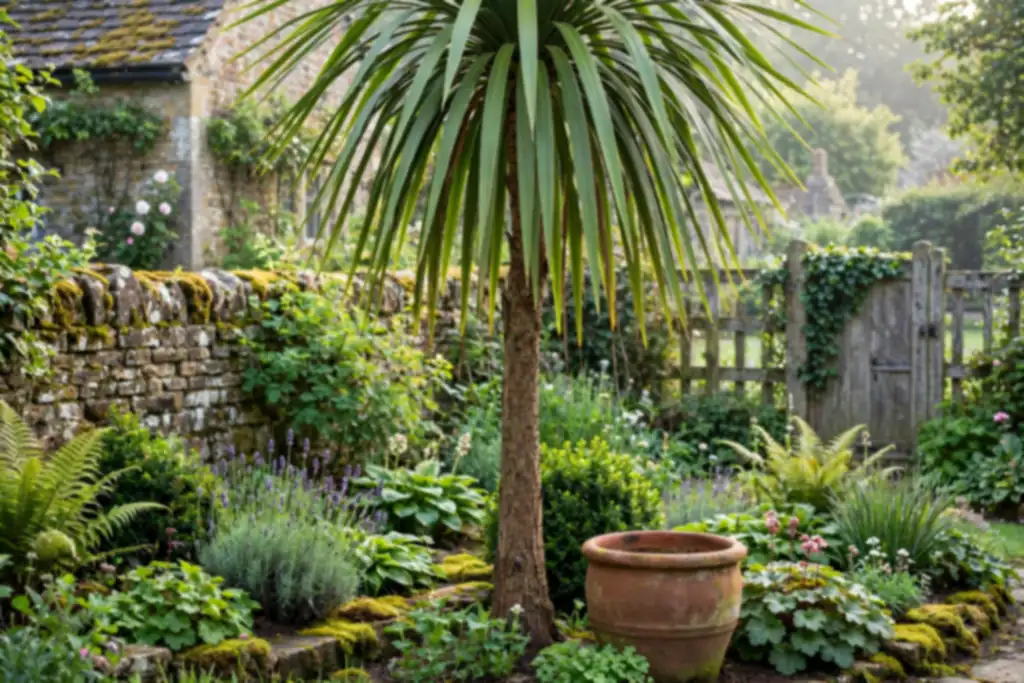
Cordylines, also known as cabbage palms, are evergreen shrubs and small palm-like trees from New Zealand and the Pacific. Young plants look like a low fountain of long, strappy, sword-shaped leaves; as they mature, they form a stout trunk and can reach 3 to 10 metres tall, with a tuft of leaves at the top of each branch that resembles a huge pineapple top. That bold, architectural shape is exactly why gardeners love them: a single cordyline makes a striking focal point in a border, a container or a contemporary urban garden, and the evergreen foliage gives interest all year round.
They suit many planting styles, from tropical and Mediterranean borders to seaside gardens and summer bedding displays. Green-leaved forms are the toughest, while varieties with dark red, purple or variegated foliage bring colour that lasts through winter, when so much else in the garden has faded. Most cordylines are not fully hardy in the UK, although Cordyline australis may survive winter outdoors in mild areas. That single fact shapes everything else in this guide: choose the right species, plant it in the right spot, and give it winter protection, and cordyline growing in Britain is genuinely easy.
The Best Cordyline Varieties for UK Gardens
There are several cordyline species and dozens of named cultivars, but only a handful are worth growing outdoors in the UK. The rest belong in pots that can be moved under cover, or indoors in bright light. Start with the hardy ones and add the tender, colourful types once you know your garden’s cold spots.
Cordyline australis — The Hardiest Choice
Cordyline australis, the cabbage palm, is the species to grow if you want a cordyline that survives British winters outdoors. It is the most winter hardy cordyline for UK gardens, tolerating frost down to around minus 5°C in a sheltered spot, and mature plants with a thick trunk cope better still. In a mild, sheltered garden it can grow into a small multi-stemmed tree several metres tall, and in hot summers established plants produce frothy spikes of tiny white flowers, followed by clusters of small purple berries in autumn. Green-leaved forms are the toughest of all; coloured forms of australis are slightly more tender, so give them the warmest spot you have.
Red and Purple Varieties: ‘Red Star’, ‘Pink Passion’ and ‘Charlie Boy’
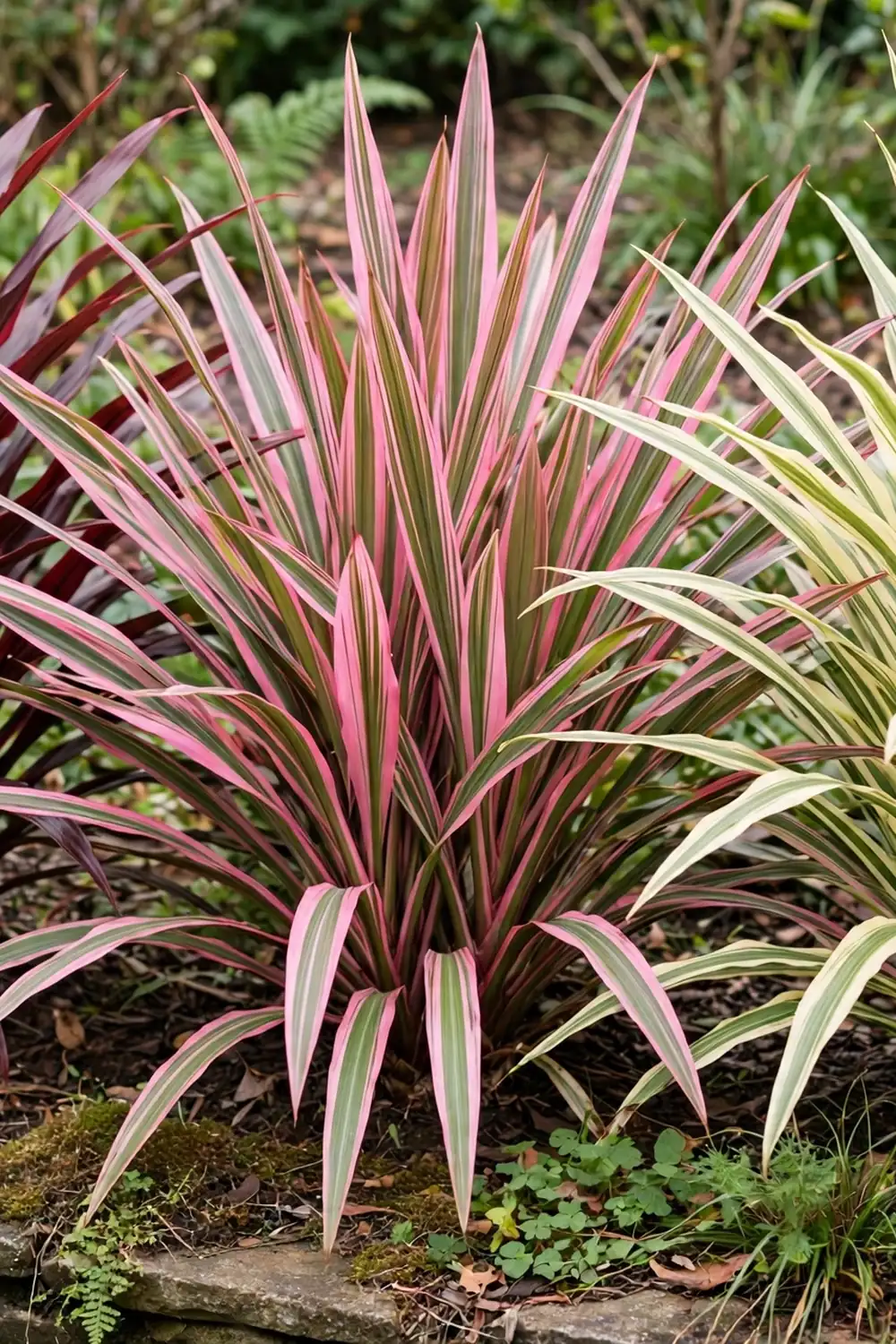
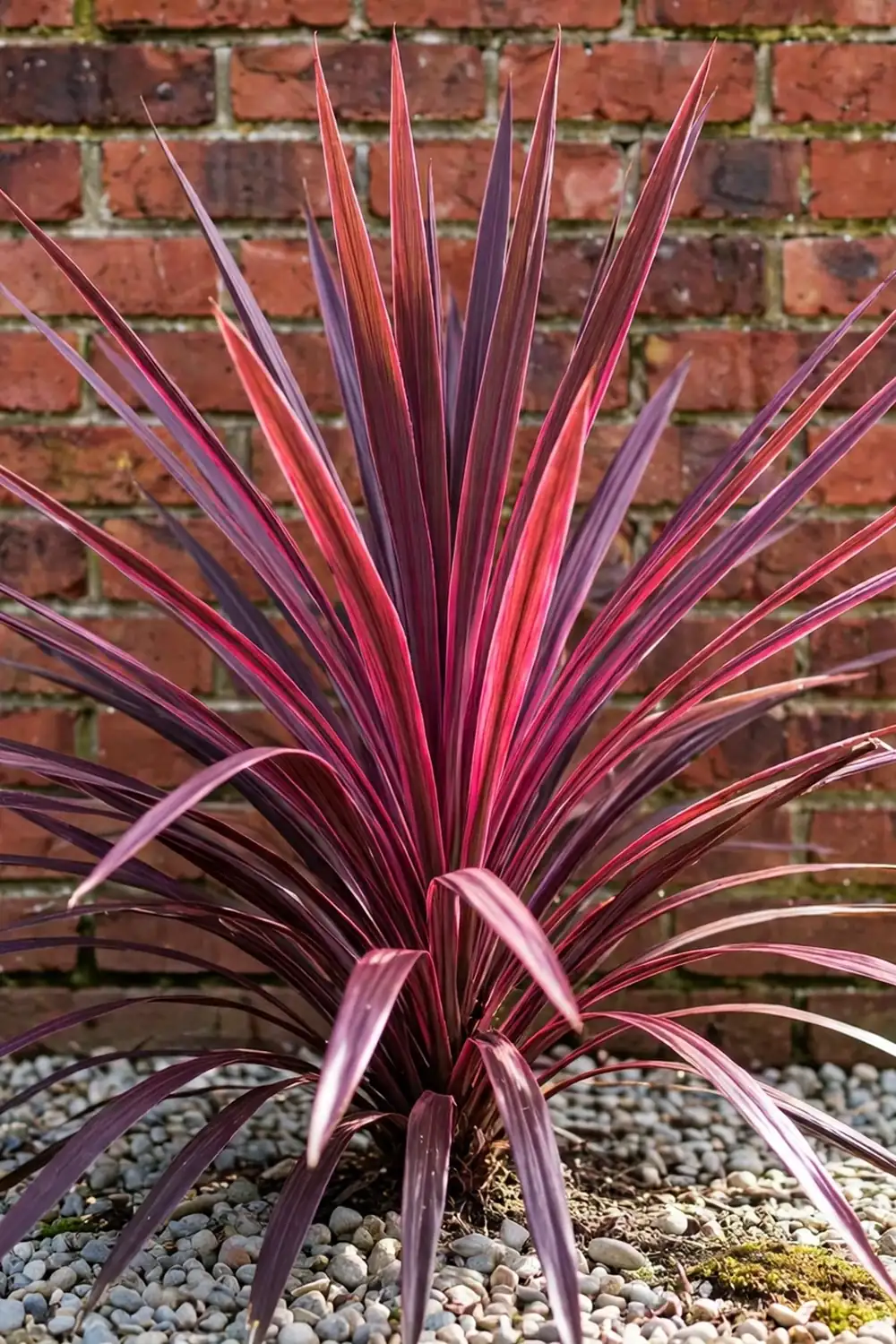
If you want colour, the red and purple cultivars are the show-offs of the family. ‘Red Star’ has deep burgundy-red, sword-shaped leaves and is one of the most popular cordylines sold in the UK. ‘Pink Passion’ is brighter still, with hot pink and cream stripes that glow in evening light. ‘Charlie Boy’ is a newer variety with bold red and pink variegation. All three are forms of Cordyline australis, so they are hardier than the truly tender species, but their coloured foliage is more vulnerable to cold than plain green leaves, and strong sun can fade the colours — light shade suits them better than baking sun. In colder parts of the country, grow them in containers so you can move them under cover in winter.
Variegated Varieties: ‘Torbay Dazzler’ and ‘Sundance’
Variegated cordylines such as ‘Torbay Dazzler’, with cream-striped green leaves, and ‘Sundance’, with yellow and green stripes, light up a shady corner in a way plain green plants cannot. Like the red varieties, they prefer light shade: full sun can scorch the pale parts of the leaf and fade the variegation. They are a little less hardy than green-leaved cordyline australis, so a sheltered spot against a warm wall is ideal, and a fleece wrap in winter is worth the effort.
Tender Species to Keep in Pots: Cordyline fruticosa and Cordyline marginata
Some cordylines are simply not outdoor plants in Britain. Cordyline fruticosa, the ti plant, has broad, glossy leaves in green, red, pink and purple and is a classic houseplant; outdoors it will not survive a frost. Cordyline marginata, Cordyline stricta and Cordyline indivisa are similarly tender. Grow these in containers with a free-draining compost, enjoy them outside through summer, and bring them indoors or into a heated greenhouse before the first frost. Check the plant label carefully before buying — if it does not say australis, assume it needs winter protection.
Where to Plant Cordyline
Position matters more for cordylines than for almost any other shrub you will grow, because the right spot is the difference between a plant that sails through winter and one that turns to mush in January. Give it a warm, sheltered spot with fertile, well-drained soil — against a south- or west-facing wall, in a courtyard, or in a border sheltered by a fence or hedge. Cold wind is the enemy, and so is wet soil: long spells of cold, damp weather can kill a cordyline faster than a sharp frost on dry soil.
Full sun is ideal for green-leaved cordylines, and it produces the strongest growth. Light shade is preferable for varieties with colourful or variegated leaves, as strong sun fades their rich hues — a spot that gets morning sun and afternoon shade is perfect for red and pink forms. Avoid deep shade, which makes the plant leggy and dulls the foliage colours, and avoid frost pockets at the bottom of a slope, where cold air collects on still winter nights. Cordylines also make excellent container plants, which suits small gardens and patios: a pot lets you move the plant to the sunniest spot in summer and under cover in winter. If your garden has a shady corner that needs a bold evergreen, our guide to garden plants for shade has companions that will grow happily alongside a cordyline.
How to Plant Cordyline
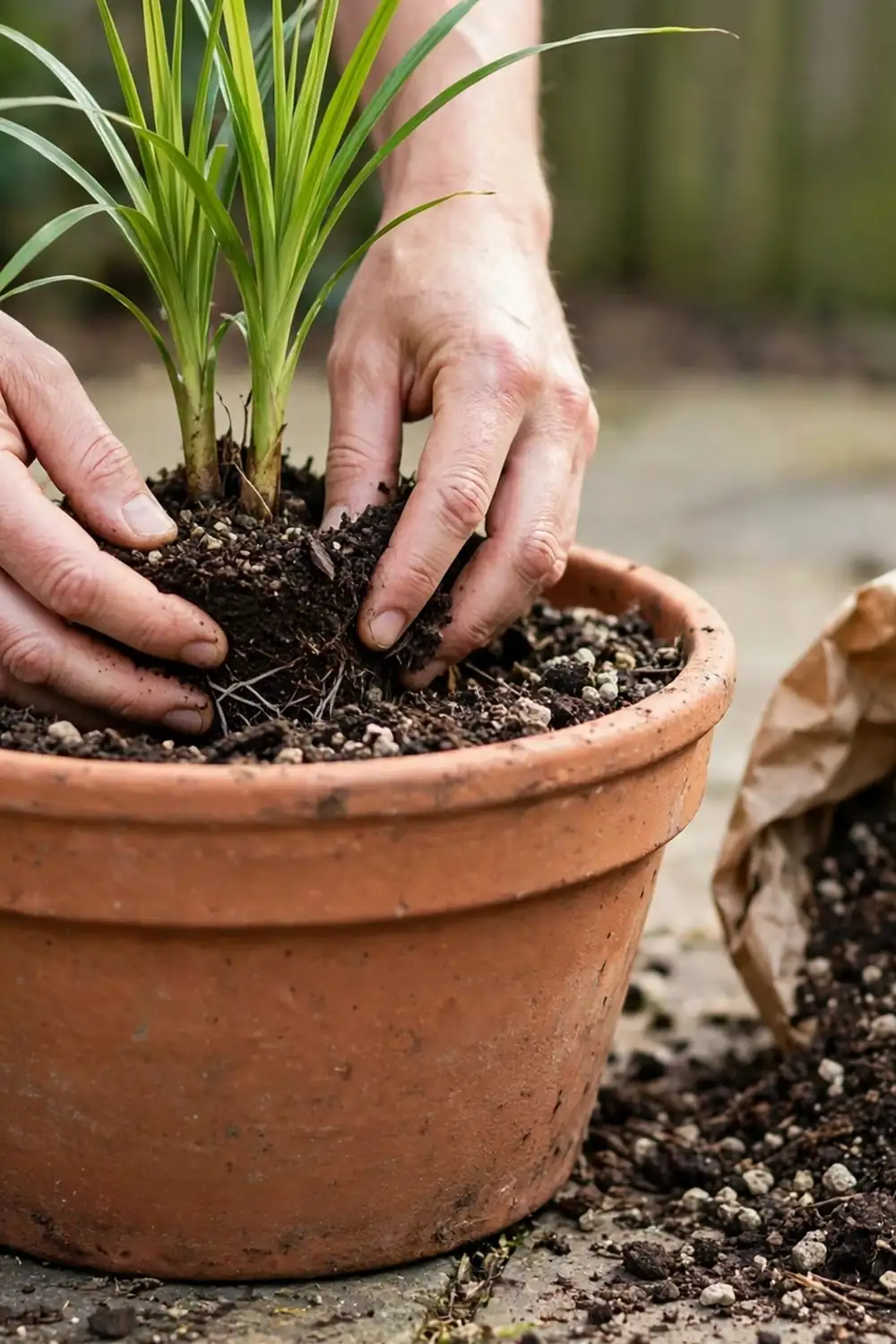
Cordylines are easy to plant and should settle in quickly, provided you get the timing and the drainage right. Plant in spring, after the last frost — usually April or May in most of the UK. Spring planting gives the roots a whole growing season to establish before winter, which greatly increases the plant’s chances of survival.
Planting in the Ground
Dig a hole twice as wide as the root ball and the same depth, and work in plenty of grit or sharp sand if your soil is heavy clay — cordylines rot in soil that stays wet. A handful of well-rotted compost dug into the planting hole helps, but do not overdo the feeding at planting time. Set the plant at the same depth it was growing in its pot, firm the soil gently around the roots, and water well. In the first summer, water newly planted cordylines regularly until they are established; after that, plants in the ground are drought tolerant and should rarely need watering. Finish with a thick mulch of bark or gravel around the root zone, kept a few centimetres clear of the stem.
Planting in a Container
Choose a pot with generous drainage holes — at least 30 to 40cm across for a young plant — and use a peat-free multipurpose or peat-free loam-based compost such as John Innes No 2, with a handful of grit mixed in for drainage. For a plant that will stay in the same pot for years, John Innes No 3 is a better choice, as it holds its structure longer. Plant at the same depth as before, water well, and top-dress with gravel, which looks good and keeps the compost from drying out too fast. Remember that a container restricts growth: a cordyline in a pot will usually reach around 2 metres rather than the 3 to 10 metres it might manage in the ground, which is often exactly what a small garden needs.
Cordyline Care Through the Year
Once established, cordylines are among the lowest-maintenance plants in the garden. The routine is simple: water when dry, feed lightly in the growing season, and tidy up dead leaves as they appear. The details below cover each part of that routine.
Watering
When growing in borders, newly planted cordylines need regular watering during their first summer, but established plants are drought tolerant and should not need watering at all — overwatering is far more dangerous than underwatering, because wet roots rot. Cordylines in containers are different: they need regular watering through the growing season, but should be kept fairly dry in winter. Plants brought indoors over winter need only occasional watering, and plants left outside should be moved to a sheltered spot to protect them from excessive winter rain. If the leaf tips turn brown, check the watering first — both too much and too little water cause brown tips, so look at the soil before reaching for the watering can.
Feeding
Cordylines growing in the ground should not need feeding at all if the soil is reasonably fertile. Those in containers can be given a balanced liquid fertiliser from spring to late summer — roughly once a month is plenty. Do not feed after late summer: soft, late growth is easily damaged by frost. If a cordyline is kept permanently in a container, top-dress it each spring by removing 5cm of old compost from the surface and replacing it with a fresh layer.
Mulching
With cordylines in borders, lay a thick layer of mulch over the root zone in autumn to help insulate the roots against frost. Bark, garden compost or well-rotted manure all work. In containers or coastal-style plantings, a mulch of gravel gives an attractive finish, keeps weeds down and suits the seaside feel of the plant. Keep mulch a few centimetres clear of the stem itself, so damp material is not sitting against the trunk all winter.
How to Protect Cordyline in Winter
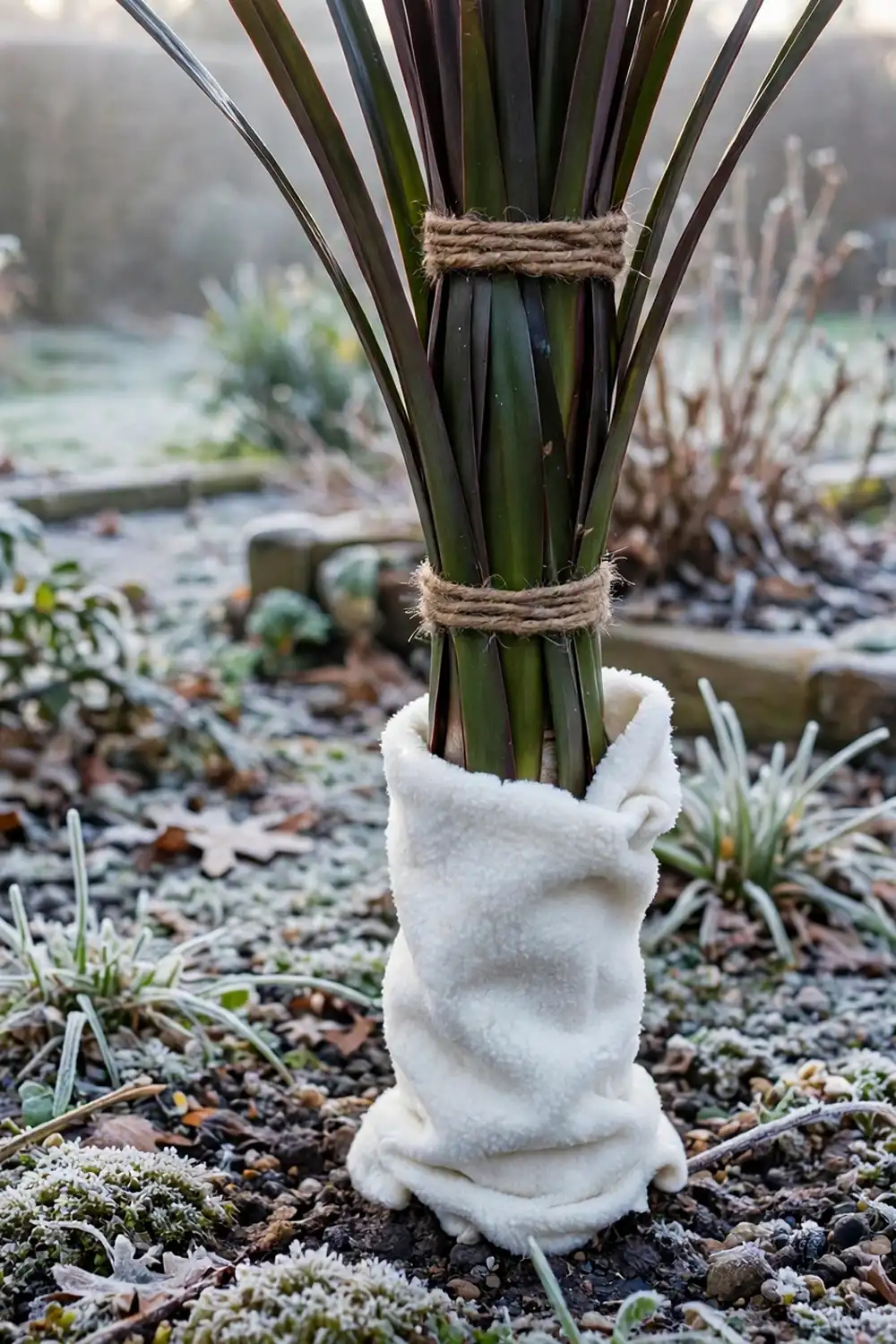
Winter protection is the one job that decides whether your cordyline survives to see another summer, and it is worth doing properly every autumn. Most cordylines are tender or not fully hardy, so in all but the mildest parts of the UK they need help through the cold months. The good news is that the protection itself is simple, cheap and takes less than half an hour per plant.
Start in late autumn, before the first hard frost. Tie the foliage together in a bunch with soft string or raffia — this reduces wind damage and, more importantly, stops rain collecting in the growing point at the crown, where standing water causes rot. Then wrap the main stem with layers of horticultural fleece, and place a thick 15cm layer of mulch over the root area. In cold locations, wrap the whole crown as well, but always make sure the foliage is thoroughly dry before you wrap it: a cordyline wrapped while wet is liable to rot inside the fleece. In spring, unwrap gradually once the risk of hard frost has passed, and check the growing point for damage before removing the fleece entirely.
Plants in containers have the advantage of being movable. Move them to a frost-free location such as a greenhouse, porch or conservatory for the winter; a shed or garage will do during cold snaps, provided there is some light. Alternatively, wrap bubble wrap around the container itself to insulate the roots, stand the pot against a sheltered wall, and protect the foliage and stem with fleece. Tender species such as Cordyline fruticosa, Cordyline marginata and Cordyline stricta should always be brought indoors or into a heated greenhouse over winter — no amount of fleece will save them from a hard frost. For the full seasonal routine, see our winter garden checklist. Even Cordyline australis, the hardiest species, can be damaged in a severe winter, so do not skip the fleece in colder areas — a plant that has survived several mild winters can still be caught out by one cold snap.
Pruning and Tidying a Cordyline
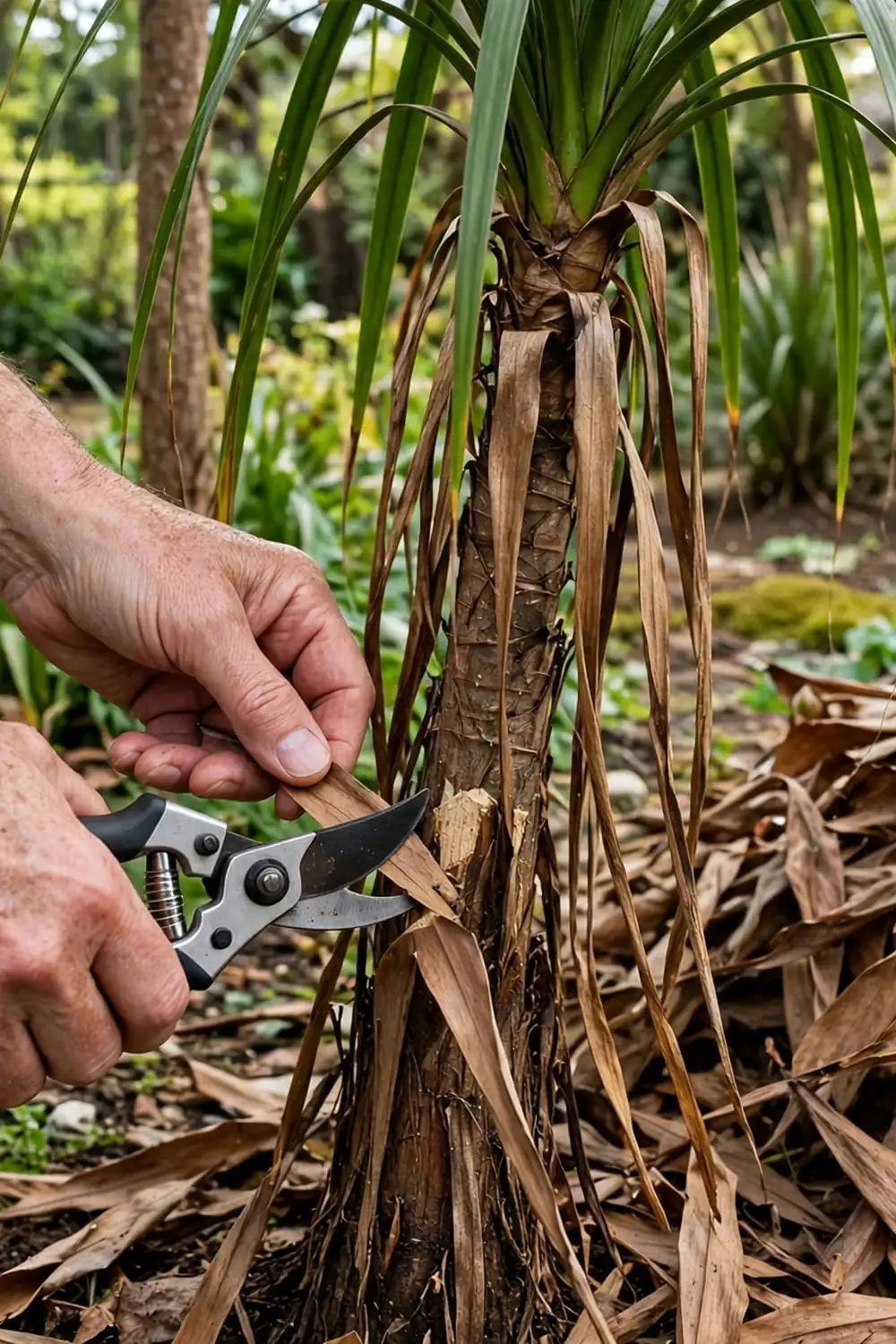
Cordylines need little pruning, but they do need regular tidying. As the plant grows, the lower leaves droop, turn yellow and then brown. Pull or cut these off to reveal the trunk and keep the plant looking smart — it is a quick job and the plant looks dramatically better for it. In warm summers, established cordylines may flower, producing frothy spikes of tiny white blooms; the faded flower spikes can be removed or left to form small red or purple berries.
If your cordyline has grown too tall, you can cut it back in mid-spring by sawing through the main stem, just above a side shoot or basal shoot, and it should quickly produce new sprouts. For a very tall specimen, cut down at ground level and it will usually re-shoot from the base. Take care with large plants — a thick trunk may need a pruning saw and, for a very big specimen, a specialist contractor. After pruning, apply a balanced fertiliser in spring to encourage new growth. If the plant has suffered winter damage or dieback, prune the damaged parts out in spring, cutting just above a side shoot or at a sound point on the trunk below any rot. To create a multi-stemmed plant, remove the growing point before growth begins in spring, and several new shoots will break from the top of the stem.
How to Propagate Cordyline
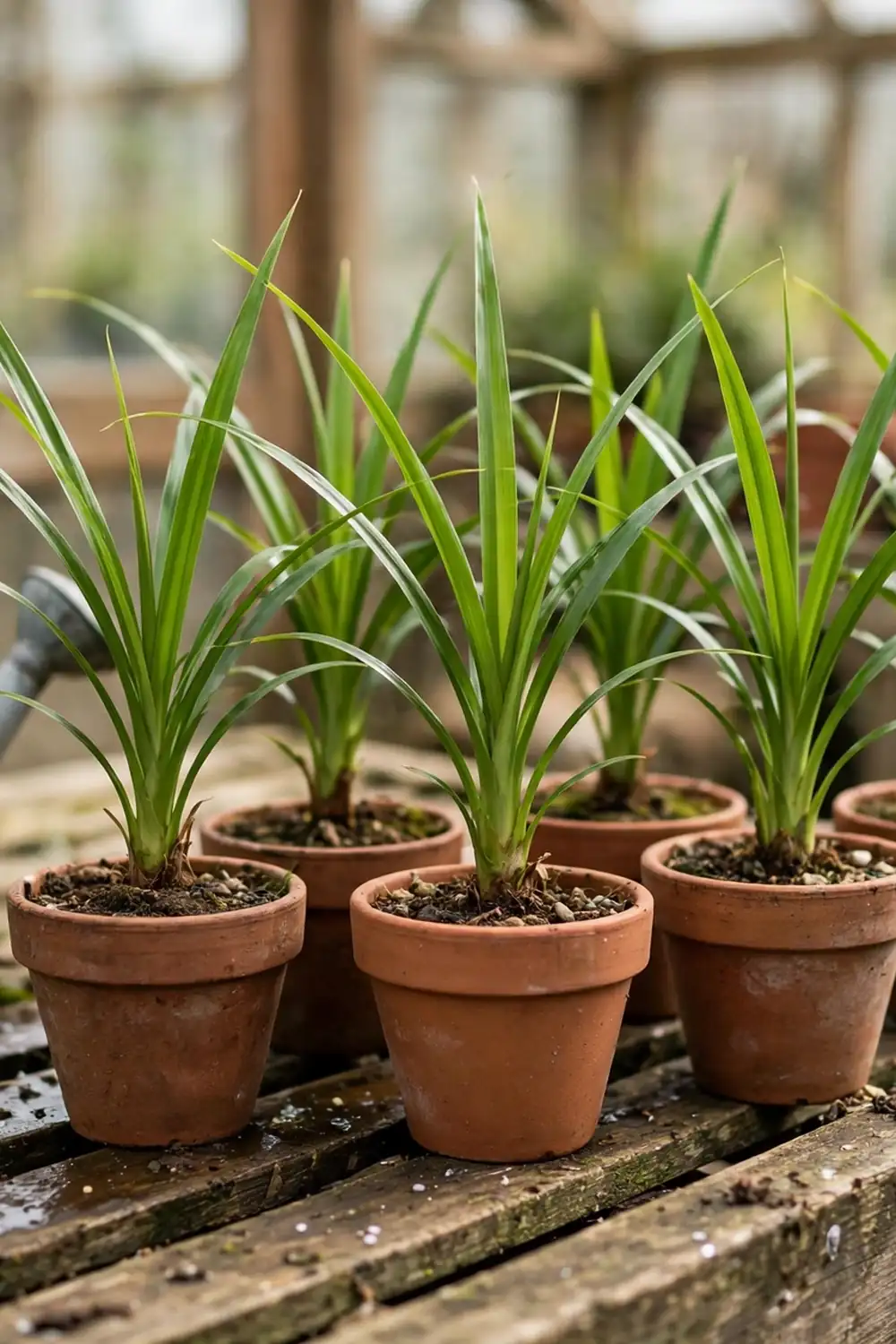
You can grow new cordylines from seed, from stem cuttings, or from suckers — and a plant that has been cut back hard will often produce suckers at the base, giving you free plants. The best time for propagation is spring and early summer, from April to June, when the plant is growing strongly.
The easiest method is terminal cuttings: take a shoot tip 10 to 15cm long, remove all the leaves apart from the terminal tuft, and pot it up in well-drained, peat-free cuttings compost. Keep it warm and lightly moist, and roots should form within a few weeks. Stem-section cuttings work for thicker stems: cut sections 5 to 7.5cm long, each with a visible growth bud, and insert them horizontally in compost with the bud just showing at the surface. Rooted suckers can simply be severed from the base in spring and potted up individually; if they have only a few roots, treat them as terminal cuttings. Seed is the slowest route but the best for Cordyline australis: sow in spring at around 16°C, and expect germination within a few weeks. Young plants should be potted up individually and grown on in a sheltered spot for their first year before planting out.
Why Are My Cordyline Leaves Turning Yellow or Brown?
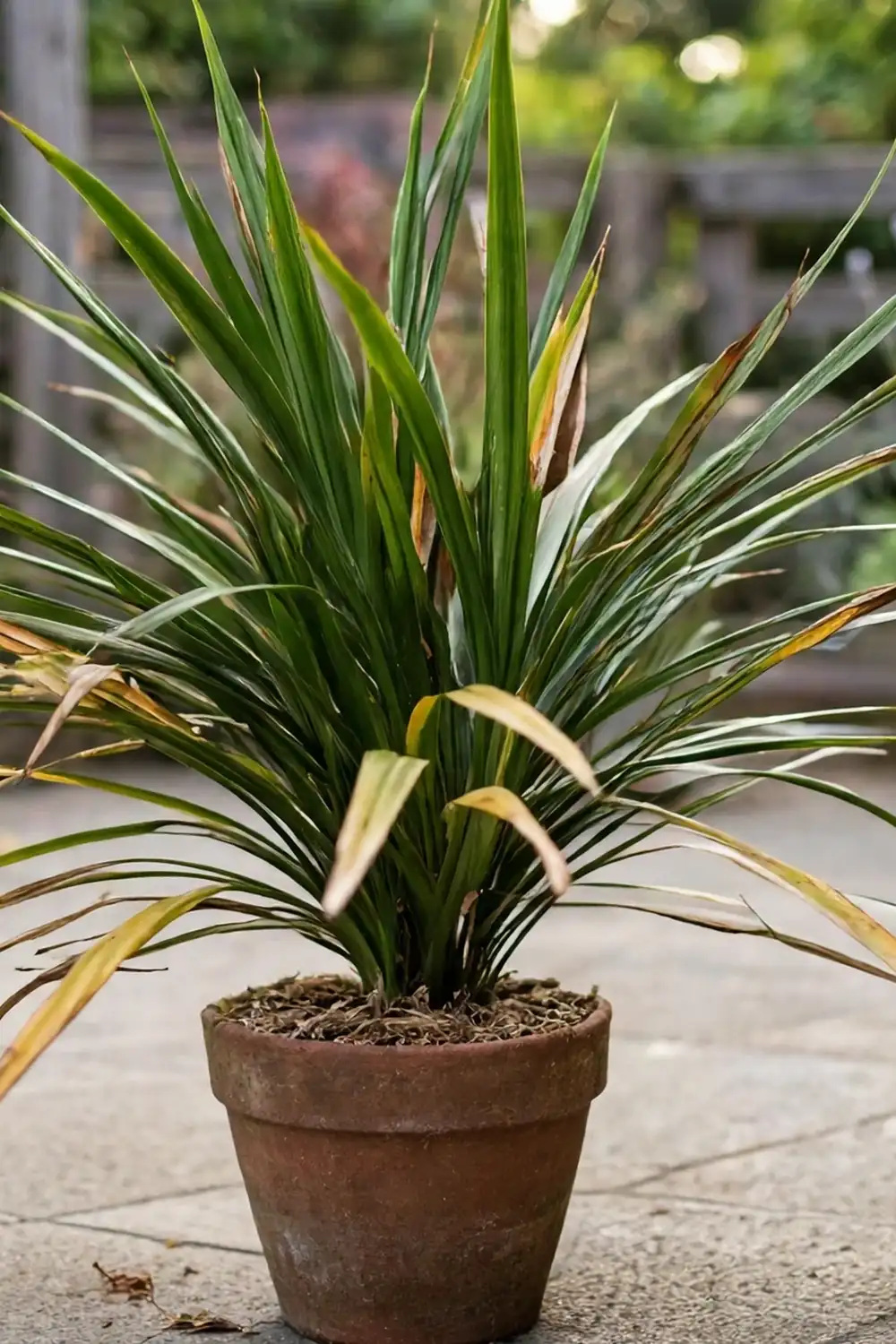
Yellow or brown leaves are the most common cordyline problem, and they usually mean something in the plant’s conditions is wrong — but not always. Old leaves naturally turn yellow and brown as they age and drop off, and a plant that is slowly losing its older leaves while still growing well is nothing to worry about. It is when many leaves discolour at once, or the new growth is affected, that you need to act. Work through the causes below, starting with the most likely.
Frost and Cold Damage
The most common cause in the UK. After a cold winter, leaves turn brown and mushy, often starting at the tips and spreading inward, and the crown may die back entirely. Cut out the damaged growth in spring, cutting just above a side shoot or at a sound point below any rot — cordylines often re-sprout from the bare stem or the base, even when the top looks dead. Frost damage can also leave the plant open to an infection known as cordyline slime flux, where the damaged tissue weeps and smells unpleasant; prune out the affected area cleanly and the plant will usually recover.
Overwatering and Root Rot
Yellow leaves, especially around the edges and on the lower leaves, often mean the roots are sitting in wet soil. Cordylines hate waterlogged conditions: the roots suffocate, rot sets in, and the plant cannot take up water or nutrients even though the soil is wet. This is most common in containers without drainage holes, or in heavy clay soil. Let the compost dry out, improve drainage with grit, and repot if necessary into fresh, free-draining compost. Yellow spots with brown margins on the leaves can also be a sign of fungal trouble, including Fusarium root rot, which follows prolonged wet conditions.
Underwatering and Drought
Whole leaves turning brown and crispy, especially at the tips, usually mean the plant is too dry — most often a container plant in a sunny spot in summer. Unlike many plants, cordylines will not wilt obviously, so the browning is often the first sign. Water thoroughly, and check that the compost is actually absorbing water rather than running straight through a dried-out root ball; if it is, stand the pot in a bucket of water for half an hour.
Too Much Sun or a Sudden Move
Coloured and variegated varieties can scorch in strong sun, with brown patches on the leaves, and any cordyline moved suddenly from indoors to full sun can suffer the same. Move plants outdoors gradually in spring, giving them a week or two in light shade before their final sunny position. If the leaves have faded to green, the plant is getting too little light — move it somewhere brighter.
Tap Water Salts and Fluoride
Brown leaf tips on indoor cordylines are often caused by salts or fluoride in tap water. Let tap water stand for 24 hours before using it, which allows some of the chemicals to dissipate, or use rainwater if you can. Over-fertilising has a similar effect: yellow leaf margins with brown crisping are a sign of salt burn, not a lack of food, so flush the compost with clean water and stop feeding for a while.
Potbound Plants and Pests
Yellow leaves can also mean the plant has become potbound — the roots have filled the pot and can no longer take up enough water or nutrients. Repot into a container one size larger in spring. Few pests bother cordylines outdoors, but indoor plants can attract mealybugs and spider mites, which hide in the leaf joints and under the leaf arches; check regularly and wipe them off, or treat with a suitable houseplant spray. Mould on the compost surface usually means too little light and too much water — move the plant somewhere brighter and let the surface dry between waterings.
Cordyline in Pots and Small Gardens
Cordylines are made for small gardens. In a pot, a cordyline stays a manageable size, gives you a bold architectural shape on a patio or balcony, and can be moved to wherever it looks best — or wherever it is safest in winter. Pair a green or bronze cordyline with low, colourful companions around its base: heuchera is ideal, with leaves in purple, lime and caramel that cover the bare compost and echo the cordyline’s colours without competing with it. In a border, use a cordyline as the tallest element at the back, with grasses and perennials in front, and it will anchor the whole planting. Just remember the two rules that apply everywhere: drainage first, and winter protection before the frost arrives.
Frequently Asked Questions
Is cordyline hardy in the UK?
Only partly. Cordyline australis, the cabbage palm, is the hardiest species and will survive outdoors in mild, sheltered parts of the UK, tolerating frost down to around minus 5°C. Young plants, coloured varieties and all other species need winter protection or should be brought indoors. In colder areas, even australis benefits from fleece and mulch through winter.
How tall does a cordyline grow?
In the ground in a mild garden, a cordyline can reach 3 to 10 metres tall over many years, forming a trunk with a tuft of leaves at the top. In a container, growth is restricted and most plants reach around 2 metres. Growth is slow at first — a young plant looks like a low fountain of leaves for several years before the trunk begins to form.
Why has my cordyline gone brown after winter?
Almost certainly frost damage. Cold, wet weather damages the leaves and the growing point, and the leaves turn brown and mushy. Do not give up on the plant: cut out the damaged growth in spring, cutting back to sound wood, and it will often re-sprout from the stem or the base. Protect it properly next winter with fleece, tied-up leaves and mulch.
Can I grow cordyline indoors?
Yes — tender species such as Cordyline fruticosa and Cordyline marginata are popular houseplants. Give them bright, indirect light, water when the top few centimetres of compost feel dry, and keep them away from radiators, which brown the leaf tips. Turn the pot occasionally so the plant grows evenly, and mist the leaves or stand the pot on a tray of pebbles and water if the air is dry.
When should I plant cordyline?
Spring, after the last frost — April or May in most of the UK. Spring planting gives the roots a full growing season to establish before winter, which makes a real difference to survival. Avoid planting in autumn: a young cordyline planted in October faces its first winter with a shallow, unestablished root system and is far more likely to be damaged by cold and wet.
A cordyline is one of the easiest ways to give a British garden a tropical look, and it asks for very little in return: a sunny, sheltered spot, soil that drains freely, and half an hour of winter protection each autumn. Choose Cordyline australis for the best chance outdoors, keep the coloured varieties in light shade and in pots if your winters are cold, and do not panic when the lower leaves turn brown — that is the plant growing up, not dying. Get those few things right and your cordyline will reward you with bold, evergreen structure every day of the year.