
Prune a hydrangea at the wrong moment and you can lose a whole summer of flowers in ten minutes — yet leave it alone and it slowly turns into a leggy tangle with blooms only at the top. The good news is that hydrangea pruning is one of the easiest jobs in the garden once you know a single fact: whether your plant flowers on old wood or new wood. This guide shows you how to tell, exactly when to prune each type in the UK, and where to make every cut, so your hydrangeas come back bigger and better every year.
Quick Answer: When to Prune Hydrangeas
Short on time? When you prune a hydrangea depends entirely on its type. Here is the whole guide in one table — find your type, then read the detail below for exactly where to cut.
| Type | Flowers on | When to prune (UK) | How hard |
|---|---|---|---|
| Mophead and lacecap | Old wood | March, once hard frosts have passed | Light — deadhead to the first fat buds |
| Mountain hydrangea | Old wood | March | Light, gentler than mopheads |
| Panicle hydrangea | New wood | Late February to March | Hard — cut back to a low framework |
| Smooth hydrangea (‘Annabelle’) | New wood | Late February to March | Hard — cut back to 15–60cm |
| Climbing hydrangea | Old wood | Straight after flowering, July–August | Light — shorten flowered shoots |
| Oakleaf hydrangea | Old wood | Spring, deadheading only | Minimal — faded flowers and dead wood |
The single most common reason hydrangeas fail to flower is being pruned like the wrong type. Cut a mophead back hard in February the way you would a panicle and you will spend the summer staring at a healthy green bush with no flowers at all. Prune a panicle as gently as a mophead and it slowly turns into a tall, leggy shrub with small flower heads on top. Get the type right and the rest is easy.
Old Wood vs New Wood: The One Rule That Matters
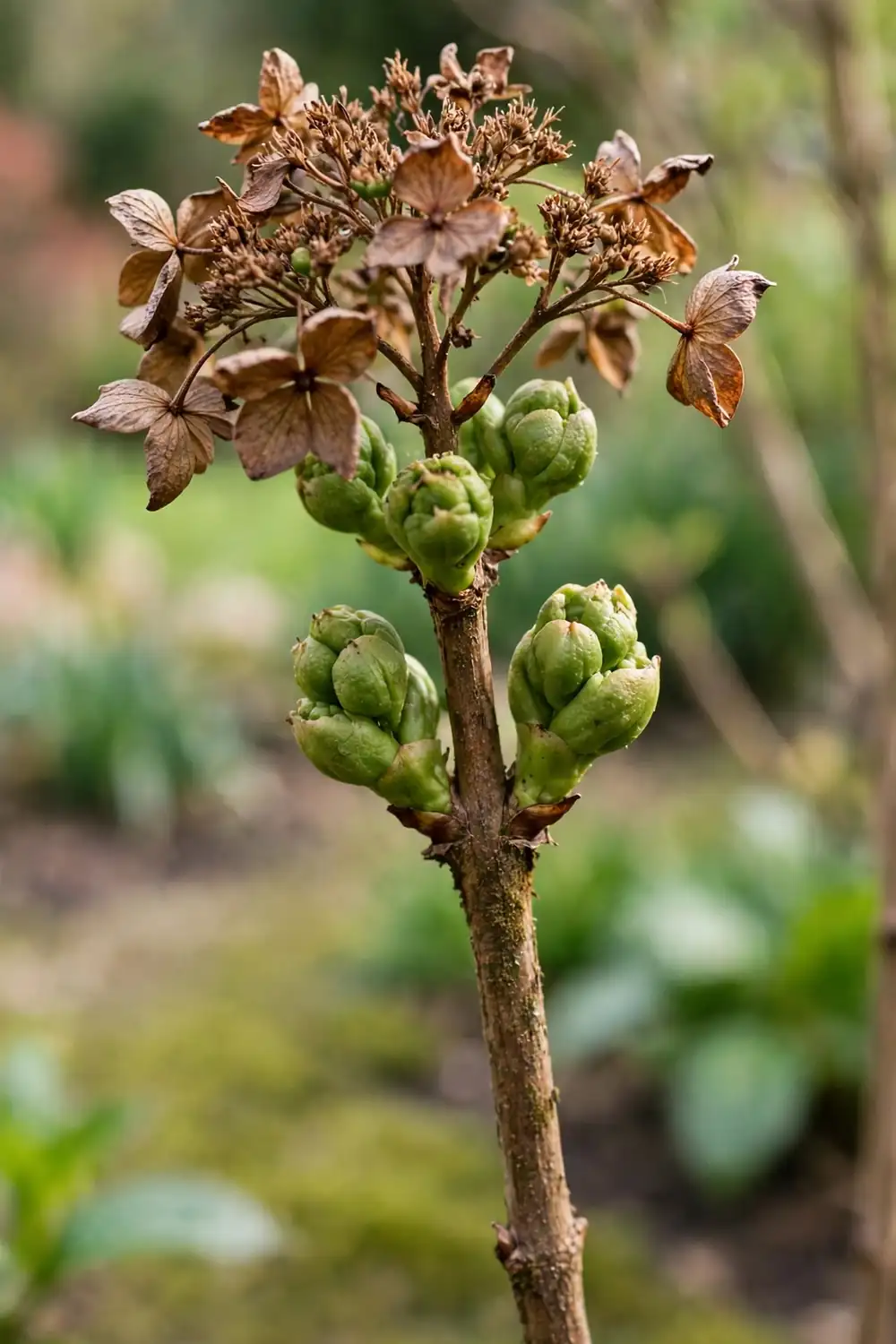
Hydrangeas fall into two camps, and everything about pruning follows from which camp yours is in. Old-wood hydrangeas form next summer’s flower buds at the tips of this year’s stems, so the buds are already sitting there through winter. Cut those stems back hard and you cut the flowers off before they ever open. New-wood hydrangeas make their flowering stems from scratch each spring, so you can cut them right down in late winter and they will still flower the same summer — often with bigger heads than before.
Old-wood types are mophead and lacecap hydrangeas (Hydrangea macrophylla), mountain hydrangeas (Hydrangea serrata), oakleaf hydrangeas (Hydrangea quercifolia), rough-leaved hydrangeas (Hydrangea aspera) and climbing hydrangeas (Hydrangea anomala subsp. petiolaris). New-wood types are panicle hydrangeas (Hydrangea paniculata) and smooth hydrangeas (Hydrangea arborescens), including the famous ‘Annabelle’. If you remember nothing else from this guide, remember this: mopheads get a light spring tidy, panicles and Annabelles get a hard late-winter cut, and climbing hydrangeas get pruned in summer after flowering.
There is one useful exception worth knowing. Some modern mophead varieties, such as the ‘Endless Summer’ series, are remontant — they flower on both old and new wood, so they can produce a second flush of flowers in late summer. Even so, prune them the same gentle way as any other mophead: the old-wood flowers are the main display, and a hard cut still costs you the early blooms.
How to Tell Which Hydrangea You Have
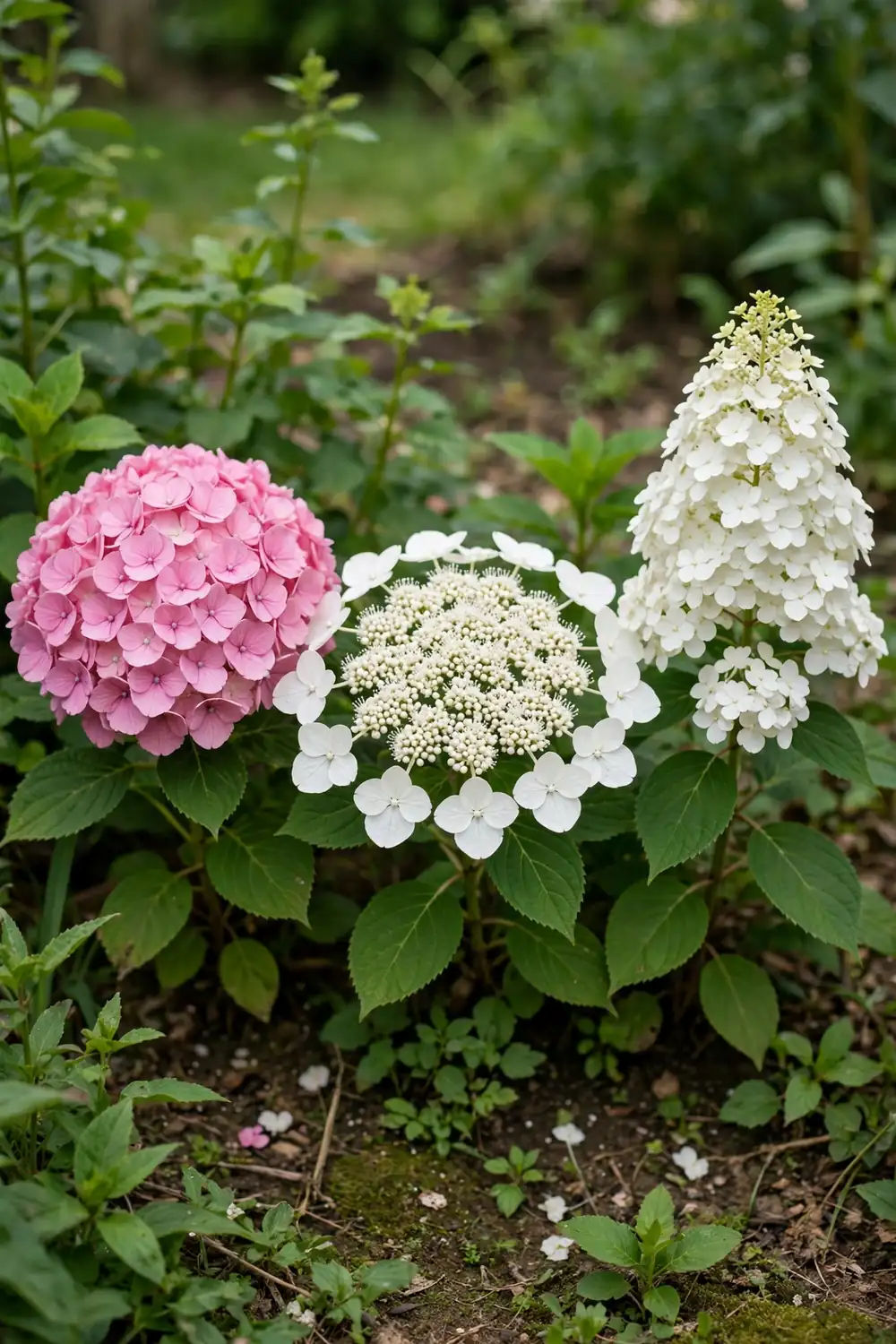
If you inherited a hydrangea with the garden and have no idea which type it is, the flowers are the quickest clue. Mopheads have big, rounded balls of flowers in pink, blue, purple or white. Lacecaps have flat heads with a ring of larger flowers around a centre of tiny ones — the classic look that bees love. Both have broad, glossy leaves and both are Hydrangea macrophylla, so prune them lightly. Panicle hydrangeas carry cone-shaped heads, usually opening white or lime and ageing to pink, on upright woody stems — ‘Limelight’ and ‘Vanille Fraise’ are the ones you see most often. Smooth hydrangeas such as ‘Annabelle’ have huge white or green balls of flowers on thinner, softer stems that often flop after rain. Oakleaf hydrangeas are unmistakable once you know them: deeply lobed leaves that colour brilliantly in autumn. Climbing hydrangeas cling to walls and fences with aerial roots and throw out flat white lacecap-style flowers in summer.
Not sure even after looking at the flowers? Leave the plant alone for a season and watch when it flowers. If flowers appear on stems that grew this year, it is a new-wood type and can be pruned harder. If flowers appear on older, darker stems from last year, treat it as an old-wood type and prune lightly. You cannot ruin a hydrangea by being cautious — a season without pruning will not kill it, and a missed year of flowers is far better than a hard cut on the wrong type.
Hydrangeas are among the most popular shrubs for UK gardens, and they earn their place: they flower for months, thrive in the shade where little else will, and ask for almost nothing in return. If yours sits in a shady corner, our guide to garden plants for shade has more companions that will grow happily alongside it.
How to Prune Mophead and Lacecap Hydrangeas
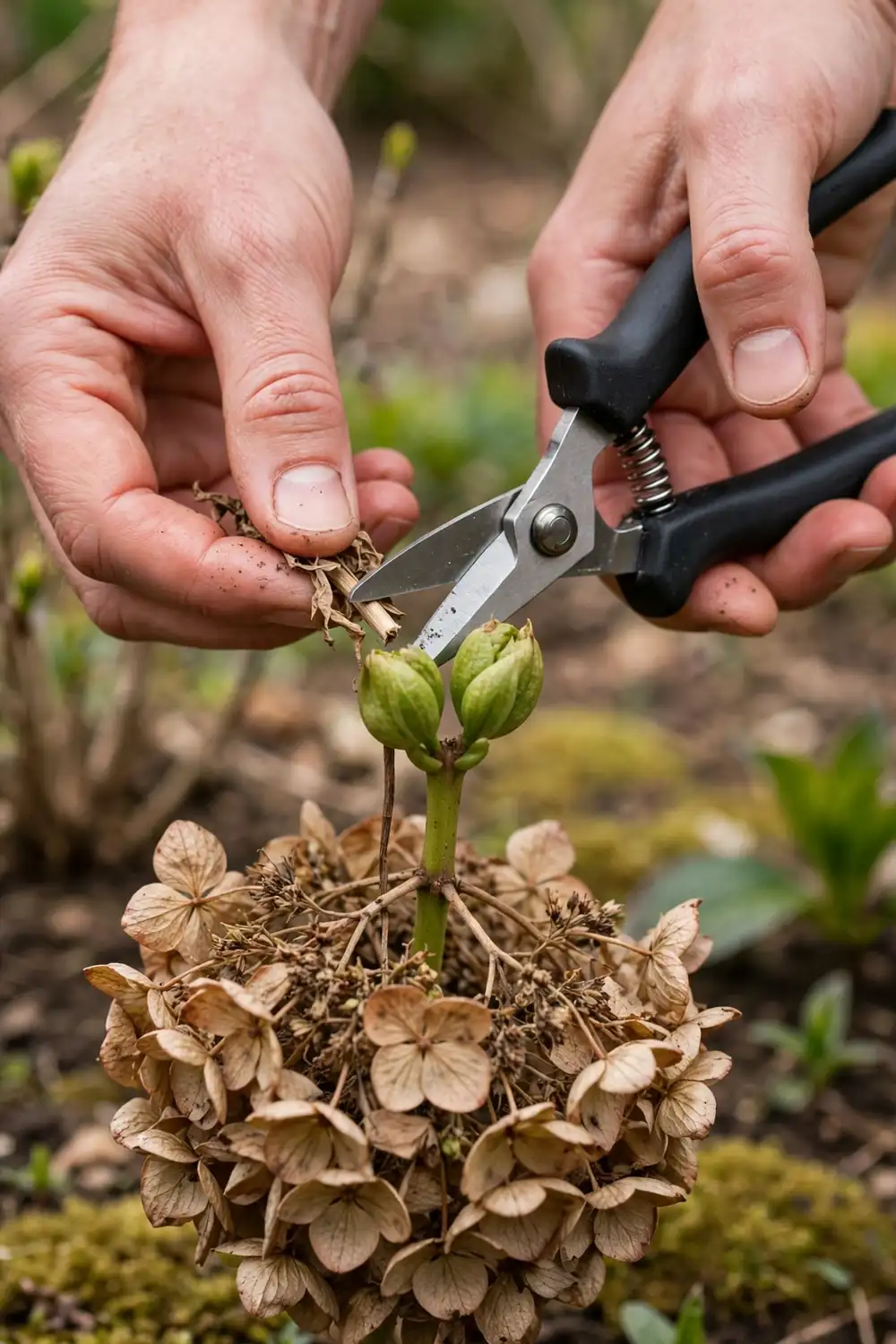
Mopheads and lacecaps are the hydrangeas most people grow — and the ones most often pruned too hard. The whole job takes about ten minutes per shrub, and the aim is simple: remove last year’s flowers and a little old wood while keeping the fat buds at the tips of the stems, because those buds are this summer’s flowers. Do it in March, once the worst frosts have passed and you can see the buds swelling. Leave the faded flower heads on over winter in the meantime: they look quietly handsome in frost and, more usefully, they shelter the tender buds below from cold.
Step 1: Cut Off the Old Flower Heads
Start by removing last year’s dried flower heads. Follow each stem down from the old flower to the first pair of plump, healthy buds and cut just above them with a sharp pair of bypass secateurs. Do not cut lower than this first pair of fat buds — they will carry this year’s flowers. Doing this first also gives you a clearer view of the shrub’s shape for the next steps. You can compost the old heads, or keep the best ones for dried flower arrangements.
Step 2: Remove One or Two of the Oldest Stems
On an established shrub, cut one or two of the oldest, thickest, least productive stems right back to the base. On a big, mature plant, you can remove up to a quarter of the stems this way. This keeps the shrub renewing itself from the base, so it does not become a congested mass of old wood with flowers only at the top. Older stems are easy to spot: they are thicker, darker and often more branched and twiggy than the younger ones. Cut them as low as you can with a clean, sharp cut, using loppers or a pruning saw if they are too thick for secateurs.
Step 3: Take Out Dead, Damaged and Crossing Stems
Next, remove anything dead, damaged or diseased, along with any stems crossing through the middle and rubbing against each other. Where two stems cross, keep the stronger one. Dead stems are brittle and grey, with no green under the bark when you scratch them, and you can cut them back to healthy wood or the base. Thinning the centre like this improves airflow through the shrub, reducing the risk of mildew and giving the remaining stems more room and light.
Step 4: Shape Lightly, If at All
Mopheads and lacecaps do not need the remaining stems shortening. Only cut back a stem that is spoiling the shape, such as one sticking out over a path, and when you do, cut just above a pair of fat buds. Resist the urge to trim the whole shrub back by a third, because every stem tip you remove is a flower you will not get this summer. When you are done, you should have an open, rounded shrub with plenty of airflow, no crossing stems and plenty of stems topped with fat buds. Hydrangeas look best following their natural, rounded form, so do not clip them into boxes or tight shapes. If it looks surprisingly untouched from a distance, you have done it right — the flowers will follow from those tip buds in June and July.
How to Prune Panicle Hydrangeas
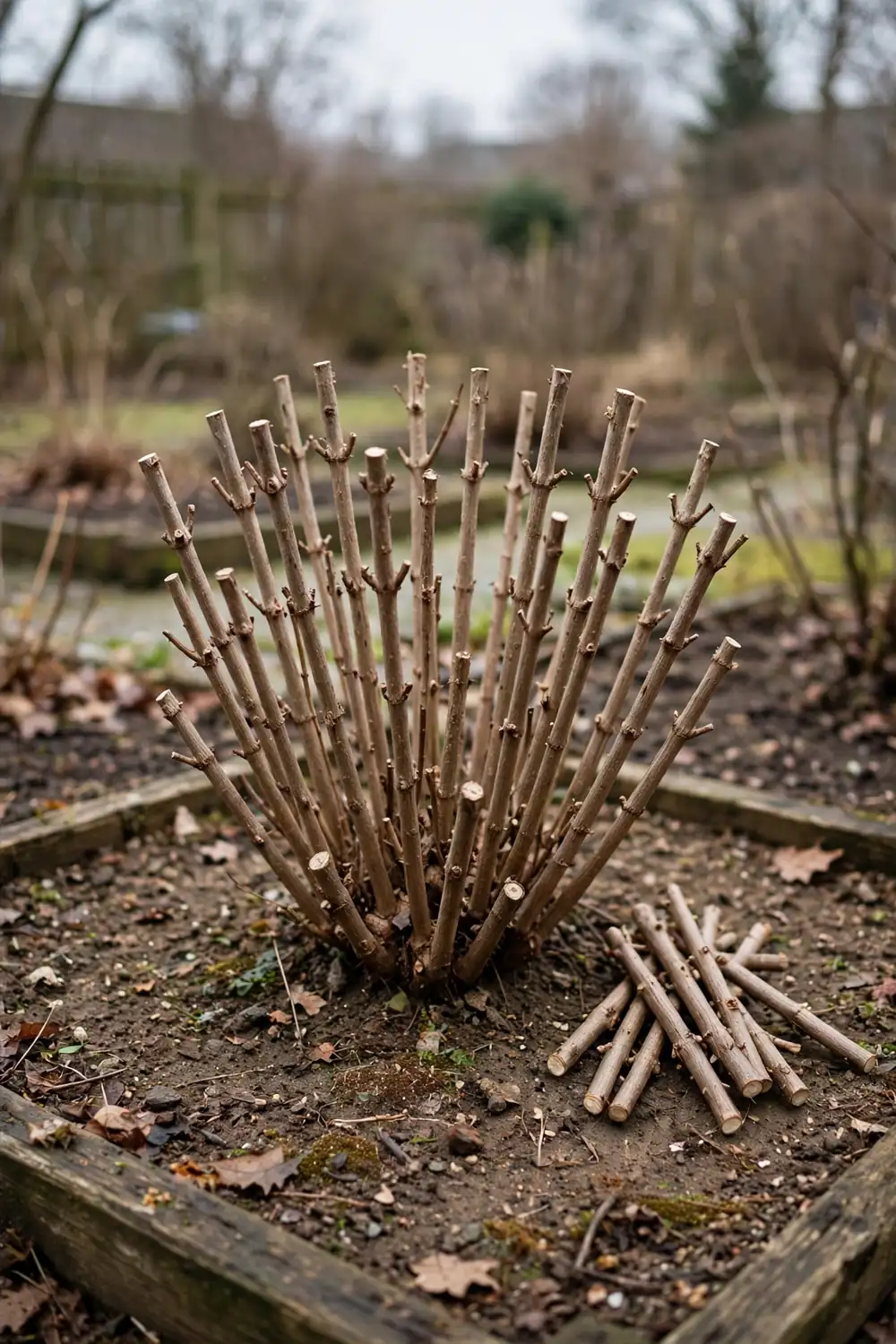
Panicle hydrangeas, such as ‘Limelight’, ‘Vanille Fraise’ and ‘Phantom’, are the ones you can — and should — be bold with. Because they flower on new growth, prune them hard in late winter or early spring, February to March in most of the UK, before new growth emerges. If you leave them, they get taller every year with smaller flowers at the top of bare, leggy stems. Cut each of last year’s stems back to one or two pairs of buds above the older framework, leaving a woody framework of stems roughly 30 to 60cm tall. New shoots from those buds will flower in late summer. The Royal Horticultural Society’s guidance is to cut to the lowest healthy pair of buds for the largest flower heads, leaving a framework usually no more than about 25cm high, or around 60cm if you want a taller plant.
The harder you cut, the bigger the flower heads — but you will get fewer of them, so on a large shrub it is worth leaving some stems longer for a fuller look. Remove any weak, thin or crossing shoots at the same time, and every few years remove one of the oldest framework stems at the base to keep the plant renewing itself. Panicles are tough enough that you can hardly get this wrong: even a very hard prune will still produce flowers the same year, which makes them the most forgiving hydrangea to learn on.
How to Prune ‘Annabelle’ and Other Smooth Hydrangeas
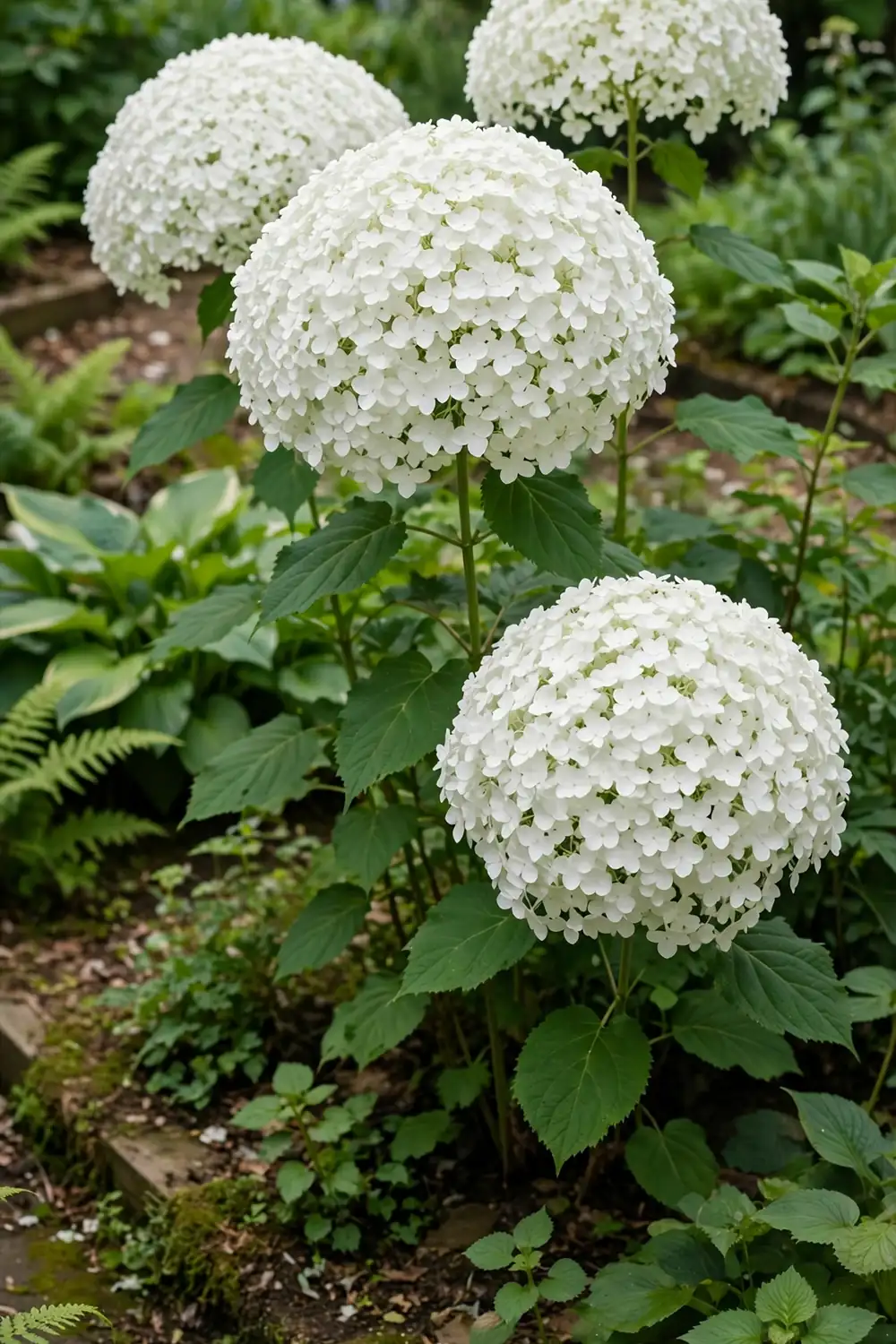
Hydrangea arborescens ‘Annabelle’ and its relatives, such as ‘Incrediball’, also flower on new wood, so prune them in late February or March just like panicles. You can cut every stem back to 15 to 30cm from the ground, which gives the biggest flower heads — but those heads are heavy, and the stems often flop after summer rain, so many gardeners prefer a lighter cut. Leaving stems around 45 to 60cm tall and cutting just above a strong pair of buds gives sturdier stems, and the thicker framework holds the flowers up much better. Remove any thin, weak stems at the base at the same time, as these will only produce small, floppy flowers.
Smooth hydrangeas are one of the easiest hydrangeas to grow, and they suit containers and smaller gardens well. They also benefit from a good twice-yearly feed of slow-release plant food. If your Annabelle’s heads flop badly every summer, the answer is usually to leave the stems taller next spring rather than staking — a taller framework is a sturdier one.
How to Prune a Climbing Hydrangea
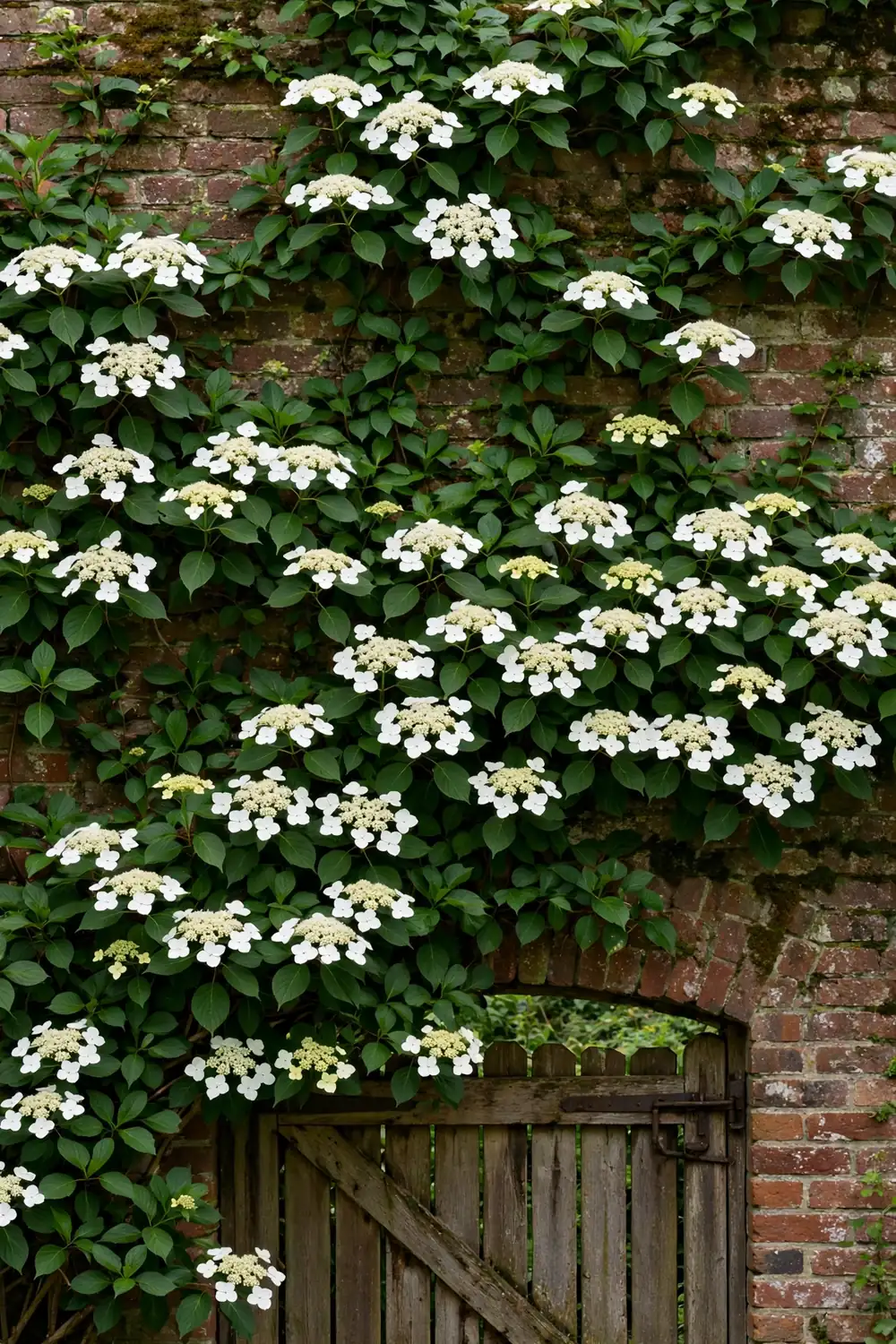
Climbing hydrangea (Hydrangea anomala subsp. petiolaris) is the exception to the spring pruning rule. It flowers on shoots made the previous year, so prune it straight after flowering, usually in July or August, to give the new growth time to ripen and form next year’s flower buds. Cut the flowered shoots back to a healthy pair of buds, and trim back any shoots growing away from the wall or heading towards gutters, windows and roof tiles.
Young plants can be slow to get going for the first couple of years, so only tie in and tidy them until they are established — do not expect much flowering while they settle in. An overgrown climbing hydrangea can be renovated by cutting a third of the oldest stems back hard in early spring, spread over three years. You will lose some flowers while it recovers, but it will come back strongly. The one thing to avoid is pruning a climbing hydrangea in spring: that removes the flowering shoots just as they are about to open.
Oakleaf, Mountain and Rough-Leaved Hydrangeas
Oakleaf hydrangeas (Hydrangea quercifolia) need very little pruning. Remove the faded flowers in spring, along with any dead, damaged or crossing stems, and leave the rest. Hard pruning spoils their natural shape and removes the flower buds, which form on the previous year’s growth — and it would be a shame to lose the autumn leaf colour, which is half the point of growing them. Mountain hydrangeas (Hydrangea serrata) are pruned in the same way as mopheads and lacecaps, but more lightly, as they are smaller, more delicate shrubs. Rough-leaved hydrangeas (Hydrangea aspera, including the Villosa Group) need little more than the removal of dead wood and the odd weak stem in spring. For all three, the rule is the same: deadhead, tidy, and leave the shape alone.
Pruning Hydrangeas in Pots
Prune hydrangeas in pots exactly the same way as you would if they were planted in the ground — the type rules do not change just because the plant is in a container. Mopheads in pots get the same light March tidy; panicles and Annabelles in pots get the same hard late-winter cut. The only difference is aftercare: container hydrangeas dry out faster, so water them well after pruning and keep them watered through dry spells in spring while the new growth gets going. A pot-grown hydrangea that has outgrown its container is also a good candidate for a slightly harder prune, since the root system can only support so much top growth — but never cut an old-wood type back hard for this reason, or you will lose the flowers. Repot into a larger container instead, or divide the plant.
When Is It Too Late to Prune Hydrangeas?
For mopheads and lacecaps, the cut-off is roughly the end of April. After that, the buds at the stem tips are already opening into leaves and the flower buds inside are developing, so any cut below the old flower head removes flowers. If you have missed the window, simply snip off the old flower heads just above the top pair of leaves and leave the rest until next March — do not be tempted to “catch up” with a harder cut. Panicle and Annabelle hydrangeas are more forgiving: you can still prune them into April, and even early May, although they will flower a little later and the heads may be smaller. Avoid pruning any hydrangea from midsummer onwards, apart from deadheading and pruning climbing hydrangeas after flowering.
Can I Prune Hydrangeas in Autumn?
It is best avoided. By autumn, mopheads and lacecaps have already formed next year’s flower buds at the stem tips, so cutting them back removes the flowers. The faded heads also protect those buds through winter and look lovely as they turn papery in frost. Panicle and Annabelle types can technically be cut back in autumn without losing flowers, but leaving them until late winter gives you winter interest and avoids soft regrowth being caught by frost. The one autumn job worth doing is clearing fallen leaves from around the base and adding a mulch — see our winter garden checklist for the full seasonal routine.
Timing shifts a little depending on where you live in the UK. In milder areas such as the South West and South Wales, you can start in late February; in the Midlands and South East, early to mid March is usual; in the north of England, wait until mid to late March; and in Scotland it is safer to wait until late March or early April, especially for mopheads and lacecaps, as the exposed buds are vulnerable to late frost.
What to Do After Pruning
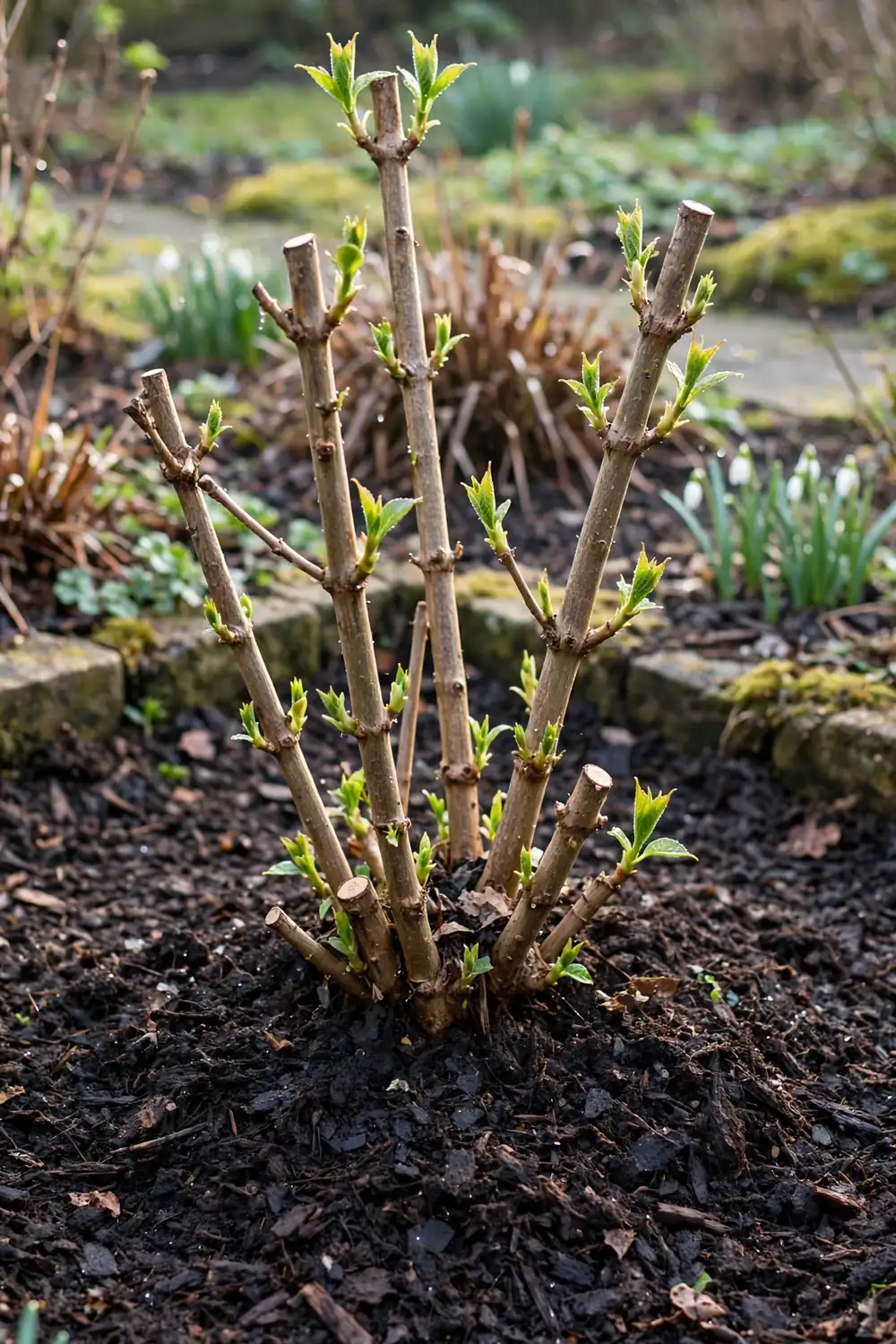
Pruning is only half the job — what you do afterwards decides how well the plant responds. First, clean up: rake away the cut stems and compost them (woody stems are fine in the compost heap if you chop them up first, or add them to the green waste). Then feed and mulch. Spread a thick layer of well-rotted compost or garden compost around the base of the shrub, keeping it a few centimetres clear of the stems, and water it in well if the soil is dry. The mulch feeds the soil, holds in moisture and suppresses weeds through the growing season. A slow-release general fertiliser in spring gives new-wood types an extra boost, since they have to grow all their flowering stems from scratch.
Keep newly pruned plants watered through dry spells in late spring, especially panicles and Annabelles, which are putting on a lot of growth quickly. Hydrangeas are thirsty plants — the name comes from the Greek for water — and a dry spring is the other common reason for disappointing flowers. If you like the look of a layered shade border, plant low companions such as heuchera around the base of your hydrangeas: they cover the bare stems, keep the roots cool and add colour long after the hydrangea flowers fade.
5 Pruning Mistakes That Cost You Flowers
Most hydrangea pruning problems come from one of five mistakes, and all of them are easy to avoid once you know them.
1. Pruning a mophead like a panicle. The classic error. A mophead cut back hard in late winter loses every flower bud it formed last year. If your mophead flowered last year and not this year, this is almost certainly why.
2. Pruning in autumn. Cutting old-wood types back in October or November removes next year’s buds and exposes the fresh cuts to winter frost. Leave the faded heads on — they are protecting the buds underneath.
3. Using blunt secateurs. Blunt blades crush stems instead of cutting them, and crushed stems are slow to heal and invite disease. A single sharp, clean pair of bypass secateurs does the whole job on most hydrangeas; add loppers only for thick old stems. Clean the blades between plants if you have had any disease in the garden.
4. Removing more than a third of the plant at once. Even on new-wood types, never take more than about a third of the plant in one go. Renovation of an overgrown shrub should be spread over two or three years, cutting a third of the oldest stems back hard each spring.
5. Deadheading too late in the year. Deadheading mopheads and lacecaps during summer is fine, but stop from late summer onwards and leave the heads on — they protect the developing buds over winter and are removed when you prune in March. Deadheading panicles and Annabelles in summer will not produce more flowers that year, so it is purely for tidiness.
Frequently Asked Questions
When should I prune my hydrangea?
It depends on the type. Mophead, lacecap and mountain hydrangeas are pruned lightly in March, cutting the old flower heads back to the first pair of fat buds and no further. Panicle and smooth hydrangeas such as ‘Annabelle’ flower on new growth, so cut them back hard in late February or March. Climbing hydrangeas are pruned straight after flowering in summer, in July or August.
Can I cut my hydrangea right down to the ground?
Only new-wood types — panicle and smooth hydrangeas such as ‘Annabelle’ — can be cut back hard, to a low framework of 15 to 60cm. Never cut a mophead, lacecap, oakleaf or climbing hydrangea down to the ground: they flower on last year’s wood, and a hard cut removes a whole year of flowers. Renovation of an overgrown old-wood hydrangea should be done gradually, removing a third of the oldest stems each year.
Why is my hydrangea not flowering after pruning?
The most common reason is pruning at the wrong time or in the wrong way: an old-wood type cut back hard, or pruned in autumn or winter, loses the flower buds it had already formed. Other causes are late frost damaging the buds, too much shade, drought in spring, or too much nitrogen fertiliser, which pushes leafy growth at the expense of flowers. Leave the plant alone for a season, prune it lightly next March, and it will usually flower again.
Should I deadhead hydrangeas?
Deadheading is removing spent flowers, and it is a different job from pruning. Deadhead mopheads and lacecaps during summer by taking the faded head off just above the first pair of leaves below it, but stop from late summer onwards and leave the heads on over winter to protect the buds. Panicle and Annabelle heads can be left on through winter for structure and frost-covered interest, then removed when you cut the plants back in late winter.
Do hydrangeas need pruning every year?
No — and that surprises most people. Mopheads, lacecaps, oakleaf and climbing hydrangeas do not need regular pruning at all: deadheading and removing dead or crossing stems is often enough. Panicle and smooth hydrangeas benefit from a yearly hard prune, because without it they grow taller every year with smaller flowers at the top. Even they will flower if you skip a year; they will simply look leggier.
Hydrangeas are among the most forgiving shrubs in a British garden, which is exactly why so many of them are pruned at the wrong moment. Get the type right, make your cuts in March, and the plant does the rest — bigger heads, stronger stems and a shrub that looks better every year. Put the secateurs away once you have finished, mark March in the diary for next year, and let the faded heads do their quiet work over winter.