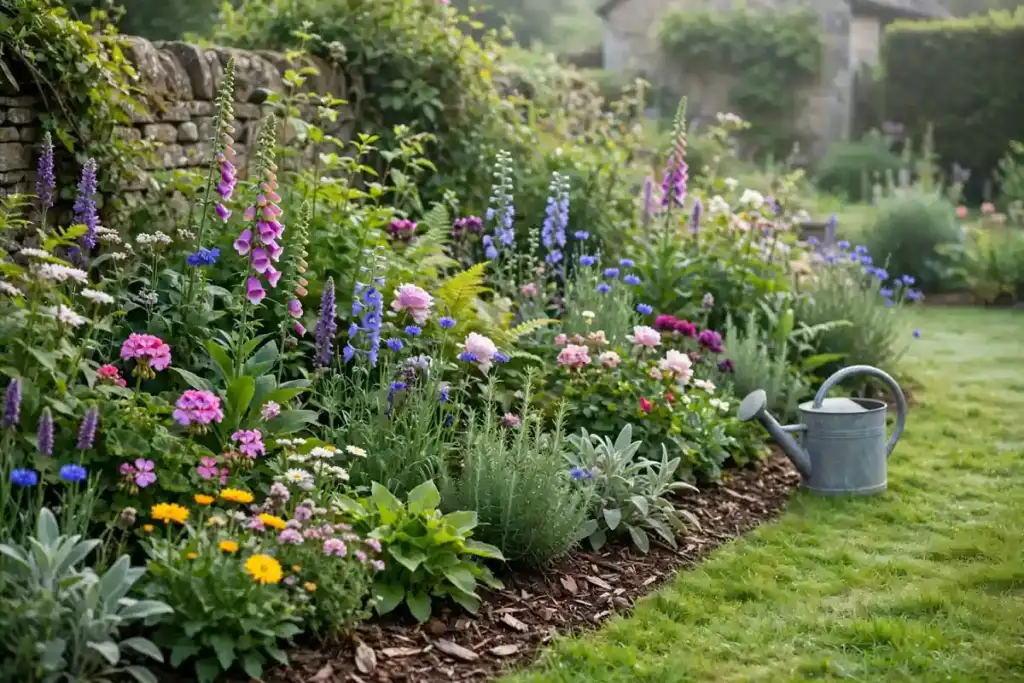
Most plants do not die because their owners do not care. They die because they get too much of the wrong thing: too much water, too much sun, or too much attention at exactly the wrong moment. If you have ever watched a healthy-looking plant from the garden centre fade within a few weeks, you are not alone — and the fix is usually simpler than you think.
This guide explains how to keep plants alive in a real UK garden, not a perfect greenhouse. It covers garden plants in beds, borders, raised beds and outdoor pots: the watering, light, soil, feeding and frost protection that actually make the difference, plus the mistakes that kill more plants than neglect ever does. Follow the nine rules below and most of your plants will not just survive — they will thrive.
Rule 1: Put the Right Plant in the Right Place
Keeping plants alive starts before you ever pick up a watering can. A sun-loving lavender planted in deep shade will struggle no matter how carefully you water it, and a shade-loving fern in a baking south-facing border will scorch. Check the plant label before you buy: it will tell you whether the plant wants full sun, partial shade or full shade, and whether it prefers moist or well-drained soil.
Watch your garden for a day before planting. Notice which borders get morning sun, which stay damp after rain, and which corners are exposed to cold wind. Matching the plant to the spot is the single easiest way to keep plants alive, because a plant in the right place largely looks after itself.
Full sun, partial shade and shade — what they really mean
Full sun means at least six hours of direct sunlight a day. Partial shade means three to six hours, often morning sun with afternoon shade. Full shade does not mean darkness — it means bright but indirect light, such as under trees or on the north side of a house. Shade plants such as hostas, ferns and heucheras are excellent choices for those tricky spots; our guide to growing heuchera shows how well one shade-tolerant plant can do.
Rule 2: Water Deeply, Not Little and Often
Overwatering is the number one killer of garden plants, especially plants in pots. Shallow, frequent watering keeps only the top centimetre of soil moist, encourages shallow roots, and leaves the plant dependent on you every single day. Deep watering does the opposite: it soaks the root zone and trains roots to grow downwards, where the soil stays moist for longer.
When you water, water slowly until the soil is damp several inches down, then leave it alone until it starts to dry again. For most garden plants, that means a good soak once or twice a week in dry weather, rather than a sprinkle every evening.
Use the finger test before you water
Push your finger about 5cm (two inches) into the soil. If it feels damp at that depth, wait. If it feels dry, water thoroughly. This simple finger test beats any fixed watering schedule, because soil dries at very different speeds depending on the weather, the soil type and whether the plant is in a bed or a pot. Plants in containers dry out far faster than plants in the ground, so check pots more often in summer.
Water in the morning when you can
Morning watering gives leaves time to dry during the day, which reduces fungal problems such as mildew. It also means less water is lost to evaporation than at midday. If you can only water in the evening, water the soil rather than the leaves, and avoid soaking foliage overnight.
Rule 3: Drainage Matters More Than You Think
Plant roots need water, but they also need air. Soil that stays waterlogged squeezes the air out, and roots sitting in standing water soon rot — the classic root rot that turns leaves yellow and stems soft. Good drainage is therefore essential, especially for container plants and for gardens on heavy clay soil.
For pots, always use containers with drainage holes, and never let a pot sit in a saucer full of water. Raise pots slightly on pot feet in winter so excess water can escape. In beds, dig in plenty of garden compost and horticultural grit to open up heavy clay soil, and avoid planting in low spots where water pools after rain.
Rule 4: Feed the Soil, Not Just the Plant
Healthy soil is the foundation of healthy plants. Garden compost, well-rotted manure and leaf mould all improve soil structure, help it hold moisture without becoming waterlogged, and feed the soil life that slowly releases nutrients to roots. Digging compost into beds each spring is one of the best long-term investments you can make in a garden.
Most garden plants also benefit from feeding during the growing season, from spring to early autumn. A general-purpose liquid fertiliser every two to four weeks suits most flowering plants and vegetables, while slow-release granular feed scattered around the base in spring works well for shrubs and perennials. Always follow the packet rate — more fertiliser is not better, and overfeeding can scorch roots and leaves. Stop feeding in autumn so new soft growth is not caught by frost.
Rule 5: Mulch Like You Mean It
Mulch is a layer of organic material — bark chips, compost, straw or leaf mould — spread over bare soil around plants. It keeps moisture in the soil, suppresses weeds that compete for water and nutrients, and protects roots from temperature swings. A 5–8cm layer, kept a few centimetres away from stems, makes a visible difference within weeks.
Mulch is especially valuable for new plants, for plants in sunny borders, and for moisture-loving plants in summer. It also saves you work: less watering, less weeding, and healthier soil underneath. If you are planning new planting, read our guide to creating stunning garden borders and finish the job with mulch.
Rule 6: Learn What Your Plant Is Telling You
Plants cannot speak, but they signal clearly. Yellow leaves often mean overwatering or poor drainage, though they can also mean a lack of nutrients. Drooping leaves usually mean thirst — but a plant that is drooping in wet soil may have root rot, so check the soil before you reach for the watering can. Crispy brown leaf edges often point to too much sun, underwatering, or cold wind damage. Pale, leggy growth stretching towards the light means the plant needs more light.
Do not panic at the first yellow leaf. Plants naturally shed older leaves, especially at the base, and a single yellow leaf is rarely an emergency. Look at the overall pattern: is the whole plant affected, or just one part? Is the soil wet or dry? Those two questions solve most plant problems.
Rule 7: Prune and Deadhead Regularly
Pruning is not just about looks. Removing dead, damaged or diseased stems stops problems spreading, lets air circulate, and encourages healthy new growth. Deadheading — snipping off spent flowers — encourages many perennials and bedding plants to flower again instead of putting energy into seeds. Use clean, sharp secateurs and cut just above an outward-facing bud or leaf joint.
Do not be afraid to prune. A plant that has been cut back hard in the right season usually comes back stronger, while a plant left tangled and congested slowly weakens. Check the pruning needs of each plant, though: some flower on last year’s wood and should be pruned after flowering, not in spring.
Rule 8: Protect Plants From Frost and Pests
In a UK garden, frost is a seasonal threat rather than a constant one, but it catches out more plants than a cold winter alone. Tender plants in pots are the most vulnerable, because their roots are exposed to cold air on all sides. Move tender pots to a sheltered spot or against a house wall in winter, wrap pots in bubble wrap or hessian, and cover vulnerable plants with fleece on frosty nights. Our full seasonal checklist in how to winterize your garden walks through the whole autumn routine.
For pests, check plants regularly and act early. Aphids cluster on soft new growth and can usually be washed off or picked off by hand; slugs and snails do their worst damage at night on young seedlings and hostas. Encouraging birds, frogs and ladybirds into the garden gives you free pest control, and is far better than reaching for sprays at the first sign of damage.
Rule 9: Be Patient — and Start With Forgiving Plants
New plants need time to establish. A shrub planted this spring may look quiet all summer while it grows roots underground, then surge the following year. Do not keep digging plants up to check on them, and do not judge a perennial in its first season — many take two or three years to reach their best.
If you are new to gardening, start with forgiving plants: hardy perennials, ornamental grasses, lavender, heuchera and hardy herbs such as rosemary and thyme. They tolerate a missed watering and a bit of neglect, which builds your confidence while you learn. Once those are thriving, you can move on to fussier plants with a much better chance of success.
The Mistakes That Kill Most Garden Plants
| Mistake | What happens | What to do instead |
|---|---|---|
| Watering on a fixed schedule | Soil stays wet or dries out regardless of weather | Use the finger test and water only when the soil needs it |
| Pots with no drainage holes | Roots sit in water and rot | Use pots with holes and empty saucers after watering |
| Wrong plant, wrong place | Sun plants scorch in shade; shade plants fry in sun | Match the label to your garden’s light and soil |
| Overfeeding | Scorched leaves and weak, leggy growth | Feed at the packet rate, only in the growing season |
| Ignoring frost warnings | Tender plants blacken overnight | Move or fleece tender pots before a frost |
A Simple Weekly Routine That Keeps Plants Alive
You do not need to spend hours in the garden every day. A short weekly routine covers most of what plants need: walk the garden once a week, finger-test the soil of pots and new plants, water deeply where needed, pull any weeds competing for moisture, deadhead spent flowers, and check for pests or damage. Ten to twenty minutes a week, plus a good soak in dry spells, keeps most gardens in good shape — and the walk itself teaches you what normal looks like for your plants, so problems stand out early.
For crisp, healthy edges around all that thriving planting, garden edging keeps lawns from creeping into beds and makes the whole garden look cared for.
Frequently Asked Questions
How often should I water garden plants?
There is no single answer, because it depends on the weather, the soil and the plant. As a guide, most garden plants in beds need a deep soak once or twice a week in dry weather, while pots may need watering every day or two in hot spells. Always check the soil with the finger test first — water when the top 5cm is dry, not by the calendar.
Why do my plants keep dying even though I water them?
The most common cause is overwatering and poor drainage, which causes root rot even in plants that look thirsty. Check that pots have drainage holes, that saucers are not full of standing water, and that the soil is not soggy below the surface. Other common causes are the wrong light levels and planting a tender plant somewhere it gets frost.
Should I water plants every day?
Usually not. Daily light watering encourages shallow roots and can keep soil constantly wet, which invites root rot. Deep, less frequent watering is better for most garden plants. The exception is small pots and hanging baskets in hot weather, which really can dry out daily.
How do I know if a plant needs more light?
Look for pale leaves, long leggy stems stretching in one direction, and little or no flowering. These are signs the plant is reaching for light. Move the plant — or, for plants in beds, prune back overhanging growth that is shading it — and give it the light level its label recommends.
What is the easiest way to keep plants alive for beginners?
Choose hardy, forgiving plants suited to your garden’s light and soil, plant them in well-drained soil improved with compost, mulch around them, and water deeply only when the soil starts to dry. That simple system — right plant, right place, deep watering, good drainage — keeps more plants alive than any fancy gadget.