London is not really one city. It is a collection of villages and districts that grew into each other, and each one still has its own character, its own pace and its own idea of a good day out. A visitor who only sees the famous sights misses the point of the place. The real pleasure of London is wandering from one neighbourhood to the next and noticing how the streets, the food, the shops and even the sound of the place change within a few minutes’ walk.
This guide takes London neighbourhood by neighbourhood, starting with the grand and ceremonial centre and working outwards to the markets of the east, the parks of the west and the riverside villages of the south. Use it to choose where to stay, to plan a day around a single area, or to join several areas into one satisfying walk. Each section explains what the area does best, what to see first, where to eat, and how much time to allow.
Westminster and St James’s
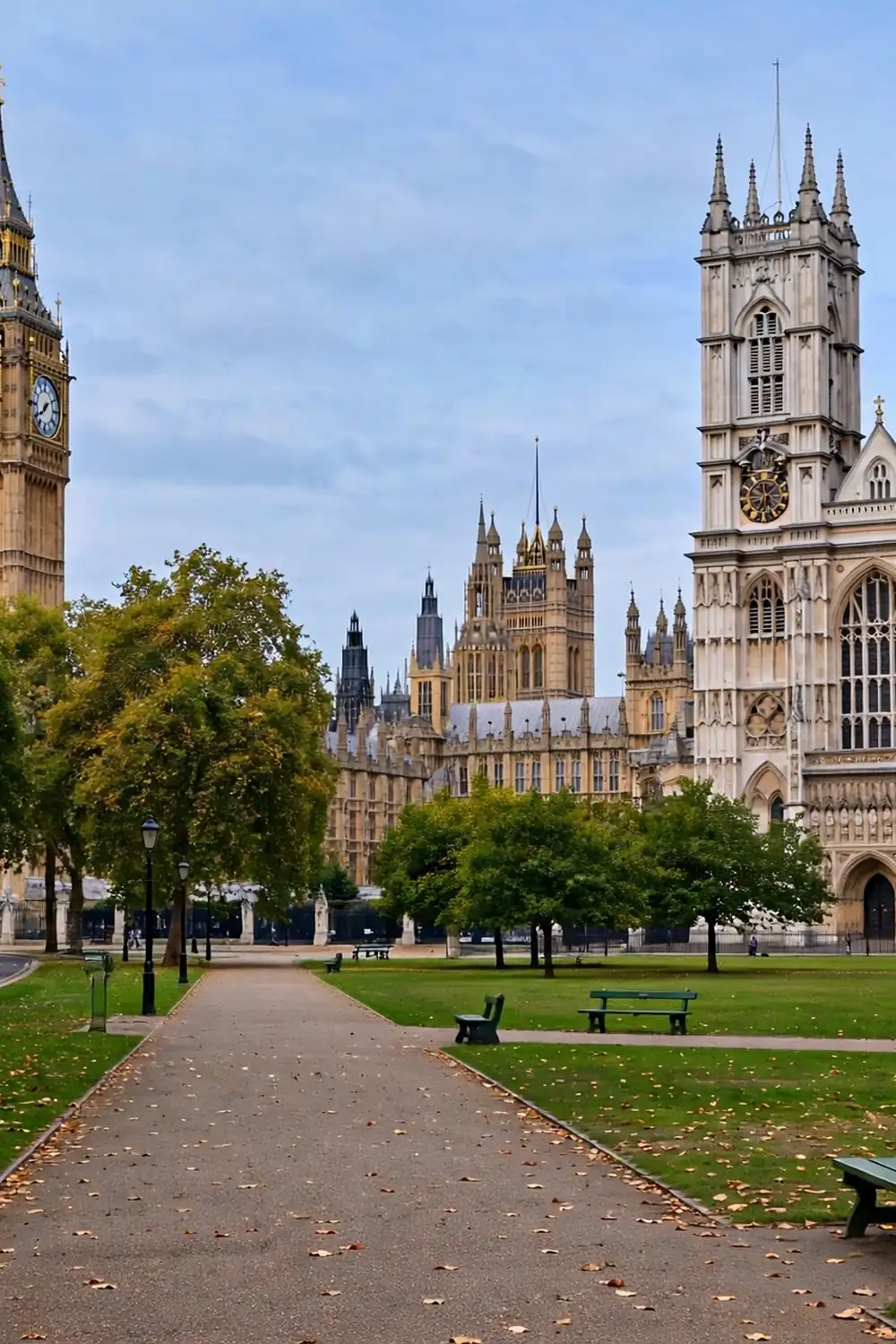
Westminster is the London of postcards and news broadcasts: the Elizabeth Tower, the Houses of Parliament, Westminster Abbey and Whitehall, all within a short walk of each other. It is the right place to start a first visit, because so much history is packed into such a small area. Arrive early if possible, when the streets are quieter and the light is kind to photographs, and begin at Parliament Square before the tour groups gather.
Royal London on foot
From Westminster, a gentle walk through St James’s Park leads to Buckingham Palace, with pelicans on the lake and flower beds that change with the seasons. Continue along The Mall, the broad ceremonial avenue lined with flags, and you reach Trafalgar Square, with the National Gallery on its north side. This whole route is flat, easy to walk, and full of places to pause, which makes it ideal for a first morning when energy is high and everything still feels new.
Quiet corners behind the grandeur
Step one street away from the main sights and Westminster softens considerably. St James’s has old gentlemen’s clubs, traditional wine merchants and narrow passages such as Jermyn Street, famous for its shirt makers and cheese shops. Duck into a historic pub for lunch rather than eating beside a landmark, and the prices drop while the atmosphere improves. Allow half a day here, longer if a visit inside Westminster Abbey or a gallery is planned.
Soho, Covent Garden and the West End
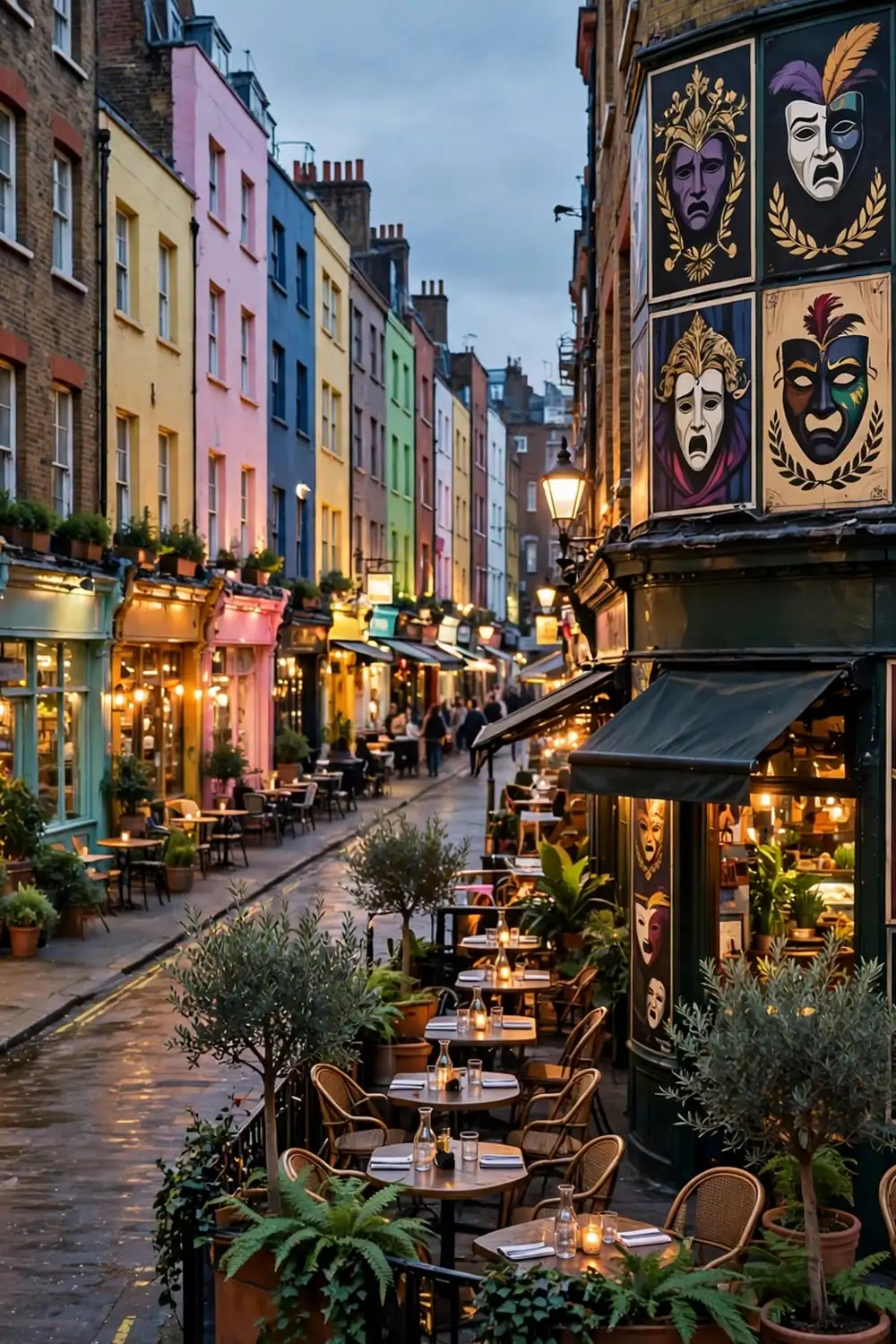
Soho is London at its most energetic: narrow streets, neon signs, small restaurants from every corner of the world, and a nightlife that runs from early evening until late. It is also one of the best places in the city simply to eat well without a plan. Wander down Old Compton Street or Brewer Street, follow the smell of good cooking, and choose a place that is busy with local diners rather than one with a tout outside.
Eating your way around Soho
Soho rewards curiosity. Tiny ramen bars sit beside century-old delicatessens, and some of the city’s most inventive cooking happens in rooms that seat barely twenty people. Lunch is often better value than dinner, with many restaurants offering set menus, and weekday afternoons are calmer than Friday or Saturday evenings. Leave room for dessert from a small patisserie or a gelato shop, and finish with a stroll through the quieter residential streets north of Oxford Street.
Covent Garden’s courtyards and street life
A short walk east brings Covent Garden, where a former fruit and vegetable market now shelters craft stalls, restaurants and street performers under its iron-and-glass roof. The piazza is at its best in the morning or late afternoon, when the crowds thin. Beyond the piazza, Neal’s Yard, a tiny courtyard painted in bright colours, is one of the most photographed corners of London, and the surrounding lanes hold independent shops, cheese counters and a famous tea merchant. Pair Soho and Covent Garden in a single afternoon for a lively, food-filled day.
Camden, King’s Cross and North London
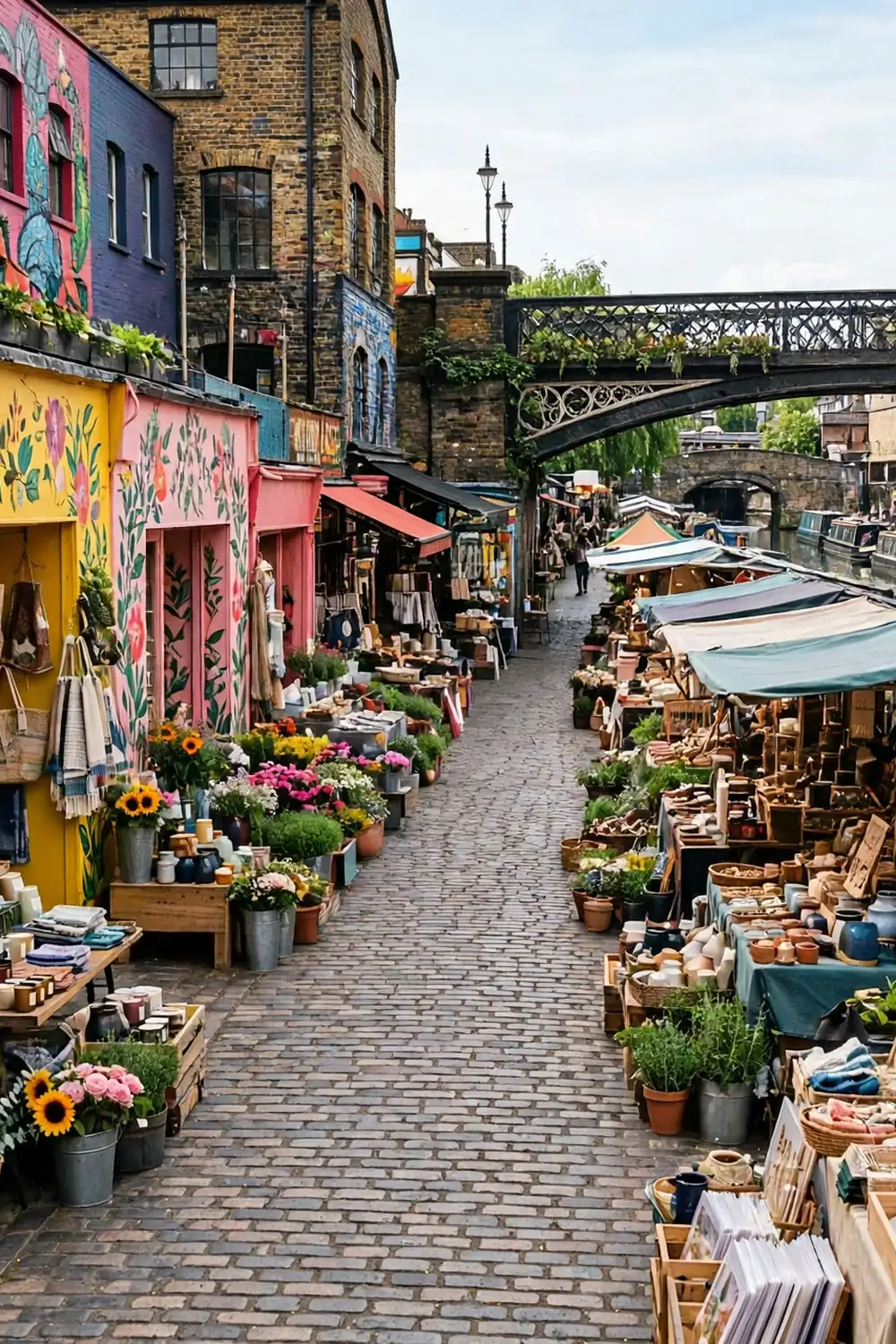
North London feels younger and louder than the centre, and Camden is its beating heart. Camden Market, spread across former stables and canal-side yards, mixes vintage clothing, handmade crafts, vinyl records and food stalls from dozens of cuisines. It is busy at weekends, gloriously chaotic, and best enjoyed slowly: browse the stalls, eat from a street-food counter, and then escape the crowds with a walk along the Regent’s Canal towpath.
Markets and music
Camden’s musical past is everywhere, from the venues that launched famous bands to the record shops and poster stalls that still draw collectors. The market itself is really several markets joined together, so it helps to pick a theme, such as vintage fashion or world food, rather than trying to see everything. Haggling is not expected, but prices for crafts are usually fair, and the food halls are a good, affordable lunch stop for groups with different tastes.
Canals and quieter streets
From Camden Lock, the canal towpath runs east towards King’s Cross and west towards Little Venice, offering a peaceful alternative to the busy roads. King’s Cross itself has changed dramatically in recent years, with a restored station, a canal-side quarter of restaurants and the pleasant green space of Lewis Cubitt Square. A canal walk of an hour or two is one of the most relaxing ways to see this side of London, and it ends conveniently near stations for the journey home.
The East End: Shoreditch, Spitalfields and Beyond
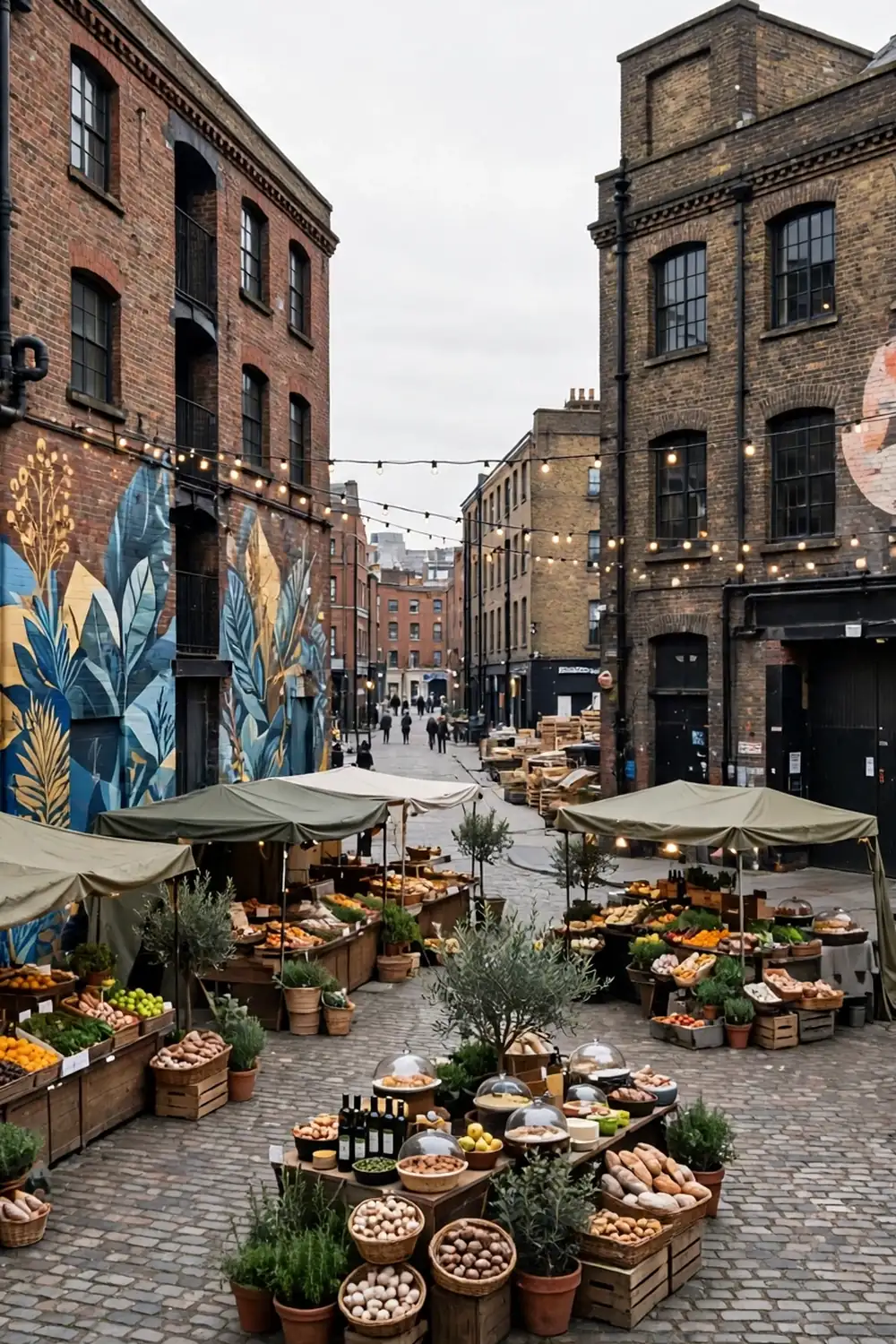
The East End is where London reinvents itself fastest. Shoreditch is known for street art, independent coffee shops, vintage stores and a creative energy that spills onto every wall and side street. It is less polished than the West End and all the better for it: the pleasure here is in wandering, looking up at murals, and ducking into a market or a small gallery that was not in any plan.
Street art and markets
Start at Brick Lane, where the street art changes so often that no two visits look quite the same, and where vintage shops and curry houses sit side by side. Old Spitalfields Market, a covered market hall nearby, is excellent for crafts, fashion and gifts, and it is sheltered, which makes it a reliable choice on a rainy day. Sunday is the liveliest market day in this part of London, but weekdays are calmer and better for browsing.
Brick Lane food and evening life
Food is the East End’s great equaliser. Brick Lane is famous for its curry houses and its 24-hour bagel shops, where a warm salt-beef bagel at midnight is something of a local institution. Shoreditch’s side streets add ramen bars, pizza ovens, taco counters and craft breweries, often in converted warehouses. Evenings here are busy but friendly, and the area is well served by buses and Overground trains for a late return to a hotel elsewhere in the city.
South of the River: South Bank, Borough and Greenwich
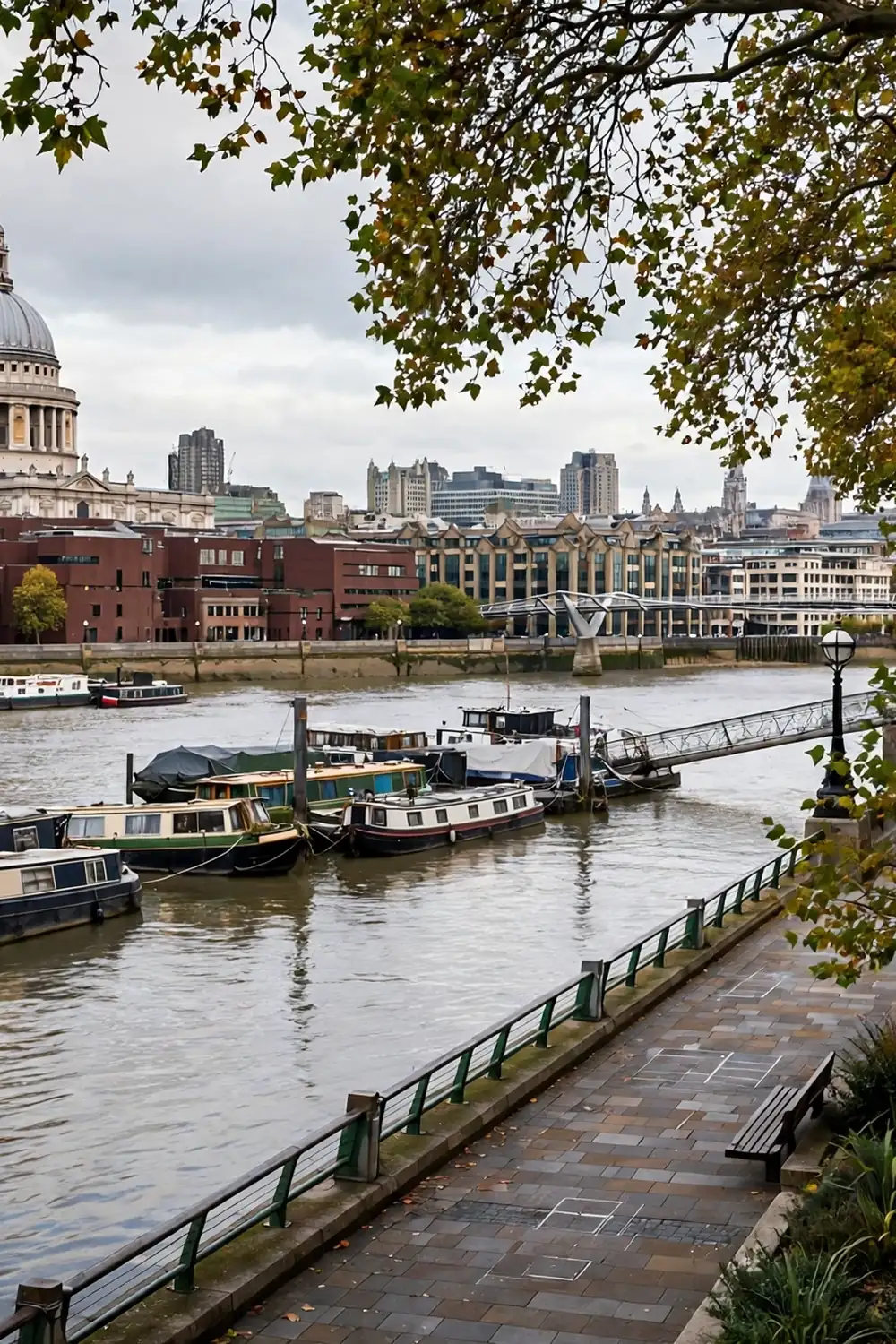
Cross the Thames and London changes tempo. The South Bank is a long riverside promenade made for walking, with street performers, book stalls, food trucks and views of the city that improve with every step. From Westminster Bridge to Tower Bridge, the walk passes the London Eye, the Royal Festival Hall, the Tate Modern and Shakespeare’s Globe, and it can be enjoyed in sections rather than all at once.
Riverside walks and Borough Market
Borough Market, near London Bridge, is one of the oldest food markets in the city and one of the best places to eat lunch in London. Arrive hungry, share small plates from several stalls, and save room for a sweet finish. The market is busiest at lunchtime from Thursday to Saturday, so a late-morning visit gives more room to browse. Afterwards, continue along the river to the Tate Modern, whose free permanent collection and riverside terrace are worth an hour even for visitors who think modern art is not for them.
A Greenwich day out
Greenwich feels like a village that happens to be part of a great city. A boat ride down the Thames is the most enjoyable way to arrive, passing under Tower Bridge and past the old docklands. Once there, Greenwich Park offers sweeping views, the Royal Observatory stands on the Prime Meridian, and the Cutty Sark, a beautifully restored sailing ship, sits in dry dock beside the river. The covered market and the riverside pubs make Greenwich a full and unhurried day out, especially for visitors who have already seen the central sights.
West London: Notting Hill, Kensington and Chelsea
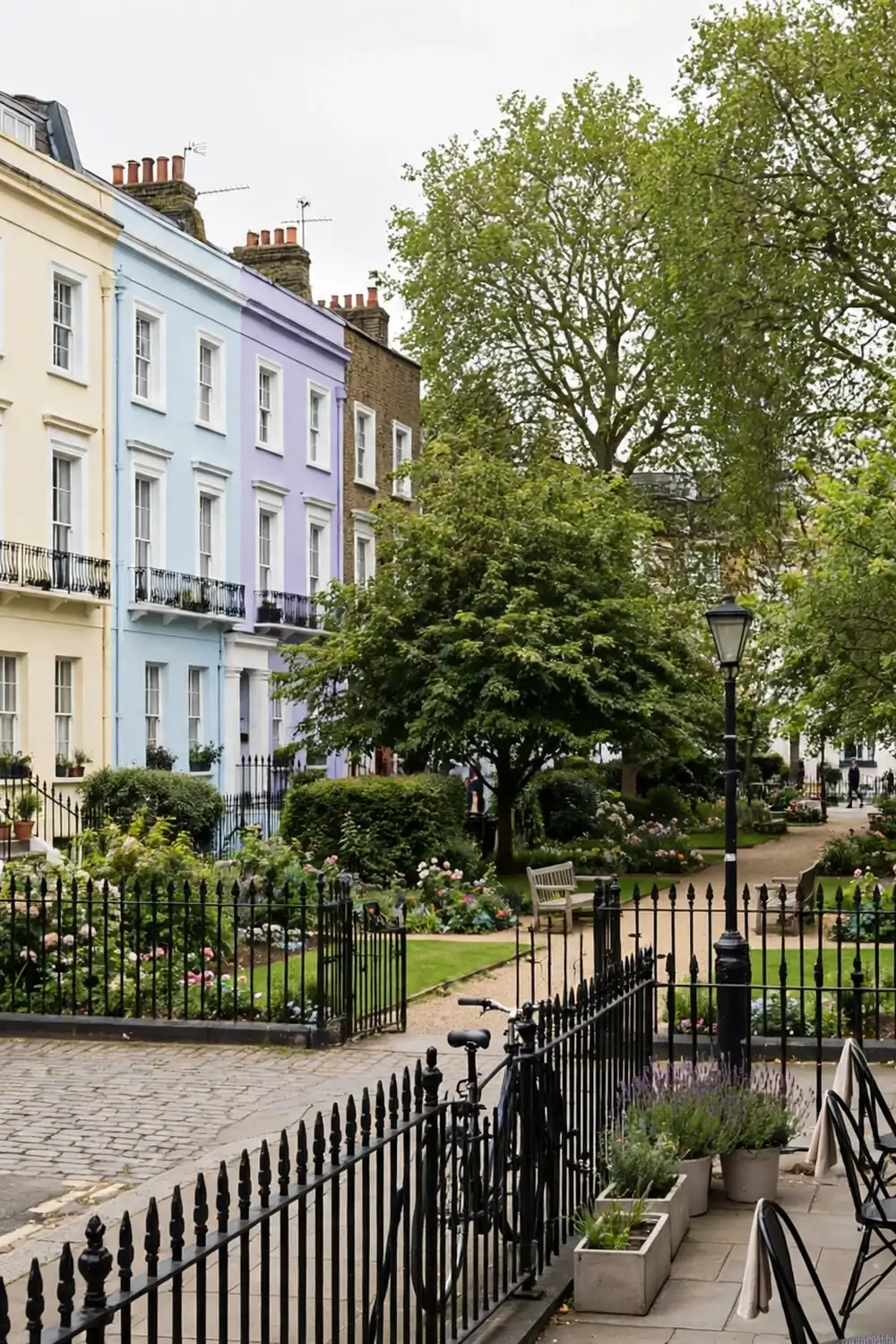
West London is the city’s prettiest quarter, all pastel houses, garden squares and elegant museum streets. Notting Hill is famous for Portobello Road Market, which runs for nearly a mile through the neighbourhood, selling antiques on Saturdays and fashion, food and crafts throughout the week. The surrounding streets, with their coloured facades and small cafes, are worth an hour of aimless wandering on their own.
Portobello Road and pretty streets
Portobello Road works best as a slow morning. Start at the Notting Hill Gate end and work downhill, browsing the antique arcades first and the food stalls later, when hunger sets in. The side streets, such as Lancaster Road and St Luke’s Mews, are quieter and often more photogenic than the market itself. On Saturdays, arrive before ten in the morning to enjoy the antiques before the largest crowds arrive.
Museums, gardens and grand streets
South Kensington is home to three of the world’s great free museums, the Natural History Museum, the Science Museum and the Victoria and Albert Museum, arranged around a handsome garden square. They are close enough to visit two in one day without rushing, and each has a cafe for a rest between galleries. Nearby, Chelsea’s King’s Road offers polished shopping and pleasant restaurants, while Holland Park, with its Japanese garden and peacocks, is one of west London’s loveliest green escapes. For a broader view of the city’s highlights, our guide to the things to do in London pairs well with a neighbourhood plan, and many visitors combine a west London morning with the best places to visit in London for a fuller itinerary.
How to String Neighbourhoods Together
The secret to enjoying London’s neighbourhoods is to group them sensibly rather than zigzagging across the city. Westminster, Soho and Covent Garden belong together in one central day. Camden and King’s Cross make a natural north London pair. Shoreditch and Spitalfields combine with a South Bank walk for an east-and-river day. Notting Hill and South Kensington belong together in the west, and Greenwich deserves its own day, reached by boat.
Walking is the best way to feel the change between areas, but the Tube is the practical way to jump between them. Choose one or two neighbourhoods per day, add a single major sight, and leave the rest of the time for wandering, eating and sitting in a park. London rewards a slower pace: the most memorable moments are rarely the famous view, but the small street, the unexpected market stall, or the quiet square discovered between two planned stops. If time allows, a longer escape is easy too, and our ideas for day trips from London show how the city can be a base for the wider south of England.
A sample three-day neighbourhood plan
A three-day plan shows how the neighbourhoods fit together without rushing. On day one, stay central: begin in Westminster in the morning, walk through St James’s Park to Buckingham Palace, then spend the afternoon eating and browsing in Soho and Covent Garden. On day two, head north and east: browse Camden Market in the morning, walk the canal towpath towards King’s Cross, and finish in Shoreditch and Spitalfields for street art, vintage shops and an evening meal on Brick Lane. On day three, choose between the west and the south: either Portobello Road and the South Kensington museums, or a river boat to Greenwich for the park, the observatory and the market. Each day stays within one or two areas, keeps travel short, and leaves the evenings free for a show, a pub or a riverside stroll.
This kind of plan also makes it easy to adjust for weather or energy. If rain arrives, swap a market morning for a museum, or trade a park walk for a covered arcade. If a neighbourhood captures the imagination, stay longer and drop the next stop without guilt. London’s neighbourhoods are not a checklist to complete but a set of places to enjoy, and the best trips are the ones that leave something undiscovered for the next visit.
Good to Know
A few practical points make neighbourhood exploring much smoother. London’s neighbourhoods are walkable, but distances deceive: a walk that looks short on a map can take forty minutes through busy streets, so check walking times rather than guessing. Comfortable shoes matter more than any other item of clothing, because even a gentle day involves several miles on foot.
Most neighbourhoods are safe and welcoming during the day and in the early evening, but it is still wise to keep bags closed in crowded markets and to stay on lit main streets late at night. Restaurants in popular areas often need booking at weekends, while weekday lunches are usually easy. Finally, remember that many museums and galleries are free, which means a neighbourhood day can be surprisingly affordable: spend on food and markets, and let the free collections provide the culture.
FAQ
Which London neighbourhood is best for a first visit?
Westminster is the best starting point, because the most famous sights are close together and easy to reach on foot. From there, Soho and Covent Garden add food, shopping and evening life, so a first visit that combines Westminster with Soho gives both the grand sights and the everyday buzz of the city in a single day.
How many neighbourhoods can be visited in one day?
Two neighbourhoods per day is a comfortable pace, with one major sight added if energy allows. Trying to cover four or five areas in a day usually means spending more time travelling than enjoying the places themselves. Group neighbouring areas together, such as Soho with Covent Garden, or Camden with King’s Cross, and save the rest for another day.
Which neighbourhood is best for food lovers?
Soho is the strongest choice for variety, with restaurants from all over the world packed into a small area, while Borough Market is the best single food destination for tasting and grazing. Shoreditch and Brick Lane add street food, curry houses and late-night bagels, so food lovers should plan at least one day in each of these three areas.
Is Greenwich worth a full day trip?
Yes, Greenwich easily fills a day, especially when the journey there is by river boat. The park, the Royal Observatory, the Cutty Sark and the market, plus riverside pubs and cafes, add up to a relaxed and varied day that feels very different from central London. It is also an excellent choice for families, with open space and hands-on attractions.
Which London neighbourhoods are best for shopping?
Covent Garden and Soho suit independent shops and gifts, Portobello Road is best for antiques and vintage finds, and Camden Market is the place for alternative fashion and crafts. For high-street shopping, Oxford Street and Regent Street remain the main draws, while Chelsea’s King’s Road offers a more polished and relaxed shopping experience.
Can London neighbourhoods be enjoyed on a budget?
Absolutely. Walking between neighbourhoods is free, many museums and galleries charge nothing, and markets offer affordable meals from street stalls. Parks, canal towpaths and riverside walks cost nothing at all, so a day built around one neighbourhood, a free museum and a market lunch can be one of the cheapest and most enjoyable days in the city.