In January, most UK gardens look stripped bare — herbaceous plants have died back, the lawn is sodden, and every border shows its bones. That is exactly when evergreen shrubs earn their keep. A good evergreen shrub holds its leaves through the darkest months, gives a garden structure when everything else has disappeared, and quietly carries the planting scheme until spring arrives. The best evergreen shrubs for UK gardens do far more than stay green: they flower in winter, scent a doorway, screen a neighbour, feed the birds, and ask for almost nothing in return. This guide picks the 15 most reliable evergreen shrubs for British gardens — for fragrance, shade, privacy hedging, pots and containers, coastal gardens and small London gardens — and shows you how to plant, prune and care for them so they look good all year.
Why Evergreen Shrubs Are the Backbone of a UK Garden
Garden designers call evergreen shrubs the backbone of the garden, and the description is exact. Deciduous plants come and go with the seasons, but evergreen shrubs provide the permanent architecture — the green framework that every other plant hangs off. Without them, a garden has no shape in winter; with them, even a grey February morning has form, colour and texture all year round.
That year-round interest matters more in Britain than almost anywhere else. Our maritime climate gives us mild, wet winters and cool summers, so evergreen shrubs keep working through months when herbaceous plants are completely dormant. A well-planned mix gives you glossy leaves in January, fragrant flowers in February, fresh growth in spring and berries for wildlife in autumn. Many evergreen shrubs also shelter birds through the coldest weeks and offer early nectar for bees when little else is flowering.
Evergreen shrubs are also among the most low maintenance plants you can grow. Once established, most need only an annual prune and a mulch in spring. They suit every size of plot, from a country garden to a small London courtyard, and they solve the problems every gardener actually has: an overlooked boundary, a shady corner where nothing thrives, a bare fence, a pot that needs to look good in December as well as June.
The 15 Best Evergreen Shrubs for UK Gardens
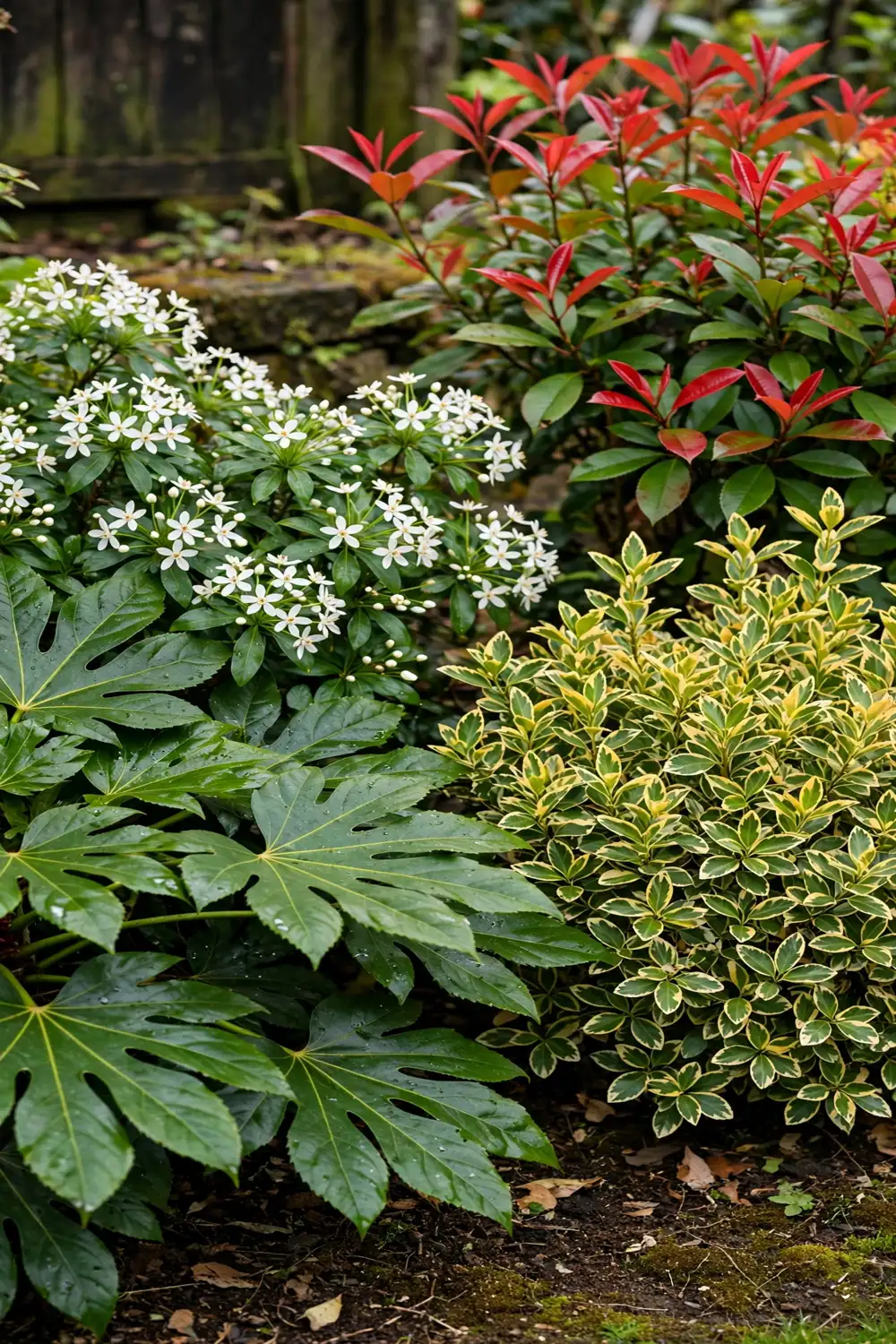
These are the evergreen shrubs that consistently perform in British gardens — hardy, reliable, and genuinely ornamental. They are grouped by the job they do best, so you can pick for your own garden rather than buying on looks alone.
Best for Fragrance: Choisya ternata and Sarcococca confusa
Choisya ternata, better known as Mexican orange blossom, is one of the finest medium-sized evergreen shrubs you can grow in the UK. Its glossy, aromatic foliage stays dark green all year, and in spring it produces masses of fragrant white flowers, often with a second flush in autumn. It grows best in a sheltered spot with well-drained soil and tolerates both sun and partial shade. Reaching 2 to 2.5 metres, it is a natural choice for a mixed border or as a stand-alone specimen near a path, where you brush past the scented leaves.
Sarcococca confusa, or sweet box, is the small shrub with the biggest winter fragrance. For most of the year it looks like a modest, glossy green bush, but from December to February it produces tiny white flowers with a scent so powerful it can waft across an entire garden — which is why it is also sold as Christmas box. It is compact, shade-loving and almost absurdly low maintenance, making it the classic choice for a shady spot by a front door or along a path you use every day. Plant it where you will actually smell it.
Best for Shade: Fatsia japonica, Skimmia japonica and Mahonia
Fatsia japonica, the false castor oil plant, is unbeatable if you want exotic, architectural impact in shade. Its huge, glossy, hand-shaped leaves bring a touch of the tropics to a shady north-facing border or a London courtyard, and it is surprisingly hardy, thriving in the damp, shaded conditions found in many UK gardens. It is shade tolerant to a remarkable degree and copes with dry shade once established.
Skimmia japonica is the neat, dome-shaped evergreen shrub for a shady border or a pot by the door. It holds its dark green leaves all year, carries clusters of fragrant flowers in spring, and — on female plants — bright red berries through winter that birds love. It needs acid to neutral soil and shelter from cold winds, but in the right spot it is one of the most dependable shade-loving evergreen shrubs available.
Mahonia, especially Mahonia x media ‘Charity’, is one of the most architecturally striking evergreen shrubs for shade. Its spiky, holly-like leaves and tall spikes of fragrant yellow flowers, which open from November through February, make it a genuine winter-flowering star. It reaches about two metres, tolerates shade and dry soil under trees, and gives a garden a bold, sculptural presence when little else is in flower.
Best for Privacy Hedging: Cherry Laurel, Yew and Photinia ‘Red Robin’
Prunus laurocerasus, better known as cherry laurel, is the fastest route to a dense privacy hedge. With a growth rate of up to 60 cm per year, it closes gaps quickly and holds its large, glossy leaves all year. It tolerates shade, pollution and most soils, though it needs well-drained soil and room to spread — give it space, and keep it clipped once a year, and it will screen a boundary within two or three seasons.
Taxus baccata, or English yew, is arguably the finest evergreen hedging plant in the UK. Its dense, dark green foliage clips to a beautifully crisp finish, it is more shade tolerant than most hedging plants, and it works in north-facing gardens or beneath tree canopies where other hedging struggles. Note that all parts of the plant are toxic to humans and animals, so think carefully if you have young children or pets. Yew is slow to establish but lives for centuries, and it is the classic choice for formal hedging and topiary.
Photinia ‘Red Robin’ is popular in UK gardens because it delivers year-round interest with a show in spring: brilliant red young leaves that fade to glossy green. As a hedging plant it grows quickly to 3 or 4 metres, works well as a freestanding shrub, and tolerates sun and partial shade. Clip it once in spring after the red flush and again in late summer to keep the colour coming.
Best for Winter Flowers: Camellia japonica, Viburnum tinus and Daphne odora
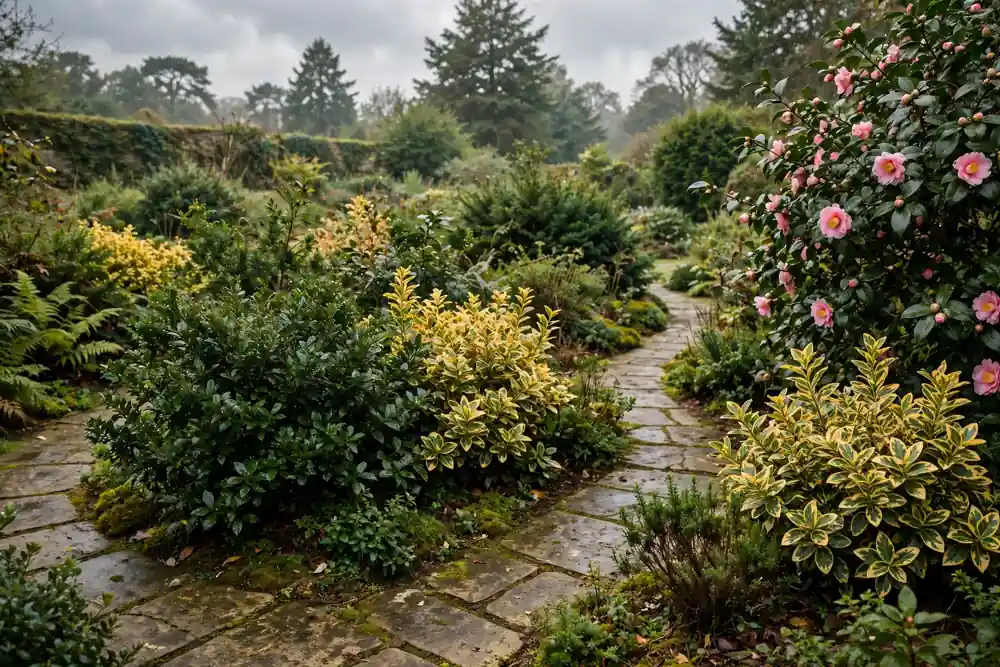
Camellia japonica is the queen of the late winter garden. Its large, rose-like flowers open from February into spring, in shades from white through pink to deep red, on a handsome evergreen shrub that holds its glossy leaves all year. Camellias need acid soil and shelter from cold morning sun, which can scorch the buds, but in the right spot — a sheltered border, or a large pot of ericaceous compost — they are unmatched for winter-flowering impact.
Viburnum tinus is perhaps the most reliable evergreen shrub in the UK. It flowers from late autumn through winter, with clusters of pink buds opening to white, lightly fragrant flowers, followed by metallic blue-black berries. It tolerates sun and shade, most soils, and coastal exposure, and it makes a fine informal hedge or a large specimen shrub. It is one of the best evergreen shrubs for wildlife too: the flowers feed early pollinators and the berries feed birds.
Daphne odora ‘Aureomarginata’ is a small evergreen shrub with an outsized reputation for fragrance. Its pink, intensely scented flowers open in late winter, and its cream-edged leaves look good all year. It is one of the hardiest and most reliable daphnes for our climate, though it dislikes being moved and needs well-drained soil and a sheltered spot. Plant it near a door or window and let the scent do the work.
Best for Pots and Containers: Euonymus, Pittosporum and Nandina domestica
Euonymus fortunei ‘Emerald ‘n’ Gold’ is one of the toughest variegated evergreens available, and one of the best evergreen shrubs for pots. It stays low and spreading, carries bright gold-margined leaves that take on orange tints in winter, and tolerates shade, drought and neglect. Its cousin Euonymus japonicus is the upright alternative, reaching 1.5 to 2.5 metres, excellent for structure, hedging, coastal planting and large containers. Both are reliably hardy, with Euonymus fortunei rated H5 and able to cope with temperatures down to -15 °C.
Pittosporum ‘Silver Ball’ is a neat, silver-variegated evergreen shrub that looks made for a pot on a patio. It forms a tidy ball without much clipping, holds its colour all year, and tolerates sun and light shade. Larger pittosporums also make good small hedging or screening shrubs in mild, sheltered gardens.
Nandina domestica, or heavenly bamboo, is not a bamboo at all, but a graceful evergreen shrub with fine, feathery foliage that turns red and orange in autumn and winter. It is compact, slow-growing and excellent in pots and containers, where its changing leaf colour gives a small space four seasons of interest from a single plant.
Best for Coastal Gardens: Hebe, Euonymus japonicus and Phormium
Hebe is one of the most reliable evergreen shrubs for UK gardens, and it is particularly suited to coastal gardens, where it tolerates salt-laden winds with ease. Small-leaved cultivars are the hardiest, and many carry spikes of purple, pink or white flowers through summer. Hebes need well-drained soil and a sunny spot, and they are an easy choice for a seaside border, a windy front garden or a low hedge.
Euonymus japonicus earns its place here again: it is one of the most adaptable evergreens available, thriving in conditions that defeat other plants — deep shade, exposed coastal sites, dry and poor soil. Its upright habit and glossy leaves make it a strong choice for a coastal hedge or a windbreak shrub.
Phormium, or New Zealand flax, is a bold, architectural evergreen for a coastal garden. Its long, sword-shaped leaves in green, bronze, purple or variegated forms give a border instant structure, and it shrugs off salt wind and drought once established. It needs a sunny spot and well-drained soil, and it is best in milder areas or a sheltered position in colder regions.
Best for Low Maintenance: Ceanothus, Rhododendron and Ilex crenata
Ceanothus, the Californian lilac, is a fast-growing evergreen shrub that covers itself in blue flowers in late spring. Evergreen types are best trained against a warm wall, where they thrive and dislike waterlogged soil, and they need almost no pruning beyond a light trim after flowering. They are ideal for a sunny wall or fence that needs quick cover.
Rhododendron is a classic low maintenance evergreen shrub for acid soil, flowering spectacularly in spring and holding handsome dark leaves all year. It needs shade or dappled light, moist but well-drained soil, and almost no pruning — just deadheading after flowering. In the right soil it is one of the most rewarding evergreen shrubs you can plant.
Ilex crenata, or Japanese holly, has quietly become one of the most useful evergreen shrubs in the UK. It looks very like box, with small, dense, dark green leaves that clip neatly, but it is not troubled by box blight or the box tree caterpillar — the two problems that have made gardeners rethink traditional box hedging. Use it for low hedging, topiary and edging, and it will stay dense and green with a single annual clip.
How to Choose the Right Evergreen Shrub
Choosing well matters more than choosing fast. A shrub that suits your soil and aspect will thrive with almost no help; one that does not will struggle for years. Work through three questions before you buy.
Match the Shrub to Your Soil
Most evergreen shrubs want moist but well-drained soil. The exceptions matter: camellias and rhododendrons need acid soil and will yellow and fail on chalk, while ceanothus and hebe hate sitting wet in winter and need sharp drainage. Dig a hole, fill it with water, and see how fast it drains — if it is still full after an hour, you have heavy clay and should choose tolerant shrubs such as viburnum, fatsia or cherry laurel, or improve the drainage with grit and organic matter. A simple soil test from a garden centre will tell you whether your soil is acid or alkaline, and that one answer rules half the list in or out. If you are planting in a border, see our guide to creating stunning garden borders for how to prepare the ground properly.
Sun, Shade and Shelter
Sun-lovers such as ceanothus, hebe and phormium need a bright, open spot to flower and colour well. Shade-loving shrubs such as fatsia, skimmia, sarcococca and mahonia are the answer for a north-facing border or the dry shade under trees — the spots where most plants fail. Shelter matters too: choisya, camellia and daphne all do best in a sheltered position in colder regions, and a cold, exposed site will scorch their foliage in a hard frost. In exposed gardens, start with the toughest shrubs — euonymus, viburnum and yew — and add the tender ones once you have a windbreak in place. Our guide to garden plants for shade covers more options for the darkest corners.
Think About Size at Maturity
Always check the mature height and spread before planting. A cherry laurel that reaches 5 metres is a fine hedge but a disaster planted a metre from a house wall; a small shrub such as sarcococca or daphne fits a front garden where a fatsia would swallow the path. Low, spreading shrubs such as euonymus fortunei make excellent ground cover under trees and along border edges, while upright shrubs such as photinia and euonymus japonicus give height and structure without taking up much ground. Buy for the size the shrub will be in five years, not the size it is in the pot.
When and How to Plant Evergreen Shrubs
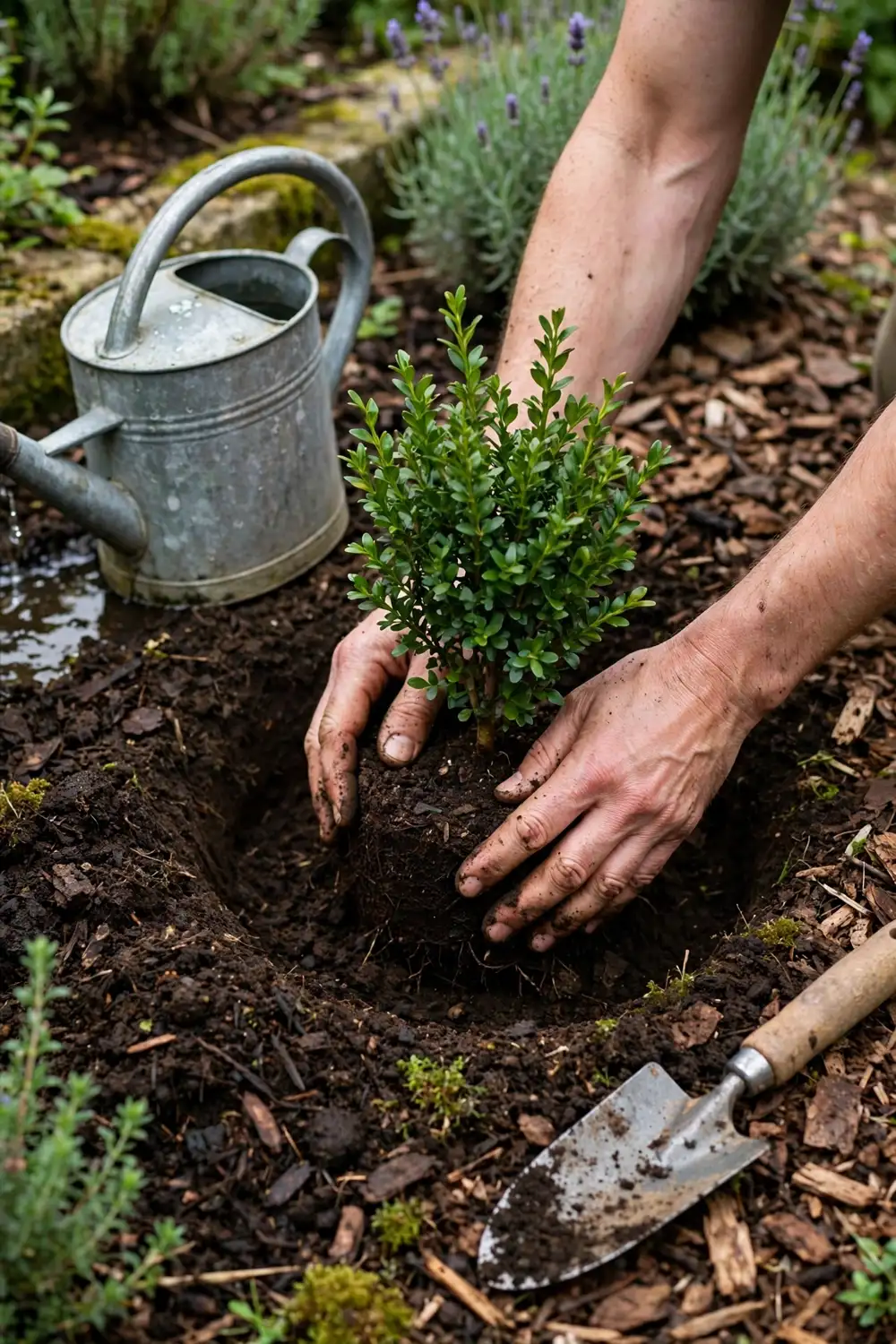
Timing is half the job. In the UK, the best time to plant evergreen shrubs is either in late autumn (October/November) or in early spring (March/April). Late autumn planting lets roots establish in still-warm soil before winter, so the shrub is ready to grow hard in spring; early spring planting avoids the worst of the wet and cold, and suits tender shrubs such as camellia and choisya in colder areas. Avoid planting in frozen ground or in the heat of midsummer, when a new shrub will dry out before its roots take hold.
Planting Steps That Actually Work
Dig a hole twice as wide as the pot and the same depth, so the shrub sits at exactly the same level it grew in the nursery — planting too deep is the commonest mistake, and it rots the stem. Loosen the sides of the hole with a fork so roots can push out into the surrounding soil, and mix the backfill with garden compost. Soak the pot in a bucket of water for ten minutes before planting, tease out any circling roots, and firm the soil gently around the rootball with your boot. Water thoroughly, then mulch with 5 to 8 cm of bark or compost, keeping the mulch clear of the stem. In the first year, water in dry spells — an evergreen shrub loses water through its leaves all winter, so a dry spring can kill a new plant faster than a cold one.
Pruning and Aftercare
Most evergreen shrubs need very little pruning, and the worst thing you can do is shear them like a hedge when they are meant to be a rounded shrub. Prune for shape, not for size, and always know when your shrub flowers before you cut.
When to Prune Each Shrub
Spring-flowering shrubs such as camellia, choisya and ceanothus should be pruned just after flowering, so you do not cut off next year’s buds. Summer-flowering shrubs such as hebe can be trimmed in spring. Hedging shrubs such as yew, photinia, cherry laurel and ilex crenata take a clip in late spring and, if needed, a light second trim in late summer — never cut yew or laurel in the depths of winter, when frost can blacken fresh cuts. Remove dead or crossing branches at any time, and take out the oldest stems of mahonia and viburnum every few years to keep the plant young and vigorous.
Feeding and Watering
Feed in spring with a balanced general fertiliser or a handful of pelleted chicken manure, and mulch each spring to hold moisture and suppress weeds. Acid-loving shrubs such as camellia, rhododendron and skimmia need an ericaceous feed and rainwater if your tap water is hard. Established evergreen shrubs rarely need watering except in a long dry summer, but pots and containers are a different story — check them every few days in summer, because a pot dries out far faster than the open ground.
Evergreen Shrubs for Small London Gardens
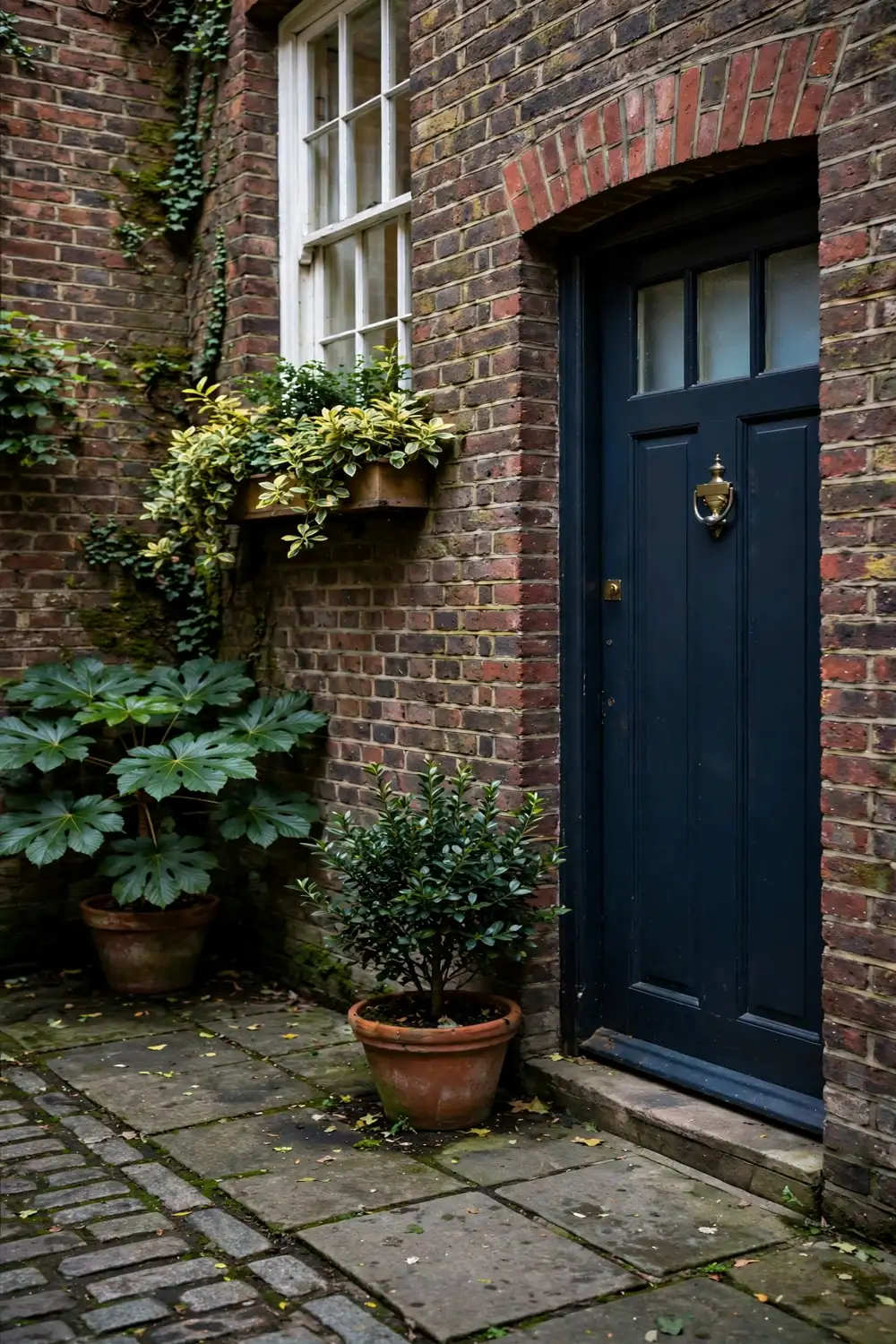
London gardens are usually small, often shaded by neighbouring buildings, and frequently little more than a courtyard, a basement lightwell or a few pots on a balcony — but evergreen shrubs are exactly what makes small gardens work. A small London garden needs plants that look good in January as well as June, and that is the evergreen shrub’s whole job. Sarcococca by the front door scents the step all winter; a fatsia in a shady corner gives a basement garden the feel of a tropical courtyard; a pair of ilex crenata balls in pots frames a doorway without ever outgrowing it; and euonymus fortunei ‘Emerald ‘n’ Gold’ in a window box keeps colour on a balcony through the darkest weeks.
For London gardens, choose compact shrubs and grow them in pots and containers where the ground is poor or paved. Camellia ‘Cleopatra’ and pittosporum are small enough for a large container on a patio, and a single photinia in a tub can screen a neighbour’s window without taking a whole border. Keep the soil in pots well watered in summer and top-dress with fresh compost each spring. And remember that many London gardens sit in a mild urban microclimate — a degree or two warmer than the surrounding countryside — so shrubs such as choisya and ceanothus, which need a sheltered position further north, often do very well here. If you are edging a small plot, see our guide to garden edging ideas for neat, low borders that frame evergreen planting.
Common Problems: Box Blight, Box Tree Caterpillar and Hardiness
Historically, Buxus sempervirens (box) was the go-to evergreen for hedging and topiary. However, due to the prevalence of box blight and the destructive box tree caterpillar in the UK, most gardeners now look for alternatives. Box blight is a fungal disease that turns leaves brown and strips whole plants, while the box tree caterpillar — the larva of a moth that arrived in Britain in the last decade — can defoliate a hedge in weeks. If your box is already affected, cut out the dead wood, clear fallen leaves, and consider replacing it rather than fighting the same battle every year.
The best replacements are ilex crenata (Japanese holly), which clips like box and is untouched by either pest, and osmanthus, a fragrant evergreen shrub with small, dense leaves that also makes excellent low hedging. Both give you the same formal, clipped look without the disease risk.
Hardiness is the other question to check before you buy. The RHS hardiness rating runs from H1 (needs heated glass) to H7 (hardy below -20 °C). Most of the shrubs in this guide sit at H4 or H5, which means they cope with -10 °C to -15 °C and are reliably hardy across most of the UK. The hardiest evergreen shrubs — yew, holly, euonymus fortunei and ninebark — carry H5 to H7 ratings and will withstand whatever a British winter throws at them. In colder, exposed regions, stick to H5 and above, and give anything rated H3 or H4 a sheltered position against a warm wall.
Frequently Asked Questions
What are the best evergreen shrubs for pots?
The best evergreen shrubs for pots are Euonymus fortunei ‘Emerald Gaiety’, which is sold both as a shrub and as a patio tree, Pittosporum ‘Silver Ball’, Nandina domestica, and small camellias such as ‘Cleopatra’. Choose a pot at least 30 cm wide, use John Innes No. 3 compost for stability, and water pots more often than plants in the ground — a container dries out fast in summer and freezes harder in winter, so move tender pots to a sheltered spot in a cold snap.
What are the best evergreen shrubs for privacy?
For a fast privacy hedge, cherry laurel (Prunus laurocerasus) is the quickest, growing up to 60 cm a year. For a formal, long-lived hedge, English yew (Taxus baccata) is the finest choice, though it is slower to establish. Photinia ‘Red Robin’ gives a quicker, colourful screen, and Viburnum tinus makes a good informal hedge that also flowers in winter. Plant hedging shrubs about 60 cm apart for a dense screen, and keep the top narrower than the base so light reaches the lower leaves.
What are the hardiest evergreen shrubs?
The hardiest evergreen shrubs carry an RHS hardiness rating of H6 or H7, which means they can withstand temperatures down to -20 °C and below. Ninebark (Physocarpus opulifolius) ‘Diabolo’ is rated H7, while yew, English holly and Euonymus fortunei are rated H5 and cope with -15 °C. Most of the shrubs in this guide are H4 or H5 and are reliably hardy across the majority of the UK, though a few — choisya, ceanothus and camellia — need a sheltered position in colder regions.
What are the best flowering evergreen shrubs?
For sheer wow factor, it is hard to look past camellias, whose large spring flowers are sensations in themselves — varieties like ‘Nuccio’s Pearl’ have graduated pink-and-white blooms, while ‘Cleopatra’ is small enough for a container on a patio. Choisya ternata (Mexican orange blossom) gives fragrant white flowers in spring and often again in autumn, Ceanothus ‘Repens’ covers itself in blue flowers in late spring, and Viburnum tinus flowers through winter. For winter fragrance, Daphne odora and Sarcococca confusa are the two to beat.
What are the best evergreen shrubs for wildlife?
English holly (Ilex aquifolium) is a good place to start: its berries feed birds through winter and its dense, spiky foliage shelters them from predators. Mahonia aquifolium (Oregon grape) is showier, with yellow winter flowers for early pollinators and blue-black berries in summer. Viburnum tinus feeds early bees with its winter flowers, Skimmia japonica carries red berries that birds love, and any dense evergreen hedge — yew, laurel or holly — gives birds a safe place to nest in spring. A garden with evergreen shrubs is a garden with birds in it all year.