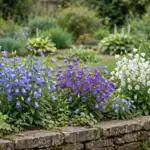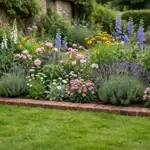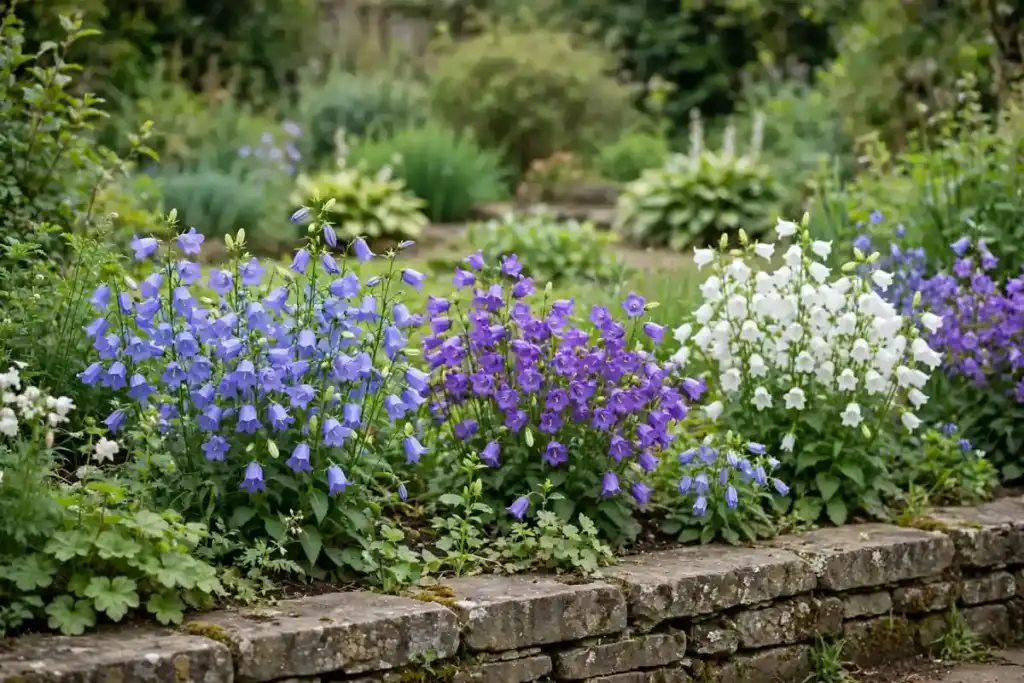
There is a moment in early summer when a cottage garden border suddenly looks like it is ringing. Tall stems of blue and violet bells sway above the foliage, low mounds of purple flowers spill over the edge of a path, and a stone wall that looked bare in April is suddenly covered in bloom. Nine times out of ten, the plant doing all that work is campanula.
Campanula, better known as bellflower, is one of the easiest and most generous plants you can grow in a British garden. It is hardy, it flowers for months rather than weeks, bees love it, and there is a variety for almost every spot — from the back of a sunny border to a crack in a wall. This guide covers how to grow campanula in the UK: the best varieties, where and when to plant, watering and deadheading, propagation, and the few problems to watch for.
What Is Campanula?
Campanula is a large genus of flowering plants in the family Campanulaceae, native across the temperate northern hemisphere, from Mediterranean hillsides to alpine meadows. The name comes from the Latin word for a little bell, and once you see the flowers you will understand why. Most varieties carry bell-shaped flowers in shades of blue, violet, purple, pink or white, held on upright stems or trailing stems depending on the type.
Gardeners use several common names for these plants. Bellflower is the general name, Canterbury bells usually means Campanula medium, the tall biennial with large cup-shaped blooms, and harebell is the wild Campanula rotundifolia that grows on grassland and cliffs. Despite the shared name, garden campanulas vary enormously in size: some are mat-forming plants barely 10 centimetres tall, while others, like Campanula lactiflora, reach 120 centimetres or more. That range is exactly what makes them so useful — there is a campanula for the front of a border, the middle, a rock garden, a wall and a pot.
Most garden campanulas are hardy perennials, meaning they come back year after year, and most sit between H5 and H7 on the RHS hardiness scale, so they cope with cold winters across the UK. A few are biennials, grown for one spectacular summer, and a handful of specialist alpine types are tender and need greenhouse protection in winter. For most gardens, the hardy perennial types are the ones to start with.
The Best Campanula Varieties for UK Gardens
With hundreds of species and cultivars to choose from, it helps to start with the reliable favourites. These are the varieties most often recommended by nurseries and the RHS, and several hold the RHS Award of Garden Merit.
Campanula persicifolia — the peach-leaved bellflower
Campanula persicifolia is the classic cottage garden bellflower. It grows to around 60–90 centimetres, with slender stems carrying large, open, cup-shaped flowers in blue, violet or white from June to August. It is happy in full sun or partial shade, in moist but well-drained soil, and it self-seeds gently around a border when it is happy — a bonus, not a nuisance, in most gardens. Look for ‘Telham Beauty’ for large pale blue flowers, and the white form ‘Alba’ for a cool, elegant contrast.
Campanula portenschlagiana — the wall bellflower
If you have a wall, a path edge or the top of a retaining wall to soften, Campanula portenschlagiana, the Dalmatian or wall bellflower, is the answer. This low, spreading evergreen perennial forms a mat of small leaves and covers itself in violet-blue star-shaped flowers in summer. It tolerates some shade, copes with dry soil once established, and tumbles beautifully over stone. It is also one of the best campanulas for pots and hanging baskets, where its trailing stems can spill over the rim.
Campanula carpatica — the Carpathian bellflower
Campanula carpatica is a neat, clump-forming plant around 20–30 centimetres tall, with large, open, cup-shaped flowers in blue, purple or white. It is ideal for the front of a border, a rock garden or an alpine trough, and it flowers for a long period if you deadhead it regularly. ‘Blue Clips’ and ‘White Clips’ are compact, free-flowering forms that suit small gardens and containers.
Campanula lactiflora — the milky bellflower
For the back of a large border, Campanula lactiflora is hard to beat. It grows to 120–150 centimetres, with tall branching stems covered in masses of small, starry, milky-blue or white flowers in mid to late summer. It needs moisture-retentive soil and may need light staking in a windy spot, but in the right place it is spectacular — a cloud of pale bells above the rest of the border. ‘Prichard’s Variety’ is a rich violet-blue favourite, and ‘Loddon Anna’ is a soft pink.
Campanula medium — Canterbury bells
Canterbury bells are biennials: sow them one year, and they flower the next, usually in May and June, with large bell or cup-and-saucer flowers in blue, pink, purple and white. They grow to around 60–90 centimetres and are wonderful in a cottage garden border or a cutting garden. Because they are biennial, sow a fresh batch each year if you want them every summer — they will not come back from the same plant.
Where and When to Plant Campanula
Most campanulas prefer a sunny position, but several, including the wall bellflower and the peach-leaved bellflower, tolerate partial shade. What almost all of them dislike is full shade and soil that stays wet in winter. Winter wet is the single biggest killer of campanula in the UK, more than frost: a plant that survives minus temperatures in well-drained soil will rot in a waterlogged border. If your soil is heavy clay, dig in plenty of grit and garden compost before planting, or grow campanula in raised beds or containers.
The best time to plant campanula is in spring, once the soil has started to warm, or in early autumn while the soil is still warm enough for roots to establish before winter. Plants bought in flower in summer can be planted too, but they will need regular watering for the rest of the season so they establish well. Space border varieties around 40–45 centimetres apart, and plant at the same depth as they were in the pot, with the crown just at soil level. Water in well after planting, and mulch lightly with garden compost to hold moisture and suppress weeds.
For containers, use a loam-based compost with added grit for drainage, and choose a pot with generous drainage holes. Trailing types like Campanula portenschlagiana and compact types like Campanula carpatica are excellent in pots, and a pot of bellflowers on a sunny patio or doorstep gives months of colour for very little effort. Containers dry out faster than borders, even in a British summer, so check the compost regularly and water when the top few centimetres feel dry.
How to Care for Campanula
Campanula is genuinely low-maintenance once established, which is part of its charm. A few simple habits, though, will keep it flowering longer and looking its best.
Watering
Once established, most campanulas are reasonably drought tolerant, but they flower far better with regular water while they are growing. Water deeply when the soil begins to dry out, especially in the flowering season — plants that dry out while in bloom can drop their buds. At the same time, never let them sit in wet soil: moist but well-drained soil is the golden rule for bellflowers. In pots, water more often, but always let excess water drain away.
Feeding
Campanulas need very little feeding. A mulch of garden compost in spring is usually enough, and a general-purpose liquid feed or a scattering of bone meal in spring can encourage flowering. Avoid heavy feeding, which produces soft, floppy growth that needs staking and is more vulnerable to slugs and frost damage. In rich soil, many campanulas need no fertiliser at all.
Deadheading for months of flowers
Deadheading is the single most useful job with campanula. Removing spent flower stems as they fade encourages many varieties to produce a second flush of blooms, stretching the display from early summer into autumn. With tall types like Campanula lactiflora, cut the flowered stems back to a side shoot that has yet to bloom, so the buds further down the stem can open. With low, spreading types, shear the whole plant lightly after the first flush. One caution: deadhead self-seeding varieties if you do not want them spreading around the garden — a happy campanula can seed itself generously.
Staking and cutting back
Only the tallest campanulas usually need staking, and only in windy or exposed gardens. A few discreet canes or a grow-through support put in place in spring will do the job without spoiling the look. In autumn, cut back dead stems and tidy the foliage, and divide congested clumps every three years or so in spring or autumn to keep them vigorous. Dividing also gives you free plants — a welcome bonus.
How to Propagate Campanula
Campanula is easy to propagate, so a single plant can become many within a couple of years. There are three main methods, and the right one depends on the variety.
Division is the simplest method for clump-forming perennials. In spring or autumn, lift the plant, split the rootball into pieces with a sharp spade or knife, and replant each piece at the same depth. Water well and they will establish quickly. Basal cuttings, taken in spring from young shoots at the base of the plant, root readily in gritty compost and are a good way to increase choice varieties. Seed sowing suits many types, including Campanula carpatica and Canterbury bells: sow seed in spring in seed trays, barely covering it, since campanula seed needs light to germinate, and prick out the seedlings once they are large enough to handle. Note that named cultivars grown from seed may not come true, so use cuttings or division to keep an exact variety.
Campanula in Garden Design
Campanula earns its place in almost any planting scheme. In a cottage garden border, tall peach-leaved and milky bellflowers mix beautifully with roses, delphiniums, foxgloves and hardy geraniums, filling the gap between the spring bulbs and the late-summer perennials. At the front of a border, Carpathian bellflowers edge a path with colour for months, and their neat habit suits formal planting too. For advice on layering heights and repeating plants so a border looks designed rather than random, see our guide to creating stunning garden borders.
On walls and in rock gardens, the wall bellflower and alpine campanulas do work no other plant does quite as well, softening hard stone with a cascade of flowers. In a wildlife-friendly garden, bellflowers are a magnet for bees and other pollinators — the open bell shape gives insects easy access to nectar, and a drift of campanula in flower hums on a warm summer day. If you are planting a shady corner as well, our guide to garden plants for shade covers the plants that thrive where campanula would struggle, and for a tidy edge that keeps your new bellflower border crisp, see our guide to garden edging. Finally, because most campanulas are cut back in autumn, it is worth folding them into your autumn routine — our guide to how to winterize your garden covers the seasonal jobs that protect them through winter.
Common Problems: Pests, Diseases and Troubleshooting
Campanula is generally disease-free and resistant to most pests, but a few problems do appear. Slugs and snails are the main pest: they love the soft leaves and flower buds, especially on young plants and low-growing types. Protect new plantings with copper tape on pots, nematodes, or by growing vulnerable plants in containers, and check plants after rain. Aphids sometimes cluster on flower stems; a strong jet of water or a wildlife-friendly spray usually deals with them, and encouraging ladybirds helps.
Powdery mildew is uncommon on most hardy campanulas, but it can appear in dry, crowded conditions — improve air circulation, avoid overhead watering, and remove affected leaves. Do not compost infected material, as the spores survive. The most serious warning concerns creeping bellflower, Campanula rapunculoides: unlike its well-behaved relatives, it spreads vigorously by underground runners, is very difficult to remove because of its deep roots, and can become a garden weed. If you buy a plant labelled only as “creeping bellflower”, check the species before planting it near a border you care about. And remember the golden rule: if a campanula dies over winter, winter wet is the likeliest cause — improve the drainage before replacing it, rather than planting the same variety in the same spot.
Frequently Asked Questions
Is campanula a perennial?
Most garden campanulas are hardy perennials that come back year after year, including Campanula persicifolia, Campanula portenschlagiana, Campanula carpatica and Campanula lactiflora. Canterbury bells (Campanula medium) are the exception: they are biennials, flowering in their second year and then dying, so sow them annually for a regular display.
Does campanula need full sun?
Most campanulas prefer full sun, but several cope with partial shade, including the wall bellflower and the peach-leaved bellflower. None thrives in full shade, and all of them need well-drained soil — wet winter soil kills more campanulas than frost does.
When does campanula flower?
Most campanulas flower from June to August, with some, such as Campanula portenschlagiana and deadheaded Campanula carpatica, blooming from early summer into autumn. Canterbury bells flower earlier, usually in May and June. Deadheading spent blooms regularly extends the flowering season considerably.
How do you stop campanula spreading too much?
Deadhead plants before they set seed, especially self-seeding types like Campanula persicifolia, and divide clumps every few years to keep them in bounds. Avoid planting creeping bellflower (Campanula rapunculoides) in open borders, as it spreads aggressively by runners and is hard to remove.
Can you grow campanula in pots?
Yes. Compact and trailing varieties such as Campanula carpatica and Campanula portenschlagiana are excellent in pots, hanging baskets and alpine troughs. Use loam-based compost with added grit, make sure the pot drains freely, and water more often than plants in the ground, since containers dry out faster.