Every garden has a corner that defeats it. The strip along the north-facing wall where nothing seems to settle. The dry patch under the big tree where the grass thins and the soil turns to dust. The damp border behind the shed that never quite dries out. Most gardeners stare at these spots, plant something hopeful, watch it fade — and conclude that shade means no garden at all.
That conclusion is wrong, and it costs you the most atmospheric part of your garden. Garden plants for shade do not just tolerate low light; many of them prefer it. Hostas unfurl bigger leaves in shade than they ever manage in sun. Ferns look wilder and lusher without a ray of direct light. Hellebores flower in February, when the sunny borders are still asleep. This guide picks 21 of the best shade plants for UK gardens, organised by the kind of shade you actually have — deep, dry, damp or dappled — so you can match the plant to the spot instead of gambling.
First, Work Out What Kind of Shade You Have
Shade is not one condition. A plant that thrives in moist, dappled shade under a birch can fail completely in dry shade under a conifer, even though both spots look equally dark. Before you buy anything, spend a week watching your shady corner. Does it get an hour or two of morning sun, or none at all? Does the soil stay damp after rain, or does it dry within a day? Are tree roots competing for every drop of water?
As a rough guide, partial shade means three to six hours of direct sun a day, often in the morning. Full shade, sometimes called deep shade, means less than two hours — the north side of a house, a courtyard between tall buildings, or ground under dense evergreens. Dappled shade is the shifting, filtered light under a deciduous tree canopy. Dry shade is shade plus thirsty roots, usually under mature trees or beside walls and hedges. Damp shade is shade plus soil that holds moisture, often on clay or in a low spot. Most shade plants are happy in partial or dappled shade; only the toughest cope with deep, dry shade, and the list below says which is which.
Prepare the soil before you plant
Shade plants still need decent soil. Dig in plenty of garden compost before planting — it improves both dry soil, which then holds moisture longer, and heavy soil, which then drains better. In dry shade, this step matters more than the choice of plant: no plant establishes well in dust. Finish with a thick mulch of bark chips or leaf mould, kept a few centimetres away from stems. Mulch holds moisture in the soil, suppresses weeds that compete for water, and feeds the soil as it rots down. Water new plants deeply for their first summer, even shade lovers, until their roots are established.
The Best Perennials for Shade
Perennials are the backbone of a shade border. They come back year after year, fill the ground so weeds cannot, and give you flowers at times when sunny borders are quiet. Start with these reliable performers.
Hostas — bold leaves for moist shade
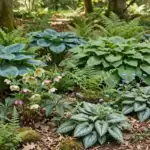
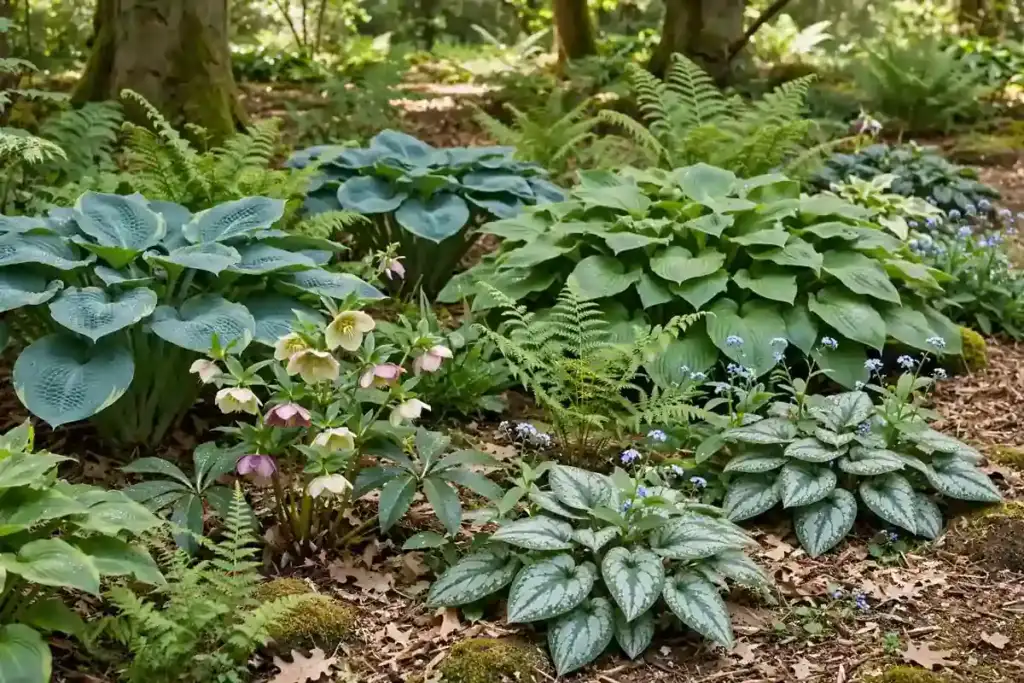
Hostas are the classic shade plant for a reason. Their large leaves, in greens, blues and variegated creams, bring structure to a border that flowers alone cannot. They prefer moist, fertile soil in partial or dappled shade and look superb planted in drifts under trees or along a shady path. The catch is slugs, which love hosta leaves: grow them in pots, use copper tape or nematodes, or choose thicker-leaved varieties such as ‘Sum and Substance’ that slugs find less tempting. In a damp, sheltered corner, hostas are almost unbeatable.
Ferns — texture for the darkest corners
If your corner gets almost no direct sun, ferns are your best friend. The male fern (Dryopteris filix-mas) and the soft shield fern (Polystichum setiferum) are evergreen, fully hardy and happy in deep shade, provided the soil is not bone dry. Their arching fronds add a woodland feel that no other plant quite matches, and they need almost no care beyond cutting back tatty fronds in spring. Plant ferns in groups of three or five for a natural, layered look.
Hellebores — winter flowers when nothing else blooms
Hellebores, often called Lenten roses, flower from February to April in shades of white, pink, plum and green. They cope with deep shade and even dry shade once established, and their evergreen foliage looks good all year. Cut off last year’s leaves in late winter before the flowers open, so the blooms show clearly. One caution: hellebores are toxic if eaten, so keep them out of borders where small children or pets graze on plants.
Astilbe — feathery plumes for damp shade
Astilbe is the plant to reach for when your shade comes with damp soil. Its feathery plumes in pink, red, white and lilac rise above fern-like foliage in summer, and the dried flower heads give winter interest if you leave them standing. Astilbes sulk in dry soil, so give them moisture-retentive ground and mulch generously. Planted in a drift beside ferns and hostas, they turn a soggy shady border into a summer showpiece.
Brunnera — silver leaves that light up dark spots
Brunnera macrophylla ‘Jack Frost’ is a shade gardener’s trick for brightening gloom. Its heart-shaped leaves are veined and frosted with silver, reflecting what little light reaches the border, and in spring it carries sprays of tiny blue flowers like forget-me-nots. It prefers moist soil in partial shade and self-seeds gently, filling gaps without becoming a nuisance.
Epimedium — the dry-shade survivor
Epimediums are the answer to the hardest spot in many gardens: dry shade under trees. Once established, these low, tough perennials cope with root competition and drought that defeat hostas and astilbes. Their delicate spring flowers in yellow, pink or white hover above fresh foliage, and many varieties are semi-evergreen. Cut back old foliage in late winter to show off the flowers. If you remember one plant from this guide for dry shade, make it epimedium.
Heuchera — colour all year in partial shade
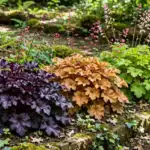
Heucheras, or coral bells, give shade borders colour when nothing is flowering. Their leaves range from lime green and amber to deep plum and near-black, and they hold that colour through winter. They prefer partial shade and well-drained soil — wet winter soil is their enemy — and their slender flower spikes attract bees in summer. Our guide to growing heuchera covers varieties and care in detail, and heucheras edge paths and the fronts of borders beautifully.
Shrubs and Evergreens for Shade Structure
Perennials alone can look flat in winter. Evergreen shrubs give a shade border its year-round skeleton, hide fences and walls, and make the whole planting feel intentional rather than accidental.
Fatsia japonica — bold, tropical-looking leaves
Fatsia japonica is the drama plant for shade. Its huge, glossy, hand-shaped leaves look almost tropical, yet it is fully hardy in most of the UK and tolerates deep shade. It grows to around 2–4 metres, so give it room, and it flowers in autumn with creamy white clusters that bees love. Plant it where you want an instant, architectural statement — beside a shady front door, for example.
Aucuba japonica — the toughest evergreen for shade
Spotted laurel (Aucuba japonica) will grow where almost nothing else will: deep shade, dry soil, pollution, neglect. Its gold-spotted evergreen leaves brighten dark corners all year, and female plants carry red berries if a male is nearby. It is not the prettiest shrub on this list, but for a problem corner it is often the only shrub that works, and a clipped aucuba hedge makes a smart screen for a shady boundary.
Skimmia — winter berries and spring scent
Skimmia japonica is a compact evergreen shrub made for shade. Female plants carry long-lasting red berries through winter, while male plants such as ‘Rubella’ have pink buds all winter and fragrant white flowers in spring. Skimmias need acidic to neutral soil and dislike lime, so check your soil or grow them in pots of ericaceous compost if your garden is chalky. They are slow-growing and neat, ideal for small shady borders and containers.
Hydrangea — big blooms in dappled shade
Hydrangeas are shade-tolerant shrubs that reward dappled or partial shade with huge flower heads from summer into autumn. Hydrangea macrophylla (mophead and lacecap types) and the climbing hydrangea, Hydrangea petiolaris, are the stars: the climber clings to a north-facing wall by itself and covers it with white lacecap flowers in June. Hydrangeas need moist, fertile soil, so mulch well and water in dry spells; on acid soil, mophead flowers turn blue, on alkaline soil they turn pink.
Camellia and mahonia — spring flowers in shade
Camellias flower spectacularly in spring in partial shade, provided the soil is acidic and they are sheltered from cold morning sun after frost, which browns their blooms. Mahonia, with its spiky evergreen leaves and scented yellow winter flowers, copes with deep shade and dry soil and feeds early bees when little else is out. Both add a season of interest that perennials alone cannot provide.
Ground Cover Plants for Shade
Bare soil under trees quickly becomes a weed patch. Shade-tolerant ground cover plants knit together, suppress weeds, and keep the soil cool and moist for everything else in the border.
Pachysandra terminalis forms a dense evergreen carpet in deep shade and is one of the few plants that truly thrives under dense trees. Lamium maculatum (dead nettle) spreads quickly in partial shade with silver-marked leaves and pink or white flowers, though it can be vigorous in rich soil. Vinca minor (lesser periwinkle) covers dry shade with evergreen leaves and blue spring flowers, but keep it away from small borders it could swamp. Sweet woodruff (Galium odoratum) carpets damp, dappled shade with white spring flowers and scented foliage, and it is a lovely edging plant for a woodland path. For a tidy edge that keeps lawns from creeping into your new shade border, see our guide to garden edging.
Plants for Dry Shade vs Damp Shade
Matching the plant to the moisture level is the single decision that separates a thriving shade garden from a disappointing one. Use this table as a quick shortlist before you shop.
| Your shade type | Best plants | Avoid |
|---|---|---|
| Deep shade, moist soil | Ferns, hostas, brunnera, pachysandra, fatsia | Sun-loving perennials, lavender, roses |
| Dry shade under trees | Epimedium, hellebores, aucuba, vinca, lamium | Astilbe, ligularia, hostas (without watering) |
| Damp shade, heavy soil | Astilbe, ligularia, hostas, Japanese anemones, ferns | Heuchera in waterlogged soil, Mediterranean herbs |
| Dappled shade | Hydrangea, foxgloves, Japanese anemones, Hakonechloa grass, camellia | Deep-shade only plants that scorch in sun flecks are rare — most cope |
| Partial shade, containers | Heuchera, ferns, skimmia, Hakonechloa, trailing campanula | Plants that need deep, moist soil to survive |
Two more plants deserve a mention for the last two rows. Japanese anemones flower from late summer into autumn in partial shade, lighting up a border when most shade plants have finished. Hakonechloa macra, Japanese forest grass, spills gracefully over path edges and pot rims in partial shade, its arching blades turning gold in autumn. Foxgloves (Digitalis) self-seed in dappled shade and give height and cottage-garden charm, though like hellebores they are toxic if eaten.
Designing a Shade Border That Looks Good All Year
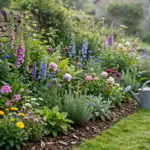
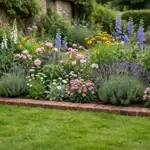
A shade border works best in layers, just like a woodland edge. Put the tallest plants at the back — fatsia, hydrangea or a climbing hydrangea on the wall — mid-height perennials such as hostas, astilbes and foxgloves in the middle, and ground cover or low heucheras at the front. Repeat the same plants in drifts of three, five or seven rather than planting one of everything; repetition is what makes a border look designed instead of random.
Use leaf shape and colour, not just flowers, to carry the design. Pair the huge leaves of hostas with the fine fronds of ferns, the silver of brunnera with the dark plum of a heuchera, and the glossy evergreen of fatsia with the soft texture of Hakonechloa. Because many shade plants flower in spring or early summer, evergreens and interesting foliage are what keep the border alive in winter. Our guide to creating stunning garden borders explains layering and repetition in more detail, and the same principles apply in shade.
Finally, be patient in the first year. Shade plants are often slower to establish than sun lovers, because they grow more slowly by nature. A border planted this autumn may look sparse next spring and full the year after. Water well in the first summer, mulch every spring, and resist the urge to keep moving plants around. By the second year, most of the plants on this list will have settled and started to knit together — and the corner that once defeated you will be the part of the garden you show visitors first. For the autumn and winter routine that protects all this planting, see how to winterize your garden.
Frequently Asked Questions
What are the best garden plants for shade in the UK?
For most UK shady borders, start with hostas, ferns, hellebores, epimediums and heucheras as the backbone, then add height with foxgloves or Japanese anemones and evergreen structure with fatsia, skimmia or aucuba. The right mix depends on whether your shade is dry, damp or deep, so check which type you have before buying.
What grows in full shade with no direct sun at all?
Ferns, pachysandra, epimedium, fatsia and aucuba all cope with full or deep shade, meaning less than two hours of direct sun a day. In full shade, foliage does most of the work, so choose plants for leaf shape and colour and add hellebores for winter flowers.
What plants grow in dry shade under trees?
Epimedium, hellebores, aucuba, vinca and lamium are the most reliable dry-shade plants, because they cope with root competition and low moisture once established. Improve the soil with compost, mulch thickly, and water well for the first summer — even dry-shade plants need help getting established.
Can I grow shade plants in pots and containers?
Yes. Heucheras, ferns, skimmia, Hakonechloa and hostas all grow well in pots in shade, provided the pots have drainage holes and you water more often than plants in the ground — containers dry out faster, even in shade. Use a moisture-retentive compost and mulch the pot surface.
Do shade plants need feeding?
Most shade plants need little feeding beyond an annual mulch of garden compost in spring, which feeds the soil slowly. A general-purpose liquid feed in spring and early summer helps flowering plants such as astilbes and hydrangeas, but avoid overfeeding — soft, lush growth in shade is more vulnerable to slugs and frost damage.