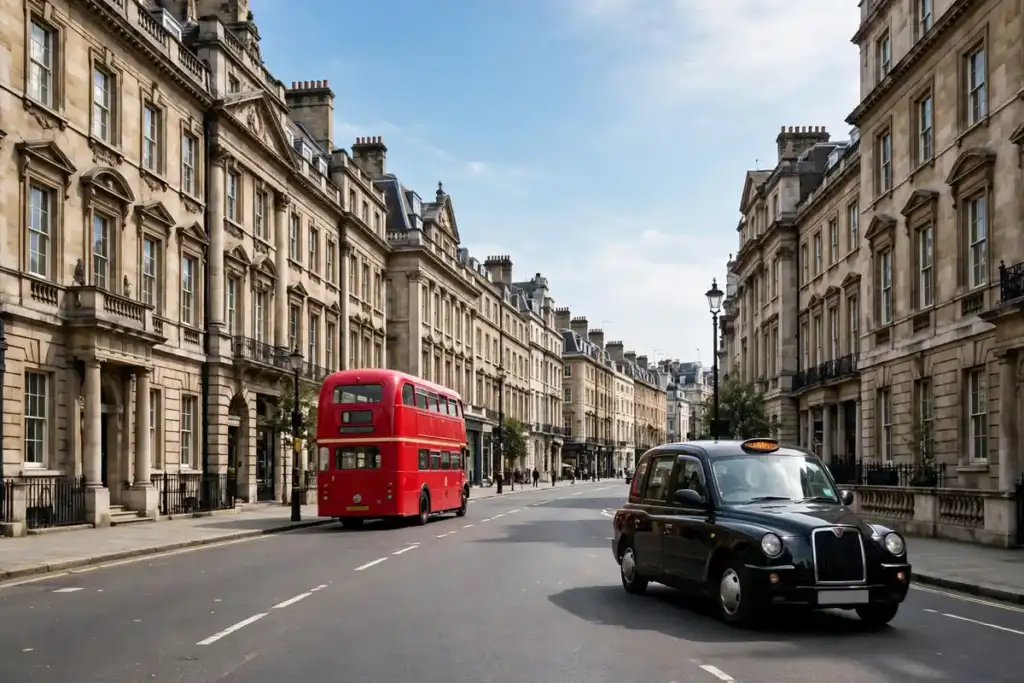
Planning a trip to London is half the pleasure of the visit, provided the planning stays practical. London is a large, busy and sometimes expensive city, but it is also one of the easiest in the world to navigate once a few basics are understood. The Tube is logical, the buses are frequent, many museums are free, and most of the famous sights sit within a compact central area. The difference between a stressful trip and a smooth one usually comes down to a handful of decisions made before departure.
This guide takes a planning-first approach. Rather than listing sights, it explains how to get here, how to get around, what to book in advance, how much money to allow, and how to time each day so queues stay short and energy stays high. Follow it in order, from the first decisions to the daily routine, and London will feel far more manageable than its size suggests.
Before You Go: The Decisions That Save Money

The three decisions that most affect the cost and comfort of a London trip are when to travel, where to stay, and how long to stay. Travelling outside school holidays and major public holidays usually means lower hotel prices and shorter queues. Staying near a Tube station, rather than beside a famous landmark, often saves a surprising amount without adding much travel time, because the Tube makes most central areas reachable within twenty minutes.
Length of stay matters too. Three full days are enough for the headline sights and a taste of neighbourhood life, while five days allow a slower pace, a market morning, a park afternoon and perhaps a day trip. Shorter trips should be ruthlessly selective: pick one major sight per day, add one neighbourhood walk, and leave the rest for a return visit. A short, well-planned trip always beats a frantic attempt to see everything.
Documents, insurance and essentials
Check passport validity, visa requirements and travel insurance well before departure, since requirements vary by nationality and can change. Travel insurance should cover medical care, cancellations and lost belongings, and it is worth reading the small print on pre-existing conditions. Pack a payment card that works abroad, a phone charger with a UK adapter, and a small day bag for walking days. Keep booking confirmations, both on a phone and as a printed or saved copy, in case of a flat battery or a weak signal underground.
Arriving in London: Airports and First Steps

London has several airports, and the journey into the centre varies a great deal between them. Heathrow, the largest, offers the fastest rail link into central London as well as slower but cheaper Underground and bus options. Gatwick has a direct rail service to Victoria station. Stansted and Luton are served by trains and coaches that take longer, so the headline flight price should always be weighed against the transfer time and cost.
On arrival, the simplest first step is to follow signs for trains or the Underground rather than joining a taxi queue, unless luggage is heavy or the group is large. Buy or top up a travel card, or check that a contactless bank card can be used for transport, before leaving the airport. Keep the first day gentle: a short walk, a light meal and an early night will do more for the rest of the trip than a heroic first-day sightseeing marathon after a long journey.
Choosing the right transfer
Express trains are fastest but costliest, and they make sense when time is short or a hotel check-in deadline is tight. The Underground is cheaper and runs directly into the centre from Heathrow, though it takes longer and can be crowded at peak times. Coaches are the cheapest option from several airports but are slowest and most affected by traffic. As a rule, choose the train for speed, the Tube for value from Heathrow, and a coach only when the saving is genuinely large or the schedule suits the flight time.
Getting Around: Tube, Bus and Walking
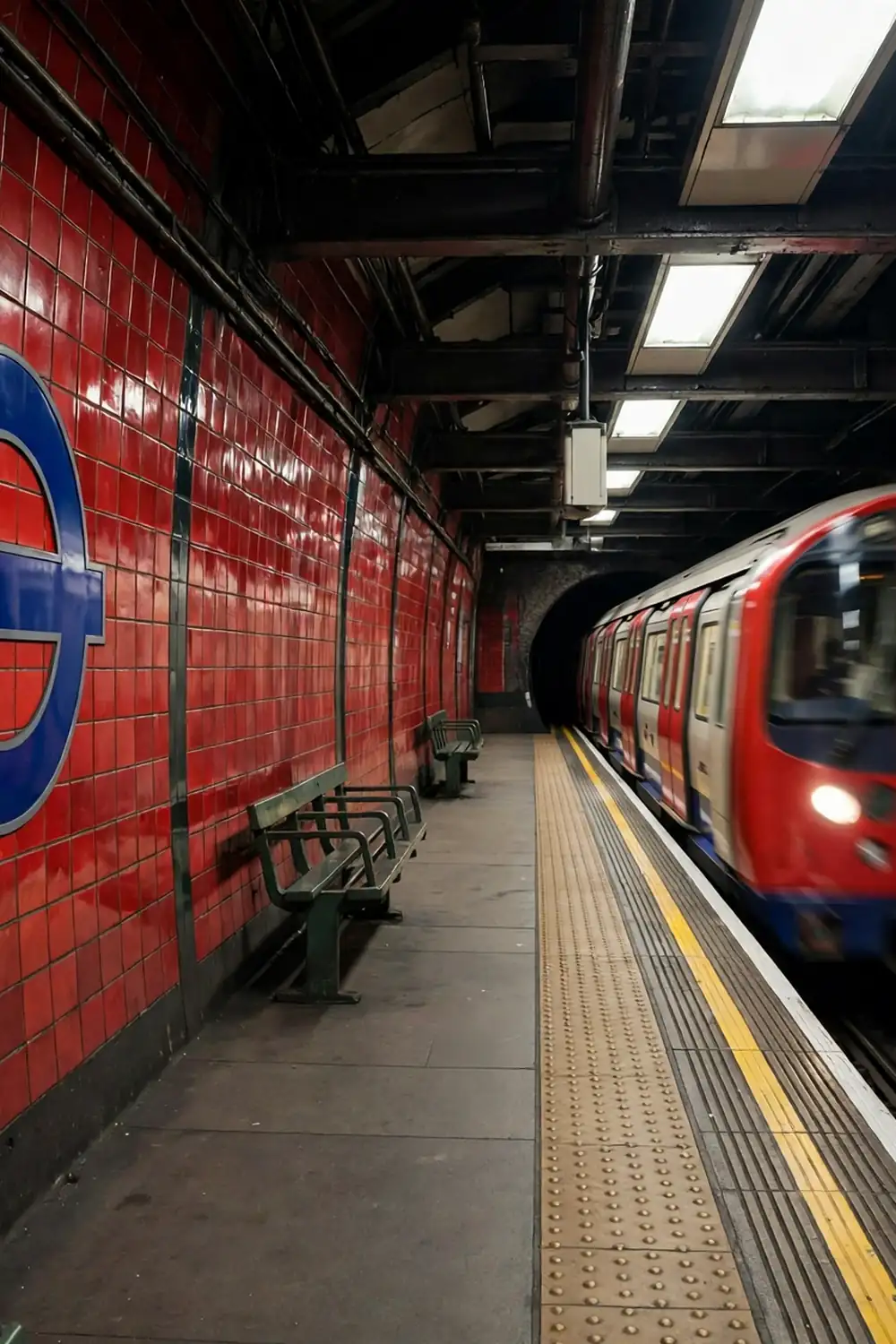
London’s transport system looks complicated on a map and feels simple in practice. The Underground, known as the Tube, has eleven lines, each with its own colour, and most central journeys involve at most one change. Stations are well signed, trains run frequently, and live departure boards show the next few trains. The key skill is not memorising the map but learning to read it: find the nearest station, follow the line colour, and change only where the lines meet.
Payment is equally straightforward. Most visitors can simply tap a contactless bank card or a phone on the yellow readers at the start and end of each journey, and daily and weekly fare caps keep costs under control automatically. A visitor travel card is still useful for those without a suitable bank card, and children under eleven usually travel free with a fare-paying adult on many services. Always tap out at the end of a journey, since an incomplete journey can cost more than a completed one.
Tube tips that save time
Avoid the Tube at weekday rush hours, roughly 7.30 to 9.30 in the morning and 5.00 to 7.00 in the evening, when carriages are packed and journeys feel much longer. Stand on the right on escalators, move down inside the carriage, and let passengers off before boarding. If a station has a long queue at the ticket machines, the contactless readers at the gates are usually faster. For step-free access, check station facilities in advance, since not every central station has lifts, and some routes are far easier than others for wheelchairs and pushchairs.
Buses, walking and river transport
Buses are London’s most underrated transport. They cost the same as a Tube journey under the fare cap, they run through the streets rather than beneath them, and the front seat upstairs on a double-decker is one of the best free views in the city. Route numbers and destination boards are clearly displayed, and most central routes run every few minutes during the day. Walking, meanwhile, is often faster than it looks: many central sights are ten to fifteen minutes apart on foot, and walking reveals shops, markets and squares that the Tube passes beneath unnoticed.
River buses along the Thames are a pleasant extra rather than a daily necessity, but they are excellent for journeys to Greenwich or between Westminster and Tower Bridge, combining transport with sightseeing. Taxis and ride-hailing cars are best kept for late nights, heavy luggage or bad weather, since traffic in central London is slow and fares add up quickly. Cycling is possible through a hire scheme with docking stations across the centre, but it suits confident cyclists best, given the busy roads.
Tickets and Booking: What to Book Ahead

Booking ahead is the single best way to avoid queues in London, but not everything needs advance booking, and over-booking can make a trip feel rigid. The rule of thumb is simple: book anything with a timed entry, a limited capacity or a strong chance of selling out, and leave flexible things, such as parks, markets and most museums, to the day itself. Timed-entry attractions include popular viewpoints, special exhibitions and theatre shows, where a booked slot guarantees entry at a known time.
For theatre, booking a few weeks ahead gives the best choice of seats, though same-day discount booths and theatre apps often release good seats at lower prices. For major attractions, official websites usually offer the best prices and the clearest cancellation terms, while third-party sellers sometimes add fees or restrict changes. Always check what a ticket includes: some passes bundle several attractions at a saving, but they only pay off if the included sights match the actual itinerary.
A sensible booking order
Book in this order for the smoothest trip: accommodation first, then any timed-entry attraction that is a must-see, then theatre or special events, then day trips and restaurant reservations for special meals. Leave one or two days deliberately light, with nothing booked before lunch, so the trip has room for weather changes, tired feet or a neighbourhood that deserves a longer stay. A trip that is fully booked from morning to night rarely leaves space for the spontaneous discoveries that make London memorable.
Money and Daily Budgets

London has a reputation for high prices, and some of it is deserved, but a well-planned day need not be expensive. The largest costs are accommodation and transport, both of which can be reduced by staying near a Tube station outside the most famous streets and by using fare caps rather than single tickets. Food is the most flexible cost: a market lunch, a cafe breakfast and a pub supper can cost far less than three restaurant meals, and many of the best eating experiences in London are informal.
As a rough guide, a budget day built around free museums, a market lunch, walking and a bus ride can be very affordable, while a day with a paid viewpoint, a West End show and a restaurant dinner will cost several times as much. Mixing the two kinds of day keeps the average sensible. Cash is rarely needed, since cards and phones are accepted almost everywhere, including buses and small market stalls, though carrying a small amount of coins is still handy for the occasional cash-only stall.
Where the savings really are
The biggest savings come from free attractions. The major national museums and galleries, including the British Museum, the National Gallery, the Natural History Museum and the Tate Modern, charge nothing for their permanent collections, and their special exhibitions are the only paid parts. Parks, canal walks, riverside promenades and many churches are free as well. Eating lunch from a market, drinking tap water, and walking between nearby sights all add up to meaningful savings over a week, without any sense of missing out.
Timing Your Days: Crowds, Queues and Seasons

Timing is the hidden skill of London travel. The same attraction can feel completely different at nine in the morning and at noon, and the same park can be a peaceful retreat on a weekday and a crowded festival ground on a sunny Saturday. The general pattern is consistent: mornings are calmest, midday is busiest at famous sights, and late afternoons are often pleasant again as tour groups depart. Planning the most popular sight first, followed by a relaxed neighbourhood walk, uses this pattern well.
Seasons matter too. Spring brings blossom, longer days and comfortable walking weather, while summer offers the longest days and the fullest events calendar, along with the largest crowds. Autumn is often the sweet spot, with mild weather, autumn colour in the parks and fewer visitors. Winter is coldest and darkest, but it brings festive markets, ice rinks and beautifully lit streets, and hotel prices are often at their lowest. There is no bad season for London, only different trade-offs, and the best choice depends on whether crowds, weather or price matter most.
A daily rhythm that works
A rhythm that suits most visitors is: one major sight in the morning, lunch in a market or a neighbourhood cafe, a walk or a free museum in the afternoon, and an evening show, riverside stroll or pub supper. Build in a rest each afternoon, even a short one, since London days involve a great deal of walking. If rain arrives, swap a park for a museum, a market hall or a covered arcade, and keep the outdoor plans for the next dry spell. Flexibility, more than any single booking, is what keeps a London trip enjoyable when plans meet reality.
Where to Base Yourself
The best base is not necessarily the most famous address. Areas such as South Kensington, Bloomsbury, King’s Cross and Southwark all offer good Tube connections, a range of hotels and apartments, and pleasant streets for evening meals. Central areas near Oxford Street are convenient but noisy, while quieter residential streets a short Tube ride away often offer better value and a more restful night’s sleep.
When choosing accommodation, weigh three things: distance to the nearest Tube station, noise at night, and the availability of breakfast or a nearby cafe. A hotel five minutes from a station on a quiet street usually beats a hotel beside a landmark on a busy road. For longer stays, an apartment with a kitchen can reduce food costs and give more space, especially for families. If a first visit feels daunting, our guide for a first time in London explains how to shape those first days, and for a wider itinerary, the ideas for day trips from London show how easily the city connects to the rest of the south of England.
Good to Know
A few final practical points round out the planning. London’s weather changes quickly, so a light waterproof jacket and layers are more useful than a single heavy coat for much of the year. Phones work well for maps and transport, but a portable charger is worth carrying, since navigation and photography drain batteries faster than expected. Tap water is safe to drink, and asking for tap water in restaurants is normal and free.
Emergency numbers, pharmacy locations and the nearest hospital are worth noting on arrival, though most trips pass without needing them. Keep valuables in a front pocket or a closed bag in crowded places, and be cautious of anyone offering unsolicited help at ticket machines. Finally, allow extra time for everything on the first day: stations, queues and street layouts all take a little learning, and by the second day the city will already feel far more familiar. Garden lovers with a spare half day should also consider the remarkable glasshouses described in our guide to the largest botanical garden on earth, an easy and rewarding addition to a London stay.
FAQ
How many days are enough for a first trip to London?
Three full days cover the headline sights and a neighbourhood or two, while five days allow a relaxed pace with markets, parks and a possible day trip. Fewer than three days is still worthwhile if the itinerary is selective, with one major sight and one neighbourhood per day. Longer stays suit visitors who want to explore beyond the centre or travel at a slower pace.
Is a travel pass better than using a contactless card?
For most visitors, a contactless bank card or phone is simplest, because daily and weekly fare caps apply automatically and there is no card to buy or top up. A visitor travel card is a good alternative for travellers without a suitable bank card, or for those who prefer to separate travel spending from their main account. Either way, the cost of Tube and bus travel is broadly the same.
What should be booked before arriving in London?
Book accommodation, timed-entry attractions, theatre shows and any special restaurant meals in advance. Free museums, parks, markets and most neighbourhood walks do not need booking. Leaving some days partly unplanned is wise, since it allows for weather changes, tiredness and spontaneous discoveries that a rigid schedule would prevent.
When is the cheapest time to visit London?
January and February, outside school holidays, usually offer the lowest hotel prices and the shortest queues, though the weather is cold and the days are short. November can also be good value before the festive season peaks. Summer and school holiday periods are the most expensive, with higher accommodation prices and larger crowds at major attractions.
How much money should be allowed per day in London?
A budget day based on free museums, market food and walking can be quite affordable, while a day with a paid viewpoint, a show and a restaurant meal costs several times more. A sensible approach is to mix the two kinds of day, spend on one special experience per day, and use free attractions and market meals to balance the overall budget across the trip.
Is London easy to get around without a car?
Yes, London is one of the easiest large cities to explore without a car, and driving in the centre is slow, expensive and unnecessary. The Tube, buses and walking cover almost every sight, river buses add a scenic option, and taxis are available for late nights or heavy luggage. Visitors who arrive by car should park outside the centre and use public transport for the city itself.