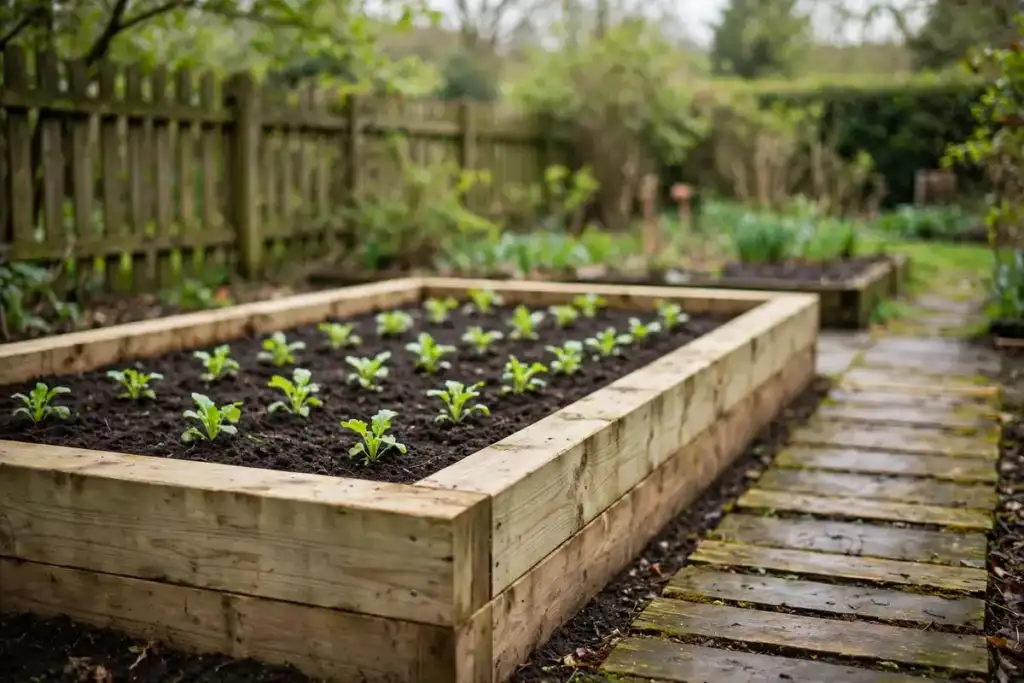
A raised garden bed is one of the simplest ways to improve a garden. It lifts plants out of wet, compacted soil, warms up earlier in spring, and makes weeding, watering, and harvesting much easier. If you are new to gardening, this is a perfect first project. You only need basic tools, a weekend afternoon, and a level spot in your garden.
This guide shows you how to build a raised garden bed step by step, from choosing the right size and timber to filling it with the best soil mix and planting your first crops.
Why Build a Raised Garden Bed?
Many UK gardens have heavy clay soil that stays cold and wet for much of the year. A raised bed lets you control the soil quality, drainage, and structure. It also helps you grow more food in less space because you can plant in neat rows or blocks without walking on the soil.
Other benefits include fewer slugs, less bending, and a tidier garden. Raised beds also work well for small gardens, patios, and allotments because you can build them to fit almost any space.
Choosing the Right Size and Position
Before you buy timber, think about size and location. The best raised bed is one you can reach from all sides without stepping into it.
Width and Length
A width of 1.2 metres is ideal because you can reach the centre from either side. For length, 2.4 metres is common, but you can make it shorter if space is limited. Avoid making beds wider than 1.5 metres, as the middle becomes hard to reach.
Height
A height of 25 to 30 centimetres works for most vegetables and flowers. If you want to grow root vegetables like carrots and parsnips, go for 40 to 45 centimetres. Deeper beds are also easier on your back.
Position
Choose a sunny spot with at least six hours of sunlight a day. Avoid low areas where water collects. The ground should be fairly level, and you should leave paths of at least 60 centimetres between beds so you can walk and push a wheelbarrow.
Choosing Materials for a Raised Bed
The most popular material is timber, but there are a few good options depending on your budget and style.
Treated Wood and Sleepers
Pressure-treated softwood is affordable and easy to cut. Look for timber treated for ground contact, and avoid old railway sleepers treated with creosote. New oak sleepers look beautiful and last for many years, but they are heavier and more expensive.
Scaffold Boards
Scaffold boards are a budget-friendly choice. They are usually 225 millimetres wide, so stacking two boards gives you a good height. They are easy to handle and can be cut with a handsaw.
For a neat finish, use corner posts to hold the boards in place and add a top cap board to sit on while gardening.
Tools and Materials You Need
You will need timber boards, corner posts, screws, a drill, a saw, a spirit level, a tape measure, and a spade. For filling the bed, you will need cardboard, compost, topsoil, and mulch.
Start by clearing the area of grass and weeds. Lay cardboard on the ground to suppress weeds, then build the frame on top. This is a simple no-dig method that works well in most gardens.
How to Build a Raised Garden Bed Step by Step
Step 1: Mark Out the Bed
Use string and pegs to mark the outline of your bed. Check the corners are square and the sides are straight. Remove any turf and level the ground roughly with a spade.
Step 2: Build the Frame
Cut your boards to size and screw them to corner posts. Build the frame on a flat surface if possible, then carry it into position. Use a spirit level to check it sits evenly, and pack soil under low corners if needed.
Step 3: Fix the Frame in Place
Drive the corner posts into the ground with a mallet. Make sure the frame is stable and does not wobble. Add a second layer of boards if you want a taller bed.
Step 4: Line the Bed
Line the bottom with cardboard to stop weeds growing through. You can also add wire mesh if rabbits or moles are a problem. Do not use plastic sheeting on the bottom, as it blocks drainage.
Step 5: Fill with Soil
Fill the bed with a mix of 60% topsoil and 40% well-rotted compost or manure. Water each layer as you fill to remove air pockets. Leave about 5 centimetres at the top so water does not overflow when you water plants.
Step 6: Plant and Mulch
Plant your chosen crops, water well, and mulch with straw, wood chips, or compost. Mulch keeps moisture in the soil and reduces weeds. Your raised bed is now ready to grow.
What to Plant First in a Raised Bed
Easy crops for beginners include lettuce, radishes, spring onions, courgettes, and herbs. These grow quickly and give you confidence in your first season. You can also plant flowers like marigolds and nasturtiums to attract pollinators.
If part of your garden is shady, it helps to know which plants do well without full sun. See our guide to garden plants for shade for ideas that suit darker corners and north-facing beds.
Mistakes to Avoid
Do not make your bed too wide, use poor soil, or forget drainage. Avoid placing beds under large trees where roots compete for water. Also, do not walk on the soil inside the bed, as this compacts it and harms plant roots.
Another common mistake is filling a bed with only compost. Compost alone dries out quickly and lacks structure. A mix of topsoil and compost gives the best results.
Keeping Your Raised Bed in Good Condition
Top up the soil each spring with fresh compost, as levels drop as organic matter breaks down. Check screws and boards once a year and replace any rotten timber. Rotate crops each year to keep soil healthy and reduce pests.
Finally, think about how the bed fits into the rest of your garden. A clean edge makes a big difference to the overall look. Our guide to garden edging shows simple ways to finish paths and borders around your beds.
Frequently Asked Questions
How deep should a raised garden bed be?
Most vegetables grow well in 30 centimetres of soil. For root vegetables, aim for 45 centimetres or more.
Do I need to remove grass before building a raised bed?
No. You can lay cardboard over the grass and build on top. The grass will break down and add organic matter to the soil.
What is the best soil mix for a raised bed?
A mix of 60% topsoil and 40% compost is a good starting point. Add well-rotted manure for extra nutrients if you are growing hungry crops like tomatoes and squash.
How long does a timber raised bed last?
A well-built timber bed can last 8 to 12 years. Hardwood and sleepers last longer than softwood, especially if you line the inside with a breathable membrane.
With the right position, good timber, and rich soil, a raised bed will reward you for years. Start small, grow what you love to eat, and enjoy the process. When autumn arrives, remember to prepare your beds for winter — see how to winterize your garden for a simple seasonal checklist.