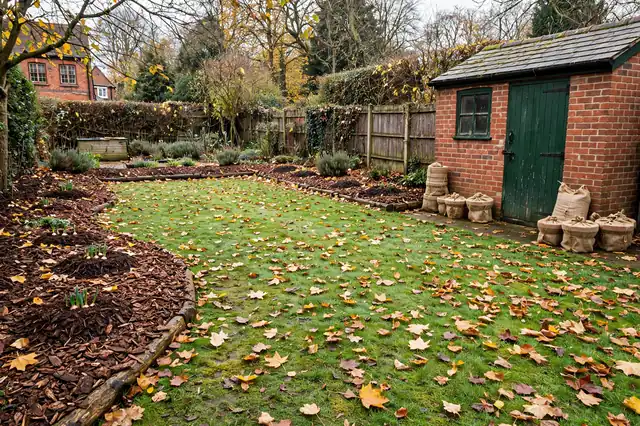
The first hard frost can land in Scotland by mid-October and across much of England by early November — yet most gardens sit completely unprepared. The good news: you don’t need a whole weekend. If you winterize your garden smartly, tackling just the jobs below over the next few weeks, you’ll protect everything you’ve grown this year and wake up next spring with bulbs blooming and a lawn that looks twice as good as your neighbour’s.
Late October is genuinely the sweet spot for winter prep. The soil is still warm from summer, autumn rain does half your watering for you, and there’s enough daylight left to work in. Leave it until December and you’ll be digging in cold, sticky clay with frozen fingers. Here’s exactly how to winterize your garden, step by step, the way UK gardeners do it.
When should you start winterizing your garden?
Forget fixed dates — the weather forecast is your real calendar. The RHS advises getting protective coverings on plants at the first sign of frost rather than waiting for a date on the wall. As a rough guide: northern England and Scotland should start mid-October, the south and sheltered city gardens can usually stretch into early November.
Keep an eye on overnight lows. When temperatures start dipping towards 2–3°C, tender plants need protecting within days. Your priorities are always the same: anything vulnerable to frost first, then the jobs that stop winter waterlogging and damage, and only then the general tidy-up.
1. Protect your tender plants before the first frost
Bring pots indoors or into the greenhouse
Citrus trees, succulents, pelargoniums, tender fuchsias and cannas simply will not survive a British winter unprotected. Before moving anything inside, give each plant a thorough check for hitchhikers — aphids and spider mites love hitching a ride into the house. A quick spray with insecticidal soap now prevents an infestation spreading to your houseplants by Christmas.
An unheated greenhouse or cold frame fends off light frosts perfectly well. For truly tender plants, a small greenhouse heater with a thermostat set to around 2°C keeps the frost out without costing a fortune to run. Water sparingly through winter — once a month is often plenty.
Wrap border plants in horticultural fleece
Plants that must stay outside can be wrapped in horticultural fleece, which breathes — unlike plastic, which traps damp and invites rot. (Use bubble wrap only to insulate greenhouse glass or line the outside of pots.) A thick mulch around the base of shrubs and perennials adds extra root insulation at the same time.
2. Lift and store your dahlia tubers
After the first heavy frost blackens the foliage, dahlias need to come out — unless your garden is exceptionally mild with free-draining soil, where you can gamble on a thick mulch over them. On heavy clay, wet soil kills more dahlias than frost does, so lifting is the safer bet.
Cut stems back to about 15cm, gently lift the tubers with a fork, and let them dry in the sun for a few hours. Clean off loose soil, pack them in an open box of sand or sawdust, and store somewhere cool, dry and frost-free — a shed or garage is ideal. Check stored tubers monthly through winter and remove any that start to rot.
3. Mulch your beds like a winter duvet
Mulch is quite literally a winter duvet for plant roots. Spread a 5–10cm layer of bark chips, compost or well-rotted leaf mould over moist, weed-free soil around perennials, shrubs and trees. It insulates roots from freezing, holds moisture through dry spells, and suppresses the early spring weeds that would otherwise get a head start.
The one rule: never pile mulch against stems or trunks, where it can trap moisture and cause rot. For more on shaping beautiful borders before you tuck them in, see our guide on how to create stunning garden borders.
4. Turn fallen leaves into free gold
Fallen leaves are not waste — they’re next year’s soil improver. Rake them off lawns (a thick mat of wet leaves suffocates grass and invites moss), paths and ponds, then do something useful with them:
- Leaf mould: pile leaves in a wire cage or perforated sacks, keep them damp, and in a year you’ll have a superb soil conditioner.
- Mulch: run the mower over leaves first to shred them, then spread them on beds.
- Wildlife habitat: leave a discreet pile in a corner — hedgehogs and beneficial insects will move in.
5. Give the lawn its autumn overhaul
Scarify and aerate
September through October is the RHS-recommended window for scarifying, aerating and top-dressing. Rake out the thatch of dead grass and moss, spike compacted areas with a garden fork so winter rain drains through instead of pooling, and brush in a sandy top-dressing.
Feed and repair
Apply an autumn lawn feed — low in nitrogen, high in potassium — which toughens grass against cold and disease rather than forcing soft new growth that frost will blacken. Scatter grass seed over bare patches while the soil is still warm enough for germination, and keep mowing while the grass is growing, raising the cutting height slightly as growth slows.
6. Plant spring bulbs now (but hold the tulips)
Plant daffodils, crocuses and hyacinths as soon as you can — the RHS advises getting most spring bulbs in “preferably by the end of September”, and late October still works while the soil is warm. Tulips are the exception: plant them in November, as earlier planting in warm soil can encourage tulip fire disease.
Plant each bulb two to three times its own height deep, in well-drained spots — bulbs rot in waterlogged soil. Scatter handfuls for natural drifts, then plant where they land.
7. Divide perennials and plant the winter veg patch
Divide congested perennials
Summer-flowering perennials divided every 2–3 years flower far better than congested clumps. Lift, split with a spade or two back-to-back forks, and replant the healthiest divisions in improved soil, watering them in well. Skip irises and anything tender — autumn division doesn’t suit them. See our cottage garden flowers guide for easy-care varieties that divide beautifully.
Sow garlic and overwintering onions
The vegetable garden isn’t done yet. October is the month for planting garlic and overwintering onions in well-drained soil. Cover cleared vegetable beds with garden compost or sow a green manure like winter rye, which protects bare soil from erosion and adds organic matter when dug in come spring.
8. Tend the pond, pots and furniture
Net the pond
Stretch netting over the pond before the big leaf fall — rotting leaves in the water rob oxygen and can harm fish. Clear floating debris and check the pump. A tennis ball left floating on the surface stops the pond freezing over completely in a hard winter, letting the water “breathe” underneath.
Raise pots for drainage
Waterlogged pots are a silent winter killer. Lift containers onto pot feet so excess water drains away, and clear the drainage holes. Terracotta pots are vulnerable to cracking in frost — wrap them in hessian or bubble wrap, or move them to shelter.
Clean and store furniture and tools
Clean garden furniture before storing it under cover — wooden pieces benefit from a protective oil, and cushions belong somewhere dry. Clean, dry and sharpen your tools, then hang them up; well-kept secateurs and spades repay you every spring. Drain hoses, clear the gutters, and check fencing and trellis for winter-storm damage now rather than discovering it in February.
9. Don’t tidy too much — leave room for wildlife
Here’s the counterintuitive bit: resist the urge to cut everything back. Hollow stems and seed heads shelter overwintering ladybirds — and every ladybird that survives winter eats aphids on your roses in June. Leave ornamental grass plumes standing for structure through frost, and only cut back growth that’s damaged or diseased.
A slightly wilder corner does more for birds and hedgehogs than a stripped-clean garden ever will. Leave out food and water for birds through the cold months and you’ll have natural pest control on patrol by spring.
Your month-by-month winterizing checklist
October: protect tender plants, lift dahlias after the first frost, plant daffodils/crocus/hyacinth, scarify and aerate the lawn, apply autumn feed, mulch beds, start the leaf-mould pile, net the pond, plant garlic.
November: plant tulips, plant bare-root trees and hedging, give hedges a final trim, raise pots onto feet, store furniture and tools, check stored dahlia tubers, keep clearing fallen leaves.
December: finish fleece wraps, check greenhouse heater and thermometer, clear gutters before the worst of the rain, and put the kettle on — the garden is tucked in.
Frequently asked questions
What month should I winterize my garden in the UK?
Start in October, before the first hard frost. Northern gardens and Scotland should get going by mid-October; southern and sheltered urban gardens can usually wait until late October or early November. Always work from the local forecast rather than a fixed date.
Can I leave dahlias in the ground over winter?
Sometimes — in mild gardens with free-draining soil, covered with a thick mulch. But in most gardens, especially on heavy clay or further north, lifting the tubers and storing them frost-free is much safer. Wet soil kills more dahlias than frost.
Is horticultural fleece better than bubble wrap for protecting plants?
Yes — fleece breathes, while bubble wrap traps moisture against stems and leaves, which can cause rot. Save bubble wrap for insulating greenhouse glass, cold frames and the outside of pots.
Should I cut everything back in autumn?
No. Only cut back damaged or diseased growth. Leave healthy seed heads and hollow stems standing — they provide winter structure and shelter for ladybirds, lacewings and other beneficial insects that repay you with free pest control in spring.
When is the last chance to plant spring bulbs?
Daffodils, crocuses and hyacinths should go in as early in autumn as possible, but late October still works. Tulips are the exception — wait until November, when cooler soil reduces the risk of tulip fire disease.