There is a hill in North London where you can stand on the grass, spend absolutely nothing, and watch the whole of the capital light up in front of you. No tickets, no timed entry slots, no glass between you and the skyline. Locals have been guarding this secret for generations — this guide tells you everything about it.
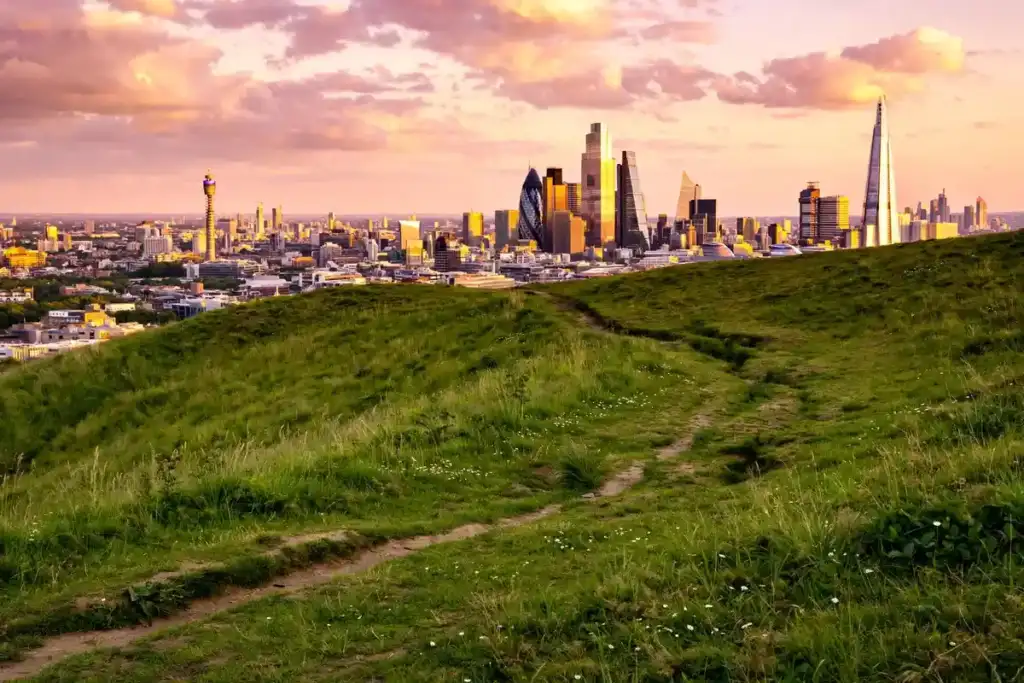
Primrose Hill is a gentle, grassy rise just north of Regent’s Park, and it offers what many Londoners quietly consider the finest free panoramic view of London in the city. At around 63 metres above sea level, its summit gives you an uninterrupted sweep of the central London skyline — from the towers of the City to Canary Wharf, with the Shard, the BT Tower, St Paul’s and the London Eye all picked out on a clear day.
What Makes Primrose Hill Special
London is full of viewpoints that charge you for the privilege, but Primrose Hill has stayed stubbornly, gloriously free. The park is open all hours, every day of the year, and you simply walk up. The climb is gentle enough for small children and takes most people about five minutes from the base.
One of London’s Six Protected Viewpoints
Primrose Hill isn’t just a nice lookout — it is one of only six protected viewpoints in London. That means its sightlines are legally safeguarded: nothing can be built that would block the panorama. The protected status was originally given because of the famous view towards St Paul’s, but the modern skyline sweep is just as protected.
The hill has serious history too. Before it became part of Regent’s Park in the 19th century, it was hunting ground used by Henry VIII. Poets have long loved it here: William Blake set part of his poem “Jerusalem” on the hill, and the Romantic poet Ted Hughes — whose birthday stone stands here — drew inspiration from these slopes.
What You Can Actually See from the Summit
On a clear day the view from the top of Primrose Hill is genuinely wide — west to east across the entire central London skyline. A viewing plaque at the summit helps you identify the landmarks. Look for:
- The Shard — the tallest building in Western Europe, unmistakable on the south bank
- The City of London — the cluster of skyscrapers including the Gherkin, rising beyond St Paul’s
- Canary Wharf — the distant forest of towers in the east
- The BT Tower — closer in, anchoring the middle distance
- The London Eye — visible on the South Bank on very clear days
- Wembley Arch — far to the northwest, a bonus on the clearest days
The foreground is all green: Regent’s Park spreads out below you, and the layered, almost map-like quality of the view is what makes it so different from a glass observation deck. It feels like London, not a theme park.
The Best Time to Visit Primrose Hill
Timing changes everything at this viewpoint. The same hill can feel like two different places at dawn and at dusk, so it is worth planning around the light.
Sunset and Golden Hour: The Crowd Favourite
Sunset is, by a wide margin, the best-loved time to visit. As the sun drops, the skyline catches golden hour light and the buildings glow gold and pink before the city lights start to glitter on. Photographers arrive every evening for exactly this reason, so come 30–45 minutes before sunset to claim a good spot. Sunset photography here is at its finest in autumn and winter, when the light sits lower and lasts longer.
Expect company: warm weekend evenings are the busiest time on the hill, when it becomes one giant picnic.
Early Mornings and Weekdays: The Quiet Option
If you prefer the hill to yourself, early morning is magical — soft light, almost no one around, and a peacefully hazy panorama. Weekday mornings are the calmest of all. Midday in summer brings the crowds and the harshest light, so it is the least rewarding time for photos, though still lovely for a picnic.
How to Get to Primrose Hill
Getting here is refreshingly simple, and that is half its charm. There are no bookings, no queues and no admission gates — you just arrive and walk up.
By Tube
- Chalk Farm (Northern line) — the closest station, about a 10-minute walk to the hilltop
- Camden Town (Northern line) — about 15 minutes on foot, an easy stroll up through Regent’s Park Road
From Chalk Farm, head up Regent’s Park Road — the main village street — and you’ll see the hill rising on your right. The entry points at Elsworthy Road and Primrose Hill Road are both well signposted.
Walking In from Regent’s Park
If you’re already in Regent’s Park, the hill is five minutes north of the park’s top edge. It pairs perfectly with a day that starts at London Zoo (on the park’s northern edge) and ends at Camden Market (about 15 minutes east) — the classic North London trio. For a full plan, see our 3-day first-timer itinerary, which slots this area into a London visit beautifully.
10 Things to Do Around Primrose Hill
The hill itself is the headline, but the surrounding area deserves half a day. Here is how to make the most of it:
- Watch the sunset from the summit — the single best free show in London.
- Bring a picnic — grab a £3–£5 meal deal from a supermarket on Regent’s Park Road and eat dinner with a skyline view. This is the classic Primrose Hill ritual.
- Wander Primrose Hill village — the colourful pastel houses on streets like Chalcot Square and Chalcot Crescent are some of the most photographed residential streets in London.
- Browse Regent’s Park Road — the village high street is full of independent cafés, brunch spots and boutiques with a relaxed, non-touristy feel.
- Try Lemonia or the Greenberry Café — Greek food at Lemonia is a local institution, and the area’s cafés are ideal for a post-climb coffee.
- Visit the farmers’ market — the weekly farmers’ market adds to the village atmosphere with fresh produce and street food.
- Walk down into Regent’s Park — Queen Mary’s Gardens, the boating lake and the rose gardens are five minutes downhill.
- See London Zoo — the world’s oldest scientific zoo sits on the park’s northern edge, an easy add-on for families.
- Explore Camden Market — a 15-minute walk east gives you the stalls, street food and music scene of Camden Town.
- Bring the dog — the hill is one of the most dog-friendly viewpoints in London, and on any given morning you’ll see plenty of four-legged regulars.
Primrose Hill vs Sky Garden: Which Free View Wins?
London’s two most famous free views could not be more different. Sky Garden, 155 metres up inside the Walkie-Talkie building, gives you a glass-enclosed, city-centre panorama with tropical gardens — but you need to book free tickets weeks ahead, and the slots disappear fast.
Primrose Hill asks nothing of you: no booking, no security queue, no time limit. You trade the height for atmosphere — grass underfoot, the city spread out like a map, and a village to wander afterwards. Honestly? Do both. Sky Garden for the wow-factor glass deck, Primrose Hill for the golden-hour picnic you’ll actually remember. For more free options, see our roundup of the best free views of London.
Practical Tips Before You Go
- Cost: completely free, always. No tickets, no entry fee, open all hours.
- Facilities: there are no toilets or cafés at the summit itself — use the facilities on Regent’s Park Road before you walk up, and bring water.
- Weather: the hill is exposed, so it is windier than street level. Check the forecast and bring a layer even in summer — sunsets can turn chilly.
- Footwear: the paths are a mix of concrete and grass and are well maintained, so ordinary trainers are fine. They can get muddy after rain.
- Celebrity spotting: the area has been home to the “Primrose Hill set” — Jude Law, Kate Moss and Sadie Frost among them — since the 1990s, so don’t be surprised if you spot a familiar face in the cafés.
- Photography: a small tripod is fine, but the hill is a public park, so be considerate at busy sunset times.
Frequently Asked Questions
What can I see from the top of Primrose Hill?
On a clear day you can see across the whole central London skyline: the Shard, the City of London skyscrapers (including the Gherkin), Canary Wharf, the BT Tower, St Paul’s and — on very clear days — the London Eye and Wembley Arch. A viewing plaque at the summit identifies the major landmarks.
What is the best time of day to visit Primrose Hill?
Sunset is the most popular time, when golden hour light makes the skyline glow — arrive 30–45 minutes early for the best spot. Early morning is the quietest and loveliest option if you want the hill to yourself, and weekday mornings are the calmest of all.
Is Primrose Hill worth visiting?
Absolutely — it is one of London’s six protected viewpoints, it is completely free and open all hours, the climb takes about five minutes, and the panorama is genuinely one of the widest and most atmospheric in the city. Pair it with Regent’s Park, London Zoo or Camden Market for a full North London day.
How do I get to Primrose Hill?
Take the Northern line to Chalk Farm (10-minute walk) or Camden Town (15-minute walk). From Chalk Farm, walk up Regent’s Park Road — the hill rises on your right. You can also walk in from Regent’s Park, which borders the hill to the south.
Is Primrose Hill free?
Yes — Primrose Hill is completely free to visit, open daily and all hours. There are no tickets, no bookings and no charges of any kind, unlike most of London’s paid observation decks.